


Stefani Water Filter Cartridges
In the landscape of water purification, particularly for gravity-fed systems, stefani water filter cartridges have long been recognized as a standard for decentralized water treatment. For engineers and procurement professionals in the industrial and commercial sectors, understanding the technical specifications, material composition, and performance boundaries of these cartridges is essential when evaluating filtration solutions for specific applications. While often associated with domestic use, the principles behind ceramic filtration are frequently compared to industrial-grade Filter Cartridges used in larger-scale processing.
This guide provides a technical analysis of the construction, filtration mechanisms, and operational considerations of Stefani-style cartridges, while contrasting them with the robust requirements of industrial filtration environments.
Technical Composition and Filtration Mechanisms
The efficacy of stefani water filter cartridges is rooted in a multi-stage filtration process housed within a ceramic shell. Understanding the physics of this process helps technical teams determine if such a solution meets their specific water quality requirements.
The Ceramic Micro-Porous Shell
The outer layer of the cartridge is typically composed of diatomaceous earth, a naturally occurring, siliceous sedimentary rock. This material is processed to create a highly porous ceramic structure with a controlled pore size, often ranging from 0.5 to 1.5 microns. This "tortuous path" filtration mechanism traps suspended solids, cysts (such as Giardia and Cryptosporidium), and various bacteria through mechanical straining. Because the pores are smaller than the target contaminants, the physical barrier remains consistent throughout the life of the cartridge.
Silver Impregnation
To address the risk of bacterial growth within the filter medium itself—a common concern in gravity-fed systems where water may sit stagnant—the ceramic is often impregnated with silver. Silver ions act as a bacteriostatic agent, disrupting the metabolic processes of bacteria trapped on the surface or within the pores. This prevents the formation of biofilms, ensuring that the cartridge remains hygienic between uses.
Activated Carbon Core
Inside the ceramic shell, these cartridges typically contain a core of granular activated carbon (GAC) or a carbon block. Carbon works through adsorption, a process where chemical impurities such as chlorine, herbicides, pesticides, and volatile organic compounds (VOCs) are chemically bonded to the surface area of the carbon. This stage is critical for improving the organoleptic properties of water, such as taste and odor, which are vital in food and beverage pre-treatment applications.
Key Performance Metrics for Evaluation
When specifying filtration components, engineers must look beyond brand names and focus on empirical data. The following metrics define the operational window for stefani water filter cartridges:
* Filtration Rating: Most high-quality ceramic cartridges offer a nominal filtration rating of 0.5 microns. It is important to distinguish between "nominal" (percentage-based retention) and "absolute" (100% retention at a specific size). For critical pharmaceutical or laboratory applications, absolute ratings are generally preferred.
* Flow Rate: As gravity-fed components, these cartridges have a relatively low flux. A single cartridge may produce between 1 to 2 liters of water per hour depending on the head pressure (the height of the water column above the filter). In industrial settings requiring high-throughput, these must be manifolded in large arrays or replaced by pressurized systems.
* Turbidity Reduction: These filters are highly effective at reducing turbidity, often achieving reductions of over 95%. This makes them suitable for treating raw water sources with high suspended solids, though frequent cleaning may be required to maintain flow.
Industrial vs. Domestic Application Boundaries
While stefani water filter cartridges are excellent for point-of-use (POU) applications, industrial environments often demand a different set of material properties. Professionals must evaluate the following trade-offs:
Mechanical Strength and Pressure Resistance
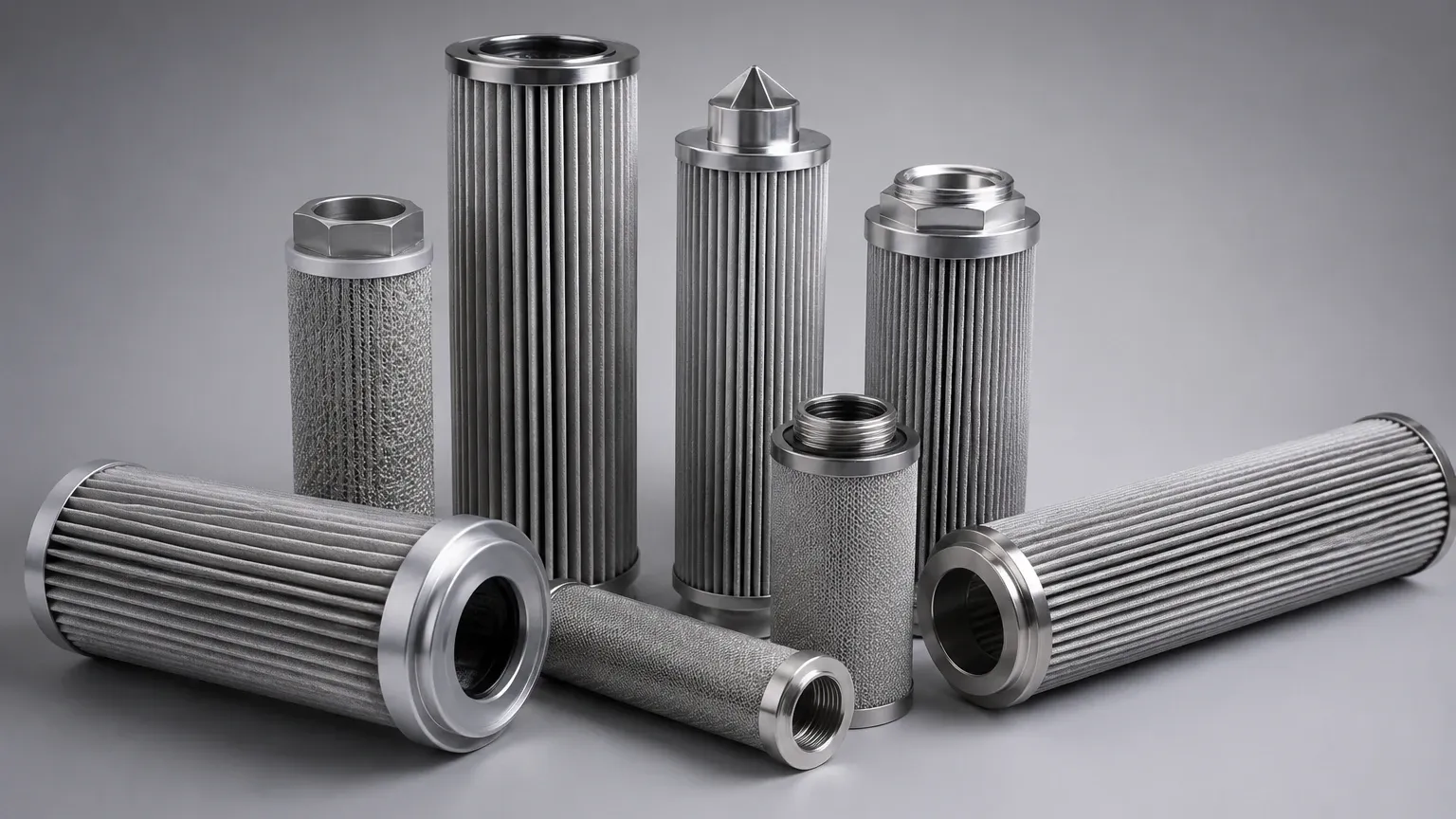
Ceramic cartridges are inherently fragile. They are designed for atmospheric pressure or very low-pressure systems. In industrial hydraulic lines or chemical processing where pressure spikes and water hammer are common, ceramic media is at risk of cracking. In these scenarios, stainless steel Filter Cartridges are the industry standard. Sintered metal or wire mesh provides the structural integrity needed to withstand high differential pressures without the risk of media migration or catastrophic failure.
Chemical Compatibility
Ceramic is generally inert and resistant to many acids; however, the plastic housings and seals used in standard water filter cartridges may not be compatible with aggressive solvents or high-pH caustic cleaners. Industrial filtration often requires 304 or 316L stainless steel components to ensure longevity in corrosive environments.
Thermal Stability
Stefani-style cartridges are designed for ambient water temperatures. If a process involves steam sterilization (SIP) or high-temperature fluids, ceramic and carbon components may degrade. Stainless steel filtration solutions can operate at temperatures exceeding 500°F (260°C), making them necessary for steam filtration and hot oil applications.
Selection Criteria for Engineering Teams
Before integrating stefani water filter cartridges or their industrial equivalents into a system, several technical factors must be confirmed:
1. Water Chemistry: Analyze the influent water for specific contaminants. If heavy metals or high levels of dissolved salts (TDS) are present, a ceramic/carbon cartridge alone may be insufficient, requiring a subsequent reverse osmosis or ion-exchange stage.
2. Maintenance Cycles: Ceramic filters require manual cleaning (scrubbing the outer surface) to restore flow when the pores become blinded by sediment. In a B2B context, the labor cost of manual cleaning must be weighed against the cost of self-cleaning automatic filters or backwashable stainless steel mesh.
3. Certification Requirements: Ensure the cartridges meet relevant standards such as NSF/ANSI 42 (for aesthetic effects) and 53 (for health effects). For food processing, FDA-compliant materials are mandatory.
4. Total Cost of Ownership (TCO): While the initial cost of a ceramic cartridge is low, the frequency of replacement and the risk of breakage can increase the TCO. Durable metal filters, though higher in initial investment, often provide a lower cost per gallon over a 5-to-10-year horizon due to their cleanability and reuse potential.
Common Risks and Mitigation Strategies
Using stefani water filter cartridges in a professional or industrial capacity involves certain risks that must be managed through proper engineering controls:
* Bypass Risk: If the cartridge is not seated correctly in its housing, contaminated water can bypass the filter media. Utilizing high-quality EPDM or Viton gaskets is essential for maintaining a positive seal.
* Media Exhaustion: The activated carbon core has a finite capacity for chemical adsorption. Unlike the ceramic shell, which can be cleaned, the carbon eventually becomes saturated. System designers should implement flow meters to track total throughput and replace cartridges based on volume rather than time.
* Fragility during Shipping and Installation: Due to the brittle nature of ceramics, rigorous inspection protocols must be in place upon delivery. Even a hairline crack can allow pathogens to pass through the filter, compromising the entire system.
The Role of Customized Filtration Solutions
In many B2B scenarios, a standard off-the-shelf cartridge does not meet the unique demands of a specific production line. This is where custom manufacturing becomes vital. While stefani water filter cartridges serve a specific niche in gravity purification, many industrial applications require custom-engineered Filter Cartridges that combine the fine filtration of ceramics with the durability of metal.
For example, a chemical processing plant might require a stainless steel pleated cartridge that offers the same 0.5-micron rating as a ceramic filter but can handle 50 gallons per minute at 100 PSI. By working with a specialist manufacturer, companies can develop filtration components that are tailored to their specific flow rates, chemical exposures, and housing dimensions.
Conclusion
Stefani water filter cartridges represent a reliable and time-tested technology for low-pressure, sub-micron water purification. Their use of natural ceramic and activated carbon provides an effective barrier against biological and chemical contaminants in small-scale or gravity-fed applications. However, for industrial professionals, these cartridges serve as a baseline for understanding filtration principles rather than a universal solution.
When scaling up to industrial processes, the limitations of ceramic—specifically regarding pressure, temperature, and mechanical shock—often necessitate a transition to more robust materials. By evaluating the specific needs of the application, from micron ratings to chemical compatibility, engineering teams can determine whether a ceramic solution is appropriate or if a custom-designed stainless steel filtration system is required to ensure process stability and long-term cost-efficiency.
