


Swimming Pool Filter Cartridges
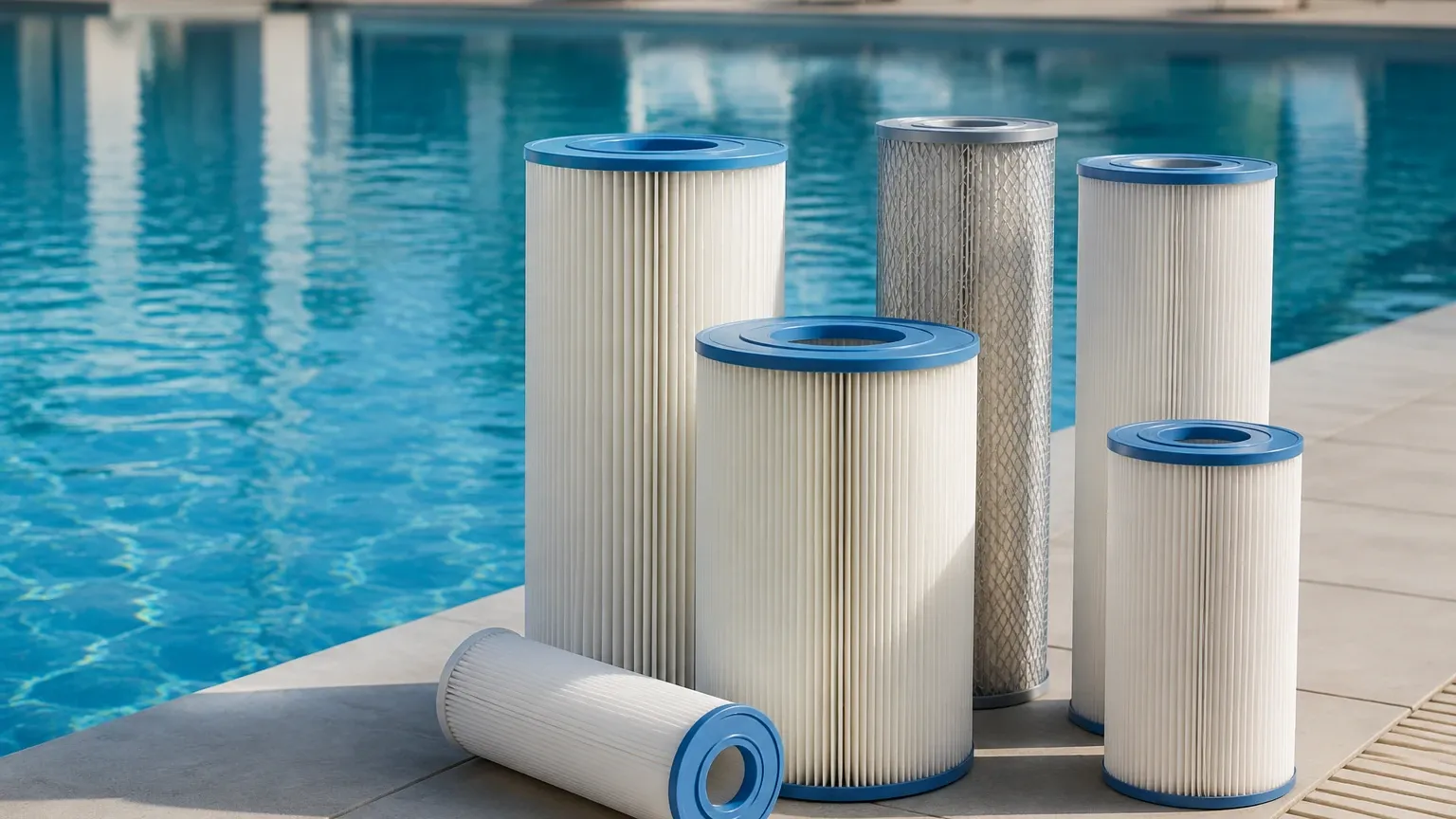
In the realm of commercial and industrial water management, the efficiency of a filtration system is often defined by the quality of its media. Swimming pool filter cartridges represent a critical component in maintaining water clarity and hygiene, particularly in high-traffic environments such as municipal aquatic centers, hotel resorts, and industrial process water loops. Unlike sand or DE (Diatomaceous Earth) systems, cartridge filtration offers a specific set of engineering advantages, including lower water waste, higher surface area, and simplified maintenance protocols.
For engineers and procurement professionals, selecting the appropriate swimming pool filter cartridges involves more than a simple dimensional match. It requires a deep understanding of fluid dynamics, material science, and the specific chemical environment of the water being treated. As a manufacturer of precision Filter Cartridges, Kaifil emphasizes the importance of structural integrity and filtration accuracy in demanding industrial and commercial applications.
Understanding the Engineering of Swimming Pool Filter Cartridges
The primary function of a pool filter cartridge is to remove suspended solids—ranging from organic debris to microscopic particulates—through mechanical straining. The design of these cartridges is centered on maximizing the effective filtration area within a confined housing volume. This is typically achieved through pleating.
The Role of Pleat Geometry
An optimized pleat design ensures that the entire surface area of the media is utilized. If pleats are too dense, they can "bridge" or stick together under pressure, effectively reducing the active filtration area and increasing the velocity of water through the remaining open pores. This phenomenon, known as "blinding," leads to premature pressure spikes and reduced dirt-holding capacity. High-quality cartridges utilize consistent pleat spacing and specialized banding to maintain structural spacing even under high flow rates.
Core Support and Structural Integrity
The internal core of the cartridge is the backbone of the filter. In commercial settings, where pumps may operate at high pressures, a weak core can lead to cartridge collapse. Industrial-grade cartridges often feature reinforced polypropylene or even stainless steel cores to ensure the element remains cylindrical and seated correctly against the manifold seals. A failure in the core leads to "bypass," where unfiltered water escapes back into the system, compromising water quality.
Key Performance Metrics for Industrial-Grade Pool Filtration
When evaluating swimming pool filter cartridges for large-scale applications, technical teams must focus on three primary metrics: micron rating, flow rate, and dirt-holding capacity.
Micron Rating and Filtration Efficiency
Most standard swimming pool filter cartridges are designed to capture particles in the 10 to 20-micron range. For context, the human eye can typically see particles down to approximately 40 microns. In specialized industrial applications or high-end commercial facilities, finer filtration may be required. It is essential to distinguish between "nominal" and "absolute" micron ratings. A nominal rating indicates the filter can trap a large percentage of particles of a certain size, whereas an absolute rating (more common in industrial stainless steel filtration) guarantees the retention of all particles above that size.
Flux Rate and Surface Loading
The flux rate—the volume of water passing through a specific area of filter media over time—is a critical calculation for system longevity. Lower flux rates generally lead to better filtration efficiency and longer intervals between cleanings. By increasing the total square footage of the filter media, operators can reduce the velocity of the water at the interface of the media, allowing for deeper penetration of particles into the fiber matrix rather than immediate surface blinding.
Material Selection and Chemical Compatibility
The longevity of swimming pool filter cartridges is heavily dependent on the materials used in their construction. Commercial pools are aggressive chemical environments, utilizing chlorine, bromine, ozone, and various pH adjusters that can degrade inferior materials.
Synthetic Media (Polyester)
Most modern cartridges utilize non-woven, spun-bond polyester. This material is favored for its chemical resistance and its ability to be cleaned repeatedly. The thickness and fiber density of the polyester determine the filtration grade. In B2B procurement, verifying the weight of the media (typically measured in ounces per square yard) is a standard method for assessing the quality and durability of the cartridge.
End Cap Construction
The end caps of the cartridge provide the seal between the filter element and the housing. These are usually molded from high-impact polyurethane or plastisol. In industrial water treatment scenarios where temperatures may fluctuate or specialized chemicals are present, the compatibility of these polymers must be verified to prevent cracking or softening, which would lead to seal failure.
The Shift Toward Metal Filtration in Industrial Loops
While polyester is the standard for traditional pool environments, industrial facilities that integrate pool-like water loops (such as large-scale cooling or heat recovery) may opt for stainless steel Filter Cartridges. Stainless steel mesh provides superior temperature resistance and can be ultrasonically cleaned, offering a permanent solution where disposable synthetic cartridges would fail due to thermal or chemical stress.
Operational Considerations: Maintenance and Replacement Cycles
For facilities management, the total cost of ownership (TCO) of filtration is a primary concern. This includes not only the initial purchase price of the swimming pool filter cartridges but also the labor and water costs associated with maintenance.
Pressure Differential (ΔP) Monitoring
The most accurate way to determine when a cartridge needs cleaning or replacement is by monitoring the pressure differential. A clean filter will show a baseline pressure. As the media loads with debris, the resistance to flow increases, causing the upstream pressure to rise. Generally, a rise of 8 to 10 PSI over the baseline indicates that the cartridge requires attention. Neglecting this leads to "forced filtration," where debris is pushed through the media, or the structural integrity of the cartridge is compromised.
Cleaning Protocols
Unlike sand filters that require backwashing (which can waste thousands of gallons of chemically treated water), cartridge filters are cleaned by removal and rinsing. In commercial settings, a two-stage cleaning process is often employed:
1. Degreasing: Removing body oils, lotions, and organic films using a specialized surfactant soak.
2. Descaling: Removing calcium carbonate and mineral deposits using a mild acid solution.
Failure to degrease before descaling can "set" the oils into the media, permanently reducing its permeability.
Common Challenges in Commercial Pool Filtration Systems
Even with high-quality swimming pool filter cartridges, certain operational challenges can arise that require engineering interventions.
* Biofouling: In warm water environments, biofilm can rapidly accumulate on the filter media. This biological growth creates a slimy barrier that is resistant to standard rinsing. Utilizing antimicrobial-treated media or ensuring strict secondary disinfection (UV or Ozone) can mitigate this.
* Oil Loading: High bather loads introduce significant amounts of oils. Without proper pre-filtration or enzymatic treatments, these oils can quickly saturate polyester media. This is an area where industrial-grade oil-absorbent inserts or specialized filter cartridges are often utilized.
* Structural Bypass: If the cartridge is not seated perfectly within the housing, or if the gaskets have degraded, water will take the path of least resistance. This bypass results in persistent turbidity issues despite the filters appearing clean.
Selection Criteria for Procurement and Engineering Teams
When sourcing swimming pool filter cartridges for B2B applications, it is vital to confirm technical specifications with the manufacturer. The following checklist serves as a guide for professional selection:
1. Dimensional Accuracy: Confirm the outside diameter (OD), inside diameter (ID), and overall length (OAL). Even a 1/8-inch discrepancy can prevent a proper seal.
2. Media Weight: Specify the required ounce-weight of the polyester to ensure the cartridges can handle the expected TSS (Total Suspended Solids) load.
3. Core Reinforcement: For high-flow systems, request reinforced center cores to prevent deformation.
4. Chemical Resistance: Ensure all components (media, end caps, and adhesives) are compatible with the facility's specific disinfection and flocculation chemicals.
5. OEM Compatibility: Verify that the replacement cartridges meet or exceed the original equipment manufacturer's specifications for flow and pressure drop.
The Kaifil Advantage in Custom Filtration
While standard swimming pool filter cartridges serve many commercial needs, complex industrial water systems often require a more robust approach. At Kaifil, we specialize in the engineering and manufacture of high-performance Filter Cartridges designed for the most demanding environments. Our expertise in stainless steel wire mesh and precision metal components allows us to provide solutions where traditional synthetic media falls short.
Whether you are managing a large-scale aquatic facility or an industrial process water system, the choice of filtration media directly impacts operational efficiency and water quality. By focusing on technical parameters—such as pleat stability, material compatibility, and micron precision—engineering teams can ensure long-term performance and reduced maintenance overhead. For customized filtration requirements or high-durability metal alternatives, professional consultation with a specialized manufacturer like Kaifil ensures that your filtration system is optimized for its specific application.
