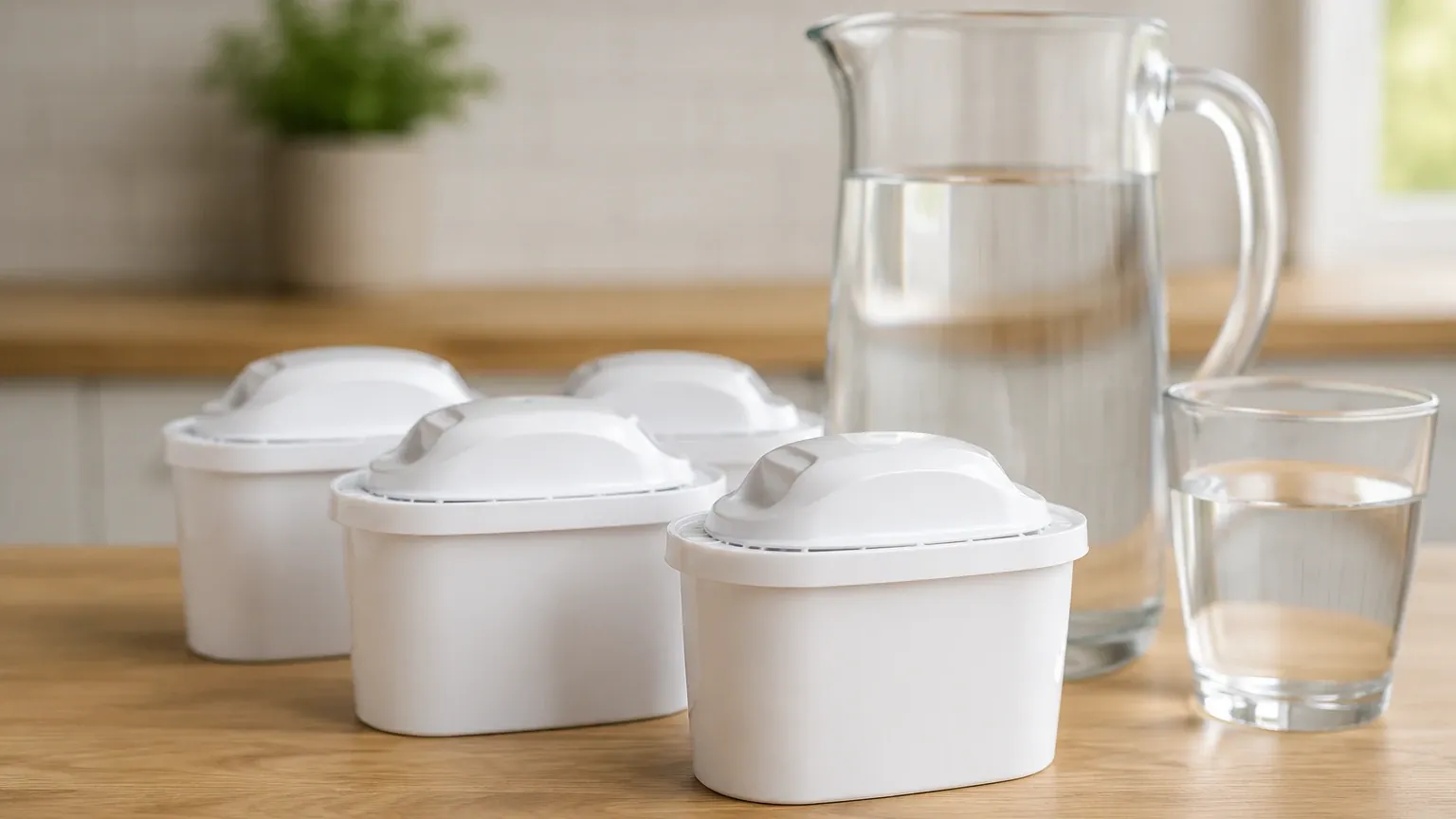
Tesco Brita Water Filter Cartridges
In the landscape of water treatment, understanding the technical specifications and performance boundaries of filtration media is essential for both domestic consumers and industrial engineers. While products like Tesco Brita water filter cartridges represent a standard for residential point-of-use (POU) systems, they also serve as a foundational case study in filtration mechanics, material science, and the transition from consumer-grade to industrial-grade filtration solutions. For procurement professionals and engineers, analyzing these systems provides insight into how filtration efficiency, flow rates, and media selection impact the overall quality of the output.
The Engineering Behind Domestic Water Filtration
Consumer-facing products, such as those found in the Tesco Brita water filter cartridges range, are engineered to address specific municipal water quality concerns. The primary objective is the reduction of chlorine, limescale (carbonate hardness), and heavy metals like copper and lead. To achieve this, these cartridges typically employ a dual-stage filtration process within a compact housing.
1. Activated Carbon Pearls: These are derived from natural coconut shells. The carbon is processed to create a high surface area with a vast network of micropores. This structure is ideal for the adsorption of organic contaminants and chlorine, which significantly affect the taste and odor of water.
2. Ion-Exchange Resin: This component focuses on the reduction of mineral content. By exchanging calcium and magnesium ions for hydrogen or sodium ions, the resin effectively softens the water, preventing the formation of scale in household appliances.
From a technical perspective, the performance of these cartridges is governed by "contact time." Because the water flows through the cartridge via gravity, the dwell time within the media is sufficient for chemical adsorption and ion exchange to occur. However, as we move into industrial environments, gravity-fed systems are rarely sufficient, requiring more robust Filter Cartridges capable of handling high-pressure differentials and significantly higher flow velocities.
Material Science: Carbon vs. Stainless Steel Filtration
When evaluating Tesco Brita water filter cartridges, it is important to recognize the limitations of the materials used. The plastic housings and granular media are designed for low-pressure, ambient-temperature environments. In contrast, industrial filtration often demands materials that can withstand extreme conditions, including high temperatures, corrosive chemicals, and mechanical stress.
Industrial-grade filter cartridges, such as those manufactured by Kaifil, often utilize stainless steel (304 or 316L) wire mesh or sintered metal. The choice between granular carbon and stainless steel mesh depends entirely on the application's requirements:
* Durability and Reusability: Consumer cartridges are disposable and typically have a lifespan of four weeks or 100–150 liters. Industrial stainless steel filters are designed for longevity; they can be cleaned via backwashing or ultrasonic cleaning and reused multiple times, significantly reducing the total cost of ownership (TCO) in a B2B context.
* Chemical Compatibility: While carbon is excellent for organic removal, it can be degraded by certain industrial solvents or high-concentration oxidizers. Stainless steel provides superior resistance to a wide range of pH levels and chemical compositions found in pharmaceutical and chemical processing.
* Structural Integrity: Under high pressure, granular media can experience "channeling," where the fluid carves a path through the media, bypassing the filtration process. Rigid metal filter elements maintain their structural integrity, ensuring consistent filtration accuracy across the entire surface area.
Performance Criteria for Filter Cartridges
Engineers must look beyond the brand name and focus on the technical data sheets when selecting filtration components. Whether dealing with Tesco Brita water filter cartridges for a breakroom or specialized metal filters for a production line, the following criteria are paramount:
Micron Rating: Nominal vs. Absolute
Most consumer cartridges provide a nominal micron rating, meaning they can trap a certain percentage of particles of a specific size. In precision industrial applications, an "absolute" rating is often required. This ensures that 99.9% of particles above the specified micron size are captured. For instance, in the food and beverage industry, a 1-micron absolute filter might be necessary to remove specific microbial contaminants, whereas a 10-micron nominal filter might suffice for general sediment removal.
Flow Rate and Pressure Drop (Delta P)
The "clean pressure drop" is the initial resistance a filter offers to the fluid flow. As the filter captures contaminants, the pressure drop increases. In domestic systems like Brita, the flow is slow and steady. In industrial systems, engineers must calculate the maximum allowable pressure drop before the filter must be cleaned or replaced. High-performance stainless steel mesh filters are engineered to provide maximum surface area, which minimizes the initial pressure drop and extends the service interval.
Scaling from Domestic to Industrial Applications
The transition from domestic solutions like Tesco Brita water filter cartridges to industrial systems is defined by scale and complexity. In an industrial setting, water is not just for drinking; it is a critical process fluid used for cooling, cleaning, or as an ingredient.
In chemical processing, for example, the filtration system must handle thousands of liters per hour. Here, the plastic-housed cartridges are replaced by multi-round stainless steel filter housings containing several high-capacity Filter Cartridges. These systems are often automated, with sensors monitoring the pressure differential to trigger cleaning cycles without manual intervention.
Furthermore, industrial applications often require specialized filtration stages:
* Pre-filtration: Using coarse wire mesh to remove large debris and protect sensitive downstream components.
* Fine Filtration: Utilizing sintered metal or fine mesh to achieve the final desired purity level.
* Sterile Filtration: In pharmaceutical settings, filters must be capable of removing bacteria and must be able to withstand sterilization processes like Steaming-In-Place (SIP).
Selection Factors for Industrial Filtration Systems
For purchasing teams and engineers, selecting the right filtration solution involves a thorough analysis of the application environment. While a consumer might choose Tesco Brita water filter cartridges based on convenience and price, an industrial selection process should involve the following confirmations:
1. Fluid Characteristics: What is the viscosity, temperature, and chemical composition of the fluid? This dictates whether a polymer-based or metal-based filter is required.
2. Contaminant Profile: What is the nature of the solids being removed? Are they hard, abrasive particles or soft, deformable organic matter? This affects the choice of mesh weave or pore structure.
3. Regulatory Compliance: In food, beverage, and pharmaceutical industries, all filtration components must meet strict FDA or EU food-grade standards. Stainless steel is often the preferred material due to its inert nature and ease of sterilization.
4. End-Cap Configurations: Industrial cartridges come in various standard fittings, such as Code 7 (226 O-rings with a locking fin), DOE (Double Open End), or 222 O-rings. Ensuring compatibility with existing filter housings is critical for seamless integration.
Maintenance and Lifecycle Management
The maintenance requirements of Tesco Brita water filter cartridges are straightforward: periodic replacement based on time or volume. In the industrial sector, maintenance is a more strategic operation.
Total Cost of Ownership (TCO) is a vital metric. While a disposable polymer filter might have a lower upfront cost, a permanent stainless steel filter cartridge often proves more economical over a three-to-five-year period. The ability to clean and reuse metal filters reduces waste disposal costs—a significant factor in modern corporate sustainability goals. Additionally, the reduced downtime associated with high-capacity, durable metal filters contributes to higher overall equipment effectiveness (OEE) in manufacturing plants.
Conclusion
Understanding the mechanics of Tesco Brita water filter cartridges provides a useful entry point into the broader world of filtration technology. However, for industrial applications, the requirements for durability, precision, and chemical resistance necessitate a shift toward engineered metal solutions. By focusing on material science, micron accuracy, and structural integrity, engineers can select Filter Cartridges that not only meet their immediate filtration needs but also optimize their operational efficiency and long-term cost management. Whether the goal is protecting sensitive machinery or ensuring the purity of a final product, the principles of professional-grade filtration remain the same: precision engineering for reliable performance.