


Tesco Water Filter Cartridges
In the realm of water purification, the requirements for filtration vary significantly depending on the scale of operation and the specific contaminants involved. For many small-scale commercial environments, light office spaces, or domestic settings, the name Tesco is synonymous with accessibility and convenience. Tesco water filter cartridges are widely recognized for their role in improving the taste and odor of tap water by reducing chlorine, limescale, and certain heavy metals. However, for industrial engineers and procurement professionals, understanding the distinction between these consumer-grade solutions and industrial-grade Filter Cartridges is essential for ensuring process efficiency and equipment longevity.
This article examines the technical specifications, application boundaries, and performance expectations of standard water filtration solutions, while providing a comparative framework for those transitioning from light-duty applications to demanding industrial filtration environments.
Understanding the Scope of Tesco Water Filter Cartridges
Tesco water filter cartridges are primarily designed for point-of-use (POU) systems, such as gravity-fed jugs or small under-sink units. These cartridges typically utilize a combination of activated carbon and ion-exchange resin. The activated carbon acts as an adsorbent to remove organic compounds and chlorine, which are the primary culprits for unpleasant tastes and odors in municipal water supplies. The ion-exchange resin is focused on reducing temporary hardness (limescale), which protects small appliances like kettles and coffee machines from mineral buildup.
From a B2B perspective, these cartridges serve a specific niche: providing potable water for staff breakrooms or small laboratory settings where high-volume throughput is not required. Their design is optimized for low-pressure environments and periodic use. However, when a facility moves beyond simple hydration and into manufacturing, chemical processing, or large-scale water treatment, the limitations of these plastic-housed, disposable units become apparent.
Technical Limitations of Consumer-Grade Filtration
When evaluating filtration for industrial applications, engineers must look beyond basic taste improvement. Several technical factors differentiate light-duty cartridges from industrial components:
1. Pressure and Flow Rate Constraints
Consumer cartridges are designed for low flow rates, often measured in milliliters per minute. In an industrial setting, systems may require hundreds of liters per minute. Attempting to scale up consumer-grade technology leads to excessive differential pressure ($ΔP$), which can cause housing failure or bypass leaks. Industrial filter cartridges are engineered to withstand high operating pressures and maintain structural integrity under fluctuating flow conditions.
2. Temperature Sensitivity
Most retail water filters are rated for cold water use only (typically below 30°C). Industrial processes often involve hot water loops or steam sterilization. Plastic housings and resin-based media will degrade or leach chemicals if exposed to high temperatures. In contrast, stainless steel filtration media can operate effectively at temperatures exceeding 200°C.
3. Chemical Compatibility
While Tesco water filter cartridges are excellent for municipal water, they are not designed to handle process fluids that may contain solvents, oils, or varying pH levels. Industrial environments require materials like 304 or 316L stainless steel, which offer superior resistance to corrosion and chemical attack.
The Transition to Industrial Filter Cartridges
For facilities that have outgrown the capacity of retail-sourced filters, the transition to industrial-grade Filter Cartridges represents a shift toward durability and precision. Industrial filtration solutions, such as those manufactured by Kaifil, focus on mechanical filtration through specialized media like stainless steel wire mesh, sintered metal, or wedge wire.
Material Science in Industrial Filtration
Unlike the plastic and carbon construction of domestic filters, industrial cartridges utilize high-performance alloys.
- SS 304: Suitable for general water treatment and mildly corrosive environments.
- SS 316L: The gold standard for pharmaceutical and food-grade applications due to its high resistance to pitting and crevice corrosion.
- Sintered Mesh: Multiple layers of wire mesh are bonded through a heat-treating process (sintering) to create a robust, porous structure that provides precise micron ratings and high mechanical strength.
Filtration Accuracy and Micron Ratings
Consumer filters often provide a "nominal" filtration level, which is sufficient for general sediment reduction. Industrial applications require "absolute" micron ratings. Whether the requirement is 5 microns for protecting sensitive membranes or 100 microns for pre-filtration, industrial cartridges offer verified performance that ensures downstream equipment is protected from particulate damage.
Performance Evaluation Criteria for Engineers
Before selecting a filtration solution, engineering teams should conduct a thorough analysis based on the following criteria:
Total Cost of Ownership (TCO)
While the initial purchase price of a retail-style cartridge may be low, the TCO can be high in a professional setting. Disposable cartridges create significant waste and require frequent replacement labor. Industrial stainless steel filters, although higher in initial cost, are cleanable and reusable. Methods such as backwashing, ultrasonic cleaning, or chemical soaking can restore the filter to its original performance, leading to lower long-term costs and reduced environmental impact.
Filtration Efficiency and Dirt Holding Capacity
In industrial water treatment, the volume of solids to be removed can be substantial. Industrial cartridges are designed with pleated structures to maximize surface area. A higher surface area results in a lower face velocity, which improves filtration efficiency and extends the time between cleaning cycles. This is a critical factor in maintaining continuous production lines.
Structural Integrity
In a B2B environment, a filter failure can lead to catastrophic downstream contamination or pump damage. Industrial cartridges are often constructed with internal support cores and outer protective cages. This ensures that even if the filter becomes heavily loaded with contaminants, it will not collapse or allow particles to bypass the media.
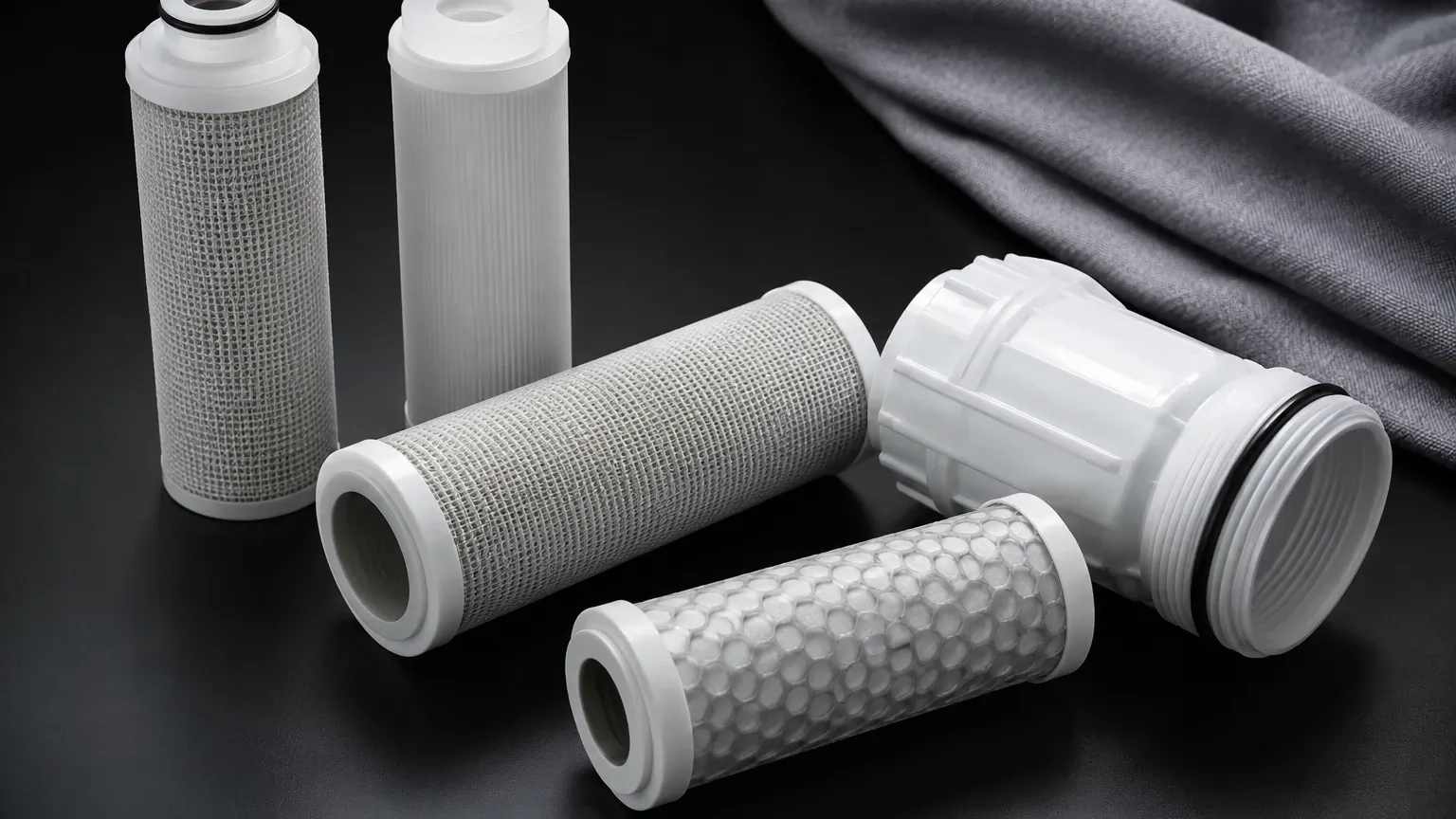
Customization and Engineering Support
One of the primary advantages of working with a professional manufacturer like Kaifil is the ability to customize filtration components. Retail products like Tesco water filter cartridges are "one size fits all." In contrast, industrial projects often require unique dimensions, specific end-cap configurations (such as DOE, 222, or 226 O-rings), and tailored filtration media.
Customization options include:
- Variable Lengths: From small 5-inch cartridges to large 40-inch multi-round systems.
- End-Cap Styles: Ensuring a leak-proof seal within existing filter housings.
- Reinforced Construction: For high-viscosity fluids or high-pressure differential applications.
Common Questions for Industrial Filter Procurement
When moving from basic water filtration to professional systems, purchasing teams often ask several key questions:
How often should an industrial filter be cleaned?
This is typically determined by monitoring the differential pressure. Once the $ΔP$ reaches a pre-determined limit (e.g., 1.5 to 2 bar), the filter should be cleaned. Unlike disposable cartridges that are discarded when clogged, stainless steel units are restored to service.
Are industrial filters compatible with food and beverage standards?
Yes, provided they are manufactured from compliant materials like 316L stainless steel and use food-grade gaskets (EPDM, Silicone, or Viton). These materials do not impart taste or odor to the water, ensuring the final product's integrity.
Can industrial cartridges replace domestic systems?
While possible, it is usually a matter of scale. If a facility uses a large number of domestic-style filters, it is often more cost-effective to install a single industrial housing with a high-capacity stainless steel cartridge.
Conclusion: Selecting the Right Filtration Level
While Tesco water filter cartridges serve an important role in providing clean drinking water for low-demand scenarios, they are not designed for the rigors of industrial processing. For engineers and facility managers, the choice of filtration media impacts everything from product quality to maintenance budgets.
By opting for high-quality industrial Filter Cartridges, businesses can achieve higher filtration precision, better chemical compatibility, and a more sustainable operation. Understanding the technical requirements of your specific application—considering flow rate, pressure, temperature, and contaminant type—is the first step in moving from a temporary retail solution to a permanent engineering asset.
Kaifil continues to support global industries by providing the technical expertise and manufacturing precision needed to solve complex filtration challenges, ensuring that whether the application is water treatment, chemical processing, or food production, the filtration system performs reliably under pressure.
