


Unicel Filter Cartridges
In the landscape of industrial and commercial water treatment, the efficiency of a filtration system is often dictated by the quality and specification of its consumable components. Among the most recognized names in the replacement element market are Unicel filter cartridges. These components are engineered to provide high-surface-area filtration for applications ranging from large-scale commercial pools and spas to light industrial process water systems. Understanding the technical nuances of these cartridges, their material composition, and how they compare to alternative filtration technologies like stainless steel media is essential for maintenance engineers and procurement specialists aiming to optimize system performance.
Selecting the correct Filter Cartridges requires a deep dive into fluid dynamics, particle retention requirements, and the chemical compatibility of the filter media. While Unicel has established a significant footprint in the synthetic media sector, the decision to utilize these products versus custom-engineered metal solutions depends heavily on the specific demands of the industrial environment.
Engineering and Design of Pleated Filter Elements
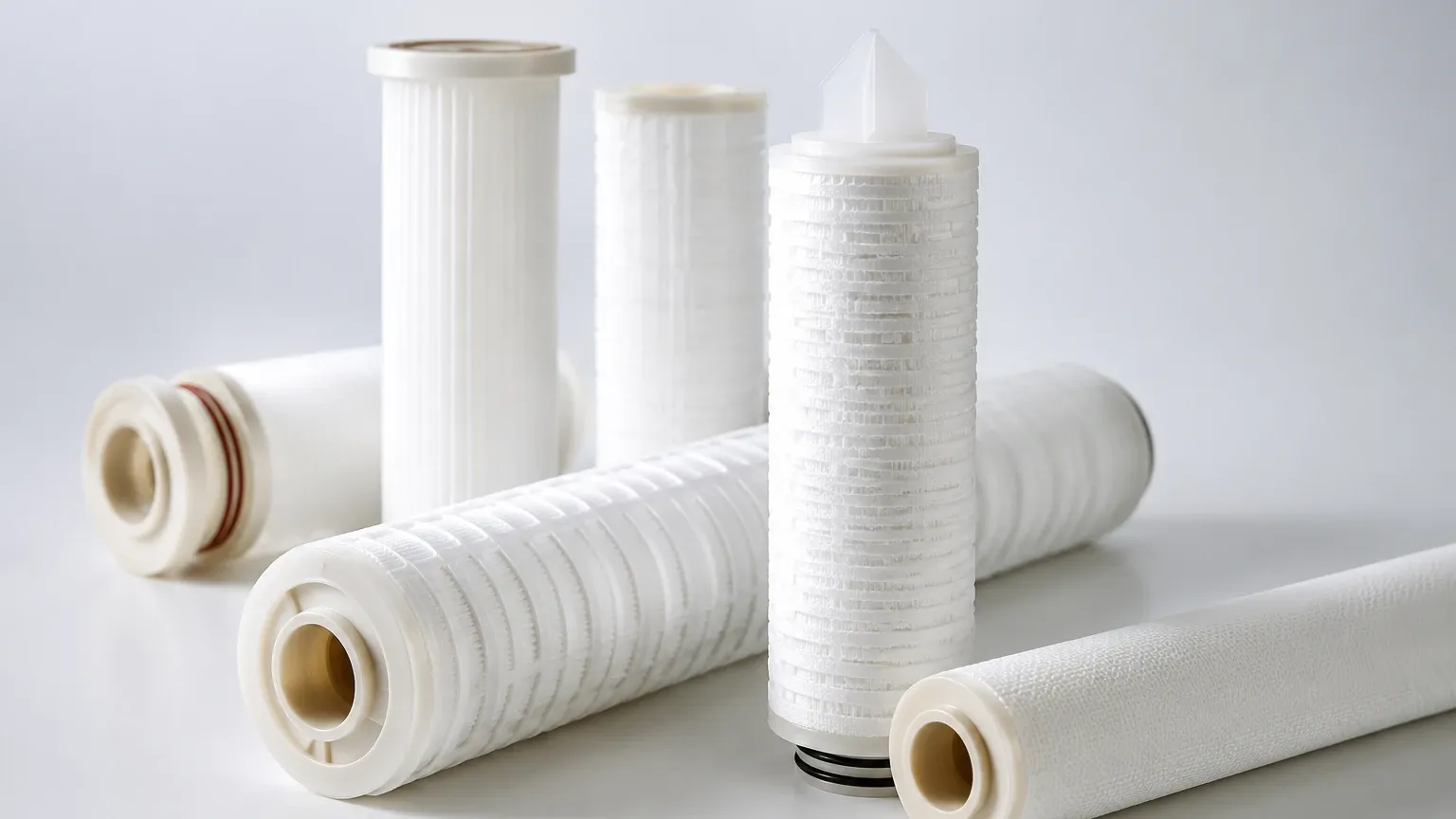
The fundamental advantage of unicel filter cartridges lies in their pleated design. Pleating is a mechanical process that folds the filter media back and forth, significantly increasing the effective filtration surface area within a fixed cylindrical volume. From an engineering perspective, maximizing surface area is critical for two primary reasons: reducing the clean pressure drop and extending the dirt-holding capacity.
Surface Area and Flux Rates
When a fluid passes through a filter, it encounters resistance. By increasing the surface area through pleating, the "flux"—or the volume of fluid passing through a given area of media per unit of time—is reduced. Lower flux rates generally lead to higher filtration efficiency because particles have more opportunities to be captured by the media fibers rather than being forced through by high-velocity fluid. In industrial applications, maintaining a low flux rate is a key strategy for protecting downstream equipment from premature wear.
Pleat Stability and Support
A common failure point in lower-quality pleated cartridges is "pleat bunching." This occurs when the pressure of the fluid flow causes the pleats to collapse against one another, effectively sealing off large portions of the filter media and causing a spike in differential pressure. High-quality unicel filter cartridges utilize heavy-duty internal cores and, in many cases, external structural supports or "bands" to ensure that the pleats remain uniformly spaced throughout the service life of the element. This structural integrity is vital for maintaining consistent flow rates in high-demand systems.
Material Science: Synthetic Media vs. Metal Mesh
Most standard unicel filter cartridges utilize spunbond polyester as the primary filtration medium. Specifically, many of these products incorporate Reemay® media, a high-performance non-woven polyester fabric known for its durability and resistance to chemicals. However, for engineers operating in more demanding environments, it is important to understand where synthetic media succeeds and where it may reach its physical limits.
Synthetic Media Characteristics
Polyester media is excellent for capturing organic debris, fine sediments, and minerals in water-based applications. The fibers are thermally bonded, meaning no glues or resins are used that could potentially leach into the fluid stream. This makes them suitable for many commercial water applications. However, polyester has temperature limitations and can degrade when exposed to certain aggressive solvents or extreme pH levels.
The Role of Stainless Steel Alternatives
In contrast to synthetic pleated elements, manufacturers like Kaifil specialize in stainless steel Filter Cartridges. Metal filtration media, such as woven wire mesh or sintered metal fibers, offer distinct advantages in industrial processing. Stainless steel provides superior mechanical strength, allowing for much higher operating pressures and temperatures (often exceeding 500°F). Furthermore, while synthetic cartridges are typically treated as disposables, stainless steel cartridges can be cleaned and reused multiple times through ultrasonic cleaning or backwashing, which can significantly alter the long-term total cost of ownership (TCO) in industrial settings.
Performance Evaluation Criteria
When evaluating unicel filter cartridges for a specific application, engineers must look beyond simple dimensions and focus on performance metrics that impact the process outcome. The two most critical metrics are micron rating and differential pressure.
Understanding Micron Ratings
Filtration accuracy is measured in microns (μm). It is important to distinguish between "nominal" and "absolute" micron ratings. Most pleated synthetic cartridges are nominally rated, meaning they can trap a high percentage (typically 60% to 90%) of particles at the specified size. For critical industrial processes where even a small amount of bypass can cause system failure, an absolute-rated filter—often achieved through multi-layered stainless steel mesh—may be required to ensure 99.9% retention efficiency.
Differential Pressure (ΔP)
Differential pressure is the difference in pressure between the upstream and downstream sides of the filter. A high initial ΔP indicates that the filter is either too restrictive for the flow rate or that the media is already partially blinded. Monitoring the ΔP over time is the standard method for determining when a cartridge needs to be replaced or cleaned. For unicel filter cartridges, the manufacturer typically provides a recommended change-out pressure (often around 10-15 PSI above the clean starting pressure) to prevent the risk of media rupture or bypass.
Compatibility and Industrial Application Scenarios
While unicel filter cartridges are synonymous with pool and spa filtration, their use extends into several light industrial sectors. However, the application must be carefully matched to the material properties of the cartridge.
1. Pre-Filtration for Reverse Osmosis (RO): In water treatment plants, pleated cartridges are often used as a final stage of protection before water enters RO membranes. They capture fine silt and particulates that could otherwise foul the expensive membranes.
2. Cooling Tower Filtration: Industrial cooling loops require the removal of airborne dust and scale to maintain heat exchanger efficiency. Pleated elements provide the high flow rates necessary for these side-stream filtration systems.
3. Food and Beverage: Certain stages of beverage production require the removal of large particulates. While synthetic media is used, many facilities are transitioning to stainless steel Filter Cartridges to meet more stringent sanitization requirements, as metal filters can withstand Steam-In-Place (SIP) and Clean-In-Place (CIP) protocols.
In applications involving high-viscosity fluids, corrosive chemicals, or high-pressure hydraulic systems, the standard synthetic unicel filter cartridges are generally not appropriate. In these instances, custom-engineered metal filtration components are the industry standard to ensure safety and reliability.
Maintenance, Replacement Cycles, and Total Cost of Ownership
For purchasing teams, the unit price of a filter cartridge is only one part of the economic equation. The true cost of filtration includes the frequency of replacement, the labor costs associated with change-outs, and the disposal costs of spent cartridges.
Determining Replacement Frequency
The service life of a cartridge is determined by the contaminant load in the fluid. In a relatively clean system, a high-quality pleated cartridge might last several months. In a high-load industrial process, it could blind in a matter of days. Engineers should conduct a baseline study to track how quickly the ΔP rises under normal operating conditions. If the replacement cycle is too frequent, it may indicate a need for a larger filter housing or a transition to a multi-stage filtration approach using coarser pre-filters.
Cleaning vs. Disposal
One of the primary questions regarding unicel filter cartridges is whether they can be cleaned. While it is possible to hose off large debris from the surface of a pleated polyester cartridge, fine particles often become deeply embedded in the fiber matrix. Over time, even a "cleaned" cartridge will show a higher baseline pressure drop. Eventually, the media fibers will stretch or degrade, necessitating a full replacement. This is a key differentiator from stainless steel cartridges, which are designed for robust cleaning cycles, offering a longer functional life at a higher initial capital expenditure.
Technical Confirmation Before Procurement
Before finalizing a purchase of replacement Filter Cartridges, engineers and procurement officers should confirm several technical details to ensure compatibility and performance:
* Exact Dimensions: Measure the outside diameter (OD), inside diameter (ID), and the overall length. Even a few millimeters of difference can prevent a proper seal within the housing.
* End-Cap Configuration: Determine if the cartridge requires open ends (DOE), a single open end with a code 7 or 222 O-ring, or a specific threaded fitting. A failure in the end-cap seal results in unfiltered fluid bypassing the system entirely.
* Chemical Compatibility: Verify that the polyester media and the polyurethane or plastisol end-cap materials are compatible with any chemicals present in the process fluid, including cleaning agents.
* Operating Temperature: Ensure the maximum process temperature does not exceed the structural limits of the synthetic media and core.
By focusing on these engineering realities, facilities can ensure they are selecting the most effective filtration solution for their specific needs. Whether the application calls for the high-surface-area efficiency of unicel filter cartridges or the extreme durability of custom stainless steel elements, the goal remains the same: protecting equipment, ensuring product quality, and maintaining operational continuity.
For organizations requiring specialized filtration performance or those operating in demanding industrial environments, exploring advanced Filter Cartridges options is a necessary step in system optimization. Custom manufacturers like Kaifil provide the technical expertise needed to bridge the gap between standard replacement parts and high-performance industrial filtration solutions.
