


Alumina Anodisc Filter Discs
In the landscape of precision industrial filtration, the selection of media often dictates the success of a process, particularly when dealing with micro-scale separation. Alumina anodisc filter discs represent a specialized class of filtration media known for their unique pore structure and high chemical resistance. While industrial applications often rely on robust metallic solutions, understanding the specific role of anodic aluminum oxide (AAO) membranes is essential for engineers and purchasing teams tasked with optimizing filtration performance in laboratory and high-precision environments.
As a manufacturer specializing in Filter Discs & Packs, Kaifil recognizes that the integration of various media types—from stainless steel wire mesh to specialized ceramic membranes—requires a deep understanding of material science and fluid dynamics. This guide examines the technical properties, application boundaries, and selection criteria for alumina anodisc filter discs within the broader context of industrial filtration systems.
Understanding Alumina Anodisc Filtration Technology
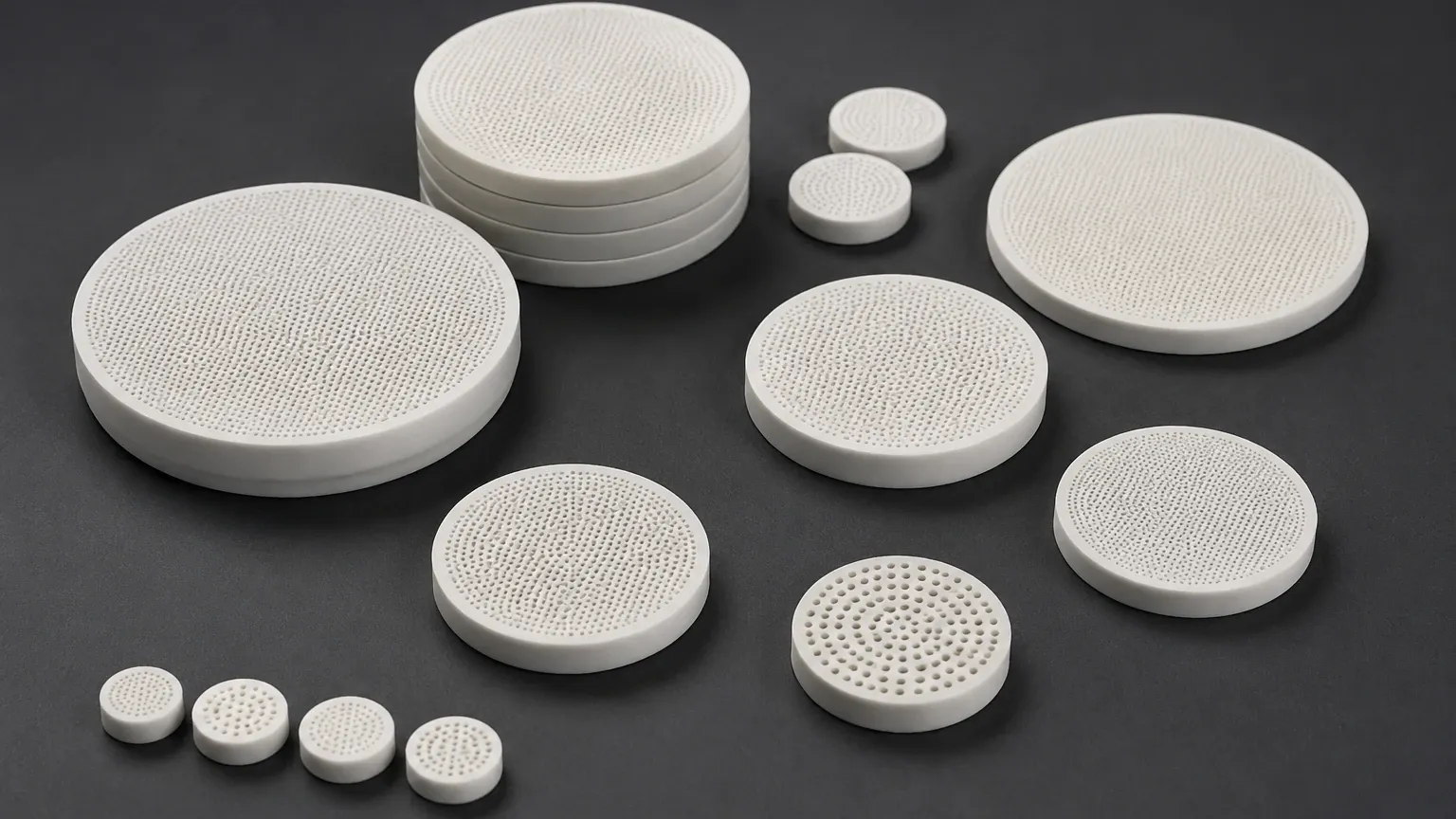
Alumina anodisc filter discs are manufactured through the electrochemical oxidation of aluminum, a process that creates a highly controlled, honeycomb-like pore structure. Unlike traditional polymer membranes or woven wire meshes, these discs are composed of a rigid, inorganic alumina matrix. The resulting membrane features a high density of non-branching, cylindrical pores that run perpendicular to the surface.
This precise geometry ensures a very narrow pore size distribution, which is critical for applications requiring absolute retention ratings. In industrial and laboratory settings, these discs are typically available in pore sizes ranging from 0.02 μm to 0.2 μm. The structural integrity of the alumina allows for a high degree of porosity (often exceeding 50%), which facilitates high flow rates relative to the pore size, minimizing the pressure drop across the filter media.
Key Performance Characteristics of Anodic Aluminum Oxide (AAO)
When evaluating filter media for specialized processes, engineers must consider the chemical and thermal limitations of the material. Alumina anodisc filter discs offer several distinct advantages that differentiate them from organic membrane filters:
1. Chemical Compatibility
Alumina is inherently resistant to a wide range of organic solvents and many aggressive acids. This makes it an ideal choice for HPLC mobile phase filtration and the processing of aggressive chemicals that would degrade standard nylon or PES membranes. However, it is important to note that alumina is sensitive to strong bases, which can cause the dissolution of the membrane structure.
2. Thermal Stability
Unlike polymer-based filters, alumina can withstand significantly higher temperatures. This thermal stability is vital in applications involving hot gas filtration or processes that require high-temperature sterilization. The rigid nature of the ceramic matrix ensures that the pore structure remains stable even under thermal stress.
3. Low Protein Binding and Extractables
For pharmaceutical and biotechnological applications, the level of extractables and the tendency for protein binding are critical metrics. Alumina anodisc filter discs exhibit extremely low non-specific protein binding, ensuring that valuable biological samples are not lost during the filtration process. Additionally, being an inorganic material, they do not leach plasticizers or other organic contaminants into the filtrate.
Industrial Applications for Precision Filter Discs
The unique properties of alumina anodisc filter discs make them indispensable in specific high-precision sectors. While they are often used in laboratory scale-up, their principles apply to various industrial filtration components.
* Microscopy and Analytics: Due to their flat surface and transparent nature when wet, these discs are frequently used as substrates for Scanning Electron Microscopy (SEM) and optical microscopy. They allow for the direct capture and observation of particulates.
* Pharmaceutical Clarification: In the production of small-batch biologics, these discs provide sterile filtration of aqueous solutions without the risk of contaminating the product with organic leachables.
* Environmental Monitoring: For the analysis of air or water quality, the precise pore structure allows for the accurate capture of microorganisms and fine particulate matter for subsequent gravimetric or microscopic analysis.
* Battery and Material Science: They serve as templates for the synthesis of nanowires and nanotubes, leveraging the uniform cylindrical pores as a mold.
Comparing Alumina Discs with Stainless Steel Mesh Filters
In many industrial settings, the choice between ceramic-based alumina discs and stainless steel Filter Discs & Packs depends on the balance between precision and durability. At Kaifil, we often help engineers navigate these trade-offs to ensure the longevity of their filtration systems.
| Feature | Alumina Anodisc Discs | Stainless Steel Wire Mesh |
| :— | :— | :— |
| Pore Size Range | 0.02 μm to 0.2 μm (Absolute) | 1 μm to 500+ μm (Nominal/Absolute) |
| Mechanical Strength | Fragile, requires support | High, self-supporting in many designs |
| Cleanability | Limited; often single-use | Excellent; cleanable via ultrasonic or backwash |
| Customization | Standard sizes; limited geometry | Highly customizable shapes and layers |
| Flow Rate | High for sub-micron range | High for larger particulate loads |
For heavy-duty industrial applications, such as hydraulic systems or large-scale chemical processing, stainless steel filter discs are generally preferred due to their ability to withstand high pressure differentials and mechanical shocks. However, for the final stage of high-purity filtration where sub-micron precision is non-negotiable, alumina anodisc filter discs provide a level of accuracy that woven meshes cannot reach.
Engineering Considerations for Custom Filter Pack Integration
Integrating alumina anodisc filter discs into an industrial process requires careful consideration of the housing and support structure. Because alumina is a ceramic material, it is brittle and prone to cracking under uneven mechanical stress. Engineers must ensure that the filter holder provides uniform support across the entire surface of the disc.
Sealing and Gasket Selection
To prevent bypass, the seal between the disc and the housing must be airtight and liquid-tight. In many setups, a polypropylene or PTFE support ring is used to protect the edges of the disc. When designing custom filter packs, the choice of gasket material must match the chemical profile of the fluid being filtered to avoid degradation and subsequent leakage.
Pressure Differential Management
While the honeycomb structure allows for efficient flow, the maximum allowable pressure differential for an unsupported alumina disc is relatively low. In high-pressure systems, these discs are often used in conjunction with a stainless steel support mesh or a perforated metal plate. This hybrid approach combines the precision of the alumina membrane with the structural robustness of metallic components.
Selection Guide: Choosing the Right Filter Discs & Packs
When selecting a filtration solution, the following technical factors should be confirmed by the engineering team before procurement:
1. Required Retention Rating: Is the goal to remove bacteria (typically 0.2 μm) or to capture smaller viruses and nanoparticles (0.02 μm)?
2. Fluid Chemistry: Does the process involve strong bases or hydrofluoric acid? If so, alumina may not be suitable, and a specialized stainless steel or fluoropolymer solution may be required.
3. Flow Volume and Velocity: Determine if the surface area of a single disc is sufficient or if a multi-layered filter pack is necessary to handle the required throughput without exceeding the maximum pressure drop.
4. Operating Environment: Consider the potential for mechanical vibration or thermal cycling, which could impact the integrity of a ceramic disc.
At Kaifil, we specialize in manufacturing the metal housings and support structures that enable these precision media to function effectively in industrial environments. By providing high-quality stainless steel components, we ensure that the delicate filtration media are protected and utilized to their full potential.
Quality Control and Manufacturing Standards
The reliability of any filtration system is only as good as the quality control measures in place during manufacturing. For alumina anodisc filter discs, this involves rigorous testing of pore size uniformity and membrane thickness. In the broader category of Filter Discs & Packs, Kaifil adheres to strict manufacturing protocols to ensure that every component—whether a single-layer mesh disc or a complex multi-layered pack—meets the exact specifications required by the application.
Material traceability is a cornerstone of industrial filtration. Whether using 316L stainless steel for a hydraulic filter or sourcing high-purity alumina for a laboratory disc, knowing the origin and grade of the material is essential for compliance in industries like food and beverage or pharmaceuticals. Engineers should always request material certification and performance data sheets to verify that the filters will perform as expected under operational conditions.
Conclusion: Optimizing Your Filtration Strategy
Alumina anodisc filter discs offer a level of precision and chemical purity that is vital for specific niche applications in science and industry. However, their successful implementation depends on a holistic understanding of the filtration system, including the mechanical support and the chemical environment. By comparing these specialized ceramic discs with more robust alternatives like stainless steel wire mesh, technical teams can develop a filtration strategy that balances accuracy, durability, and cost-effectiveness.
For organizations looking to implement high-performance filtration solutions, partnering with an experienced manufacturer like Kaifil provides access to the technical expertise needed to design and produce custom components. Whether you require precision-engineered metal supports or complete Filter Discs & Packs, focusing on material science and engineering fundamentals ensures long-term operational success.
