


Airweave Copper Filter Packs
In the high-precision world of polymer extrusion, synthetic fiber production, and chemical processing, the efficiency of the filtration system directly dictates the quality of the final product. Among the various configurations used to purify molten resins and high-viscosity fluids, airweave copper filter packs represent a specialized category of filtration media designed for specific thermal and mechanical environments. These components are essential for removing contaminants such as gels, carbonized particles, and foreign debris that can cause fiber breakage or surface defects in extruded plastics.
Selecting the right Filter Discs & Packs requires a deep understanding of metallurgy, fluid dynamics, and the specific rheological properties of the medium being filtered. For engineers and procurement teams, the choice of airweave copper filter packs is often driven by the need for superior thermal conductivity, specific chemical compatibility, or the requirement for a soft-sealing interface within the filter housing.
The Engineering Logic Behind Copper in Industrial Filtration
While stainless steel is the most common material for industrial filtration due to its corrosion resistance and mechanical strength, copper and its alloys offer unique advantages in specialized B2B applications. Copper is characterized by its exceptional thermal conductivity, which is significantly higher than that of standard 304 or 316 stainless steel. In processes involving molten polymers, maintaining a uniform temperature across the filter surface is critical to preventing localized viscosity changes or polymer degradation.
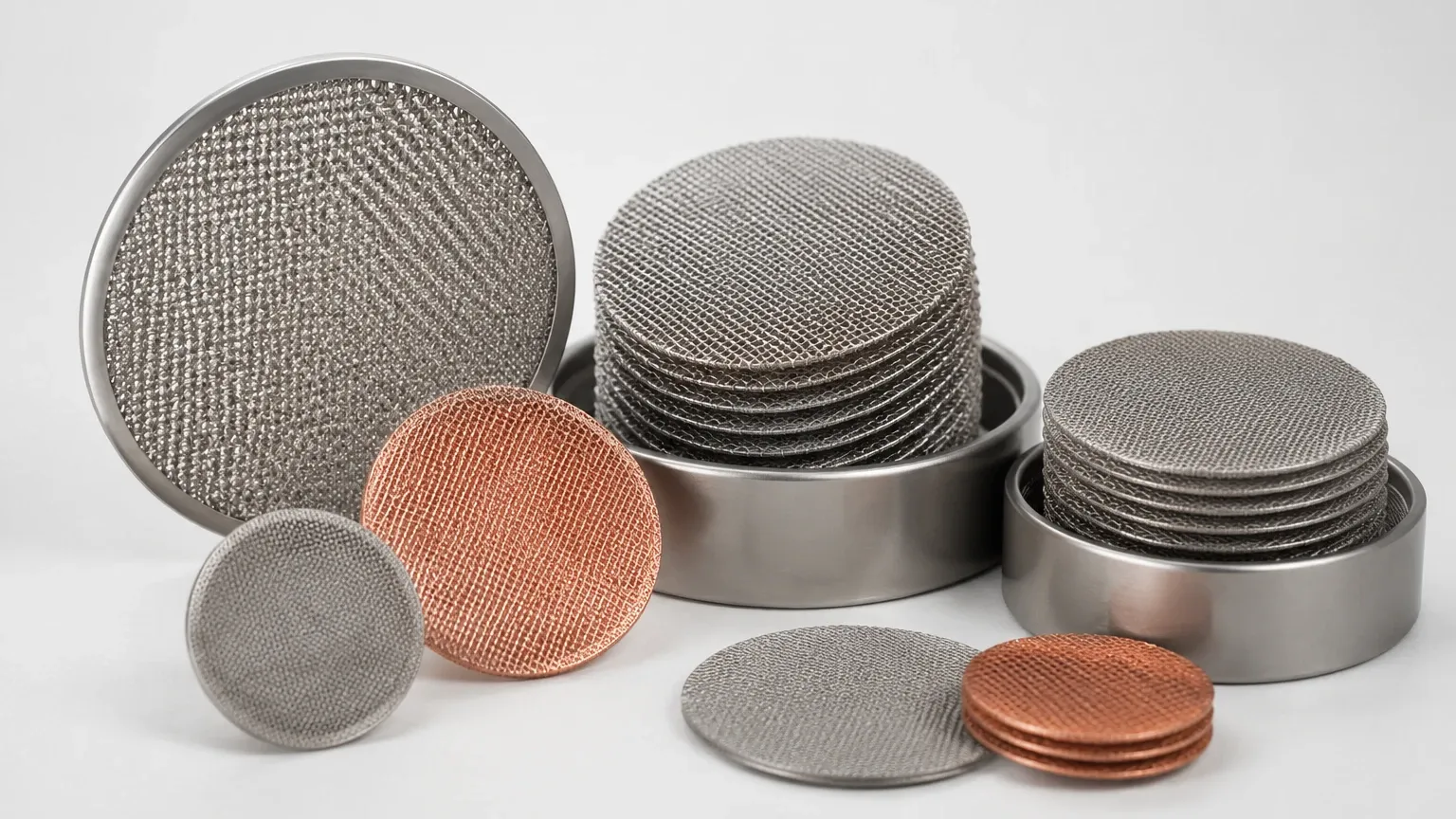
Airweave copper filter packs utilize high-purity copper wire mesh, often arranged in multi-layered configurations. The "airweave" designation typically refers to a specific weaving pattern or a layered assembly designed to maximize porosity and dirt-holding capacity while maintaining structural integrity. In these packs, copper serves a dual purpose: it acts as the primary filtration medium and, in many designs, the copper rim or outer layer functions as a gasket. Because copper is more ductile than stainless steel, it deforms slightly under the high clamping pressures of an extruder head, creating a metal-to-metal seal that prevents bypass—a common failure point in high-pressure filtration.
Structural Composition of Airweave Filter Packs
The performance of airweave copper filter packs is determined by their internal architecture. Unlike a single-layer screen, these packs are engineered as multi-stage depth filters. A typical configuration includes:
1. Support Layers: Coarse mesh layers on the upstream and downstream sides provide mechanical rigidity to the pack, preventing the finer filtration layers from collapsing under high differential pressure.
2. Filtration Layers: The core of the pack consists of one or more layers of fine copper wire mesh. The "airweave" structure optimizes the spacing between wires to ensure that the effective filtration area is maximized.
3. Drainage Layers: These layers facilitate the flow of the filtered medium toward the outlet, reducing the overall pressure drop across the assembly.
4. Binding or Rim: To ensure the layers remain aligned during installation and operation, the discs are often spot-welded or encased in a metal rim. While aluminum rims are common, copper-rimmed packs are preferred in applications where galvanic corrosion must be avoided or where a specific thermal expansion coefficient is required to match the machine's housing.
By varying the mesh count (the number of wires per linear inch) and the wire diameter, manufacturers like Kaifil can customize these packs to achieve specific micron ratings, ranging from coarse 200-micron filtration down to fine 20-micron nominal retention.
Key Performance Metrics for Engineers
When evaluating airweave copper filter packs for a production line, engineers must look beyond the basic dimensions. Several technical factors influence the total cost of ownership and the quality of the output.
Pressure Drop ($ΔP$)
The initial pressure drop is a function of the mesh's open area and the viscosity of the fluid. Copper's smooth surface finish can sometimes offer lower flow resistance compared to lower-grade alloys. However, as the filter captures contaminants, the $ΔP$ increases. An airweave structure is specifically designed to provide a higher "void volume," allowing the pack to hold more debris before reaching the maximum allowable pressure threshold, thereby extending the time between filter changes.
Thermal Stability and Heat Transfer
In synthetic fiber spinning (such as nylon or polyester), temperature fluctuations can lead to "denier variation"—inconsistencies in the thickness of the fiber. Copper's ability to rapidly conduct heat ensures that the molten polymer remains at a constant temperature as it passes through the pack. This is particularly important in large-diameter filter housings where the center of the flow might otherwise cool slower than the edges.
Chemical Compatibility
Copper is highly resistant to certain types of chemical attack but can be sensitive to others. It is widely used in applications involving neutral or slightly alkaline environments. However, it is essential to confirm that the specific polymer additives or cleaning solvents used in the process will not cause copper leaching or embrittlement. For processes involving acidic components, stainless steel alternatives within the Filter Discs & Packs category may be more appropriate.
Applications in Modern Manufacturing
Airweave copper filter packs are predominantly found in industries where polymer purity is non-negotiable. Their application spans several critical sectors:
* Synthetic Fiber Spinning: Used in the production of filaments for textiles, industrial yarns, and non-woven fabrics. The packs remove micro-gels that would otherwise cause "ends down" (breaks) during the high-speed drawing process.
* Plastic Film and Sheet Extrusion: In the production of optical-grade films or food packaging, copper filter packs ensure that there are no visible specks or "fish-eyes" in the final product.
* Resin Manufacturing: During the polymerization process, these packs are used to strain out unreacted catalysts or agglomerated polymer beads before the resin is pelletized for sale.
* Recycling Operations: While often requiring more robust stainless steel media for initial stages, copper packs are used in the final extrusion of high-quality recycled pellets to ensure the removal of fine metallic or organic residues.
Customization and Specification Requirements
Because industrial filtration systems vary significantly between machine brands (such as Barmag, Rieter, or Neumag), airweave copper filter packs are rarely off-the-shelf items. Procurement teams must provide detailed specifications to ensure compatibility and performance. Key data points include:
* Exact Diameter and Tolerance: Even a 0.5mm deviation can lead to improper seating and fluid bypass.
* Layer Sequence: Specifying the mesh count for each layer (e.g., 60/100/400/100/60) allows the manufacturer to replicate the exact depth-filtration profile required for the process.
* Micron Rating: Distinguishing between nominal (approximate) and absolute (99% retention) filtration requirements.
* Rim Material and Type: Choosing between spot-welding (for cost-efficiency) or full metal rimming (for maximum sealing and structural integrity).
Kaifil’s manufacturing process focuses on the precision of these variables. By utilizing advanced wire weaving and die-cutting technology, we ensure that every disc in a pack is burr-free and perfectly aligned, which is critical for maintaining the integrity of the airweave structure under pressure.
Maintenance, Replacement, and Total Cost Considerations
In a B2B environment, the cost of a filter pack is secondary to the cost of downtime. Airweave copper filter packs are typically considered consumable items, but their lifespan can be optimized through proper handling and system monitoring.
Monitoring Filter Life
Most modern extrusion lines utilize pressure transducers upstream and downstream of the filter pack. A common industry standard is to schedule a change-out when the differential pressure reaches a pre-determined limit (e.g., 100-150 bar, depending on the equipment). Operating beyond this limit risks "media migration," where the pressure forces captured contaminants through the mesh, or in extreme cases, causes the mesh to rupture.
Cleaning vs. Replacement
While copper mesh is durable, the decision to clean and reuse filter packs depends on the nature of the contaminant. For thermoplastic resins, thermal cleaning (vacuum pyrolysis) or ultrasonic cleaning can sometimes remove the polymer, allowing the copper mesh to be reused. However, the labor costs and the risk of damaging the fine wire structure often make replacement the more cost-effective and reliable option for high-stakes production environments.
Evaluating Suppliers
When sourcing Filter Discs & Packs, it is vital to partner with a manufacturer that understands the technical rigors of the application. Factors such as wire diameter consistency, the purity of the copper alloy, and the cleanliness of the manufacturing environment (to prevent pre-installation contamination) are essential. A reliable supplier should provide technical documentation and support for material selection to ensure the chosen pack matches the chemical and thermal demands of the specific industrial process.
Conclusion
Airweave copper filter packs remain a cornerstone of high-quality polymer and fiber production. Their unique combination of thermal conductivity, ductility for sealing, and the sophisticated depth-filtration provided by the airweave structure makes them indispensable for engineers seeking to optimize production yield and product purity. By understanding the mechanical and metallurgical properties of these components, technical teams can make informed decisions that enhance machine uptime and reduce the total cost of filtration. Whether for standard extrusion or complex synthetic fiber spinning, the precision of the filter pack is a direct reflection of the quality of the final output.
