


Arkal Filter Discs
In the landscape of industrial water treatment and fluid processing, disc filtration represents a critical middle ground between surface filtration and deep media filtration. Among the various technologies available, arkal filter discs have established a significant presence, particularly in applications requiring robust solids removal and efficient backwashing capabilities. For engineers and procurement specialists, understanding the nuances of these components—and how they relate to the broader category of Filter Discs & Packs—is essential for optimizing system performance and longevity.
This guide examines the technical specifications, operational principles, and selection criteria for disc filtration systems. By analyzing the engineering trade-offs between plastic disc systems and high-performance metal filtration solutions, technical professionals can make more informed decisions regarding their specific industrial requirements.
The Engineering Principle of Disc Filtration
Unlike traditional screen filters that rely on a single layer of mesh to capture particles, disc filtration utilizes a stack of compressed discs to create a three-dimensional filtration environment. Each disc is engineered with microscopic grooves on both sides; these grooves are typically oriented in opposite directions. When the discs are stacked and compressed, the intersections of these grooves create a complex series of chambers and channels.
This architecture facilitates depth filtration. As the fluid passes from the outer diameter of the stack to the inner core, larger particles are trapped on the outer surface, while smaller particles are captured within the depths of the grooved channels. This multi-point capture mechanism allows for a higher dirt-holding capacity compared to simple surface screens, reducing the frequency of cleaning cycles in high-loading environments.
In the context of arkal filter discs, the filtration grade is determined by the depth and width of the grooves. These are often color-coded to denote specific micron ratings, ranging from 20 microns to 400 microns. This standardization simplifies the replacement process but requires engineers to be precise about the particle size distribution of their process fluid to avoid premature clogging or bypass.
Material Science: Plastic vs. Stainless Steel Filter Discs
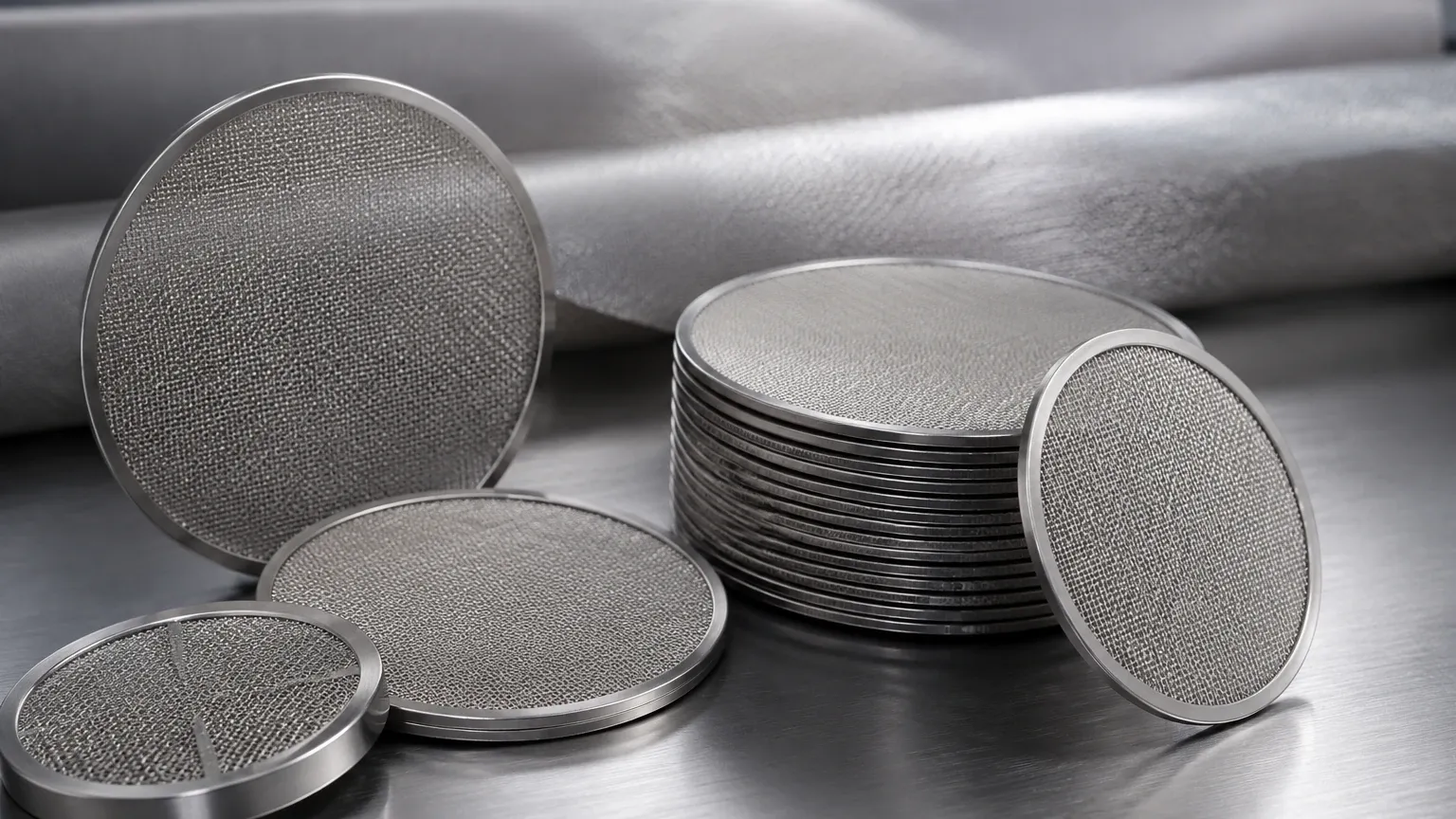
While arkal filter discs are predominantly manufactured from high-quality engineered plastics like polypropylene or reinforced polyamide, industrial applications often demand material properties that plastics cannot provide. This is where the distinction between standard plastic discs and custom metal Filter Discs & Packs becomes vital for system design.
Chemical and Thermal Resistance
Plastic discs are excellent for irrigation, general water treatment, and mildly corrosive environments. However, they have definitive thermal limits, typically losing structural integrity above 60°C to 70°C. In chemical processing or high-temperature steam applications, stainless steel (304, 316L, or 904L) is the necessary choice. Metal filter packs offer superior resistance to aggressive solvents and can operate in environments exceeding 300°C.
Pressure and Mechanical Strength
Under high-pressure differentials, plastic discs may undergo slight deformation, which can alter the effective micron rating of the grooves. Stainless steel wire mesh or sintered metal filter discs provide rigid structural stability. For hydraulic systems or high-pressure gas filtration, the mechanical strength of metal ensures that the filtration gap remains constant even under fluctuating flow rates.
Longevity and Reusability
While plastic discs are designed for durability, they are susceptible to abrasive wear over time, especially when handling sharp silicates or metallic fines. Stainless steel components are inherently more resistant to abrasion and can be subjected to aggressive ultrasonic cleaning or chemical stripping, extending their service life significantly beyond that of polymer-based alternatives.
Key Evaluation Criteria for Industrial Selection
When specifying arkal filter discs or alternative metal packs, engineers must evaluate several performance metrics to ensure the chosen solution aligns with the total system architecture.
1. Effective Filtration Area (EFA)
The EFA determines the flux rate (flow per unit area). Disc filters generally offer a higher EFA than equivalent-sized screen filters due to their stacked configuration. However, it is important to calculate the "clean" pressure drop versus the "terminal" pressure drop. A system that operates too close to its terminal pressure drop will require frequent backwashing, increasing water waste and energy consumption.
2. Backwash Efficiency
One of the primary advantages of the disc design is the ability to decompress the stack during the cleaning cycle. In automated systems, the pressure is released, and a reverse flow of water (often combined with air) spins the discs, centrifugalizing the trapped debris. Engineers must confirm that the available system pressure is sufficient to trigger this decompression; otherwise, the discs will remain compacted, leading to incomplete cleaning.
3. Micron Rating Accuracy
In critical pharmaceutical or food and beverage applications, the precision of the micron rating is paramount. While plastic grooves provide a nominal rating, stainless steel wire mesh discs can offer absolute ratings. Understanding the difference between nominal (percentage of particles captured) and absolute (all particles above a certain size captured) is essential for process safety.
Common Risks and Mitigation Strategies
Despite their robustness, disc filtration systems are not immune to operational challenges. Identifying these risks early in the procurement phase can prevent costly downtime.
* Biological Fouling: In water treatment, biofilm can grow within the grooves of the discs. Unlike sand filters, discs do not have the same level of internal friction to scrub away biofilm during backwash. If biological loads are high, engineers should consider discs treated with antimicrobial agents or integrate a pre-treatment chlorination step.
* Scaling: In hard water applications, calcium carbonate can precipitate within the grooves, effectively "cementing" the stack together. Once scaling occurs, standard backwashing is ineffective. A maintenance protocol involving acid soaking is often required to restore flow.
* Debris Shifting: Under high-flow surges, particles trapped in the outer grooves can be forced deeper into the stack. If the surges are frequent, this can lead to "breakthrough," where contaminants exit the filter and move downstream. Installing a pressure-sustaining valve can help stabilize the environment for the filter discs.
Customization and OEM Considerations
For many original equipment manufacturers (OEMs), standard off-the-shelf arkal filter discs may not meet the geometric or performance requirements of a proprietary system. Customization options for Filter Discs & Packs allow for tailored solutions that address specific engineering bottlenecks.
Customization often involves:
* Variable Stack Heights: Adjusting the number of discs to meet specific flow requirements within a restricted footprint.
* Hybrid Material Construction: Utilizing stainless steel support structures with specialized mesh or plastic disc inserts to balance cost and durability.
* Custom Gaskets and Seals: Ensuring compatibility with specialized process fluids that might degrade standard EPDM or NBR seals.
By working with a manufacturer capable of producing custom metal filtration components, engineers can bridge the gap between the general utility of plastic disc filters and the extreme-duty requirements of heavy industry.
Total Cost of Ownership (TCO) Analysis
The decision to implement arkal filter discs or stainless steel alternatives should be guided by a TCO analysis rather than initial capital expenditure (CAPEX) alone.
* Initial Cost: Plastic disc systems generally have a lower CAPEX compared to high-grade stainless steel filter packs.
* Operational Expense (OPEX): Consider the cost of backwash water. If a disc filter requires 5% of its total throughput for backwashing, that represents a significant ongoing cost. Metal filters with higher precision might allow for longer intervals between cleanings.
* Downtime: In 24/7 manufacturing environments, the time required to manually clean or replace a fouled filter stack can cost thousands of dollars in lost production. Investing in more durable stainless steel components often pays for itself through increased uptime.
* Replacement Cycles: Plastic discs eventually wear down or become brittle due to UV exposure or chemical fatigue. In contrast, a well-maintained stainless steel filter pack can last for decades.
Conclusion for Technical Procurement
Arkal filter discs remain a staple in the filtration industry due to their innovative approach to depth filtration and automated cleaning. They are particularly effective for removing organic matter and irregularly shaped particles that might easily blind a standard screen. However, they are one tool in a broader filtration toolkit.
When the application involves high temperatures, high pressures, or aggressive chemicals, the limitations of plastic become apparent. In these instances, transitioning to stainless steel Filter Discs & Packs provides the necessary safety margins and operational reliability.
Before finalizing a filtration specification, engineers should confirm the following with their supplier:
1. The exact particle size distribution of the influent.
2. The chemical compatibility of all wetted parts (discs, housings, and seals).
3. The minimum and maximum flow rates to ensure effective backwashing.
4. The anticipated replacement interval based on the abrasive nature of the solids.
By carefully weighing these factors, industrial professionals can select a filtration solution that ensures process integrity while minimizing the long-term cost of maintenance and replacement.
