


Best 4 Cup Coffee Filter Packs
In the commercial food and beverage sector, the efficiency of small-batch brewing systems often hinges on the quality of the filtration components used. While the consumer market focuses on convenience, the B2B landscape—encompassing hospitality, office coffee services (OCS), and equipment manufacturing—demands precision, durability, and consistency. When evaluating the best 4 cup coffee filter packs for industrial or commercial applications, engineers and procurement specialists must look beyond simple paper alternatives and consider the technical specifications of the filter media, the structural integrity of the disc, and the long-term operational costs.
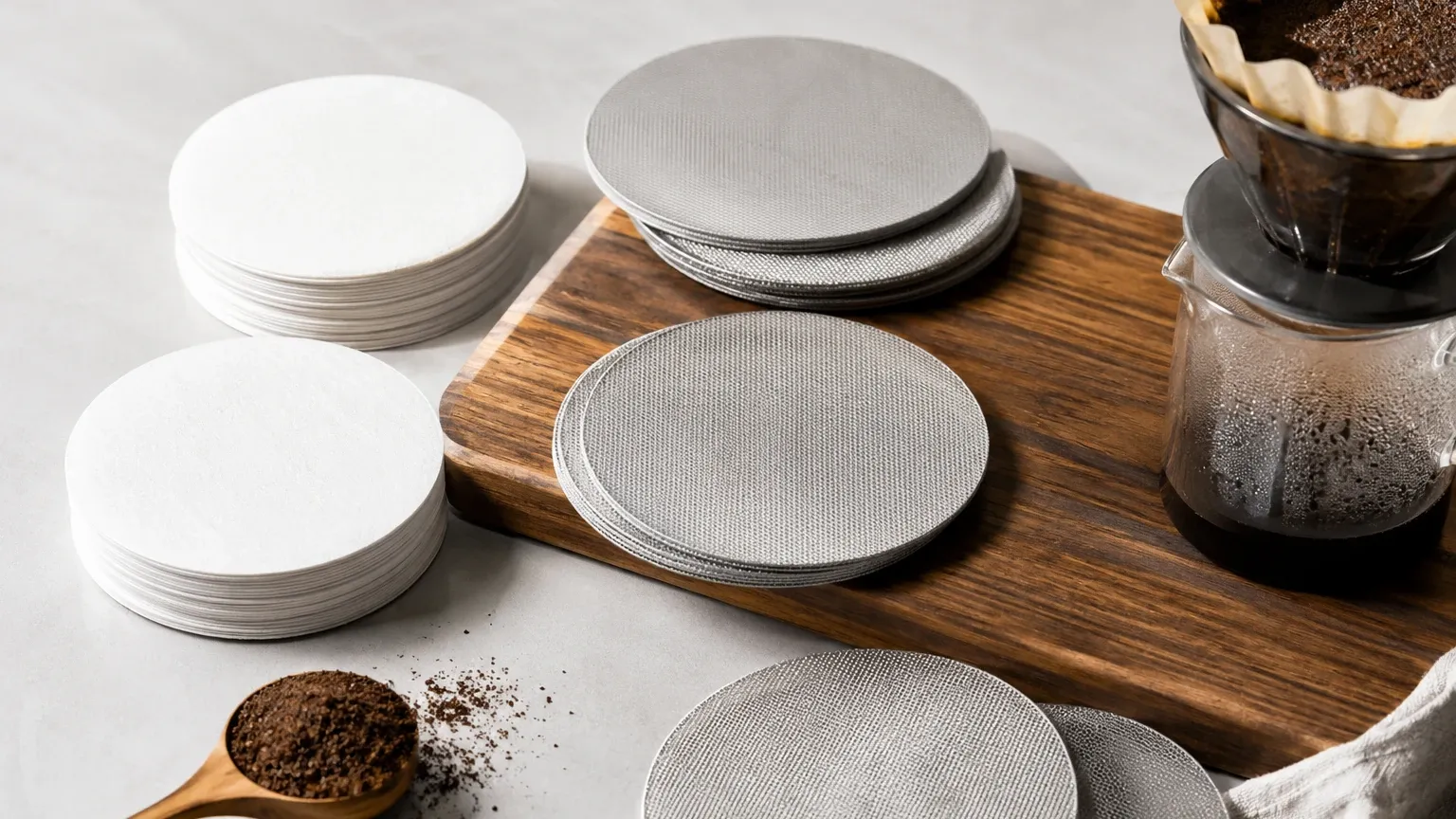
Industrial-grade filtration solutions, such as those involving stainless steel Filter Discs & Packs, provide a level of performance that traditional disposable media cannot match. This guide explores the engineering considerations, material science, and selection criteria for high-performance filtration in 4-cup brewing systems.
The Engineering Behind Commercial Coffee Filtration
At its core, coffee filtration is a process of solid-liquid separation. In a 4-cup brewing system, the goal is to allow the passage of water and essential oils while retaining coffee grounds and specific fine particulates. The "best" filter pack is defined by its ability to maintain a consistent flow rate and pressure drop throughout the brewing cycle.
For B2B applications, especially in the design of commercial brewing equipment, the filter is a critical component of the hydraulic circuit. If the filter pack has inconsistent pore distribution, it leads to "channeling," where water takes the path of least resistance. This results in uneven extraction and a substandard end product. Precision-engineered wire mesh discs ensure that the aperture size remains uniform across the entire surface area, providing a predictable resistance that is essential for automated brewing profiles.
Material Selection: Why Stainless Steel Outperforms Paper
While paper filter packs are common in domestic settings, commercial environments often benefit from the transition to permanent or semi-permanent metal filtration. The choice of material significantly impacts the flavor profile (due to the retention or passage of oils) and the mechanical reliability of the machine.
1. Durability and Heat Resistance
Stainless steel (typically Grade 304 or 316L) is the preferred material for industrial filter discs. Unlike paper, which can tear under the pressure of high-volume pumps or degrade when exposed to prolonged heat, stainless steel maintains its structural integrity. This is particularly important in 4-cup systems integrated into vending machines or high-traffic office environments where the filter is subjected to hundreds of cycles daily.
2. Filtration Precision
Paper filters are often inconsistent in their micron ratings. In contrast, stainless steel wire mesh can be manufactured to exact specifications. For coffee extraction, a micron rating between 60 and 100 is typically ideal. This allows for the passage of aromatic oils that contribute to the "body" of the coffee while effectively blocking sediment.
3. Chemical Stability
Stainless steel is non-reactive. In the food and beverage industry, ensuring that the filter media does not impart any metallic taste or chemical residue is paramount. 316L stainless steel, in particular, offers superior corrosion resistance against the acidic nature of coffee and the caustic chemicals often used in automated cleaning cycles.
Key Evaluation Criteria for Filter Discs & Packs
When sourcing the best 4 cup coffee filter packs for commercial use, technical buyers should evaluate the following parameters to ensure the component meets the rigorous demands of the application:
Mesh Weave and Pore Size
The type of weave—whether plain, twill, or Dutch weave—determines the mechanical strength and the filtration accuracy. For coffee applications, a plain weave or a fine Dutch weave is often used to balance flow capacity with particle retention. Engineers must confirm the "absolute" vs. "nominal" micron rating to understand exactly what size of particulates will be captured.
Structural Reinforcement
In many commercial 4-cup systems, the filter disc is part of a multi-layered pack. These packs may include a fine filtration layer sandwiched between coarser support meshes. This "pack" design prevents the fine mesh from deforming under pressure and extends the service life of the component. Spot welding or rim binding (using a metal U-clip or heat-sealed polymer) ensures the edges are secure and prevents bypass.
Flow Rate and Pressure Drop
The "open area" percentage of the mesh directly correlates to the flow rate. A filter with a low open area will require higher pump pressure, which can increase wear on the brewing system's mechanical parts. The best 4 cup coffee filter packs are designed to provide the lowest possible pressure drop while maintaining the required filtration efficiency.
Customization and OEM Integration
For manufacturers of brewing equipment, off-the-shelf solutions rarely suffice. Customization is often necessary to fit the specific geometry of the brew basket or the mechanical constraints of the machine.
Customization options typically include:
* Diameter and Shape: Precise laser-cutting ensures that filter discs fit perfectly into the housing, eliminating the risk of edge bypass.
* Layer Configuration: Depending on the desired extraction profile, a pack can be engineered with multiple layers of varying mesh counts.
* Edge Treatment: Options such as aluminum, stainless steel, or copper binding provide different levels of sealing and aesthetic finishes.
By working with a specialist manufacturer like Kaifil, OEMs can develop bespoke filtration components that are optimized for their specific 4-cup brewing technology.
Total Cost of Ownership (TCO) in B2B Environments
In a B2B context, the purchase price of a filter is only one part of the equation. The Total Cost of Ownership (TCO) includes maintenance, replacement frequency, and the impact on machine uptime.
While disposable paper packs have a low initial cost, the cumulative expense in a high-volume environment is significant. Furthermore, the environmental impact of disposing of thousands of paper filters and plastic-lined packs is increasingly a concern for corporate social responsibility (CSR) initiatives.
Reusable stainless steel Filter Discs & Packs offer a much lower TCO over the lifespan of the equipment. They are easily cleaned via backwashing or ultrasonic baths, reducing the need for constant inventory management and waste disposal. For service providers managing hundreds of coffee machines, the reliability of a metal filter means fewer service calls related to torn or clogged paper filters.
Common Risks and Quality Assurance
When selecting a supplier for commercial filtration components, it is vital to verify their quality control processes. Poorly manufactured filter discs can suffer from several issues:
* Wire Migration: In low-quality mesh, individual wires can break loose and enter the fluid stream, posing a significant safety risk in food applications.
* Inconsistent Pore Size: Variations in the weave can lead to "hot spots" where sediment passes through, ruining the consistency of the brew.
* Corrosion: If the grade of stainless steel is not as advertised (e.g., using 201 instead of 304), the filter will rust quickly when exposed to water and heat.
Technical professionals should request material certifications (MTRs) and ensure that the manufacturing process complies with food-grade standards (such as FDA or EU food contact regulations).
Conclusion: Making an Informed Decision
Selecting the best 4 cup coffee filter packs for industrial or commercial use requires a shift from consumer-level thinking to engineering-led analysis. By prioritizing material quality, precise micron ratings, and structural durability, businesses can optimize their brewing performance and reduce long-term operational costs.
Whether you are an equipment manufacturer looking for a reliable OEM partner or a facility manager seeking to upgrade your filtration systems, focusing on high-quality stainless steel components is the most effective way to ensure consistency and reliability. For those requiring technical assistance in defining mesh specifications or designing custom filter configurations, consulting with filtration experts is the recommended next step to ensure the chosen solution aligns with the specific demands of the application.
