


Disc Filter 2 Inch
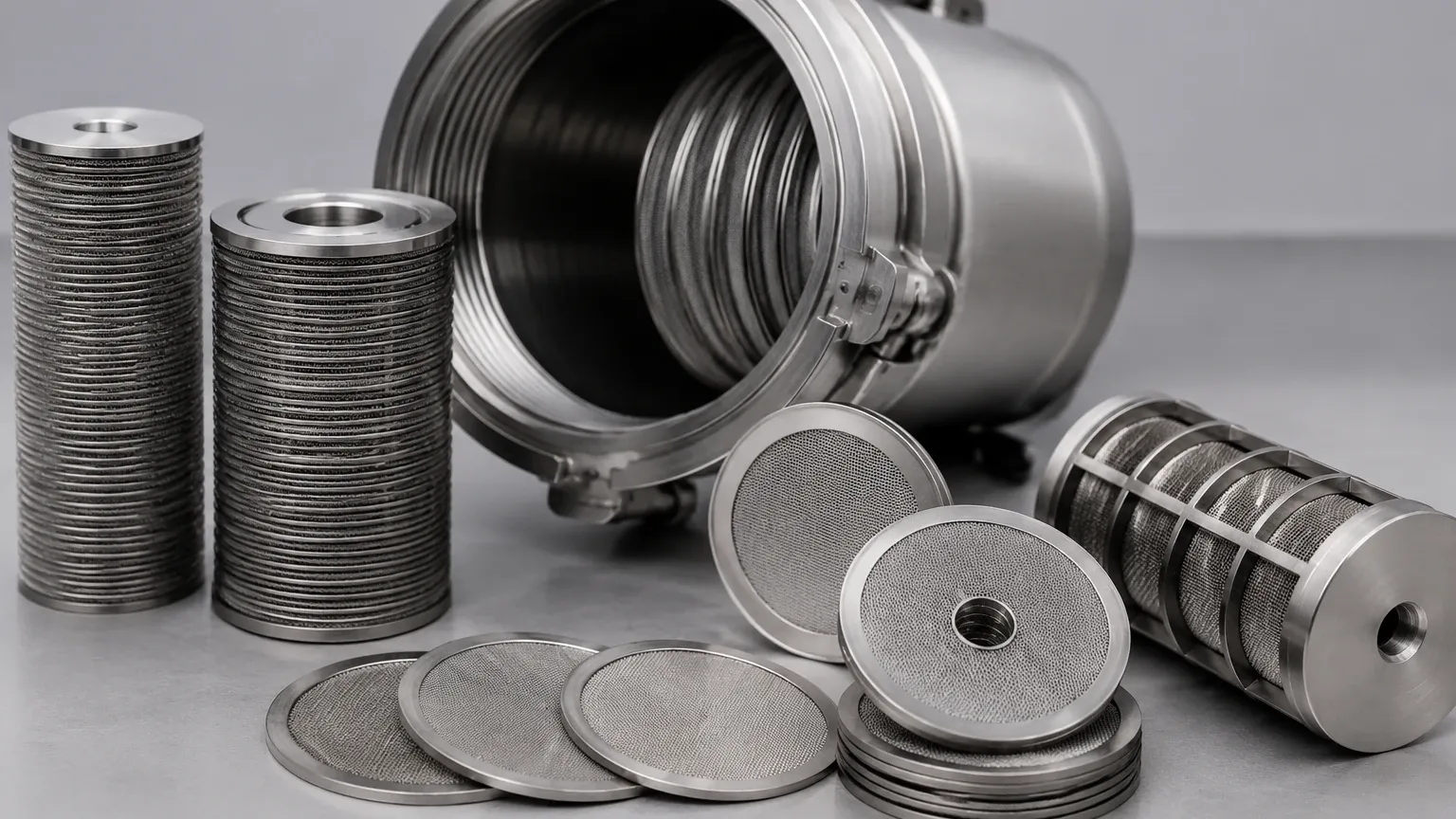
In the landscape of industrial filtration, precision and scalability are critical. The disc filter 2 inch (approximately 50.8 mm) represents one of the most versatile and widely utilized dimensions for modular filtration systems. These components serve as essential barriers against contaminants in fluid and gas streams across industries such as chemical processing, pharmaceuticals, food and beverage, and hydraulic systems. Selecting the correct Filter Discs & Packs involves a deep understanding of material science, mesh geometry, and the specific mechanical demands of the application environment.
The Role of 2-Inch Disc Filters in Industrial Systems
The 2-inch diameter is a standard specification for many pilot-scale operations, laboratory testing equipment, and small-to-medium industrial pipelines. Its surface area provides a balance between compact design and sufficient flow capacity, making it an ideal choice for point-of-use filtration or as a secondary safety filter in larger systems.
From an engineering perspective, the 2-inch disc is frequently integrated into housing units where space is at a premium. Whether used as a single-layer screen or a multi-layered pack, these discs are designed to withstand high pressure differentials while maintaining structural integrity. Manufacturers like Kaifil specialize in producing these components with high dimensional accuracy to ensure a bypass-free fit within the filter housing, which is a common failure point in poorly manufactured filtration components.
Material Engineering: Selecting the Right Grade of Stainless Steel
Material selection is the first step in ensuring the longevity and effectiveness of a disc filter 2 inch. Stainless steel is the industry standard due to its corrosion resistance, thermal stability, and mechanical strength. However, the specific grade must be matched to the chemical environment of the process.
* Stainless Steel 304: This is the most common grade used for general industrial applications. It offers excellent resistance to atmospheric corrosion and is suitable for most water treatment and food-grade applications where high acidity or chloride levels are not present.
* Stainless Steel 316: Containing molybdenum, Grade 316 provides superior resistance to chlorides and marine environments. It is the preferred choice for chemical processing where mild acids are handled.
* Stainless Steel 316L: The "L" stands for low carbon, which makes this grade highly resistant to sensitization during welding. For 2-inch discs used in pharmaceutical or high-purity chemical environments, 316L is often specified to prevent intergranular corrosion and ensure the highest levels of product purity.
In addition to these, specialized alloys like Monel or Hastelloy may be used for extremely aggressive chemical environments, though stainless steel remains the primary material for the majority of B2B filtration needs.
Filtration Media and Weave Patterns
The performance of a disc filter 2 inch is largely determined by the weave pattern of the wire mesh. Engineers must select a weave that balances filtration fineness with permeability and mechanical strength.
1. Plain Weave: The simplest and most common weave, where each warp wire crosses over and under each shute wire. It provides high flow rates and is easy to clean, typically used for coarse filtration (above 50 microns).
2. Twill Weave: Each shute wire passes over and under two warp wires. This allows for a heavier wire diameter for a given mesh count, increasing the strength and durability of the disc.
3. Dutch Weave (Plain and Twill): These weaves use different wire diameters for the warp and shute. This results in a much denser mesh with smaller triangular openings, allowing for high-pressure filtration and very fine micron ratings (down to 1-5 microns).
When specifying a disc filter 2 inch, the micron rating—the size of the particles the mesh is intended to trap—must be clearly defined as either "nominal" (60-70% efficiency) or "absolute" (99.9% efficiency) to meet the process requirements.
Structural Design: Single-Layer Discs vs. Multi-Layer Packs
Depending on the complexity of the filtration task, a 2-inch disc may be configured as a single layer or as part of a multi-layer assembly known as a filter pack.
* Single-Layer Discs: These are cost-effective and suitable for applications with low particulate loads or where frequent cleaning and reuse are required. They are often used as strainers or support screens.
* Multi-Layer Filter Packs: These consist of several layers of wire mesh, often with varying micron ratings. A typical configuration includes a fine filtration layer sandwiched between coarser support and drainage layers. This design increases the dirt-holding capacity and protects the delicate fine mesh from mechanical damage under high pressure. These layers are usually spot-welded together or bound with a metal rim to maintain alignment.
Engineering Calculations: Flow Velocity and Pressure Differential
For engineers, the two most critical performance metrics for a disc filter 2 inch are the initial pressure drop ($ΔP$) and the maximum allowable pressure differential.
The pressure drop is a function of the fluid's viscosity, the flow velocity, and the open area of the mesh. A 2-inch disc has a total surface area of approximately 3.14 square inches. If the flow rate is too high for this area, the velocity through the mesh pores will increase, leading to a rapid rise in pressure drop and potential deformation of the mesh.
When designing a system, it is advisable to calculate the "clean" pressure drop and ensure it does not exceed 10-15% of the total system pressure. Furthermore, the "terminal" pressure drop—the point at which the filter must be cleaned or replaced—should be established to prevent mechanical failure or media migration into the downstream process.
Edging and Sealing Methods for 2-Inch Filters
A common challenge in using small-diameter discs like the disc filter 2 inch is ensuring a perfect seal within the housing. If fluid can bypass the edges of the disc, the filtration efficiency drops to zero. To prevent this, various edging (or rimming) techniques are employed:
* Aluminum or Stainless Steel Rims: A metal U-shaped channel is compressed around the circumference of the disc or pack. This provides a rigid sealing surface and prevents the edges of the wire mesh from fraying.
* Spot Welding: For multi-layer packs, spot welding at multiple points around the perimeter keeps the layers synchronized without adding significant thickness to the edge.
* Unbound Edges: In some precision-machined housings, a raw-edge disc can be used if the tolerances are tight enough to provide a mechanical seal, though this is less common in high-pressure applications.
Application Scenarios in Chemical and Pharmaceutical Processing
In the chemical industry, 2-inch discs are frequently used in the filtration of polymers and resins. The high temperatures and viscosities involved require the use of stainless steel filter packs that can withstand the extrusion pressures without collapsing.
In pharmaceutical manufacturing, these discs are often used in chromatography columns or as vent filters for small tanks. Here, the focus is on cleanliness and material certification. The ability to ultrasonically clean and sterilize stainless steel discs makes them superior to disposable plastic alternatives, reducing the total cost of ownership and environmental impact.
Maintenance Protocols and Cleaning Efficiency
One of the primary advantages of stainless steel Filter Discs & Packs is their cleanability. Unlike synthetic media, metal mesh can be restored to near-original performance through several methods:
1. Ultrasonic Cleaning: High-frequency sound waves create cavitation bubbles that dislodge fine particles trapped deep within the weave. This is the most effective method for Dutch weave discs.
2. Backwashing: Reversing the flow of the fluid can dislodge surface cakes, though this is more effective for coarse, plain-weave meshes.
3. Chemical Cleaning: Soaking the discs in compatible solvents or acids can dissolve organic or mineral deposits that mechanical cleaning cannot reach.
Engineers should monitor the pressure drop across the 2-inch disc over time. If the "clean" pressure drop after maintenance begins to rise significantly, it indicates that the mesh is becoming permanently blinded, and the disc should be replaced to avoid process inefficiency.
Specifying Custom Requirements for OEM Production
When sourcing a disc filter 2 inch for a new project or as a replacement part, providing precise specifications to the manufacturer is vital. Engineers should confirm the following data points:
* Exact Diameter and Tolerance: Even a 0.5 mm deviation can cause bypass or installation issues.
* Layer Configuration: Specify the micron rating for each layer in a pack.
* Material Certification: Request Mill Test Reports (MTRs) to verify the grade of stainless steel.
* Operational Environment: Provide details on the operating temperature, maximum pressure, and the chemical composition of the fluid.
By working with a specialized manufacturer like Kaifil, purchasing teams can ensure that their filtration components are engineered to exact tolerances, providing reliable performance in the most demanding industrial environments. Proper selection of a disc filter 2 inch not only protects downstream equipment but also optimizes the overall efficiency of the production line.
