


Disc Filter 63mm
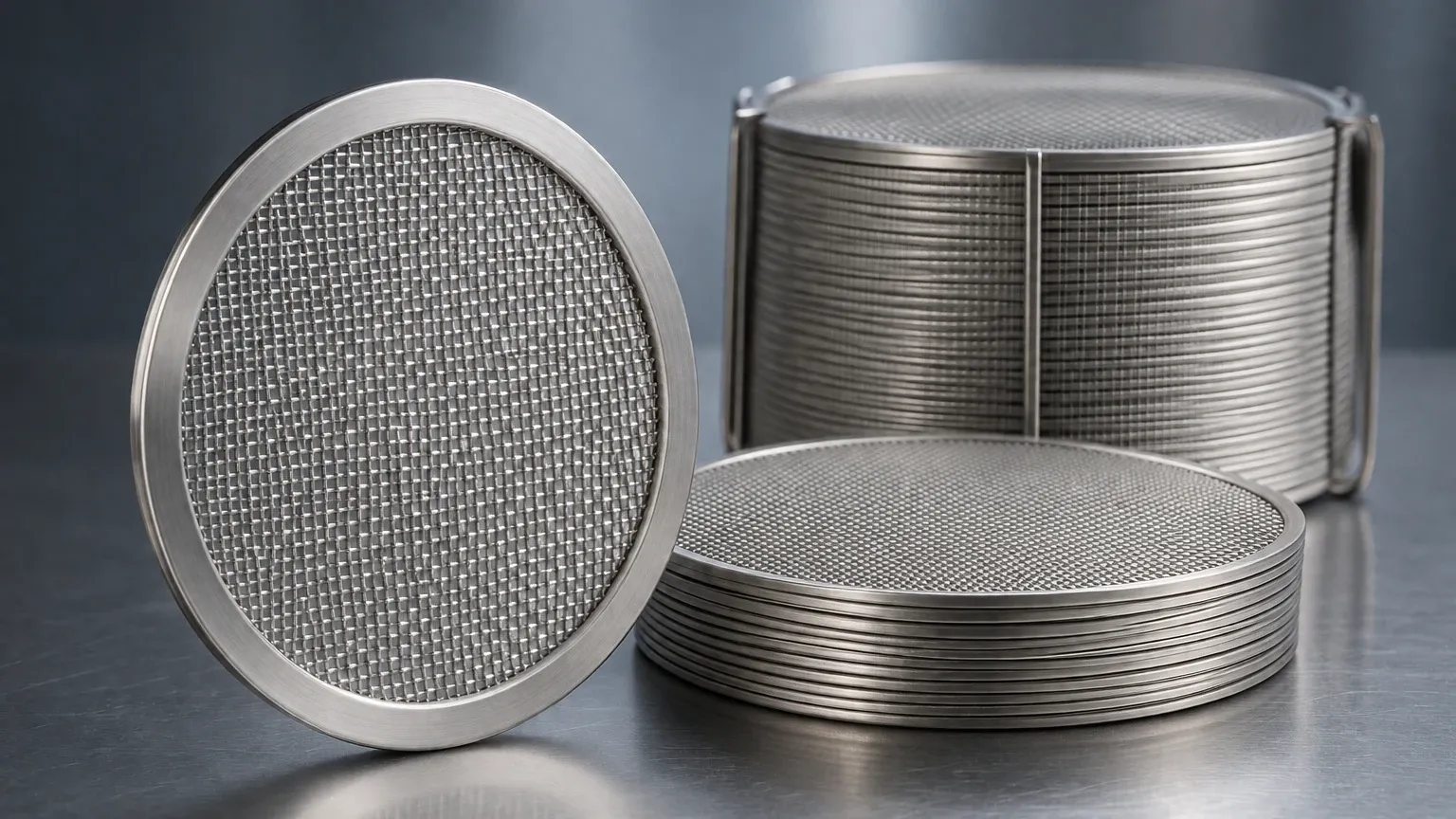
In industrial filtration, precision is measured not just in microns, but in the exact fit and structural integrity of the filtration component. The disc filter 63mm is a specific dimensional standard frequently utilized in polymer extrusion, hydraulic systems, and specialized chemical processing. Selecting the correct 63mm disc involves more than matching the diameter; it requires a deep understanding of wire mesh metallurgy, weave patterns, and the mechanical stresses the disc will encounter during its service life.
As a manufacturer specializing in high-performance stainless steel filtration, Kaifil provides engineered solutions that prioritize durability and filtration accuracy. This guide examines the technical specifications, material considerations, and engineering criteria essential for selecting and implementing 63mm filter discs in demanding industrial environments.
Understanding the Specifications of 63mm Disc Filters
The 63mm diameter is a common specification for circular filter elements used in various housings and machinery. While the diameter is fixed, the performance of the disc is determined by the configuration of the wire mesh. Engineers must evaluate the mesh count, wire diameter, and the resulting aperture size to ensure the filter meets the process requirements.
Weave Patterns and Their Impact
The choice of weave pattern significantly influences the flow characteristics and particle retention of a disc filter 63mm. Common patterns include:
* Plain Weave: The most straightforward construction where each warp wire crosses over and under each weft wire. This provides high flow rates and is ideal for basic straining and particle separation.
* Twill Weave: Each warp wire passes over and under two weft wires. This allows for a heavier wire diameter and higher mesh counts, providing greater strength and finer filtration than plain weave.
* Dutch Weave (Plain and Twill): These weaves use different diameters for warp and weft wires. Dutch weaves offer superior mechanical strength and are used for high-pressure applications where fine filtration (down to 5-10 microns) is required. The "tortuous path" created by the Dutch weave ensures high efficiency in capturing contaminants.
Micron Ratings and Effective Filtration Area (EFA)
For a 63mm disc, the Effective Filtration Area is relatively small (approximately 31.17 cm²). Therefore, maximizing the EFA through precise mesh selection is critical to prevent premature blinding and excessive pressure drop. Engineers must distinguish between nominal and absolute micron ratings. A nominal rating indicates the ability to retain a percentage of particles of a certain size, while an absolute rating guarantees the retention of all particles above that size under specific test conditions.
Material Selection and Chemical Compatibility
The longevity of a disc filter 63mm depends heavily on its resistance to the operating environment. Stainless steel is the industry standard due to its thermal stability and corrosion resistance, but the specific grade must be matched to the medium being filtered.
* Stainless Steel 304: Suitable for general industrial use where high-level corrosion resistance is not the primary concern. It offers good strength and is cost-effective for water treatment or basic oil filtration.
* Stainless Steel 316/316L: The preferred choice for chemical processing and pharmaceutical applications. The addition of molybdenum enhances resistance to pitting and crevice corrosion, particularly in chloride-rich environments. The "L" (Low Carbon) variant is essential if the filter disc will be subjected to welding during the assembly of multi-layer packs.
* Specialty Alloys: For extreme environments involving high temperatures or highly aggressive chemicals, alloys such as Monel, Inconel, or Hastelloy may be required. These materials maintain their structural integrity at temperatures where standard stainless steel might lose its mechanical properties.
Single-Layer vs. Multi-Layer Filter Discs & Packs
A single layer of wire mesh is often insufficient for high-pressure or high-viscosity applications. In these scenarios, engineers specify Filter Discs & Packs that combine multiple layers of mesh to achieve a balance of fine filtration and structural support.
The Architecture of a Filter Pack
A typical multi-layer 63mm pack consists of:
1. Filtration Layer: The middle layer(s) with the finest mesh, responsible for capturing the target particles.
2. Support Layers: Coarser mesh layers placed on either side of the filtration layer to prevent it from deforming under pressure.
3. Drainage Layers: These ensure that fluid can flow freely across the entire surface of the disc, even when the support layers are pressed against the housing.
By layering the mesh, the disc gains the rigidity necessary to withstand high differential pressures without compromising the micron rating. These packs are often spot-welded at the edges or encased in a rim to ensure they remain a single, cohesive unit during installation and operation.
Engineering Considerations: Flow Rate and Pressure Drop
One of the most critical calculations for an engineer is the initial pressure drop ($ΔP$) across the disc filter 63mm. A high initial pressure drop reduces the available service life of the filter, as the system will reach its terminal pressure limit more quickly.
Factors Influencing $ΔP$:
* Fluid Viscosity: Higher viscosity fluids (like molten polymers or heavy hydraulic oils) require coarser meshes or larger surface areas to maintain acceptable flow rates.
* Velocity: The speed at which the fluid passes through the 63mm disc. Lowering the face velocity generally improves filtration efficiency and extends the life of the disc.
* Contaminant Loading: The concentration and type of particles in the fluid. Hard, spherical particles behave differently than soft, deformable contaminants (like gels in polymer extrusion).
To optimize performance, Kaifil recommends conducting a thorough analysis of the fluid dynamics within the filter housing to ensure that the 63mm disc is not a bottleneck in the system.
Industrial Applications for 63mm Filtration Components
The versatility of the 63mm disc makes it a staple in several key industries. Its compact size allows it to be integrated into modular systems where space is limited but filtration quality cannot be sacrificed.
Polymer Extrusion and Plastic Recycling
In plastic extrusion, 63mm filter discs are used in screen changers to remove impurities from the melt. These impurities can include un-melted resin, degraded polymer, or foreign debris. Because the pressures in an extruder can exceed 3,000 PSI, these discs are almost always used as multi-layer packs with heavy-duty support mesh.
Hydraulic and Lubrication Systems
Precision hydraulic valves are extremely sensitive to particulate contamination. A disc filter 63mm is often placed at critical junctions or within manifold blocks to provide "last chance" protection for sensitive components. In these applications, the disc must be able to withstand rapid pressure fluctuations and maintain its integrity over thousands of cycles.
Pharmaceutical and Laboratory Equipment
In small-scale chemical synthesis or pharmaceutical R&D, 63mm discs are used in filtration funnels and pressurized vessels. The requirement here is often for high-purity materials (SS 316L) and precise micron ratings to ensure the consistency of the final product. The discs must be easy to clean or, in some cases, cost-effective enough to be used as single-use components in a sterile environment.
Quality Control and Customization Options
When sourcing a disc filter 63mm, technical professionals must ensure the manufacturer adheres to strict quality control standards. Variations in wire diameter or mesh tension can lead to inconsistent filtration performance.
Edge Treatments and Rims
To prevent bypass—where fluid flows around the edge of the filter rather than through it—63mm discs can be finished with various edge treatments:
* Raw Edges: Suitable for applications where the disc is tightly clamped between two flat surfaces.
* Spot Welded Edges: Used for multi-layer packs to keep the layers aligned.
* Aluminum or Stainless Steel Rims: A metal U-shaped channel is compressed around the circumference of the disc. This provides a superior seal and makes the disc easier to handle without damaging the delicate mesh.
Customization for OEM Requirements
Every industrial process has unique variables. Kaifil works with engineers to customize the disc filter 63mm beyond the standard specifications. This includes custom layer configurations, specific alloy requirements, and specialized cleaning processes (such as ultrasonic cleaning) to ensure the filters are free of manufacturing oils and debris before they reach the production line.
Maintenance and Lifecycle Management
The total cost of ownership for filtration components is determined by their durability and cleanability. Stainless steel 63mm discs are often reusable, provided they are cleaned using appropriate methods.
Cleaning Methods
1. Ultrasonic Cleaning: High-frequency sound waves create cavitation bubbles that dislodge particles from deep within the mesh. This is highly effective for Dutch weave patterns.
2. Chemical Cleaning: Using solvents or acids to dissolve accumulated contaminants. This requires careful selection of the cleaning agent to ensure it does not attack the stainless steel or the rim material.
3. Burn-off/Pyrolysis: Used primarily in the plastics industry to remove polymer residue. The disc is heated in a vacuum or controlled atmosphere to carbonize the polymer, which is then removed via ultrasonic cleaning.
When to Replace
Despite their durability, filter discs eventually reach the end of their service life. Signs that a disc filter 63mm needs replacement include:
* Permanent Pressure Drop: When the "clean" pressure drop after maintenance is significantly higher than the original specification.
* Mechanical Deformation: Any visible bowing or dimpling of the mesh, which suggests the structural limits of the disc were exceeded.
* Mesh Fraying: Broken wires at the edges or in the center of the disc can lead to media migration, where pieces of the filter itself contaminate the downstream fluid.
Conclusion
The disc filter 63mm is a critical component in maintaining the purity and efficiency of industrial processes. By focusing on the technical details—from weave patterns and material grades to the construction of multi-layer packs—engineers can ensure they select a filtration solution that provides the necessary protection for their equipment and products. Kaifil’s expertise in manufacturing custom stainless steel filtration solutions ensures that every 63mm disc meets the rigorous demands of modern industry, providing reliable performance where it matters most.
