


5 Micron Disk Filter
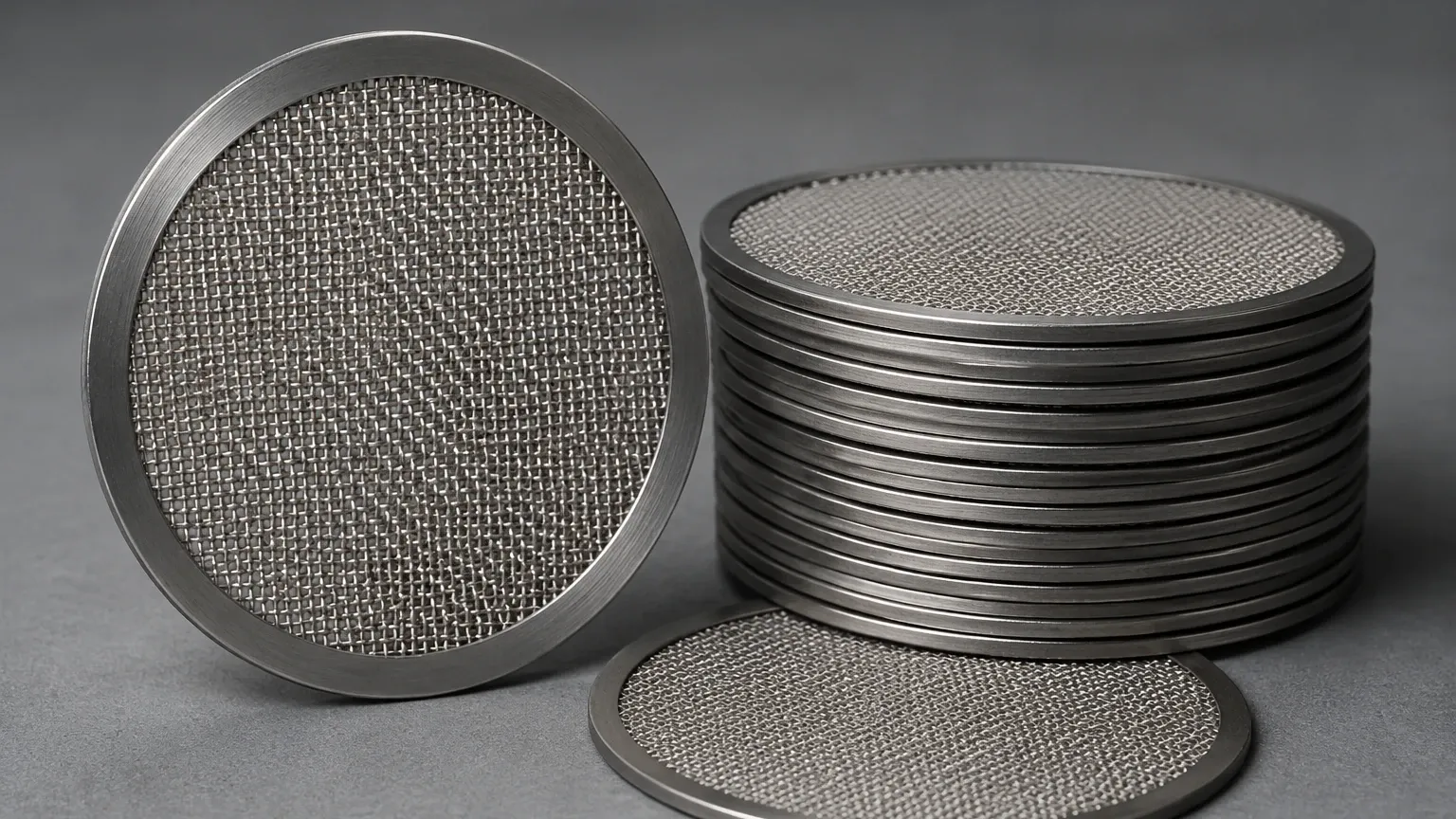
In industrial filtration, the 5 micron disk filter represents a critical threshold where precision meets high-volume processing. For engineers and procurement teams in the chemical, pharmaceutical, and hydraulic sectors, selecting a 5-micron rated component is often a strategic decision to protect sensitive downstream equipment or to ensure the purity of a final product. These filters, typically constructed from stainless steel wire mesh, provide a combination of mechanical strength and fine particle retention that polymer-based alternatives cannot match in demanding environments.
Achieving consistent performance at the 5-micron level requires an understanding of both the material science behind the filter media and the structural design of the filter assembly. Whether used as a single-layer screen or as part of complex Filter Discs & Packs, the 5 micron disk filter must balance filtration efficiency with flow resistance to optimize the total cost of ownership.
Understanding 5 Micron Filtration Efficiency
The term "5 micron" refers to the size of the particles the filter is designed to intercept. However, from an engineering perspective, it is essential to distinguish between nominal and absolute filtration ratings. A nominal 5 micron disk filter might capture a high percentage of particles at that size, but an absolute rating ensures that 99.9% of all particles 5 microns or larger are retained.
In stainless steel filtration, this precision is achieved through specialized weaving patterns. For a 5-micron requirement, standard plain weaves are often insufficient because the wire diameter required would be too fragile. Instead, manufacturers utilize Dutch Weave or Twilled Dutch Weave patterns. These weaves allow for a higher density of wires in a smaller area, creating a tortuous path for fluids and ensuring that even irregular particles are trapped within the mesh structure.
Material Engineering: Why Stainless Steel?
While various materials can achieve a 5-micron rating, stainless steel (specifically grades 304, 316, and 316L) is the industry standard for high-performance applications. The choice of material impacts the filter’s longevity, chemical compatibility, and ability to withstand extreme temperatures.
1. Corrosion Resistance: In chemical processing and water treatment, filters are often exposed to corrosive agents. 316L stainless steel, with its low carbon content and addition of molybdenum, provides superior resistance to pitting and crevice corrosion, which is vital for maintaining the integrity of the 5-micron pores over time.
2. Thermal Stability: Unlike plastic or paper filters, a stainless steel 5 micron disk filter can operate in environments exceeding 300°C (572°F) without losing structural integrity or altering its filtration accuracy.
3. Mechanical Strength: High-pressure hydraulic systems or polymer melt filtration require filters that do not deform under stress. The rigidity of stainless steel ensures that the pore sizes remain constant even under high differential pressure, preventing "media migration" or particle bypass.
Structural Configurations: Single Layer vs. Multi-Layer Packs
A 5 micron disk filter can be manufactured in several configurations depending on the application’s pressure and flow requirements. These configurations are generally categorized into single-layer discs and multi-layer filter packs.
Single-Layer Discs
Single-layer discs are often used in low-pressure applications or as secondary safety filters. They are cost-effective and easy to clean. However, because they lack secondary support, they are susceptible to damage if the pressure drops across the filter increase suddenly.
Multi-Layer Sintered Packs
For more demanding industrial roles, engineers often specify sintered multi-layer Filter Discs & Packs. In this configuration, the 5-micron control layer is sandwiched between coarser support layers. These layers are bonded together through a sintering process—applying heat and pressure without melting the metal—to create a single, robust filtration unit. The support layers protect the fine 5-micron mesh from mechanical stress and help distribute the fluid flow evenly across the entire surface area.
Key Applications for 5 Micron Disk Filters
The 5-micron rating is a "sweet spot" for many industrial processes where fine filtration is required without the extreme pressure requirements of sub-micron systems.
* Pharmaceutical Manufacturing: Used in the filtration of active pharmaceutical ingredients (APIs) and solvents where purity is non-negotiable. The cleanability of stainless steel allows these filters to meet stringent sanitary standards.
* Chemical and Petrochemical Processing: 5 micron disk filters are used to recover expensive catalysts from process streams or to remove fine contaminants from specialty chemicals.
* Hydraulic and Lubrication Systems: High-performance hydraulic valves have extremely tight tolerances. A 5-micron filter ensures that fine metallic wear particles or environmental dust do not cause component failure or system downtime.
* Food and Beverage: In the production of edible oils, beverages, and syrups, these filters provide clarification, removing fine particulates that could affect the clarity or shelf-life of the product.
Engineering Selection Criteria
When specifying a 5 micron disk filter for a new or existing system, technical professionals must evaluate several performance metrics beyond the micron rating itself.
Pressure Drop (ΔP)
The pressure drop is the difference in pressure between the upstream and downstream sides of the filter. A 5-micron mesh naturally creates more resistance than a 20 or 50-micron mesh. Engineers must ensure that the pump capacity is sufficient to overcome the initial clean pressure drop and the increasing pressure drop as the filter becomes loaded with contaminants.
Dirt Holding Capacity
This refers to the amount of contaminant a filter can retain before reaching its terminal pressure drop. Sintered multi-layer packs typically offer higher dirt-holding capacity than single-layer discs because the depth of the combined layers can trap more material throughout the structure.
Flow Rate Requirements
The total surface area of the disk filter determines the maximum flow rate. If the required flow rate is high, a single disk may not be sufficient, leading to the use of pleated designs or large-diameter filter packs to increase the available filtration area.
Customization and OEM Considerations
Industrial filtration is rarely a one-size-fits-all solution. Customization is often required to integrate a 5 micron disk filter into specific machinery or housings. Key customization options include:
* Edge Binding: To prevent fraying and ensure a leak-proof seal within the housing, filter discs can be finished with various edge treatments. Common options include aluminum, stainless steel, or copper rims. These rims provide a compression surface for gaskets or mechanical seals.
* Spot Welding: In multi-layer packs that are not sintered, spot welding is used to keep the layers aligned during installation and operation.
* Geometric Shapes: While circular discs are standard, manufacturers can produce oval, rectangular, or ring-shaped filters to fit specialized equipment.
Maintenance, Cleaning, and Longevity
One of the primary advantages of investing in stainless steel 5 micron disk filters is their ability to be cleaned and reused. This significantly reduces the long-term operational cost compared to disposable filters.
Cleaning Methods
* Ultrasonic Cleaning: This is the most effective method for 5-micron filters. High-frequency sound waves create cavitation bubbles that dislodge fine particles trapped deep within the wire mesh.
* Backwashing: For filters integrated into automated systems, a reverse flow of clean fluid can be used to flush out accumulated debris.
* Chemical Cleaning: Using compatible solvents or acids can dissolve organic or mineral deposits that mechanical cleaning cannot reach.
Replacement Cycles
While cleanable, metal filters do have a finite lifespan. Repeated cleaning cycles and mechanical stress will eventually lead to "work hardening" of the wire or microscopic tears in the mesh. Engineers should monitor the time it takes for the filter to reach its terminal pressure drop after each cleaning. A significant decrease in the time between cleanings usually indicates that the media is becoming permanently fouled or damaged, signaling the need for replacement.
Conclusion
The 5 micron disk filter is an essential component for achieving high-precision filtration in challenging industrial environments. By selecting the appropriate material grade, weave type, and structural configuration—such as multi-layer Filter Discs & Packs—engineers can ensure reliable performance and protect their critical infrastructure. When sourcing these components, confirming technical specifications such as absolute vs. nominal ratings, edge finishing requirements, and chemical compatibility is the necessary step to optimizing filtration efficiency and minimizing downtime.
