


Disc Filter Andritz
In the realm of large-scale industrial liquid-solid separation, the efficiency of a filtration system is often determined by the precision and durability of its internal components. Systems such as the disc filter andritz are widely recognized in industries ranging from pulp and paper to municipal wastewater treatment and mining for their ability to handle high-volume throughput with a relatively small footprint. However, for engineers and plant managers, the operational success of these machines depends heavily on the selection and maintenance of the specialized filter media used within them.
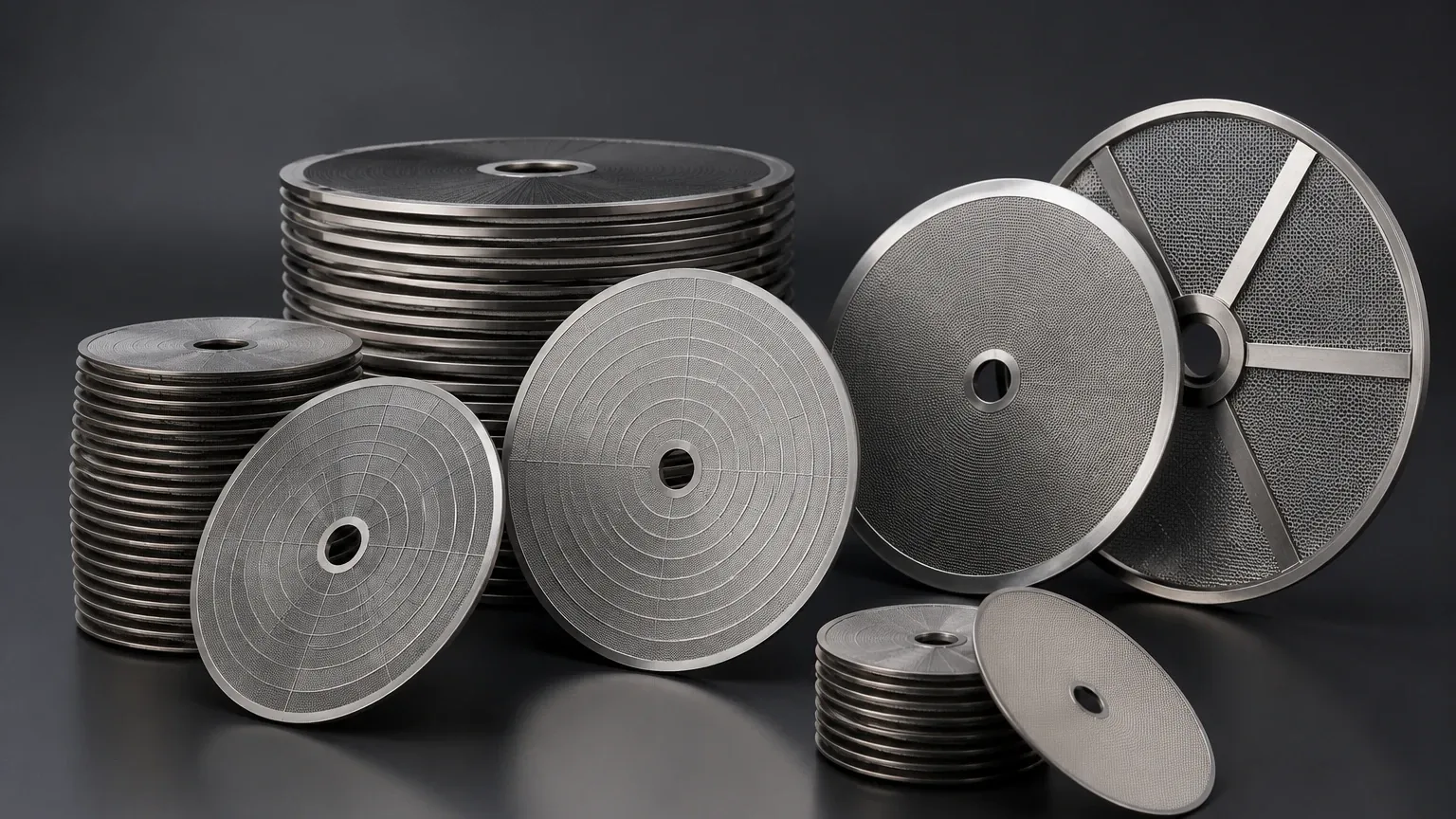
Industrial disc filters operate on a principle of rotating segments covered in filter media, which are partially submerged in a slurry. As the discs rotate, vacuum or pressure is applied to draw liquid through the media, leaving solids to form a "cake" on the surface. To maintain the integrity of this process, high-quality Filter Discs & Packs must be engineered to withstand mechanical stress, chemical exposure, and constant cleaning cycles. This article examines the technical considerations, material requirements, and performance factors essential for optimizing disc filtration systems.
The Mechanics of Large-Scale Disc Filtration
Large-scale disc filters, including the disc filter andritz series, are engineered for continuous operation. Unlike batch filters, these systems provide a steady output, which is critical for downstream processes. The filtration cycle typically involves three distinct phases: cake formation, dewatering (or drying), and cake discharge.
During cake formation, the submerged portion of the disc draws in the filtrate. The quality of the filter media at this stage determines the initial clarity of the filtrate and the uniformity of the solids buildup. If the pore size of the filter mesh is inconsistent, it can lead to "bleeding," where fine particles pass through the media, or premature blinding, where particles become trapped within the mesh structure itself.
In the dewatering phase, the disc emerges from the slurry. The vacuum continues to pull air through the cake, reducing its moisture content. Finally, the cake is removed via scrapers or air blowback. Each of these steps exerts physical force on the filter segments, necessitating a robust construction that prevents mesh displacement or tearing.
Engineering Requirements for Filter Discs & Packs
When sourcing components for industrial filters, engineers must look beyond simple dimensions. The performance of Filter Discs & Packs is defined by several technical parameters that directly impact the total cost of ownership (TCO) and system uptime.
Filtration Accuracy and Micron Ratings
Filtration accuracy is not just about the smallest particle a mesh can stop; it is about the distribution of those pores. In high-volume applications like those handled by a disc filter andritz, a narrow pore size distribution is essential to ensure predictable flow rates. Stainless steel wire mesh is often preferred over synthetic fabrics in demanding environments because it maintains its geometric stability under pressure, ensuring the micron rating remains constant throughout the service life of the component.
Mechanical Strength and Rigidity
Disc filters involve rotating components that are subject to centrifugal forces and the weight of the accumulated filter cake. Filter packs must be designed with sufficient structural integrity to resist sagging or deformation. This is often achieved through multi-layer designs where a fine filtration mesh is supported by one or more layers of coarser, heavier-duty mesh. Sintered mesh discs are particularly effective here, as the diffusion-bonding process fuses the layers into a single, rigid unit that cannot delaminate.
Material Selection and Chemical Compatibility
The environment inside an industrial disc filter is often harsh. Whether dealing with the acidic conditions of a mineral processing plant or the caustic cleaning chemicals used in food and beverage applications, material selection is the first line of defense against premature failure.
1. Stainless Steel 304/304L: The standard choice for general industrial applications. It offers good corrosion resistance and is cost-effective for water treatment and less aggressive chemical environments.
2. Stainless Steel 316L: Containing molybdenum, 316L provides superior resistance to chlorides and organic acids. This is the preferred material for many disc filter andritz applications in the pulp and paper industry, where bleaching agents and high temperatures are common.
3. Specialty Alloys: In extreme cases involving high salinity or highly acidic slurries, alloys such as 904L, Hastelloy, or Monel may be required. These materials ensure that the filter discs do not suffer from pitting or stress-corrosion cracking, which could lead to catastrophic system failure.
Optimizing Throughput and Filtration Accuracy
One of the primary goals in managing a disc filter andritz system is maximizing throughput without sacrificing filtrate quality. This balance is achieved by optimizing the "open area" of the filter media. The open area is the percentage of the mesh surface that is not obstructed by wires. A higher open area allows for higher flow rates and lower pressure drops (Delta P).
However, increasing the open area often requires using thinner wires, which can compromise the durability of the disc. Engineering a high-performance filter pack involves finding the "sweet spot" where the wire diameter provides enough strength to support the vacuum pressure while leaving enough space for the liquid to pass efficiently.
Furthermore, surface treatments can be applied to the mesh to improve cake release. A smooth, precision-woven surface ensures that the filter cake drops off cleanly during the discharge phase. If the cake sticks to the media, it results in "carryover," where the effective filtration area is reduced in the next cycle, leading to a progressive loss of capacity.
Maintenance and Replacement Strategies
Even the most robust Filter Discs & Packs will eventually require maintenance or replacement. In large-scale operations, unplanned downtime can cost thousands of dollars per hour. Therefore, a proactive replacement strategy is essential.
Common signs that filter discs need attention include:
* Increased Pressure Drop: A steady rise in the vacuum required to maintain flow usually indicates deep-seated blinding within the mesh.
* Decreased Filtrate Quality: If the turbidity of the filtrate increases, it may indicate a hole in the mesh or a failure in the sealing of the filter segment.
* Uneven Cake Formation: This often points to localized blinding or mechanical damage to specific disc segments.
For systems like the disc filter andritz, using standardized, high-quality replacement parts ensures that the equipment continues to operate within its original design specifications. It is often more cost-effective to replace segments on a scheduled basis than to run the equipment to the point of failure, which can damage the rotating shaft or the discharge mechanism.
Customization and OEM-Compatible Solutions
While original equipment manufacturers provide standard specifications, many industrial processes benefit from customized filtration solutions. Slurry characteristics—such as particle shape, viscosity, and temperature—can vary significantly between different sites, even when using the same model of disc filter andritz.
Customized Filter Discs & Packs allow engineers to adjust the mesh weave (e.g., plain, twilled, or dutch weave) to better suit their specific solids. For example, a Dutch weave might be used for high-pressure applications requiring fine filtration, while a plain square weave might be better for high-flow dewatering of coarse particles.
By working with a manufacturer capable of producing custom stainless steel filtration components, plant operators can often improve the efficiency of their existing equipment. This might involve upgrading the material grade to extend the replacement cycle or redesigning the support structure of the filter pack to handle higher vacuum levels.
Conclusion: Achieving Operational Excellence
The disc filter andritz remains a cornerstone of industrial separation technology due to its reliability and high capacity. However, the true performance of the system is unlocked only when it is equipped with high-quality, precision-engineered filter media.
When selecting Filter Discs & Packs, technical professionals must evaluate the specific demands of their application, from chemical compatibility and mechanical stress to the nuances of cake formation and discharge. By focusing on high-grade materials like stainless steel 316L and utilizing advanced manufacturing techniques such as sintering, industries can ensure their filtration processes remain efficient, cost-effective, and capable of meeting stringent environmental and production standards. Investing in superior filtration components is not merely a maintenance task; it is a strategic decision that directly impacts the productivity and longevity of the entire industrial plant.
