


Disc Filter Cartridge
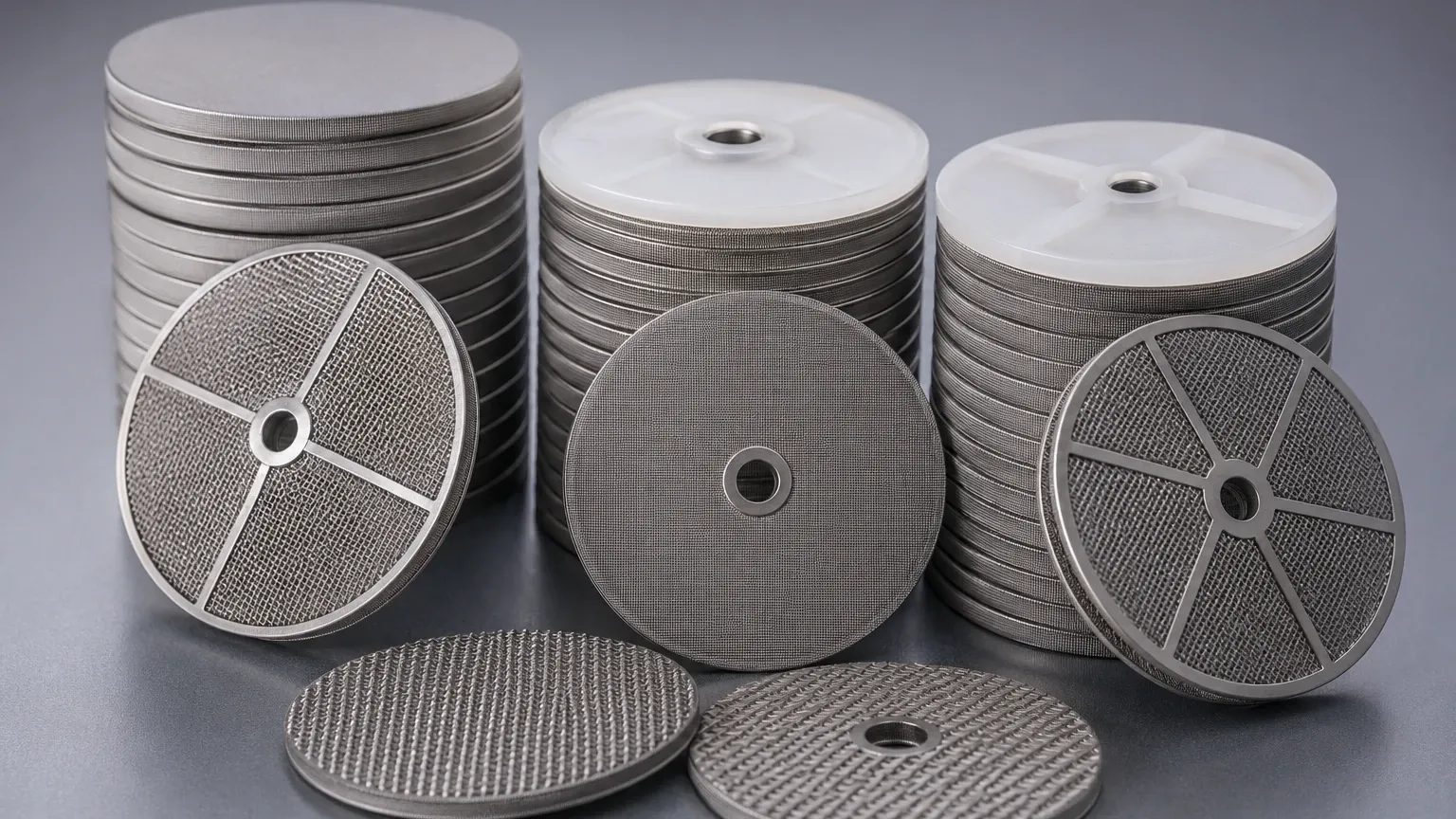
In industrial filtration, the disc filter cartridge represents a specialized engineering solution designed to maximize filtration surface area within a restricted housing volume. Unlike standard cylindrical pleated filters, these cartridges utilize a stacked configuration of individual filter discs or packs. This design is particularly prevalent in high-viscosity applications, polymer melt filtration, and processes where precise pressure drop management is critical. For engineers and procurement professionals, understanding the technical nuances of these components is essential for optimizing system uptime and ensuring product purity.
Selecting the right filtration media involves more than just identifying a micron rating. It requires a comprehensive analysis of fluid dynamics, chemical compatibility, and mechanical stresses. As a specialized manufacturer, Kaifil provides a range of Filter Discs & Packs that serve as the foundational elements for these complex cartridge assemblies, ensuring that each layer contributes to the overall efficiency and durability of the system.
Engineering Fundamentals: Materials and Construction
The performance of a disc filter cartridge is fundamentally dictated by its material composition and structural integrity. Most industrial-grade cartridges are constructed from stainless steel, specifically AISI 304 or 316L, due to their superior corrosion resistance and ability to withstand extreme temperatures.
Wire Mesh and Sintered Media
The primary filtration medium within each disc is typically a stainless steel wire mesh. This mesh can be configured in various weaves, such as plain, twilled, or Dutch weave, depending on the required filtration accuracy. For more demanding environments, sintered metal felt or multi-layer sintered wire mesh is used. Sintering involves bonding multiple layers of mesh through a heat-treatment process without the use of binders, resulting in a porous metal plate that offers high mechanical strength and stable pore geometry.
Assembly Techniques
A disc filter cartridge is assembled by stacking these discs onto a central perforated core. The edges of the discs are often sealed using specialized welding techniques—such as plasma or TIG welding—or mechanical binding with metal rims. This sealing is critical to prevent "bypass," where unfiltered fluid escapes through the edges of the discs rather than passing through the filtration media. The choice between a welded or bound edge often depends on the operating pressure and the potential for thermal expansion within the system.
Filtration Efficiency and Micron Ratings
When specifying a disc filter cartridge, engineers must distinguish between nominal and absolute micron ratings. A nominal rating refers to the ability of the filter to retain a major percentage (usually 60% to 90%) of particles of a specific size. In contrast, an absolute rating indicates that 99.9% or more of particles above the specified size will be captured.
Pore Size Distribution
In precision applications, such as pharmaceutical or fine chemical processing, the pore size distribution must be uniform. Sintered wire mesh discs provide a highly controlled pore structure, which minimizes the risk of media migration—a common failure mode where fragments of the filter material break off and contaminate the filtrate.
Pressure Drop (ΔP) Considerations
The stacked nature of the disc filter cartridge allows for a high flow rate with a relatively low initial pressure drop. However, as the filter cake builds up on the surface of the discs, the differential pressure will increase. Engineering teams must calculate the "clean pressure drop" versus the "terminal pressure drop" to determine the optimal timing for cleaning or replacement. Over-specifying the filtration fineness can lead to premature clogging and increased energy costs due to higher pumping requirements.
Comparing Disc Filter Cartridges with Traditional Cylindrical Elements
While cylindrical pleated filters are common, the disc filter cartridge offers distinct advantages in specific industrial contexts. The primary benefit is the ratio of surface area to total volume.
1. High-Viscosity Fluids: In applications like polymer filtration or heavy oil processing, high-viscosity fluids exert significant mechanical stress on filter media. The rigid structure of a disc stack is often better suited to withstand these forces than the pleats of a standard cartridge, which may collapse or deform under high pressure.
2. Depth vs. Surface Filtration: Disc stacks can be configured to act as either surface filters or depth filters. By varying the mesh density across the stack, engineers can create a gradient that captures larger particles in the outer layers and finer particles toward the core, effectively increasing the dirt-holding capacity.
3. Space Constraints: In systems where the filter housing must be kept small—such as in aerospace or compact hydraulic units—the ability to stack discs allows for a customized height that fits the available envelope while still meeting the required filtration area.
Application-Specific Selection and Chemical Compatibility
The versatility of the disc filter cartridge makes it suitable for a wide range of industries, provided the materials are compatible with the process fluid.
Chemical and Petrochemical Processing
In these environments, filters are exposed to aggressive solvents, acids, and bases. Stainless steel 316L is the standard choice due to its molybdenum content, which provides enhanced resistance to pitting and crevice corrosion. For highly corrosive environments, exotic alloys like Hastelloy or Monel may be used in the construction of the filter discs.
Food and Beverage Industry
Filtration in the food and beverage sector requires materials that are FDA-compliant and easy to sterilize. Stainless steel disc cartridges are ideal because they can withstand Clean-in-Place (CIP) procedures involving high-temperature steam and caustic cleaning agents. The absence of adhesives or resins in sintered metal discs ensures that no chemical leaching occurs during the process.
Hydraulic and Lubrication Systems
Precision hydraulic systems require the removal of fine metallic particles to prevent wear on valves and pumps. A disc filter cartridge used in these systems must be able to handle rapid pressure fluctuations and high flow velocities without losing its structural integrity.
Maintenance, Cleaning, and Lifecycle Management
One of the most significant advantages of stainless steel disc filter cartridges is that they are cleanable and reusable, which significantly reduces the total cost of ownership compared to disposable polymer filters.
Cleaning Methods
* Ultrasonic Cleaning: This is the most effective method for removing fine particles trapped within the mesh pores. High-frequency sound waves create cavitation bubbles that dislodge contaminants.
* Backwashing: In some automated systems, the flow of the fluid is periodically reversed to flush out the accumulated filter cake.
* Chemical Cleaning: Soaking the cartridge in specific solvents or acids can dissolve organic or inorganic deposits that cannot be removed mechanically.
Replacement Cycles
Despite being cleanable, every disc filter cartridge has a finite lifespan. Repeated cleaning cycles and mechanical stress will eventually lead to fatigue in the wire mesh or the welded joints. Engineers should monitor the time it takes for the cartridge to reach its terminal pressure drop after each cleaning. A significant decrease in the interval between cleanings usually indicates that the media is permanently fouled or the pore structure has been compromised, necessitating a replacement.
Total Cost of Ownership (TCO)
When evaluating the cost of a disc filter cartridge, the initial purchase price is only one component. A true TCO analysis must include:
* Consumable Costs: The price of the cartridge vs. the number of cleaning cycles it can withstand.
* Labor Costs: The time required for removal, cleaning, and re-installation.
* Energy Costs: The power required to maintain flow as the filter clogs.
* Product Loss: The amount of process fluid retained in the filter during changeovers.
By investing in high-quality Filter Discs & Packs, industrial facilities can often achieve a lower TCO through extended service life and more efficient cleaning cycles.
Procurement and Customization: What to Confirm with Manufacturers
Before finalizing a purchase order for a disc filter cartridge, technical professionals should confirm several key specifications with their manufacturer to ensure the product is fit for purpose.
1. Operating Parameters: Clearly define the maximum operating pressure, temperature, and expected differential pressure.
2. Fluid Characteristics: Provide details on the viscosity, pH level, and particle size distribution of the fluid to be filtered.
3. Dimensional Requirements: Confirm the inner and outer diameters of the discs, the total height of the stack, and the specific connection type (e.g., 222, 226, or threaded connections).
4. Certification Needs: If the application is in the pharmaceutical or food sector, ensure the manufacturer can provide material certificates (MTRs) and compliance documentation.
5. Customization Options: In many cases, a standard off-the-shelf cartridge will not suffice. Ask about the possibility of custom mesh layering or specialized edge treatments to solve specific filtration challenges.
By focusing on these technical details and working closely with a specialized manufacturer like Kaifil, engineering teams can ensure they select a disc filter cartridge that provides reliable, long-term performance in even the most demanding industrial environments.
