


Disc Filter for Water
In industrial water treatment and processing, the efficiency of a system often hinges on the reliability of its primary filtration components. A disc filter for water is a critical element used to remove suspended solids, particulate matter, and contaminants from liquid streams. Unlike domestic or low-pressure commercial filters, industrial-grade stainless steel filter discs are engineered to withstand high temperatures, corrosive chemistries, and significant mechanical stress. For engineers and procurement specialists, selecting the right filtration media involves a deep understanding of material properties, weave patterns, and structural configurations that ensure long-term operational stability.
Industrial filtration requires more than just a barrier; it requires a precision-engineered component that balances flow rate with particle retention. This article examines the technical nuances of stainless steel filter discs, their application in water treatment, and the engineering considerations necessary to optimize filtration performance.
Technical Principles of Disc Filtration for Water
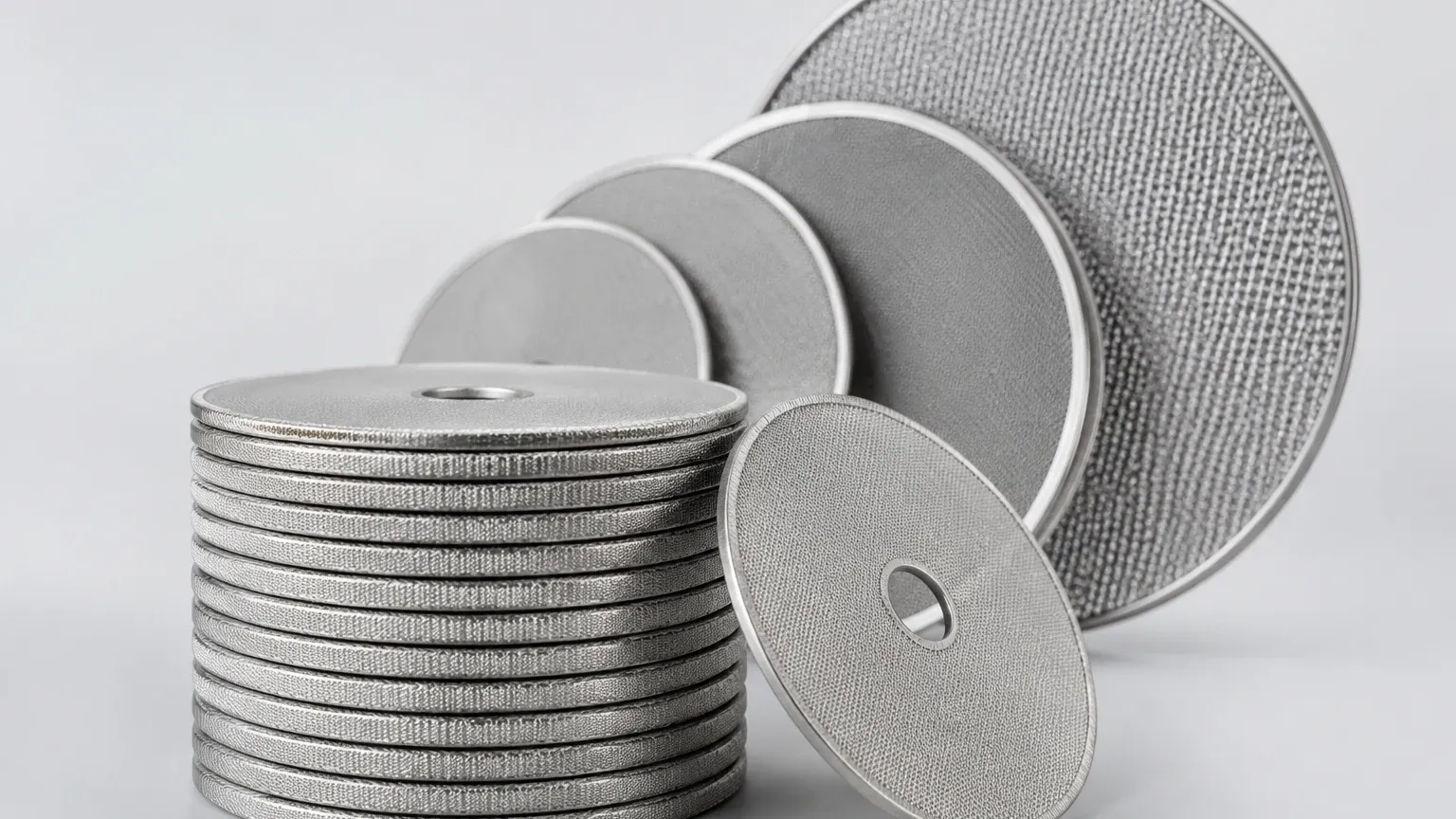
The core function of a disc filter for water is to provide a precise physical barrier against contaminants. In B2B industrial contexts, these filters are typically constructed from stainless steel wire mesh. The filtration mechanism can be categorized into surface filtration and depth filtration, depending on the configuration of the Filter Discs & Packs.
Surface Filtration vs. Depth Filtration
Single-layer filter discs primarily utilize surface filtration. Particles larger than the mesh aperture are trapped on the upstream side of the media. This is ideal for applications where the particle size distribution is relatively uniform and the contaminant load is low to moderate.
Conversely, multi-layer filter packs can provide a degree of depth filtration. By stacking layers of varying mesh counts—placing coarser mesh on the outside for structural support and finer mesh in the center for precision—the filter can trap a wider range of particle sizes without immediate blinding. This multi-layered approach increases the dirt-holding capacity and extends the service interval between cleanings.
Wire Mesh Weave Types
The performance of a disc filter for water is largely determined by the weave of the wire mesh. Common weaves used in industrial water filtration include:
- Plain Weave: The most straightforward pattern, offering high flow rates and easy cleaning, suitable for coarse to medium filtration.
- Twill Weave: Allows for a heavier wire diameter in a given mesh count, providing greater strength and durability.
- Dutch Weave (Plain and Twill): These weaves feature a higher density of wires in one direction, creating a tortuous path for the fluid. Dutch weaves provide superior filtration accuracy and mechanical strength, making them ideal for high-pressure water applications.
Engineering Specifications: Material Selection and Durability
Material selection is the most significant factor in determining the lifespan of a filter disc. In water treatment, the presence of dissolved oxygen, chlorides, and varying pH levels can lead to rapid degradation of inferior materials.
Stainless Steel Grades
- SS 304: The standard grade for many industrial water applications. It offers good corrosion resistance and is cost-effective for treated water or non-saline environments.
- SS 316L: Containing molybdenum, 316L provides superior resistance to pitting and crevice corrosion, particularly in the presence of chlorides. It is the preferred choice for brackish water, chemical processing, and pharmaceutical-grade water systems.
- Specialty Alloys: For highly aggressive environments, such as seawater desalination or concentrated brine handling, alloys like 904L or Duplex stainless steel may be required to prevent stress corrosion cracking.
Mechanical Integrity
Industrial water systems often experience pressure surges or "water hammer." A disc filter for water must possess the structural integrity to resist deformation under these conditions. The use of sintered mesh—where multiple layers of wire cloth are bonded together through heat and pressure without the use of adhesives—creates a robust, monolithic structure that maintains its pore geometry even under extreme differential pressure.
Performance Metrics: Micron Rating and Flow Dynamics
When specifying a disc filter for water, engineers must evaluate the relationship between filtration accuracy and hydraulic performance.
Micron Rating: Absolute vs. Nominal
- Nominal Rating: An approximate value indicating the ability of the filter to retain a majority of particles at a specific size (e.g., 90% of 20-micron particles). This is often sufficient for general pre-filtration.
- Absolute Rating: The diameter of the largest hard spherical particle that will pass through the filter under specified test conditions. For critical applications, such as protecting high-pressure pump seals or sensitive nozzles, an absolute rating is necessary to ensure system safety.
Pressure Drop (Delta P)
The initial pressure drop across a clean filter disc is a function of the mesh open area, fluid velocity, and viscosity. A high open area reduces energy consumption by allowing the pump to operate at lower pressures. However, as the filter accumulates debris, the pressure drop increases. Engineers must design systems with a maximum allowable Delta P in mind to prevent media rupture or bypass.
Customization of Filter Discs & Packs
Off-the-shelf solutions rarely meet the specific needs of complex industrial equipment. Customization allows for the integration of the filter disc into existing housings with minimal modification.
Layer Configuration and Spot Welding
Multiple layers of mesh can be combined to achieve specific performance goals. For example, a three-layer pack might consist of a fine filtration layer sandwiched between two coarse support layers. Spot welding ensures that these layers remain aligned during installation and operation, preventing fluid bypass at the edges.
Rimming and Edging
To facilitate a secure seal within a filter housing, discs are often finished with a metal rim. Common materials for rimming include aluminum, copper, or stainless steel. The rim serves two purposes: it prevents the wire mesh from fraying and provides a compression surface for gaskets or O-rings. Precision in the outer diameter (OD) and inner diameter (ID) is essential for leak-free performance.
For more information on available configurations, technical buyers can Review product options and application support to determine the best fit for their specific machinery.
Key Challenges in Water Filtration and Risk Mitigation
Operating a disc filter for water in an industrial environment presents several challenges that can lead to premature failure if not addressed during the design phase.
1. Scaling and Biofouling
In cooling water or untreated process water, mineral scale (calcium carbonate) and biological growth (algae or biofilm) can quickly coat the surface of the mesh. This reduces the effective filtration area and increases the frequency of maintenance. Choosing a smooth, high-quality stainless steel mesh can reduce the adhesion of these contaminants, making cleaning more effective.
2. Corrosion in Saline Environments
Chlorides are the primary enemy of stainless steel. Even 316L can succumb to pitting if the water is stagnant or if the chloride concentration is high. In such cases, ensuring high flow velocities to prevent stagnant zones and implementing regular flushing protocols are vital risk mitigation strategies.
3. Mechanical Fatigue
Repeated cleaning cycles, especially those involving high-pressure backwashing or ultrasonic cleaning, can cause metal fatigue in the fine wires of the mesh. Specifying a filter with adequate support layers or using sintered mesh can significantly extend the fatigue life of the component.
Selection Guide: What Engineers Should Confirm Before Purchase
To ensure the selected disc filter for water meets the application requirements, the following technical data should be confirmed with the manufacturer:
1. Fluid Characteristics: What is the pH, temperature, and chemical composition of the water? Are there any oxidizing agents like chlorine present?
2. Contaminant Profile: What is the nature of the solids (hard, abrasive, or soft/deformable)? What is the concentration of solids (ppm)?
3. Flow Requirements: What is the maximum and minimum flow rate? What is the maximum allowable initial pressure drop?
4. Housing Compatibility: What are the exact dimensions (diameter and thickness) required? Is a specific rim material needed for galvanic compatibility with the housing?
5. Cleaning Protocol: How will the filters be cleaned? Will they be discarded after one use, or are they intended for multiple regeneration cycles?
Maintenance and Total Cost of Ownership (TCO)
In a B2B procurement context, the initial purchase price of a disc filter for water is only one component of the total cost of ownership. Stainless steel filters offer a significant advantage over disposable polymer filters due to their cleanability and longevity.
Cleaning and Regeneration
Stainless steel discs can be cleaned using several methods:
- Backwashing: Reversing the flow to dislodge surface contaminants.
- Ultrasonic Cleaning: Using high-frequency sound waves in a solvent bath to remove fine particles trapped deep within the mesh.
- Chemical Cleaning: Using mild acids or bases to dissolve scale or organic matter, provided the chemicals are compatible with the stainless steel grade.
Long-Term Value
While the upfront cost of a precision-engineered stainless steel filter pack is higher than a plastic equivalent, the reduction in waste, lower replacement frequency, and protection of downstream equipment (such as RO membranes or high-pressure pumps) result in a much lower TCO over the life of the system. By minimizing downtime and ensuring consistent water quality, high-quality filter discs contribute directly to the operational efficiency of the plant.
Conclusion
The selection of a disc filter for water is a technical decision that impacts the reliability and efficiency of industrial water systems. By focusing on material science, weave precision, and structural customization, engineers can implement filtration solutions that withstand the rigors of demanding environments. Whether used for simple particulate removal or as a critical safeguard in a complex process, stainless steel filter discs and packs remain the industry standard for durable, high-performance liquid separation.
