


Dunkin Coffee Filter Packs
In the commercial beverage industry, the consistency and quality of a final product—whether it is a single cup of coffee or a large-scale industrial extract—depend heavily on the precision of the filtration system. While the term "dunkin coffee filter packs" is widely recognized in the consumer and retail sectors as a convenient solution for pre-measured brewing, the underlying engineering of these packs reflects a broader industrial need: the requirement for reliable, repeatable, and efficient separation of solids from liquids.
For engineers and procurement specialists in the food and beverage processing sector, the transition from disposable paper-based packs to high-performance, permanent filtration components is a critical consideration for optimizing production lines. This article explores the technical nuances of industrial filter packs, the role of stainless steel components in high-volume beverage extraction, and how specialized Filter Discs & Packs provide the durability and precision required for demanding commercial environments.
The Engineering Behind Commercial Coffee Filtration
Filtration in a commercial context is far more complex than simple gravity-fed brewing. In high-volume environments, such as those producing large batches of coffee for retail or industrial bottling, the filtration media must withstand significant hydraulic pressure, varying temperatures, and the abrasive nature of ground coffee particles.
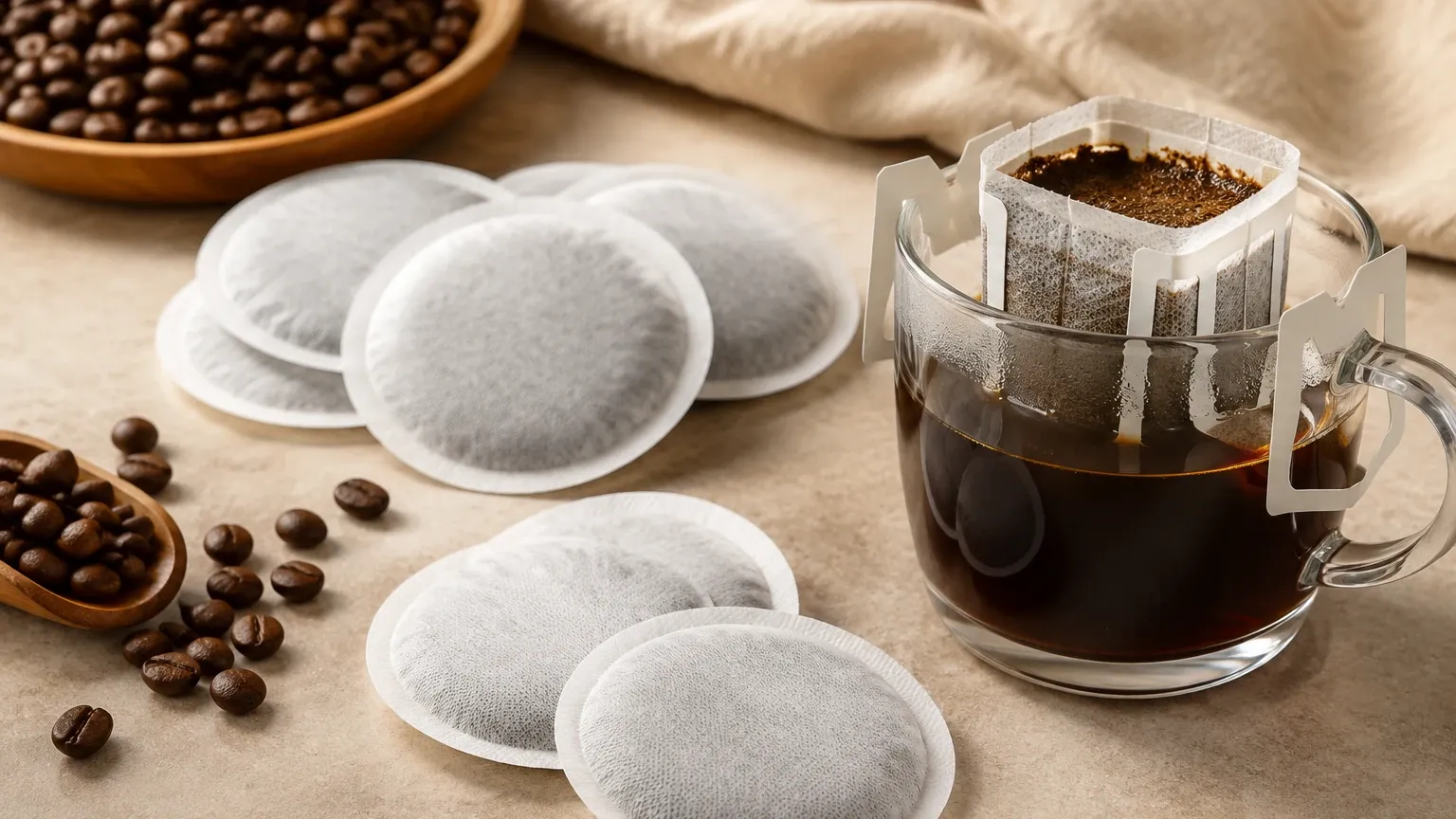
Traditional paper filter packs are designed for single-use convenience. However, in industrial extraction processes, the limitations of paper—such as tearing under pressure, inconsistent pore sizes, and the absorption of essential oils—can lead to variations in flavor profile and increased waste. Industrial-grade filter packs, often constructed from multi-layered stainless steel wire mesh, are engineered to solve these issues. These packs are designed to provide a specific micron rating that ensures the removal of "fines" (microscopic coffee particles) while allowing the desired oils and compounds to pass through, resulting in a cleaner, more consistent product.
Material Science: Why Stainless Steel Filter Discs & Packs Outperform Paper
When evaluating filtration solutions for large-scale beverage production, material selection is the most significant factor affecting long-term performance. While consumer-grade dunkin coffee filter packs utilize cellulose-based fibers, industrial applications demand materials that offer chemical stability and mechanical strength.
Corrosion Resistance and Food Safety
Stainless steel, particularly grades 304 and 316L, is the industry standard for food-grade filtration. These materials are highly resistant to the organic acids found in coffee and the caustic chemicals used in Clean-in-Place (CIP) cycles. Unlike paper or plastic, stainless steel does not leach chemicals or impart off-flavors into the beverage, ensuring that the sensory characteristics of the coffee remain untainted.
Thermal and Mechanical Stability
Industrial extraction often involves high temperatures and pressure differentials. Stainless steel filter discs maintain their structural integrity under these conditions, whereas paper filters may collapse or bypass. The rigidity of metal mesh allows for precise control over the flow rate, which is essential for maintaining the contact time between water and coffee grounds—a key variable in extraction efficiency.
Technical Specifications for High-Volume Beverage Extraction
To achieve the performance levels required in professional brewing and extraction equipment, engineers must look closely at the construction of the filter media. Industrial Filter Discs & Packs are rarely single-layer components; instead, they are sophisticated assemblies designed for specific mechanical tasks.
1. Mesh Weave Types: The choice of weave—such as plain weave, twill weave, or Dutch weave—determines the filtration accuracy and flow capacity. For coffee filtration, a Plain Dutch Weave is often preferred for its high strength and ability to capture fine particles without clogging prematurely.
2. Micron Ratings: Precision is paramount. In coffee processing, the filtration media must typically range from 50 to 150 microns. A filter that is too coarse will allow sediment into the final product, while one that is too fine will increase backpressure and slow down production.
3. Sintered Layers: For the most demanding applications, multiple layers of wire mesh are sintered (bonded under heat and pressure) to create a single, robust plate. This process eliminates the risk of wire migration and provides a stable pore structure that cannot be distorted by pressure spikes.
Customization and OEM Integration in Filter Design
One of the primary advantages of moving toward professional metal filtration components is the ability to customize the hardware to fit specific equipment. While a standard dunkin coffee filter packs size might work for a specific retail brewer, industrial extraction vessels come in a vast array of geometries.
Manufacturers like Kaifil specialize in producing custom-sized filter discs that can be integrated directly into OEM brewing systems. Customization options include:
* Edge Binding: To ensure a leak-proof seal within the filter housing, discs can be finished with specialized borders made of stainless steel, aluminum, or food-grade elastomers.
* Multi-Pack Configurations: Several layers of different mesh counts can be combined into a single pack to provide graduated filtration, where the top layers catch large particles and the bottom layers provide final polishing.
* Reinforcement: For large-diameter filters, internal support structures or perforated metal backings can be added to prevent sagging or deformation under the weight of wet coffee grounds.
Operational Efficiency: Maintenance and Total Cost of Ownership
From a procurement perspective, the shift from disposable packs to permanent stainless steel filtration is often driven by a Total Cost of Ownership (TCO) analysis. While the initial investment in a stainless steel filter pack is higher than a box of paper filters, the long-term savings are substantial.
Reduction in Consumable Costs
In high-volume facilities, the cost of purchasing, storing, and disposing of thousands of paper filter packs adds up. Stainless steel filters are reusable and can last for years with proper maintenance, effectively eliminating the recurring cost of consumables.
Streamlined Waste Management
Sustainability is an increasing priority for beverage brands. By eliminating the waste stream associated with single-use filter packs, companies can significantly reduce their environmental footprint. Metal filters are also fully recyclable at the end of their long service life.
Cleaning and Longevity
Maintaining industrial filter packs is straightforward. Most are compatible with ultrasonic cleaning, backwashing, or standard CIP protocols. Because stainless steel is non-porous, it does not harbor bacteria or mold as easily as paper or cloth, provided that regular cleaning schedules are followed. This ensures that the equipment remains hygienic and the flavor profile remains consistent batch after batch.
Selecting the Right Filter Pack for Industrial Applications
For engineers looking to optimize their filtration process, the selection of a filter pack should be based on empirical data and application-specific requirements. When moving beyond the convenience of retail-style dunkin coffee filter packs into the realm of industrial production, consider the following checklist:
* Flow Rate Requirements: Does the filter area provide sufficient throughput for your production targets?
* Pressure Drop: What is the maximum allowable pressure drop across the filter media before it impacts the pump or extraction quality?
* Particle Size Distribution: Have you analyzed the particle size of your coffee grounds to determine the optimal micron rating for the mesh?
* Housing Compatibility: Will the filter disc require custom edge binding or a specific thickness to ensure a bypass-free fit in your existing machinery?
By focusing on these technical parameters, processing facilities can achieve a level of precision and durability that disposable solutions simply cannot match. High-quality stainless steel Filter Discs & Packs represent a strategic upgrade for any commercial operation where beverage clarity and equipment uptime are critical.
In conclusion, while the concept of a "coffee filter pack" may begin with the simplicity of a pre-packaged consumer product, its industrial evolution is a testament to the importance of precision engineering. By utilizing advanced stainless steel wire mesh solutions, manufacturers can ensure that every batch of product meets the high standards of consistency and quality that global brands demand.
