


Filter Cigarette Pack
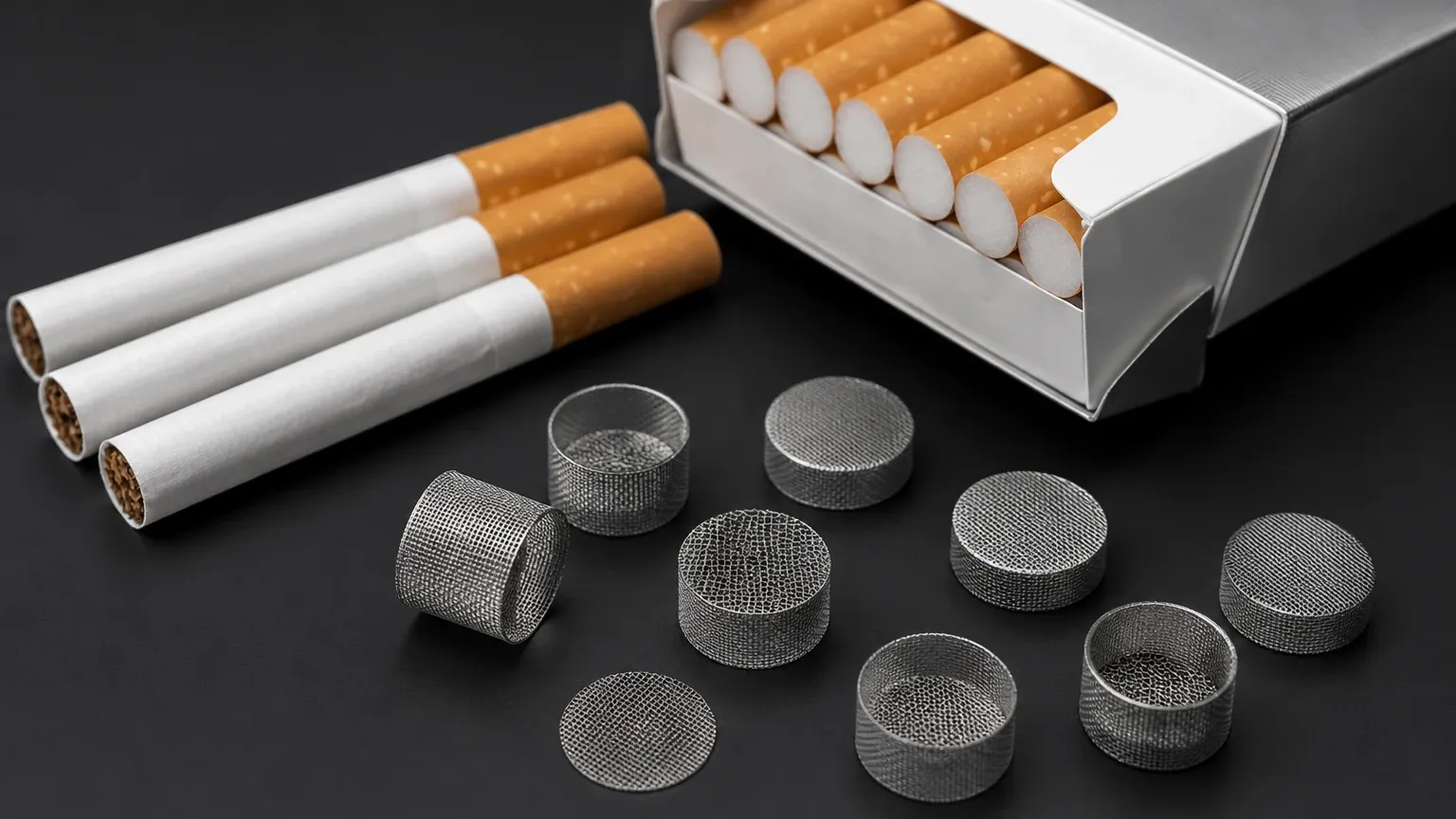
In the specialized field of industrial fiber production, particularly the manufacturing of cellulose acetate used for smoking products, the term "filter cigarette pack" refers to a critical component in the extrusion and melt filtration process. These are not consumer-facing packages but rather high-precision assemblies of stainless steel wire mesh designed to ensure the purity and consistency of the acetate tow. For engineers and procurement specialists in the chemical and textile sectors, selecting the right Filter Discs & Packs is essential for maintaining production uptime and product quality.
Industrial filtration in this context involves the removal of undissolved particles, gels, and contaminants from the polymer melt before it passes through the spinnerets. Any failure in this filtration stage can lead to clogged spinneret holes, fiber breakage, and significant downtime. This article explores the technical engineering behind these filter packs, their material specifications, and the selection criteria necessary for optimized industrial performance.
The Role of Filter Discs & Packs in Acetate Tow Production
The production of cigarette filters begins with the processing of cellulose acetate. This polymer is dissolved in a solvent (usually acetone) to create a thick "dope" or melt. This viscous fluid must be forced through microscopic holes in a spinneret to create the fine filaments that make up the filter tow.
Before the dope reaches the spinneret, it must pass through a multi-layer filter pack. The "filter cigarette pack" assembly serves several functions:
1. Contaminant Removal: It captures physical impurities and carbonized particles that may have formed during the heating or mixing stages.
2. Gel Breaking: High-pressure filtration helps break down polymer gels that haven't fully dissolved, ensuring a homogenous fiber.
3. Pressure Stabilization: The resistance provided by the filter pack helps stabilize the back-pressure in the extrusion line, which is vital for uniform fiber diameter.
4. Spinneret Protection: By acting as a final barrier, these packs prevent expensive spinneret heads from being damaged or blocked by debris.
Engineering Specifications for Industrial Filter Packs
When designing or sourcing a filter cigarette pack for industrial use, several technical specifications must be considered to balance filtration fineness with mechanical strength. Standard configurations often involve multiple layers of stainless steel wire mesh, each serving a specific purpose within the stack.
Material Selection
Stainless steel is the industry standard due to its resistance to the solvents used in acetate processing and its ability to withstand high temperatures and pressures.
* Grade 304: Suitable for standard applications with moderate corrosion risks.
* Grade 316/316L: Preferred for superior corrosion resistance, especially when dealing with acidic additives or high-moisture environments. 316L (low carbon) is often chosen for its excellent welding characteristics in rimmed packs.
Mesh Weave Types
The performance of the pack depends heavily on the weave of the wire cloth used:
* Plain Weave: Used primarily for support layers or coarse filtration.
* Dutch Weave (Plain and Twilled): These weaves offer a much higher density of wires, providing fine filtration ratings (down to 5-10 microns) while maintaining the strength to resist high differential pressures.
* Sintered Mesh: For the most demanding applications, multiple layers of mesh are vacuum-sintered together. This creates a monolithic structure that cannot migrate or delaminate under pressure, offering the highest level of reliability.
Design Configurations and Customization
No two extrusion lines are identical, and the "filter cigarette pack" must be tailored to the specific machinery and flow requirements of the facility. Customization generally focuses on three areas: geometry, layering, and edge treatment.
Geometry and Dimensions
Filter packs are manufactured in various shapes to fit specific filter changers or spinneret assemblies. Common shapes include:
* Circular Discs: The most common format for standard cylindrical filter housings.
* Annular (Ring) Discs: Used in specialized center-flow extrusion heads.
* Oval and Kidney Shapes: Often found in continuous belt-style filter changers.
Layer Sequencing
A typical high-performance pack is not a single mesh but a graduated stack. A common configuration might include:
1. Inflow Layer: A coarse mesh to capture large debris and distribute the flow.
2. Filtration Layer: One or more layers of fine Dutch weave mesh that determine the actual filtration rating.
3. Support Layer: A heavy-duty, high-count mesh that provides the structural integrity to prevent the fine filtration layers from deforming under the force of the polymer melt.
Edge Bonding and Rimming
To ensure that the individual layers stay aligned and to prevent bypass (where fluid leaks around the edges of the filter), the layers are often bonded. Methods include:
* Spot Welding: Points of contact are welded to keep the stack together during installation.
* Aluminum or Stainless Steel Rimming: The edges of the mesh stack are encased in a metal rim. This provides a superior seal against the housing and makes the packs easier to handle and replace without damaging the delicate mesh.
Operational Considerations: Pressure and Replacement
In a B2B manufacturing environment, the total cost of ownership (TCO) of a filter cigarette pack is determined by its service life and its impact on energy consumption. Engineers must monitor the differential pressure (ΔP) across the filter pack constantly.
As the filter captures contaminants, the ΔP increases. If the pressure becomes too high, it can lead to "media migration" or even a complete rupture of the mesh. High-quality stainless steel packs are designed to maintain structural integrity even at high pressure drops, allowing for longer run times between change-outs.
Cleaning and Reusability
Unlike disposable synthetic filters, stainless steel Filter Discs & Packs can often be cleaned and reused. Methods such as ultrasonic cleaning, chemical baths, or burn-off ovens (pyrolysis) can remove the accumulated acetate or polymer residues. However, it is critical to inspect the mesh after cleaning to ensure that the pore structure has not been compromised and that the wire integrity remains intact.
Common Risks in Filter Selection
Choosing an inadequate filter pack can lead to several industrial failures that affect the bottom line. Understanding these risks is part of the engineering evaluation process:
* Bypass: If the pack is not sized correctly or the rimming is poor, the polymer dope will take the path of least resistance around the filter, leading to contaminated end-products.
* Media Migration: In low-quality filters, individual wires can break off and enter the melt stream. These metal fragments can cause catastrophic damage to spinnerets and downstream equipment.
* Premature Clogging: If the filtration area is insufficient or the mesh count is poorly matched to the contaminant profile, the pack will clog too quickly, necessitating frequent and costly production halts.
Technical Evaluation for Procurement
Before finalizing a purchase for industrial filter packs, technical teams should confirm several key data points with the manufacturer:
1. Micron Rating: Is it an absolute or nominal rating? For cigarette filter production, absolute ratings are generally required to ensure consistency.
2. Pressure Rating: What is the maximum allowable differential pressure before the pack deforms?
3. Chemical Compatibility: Are the materials (including the rimming and welding flux) fully compatible with the solvents and additives used in the specific acetate dope formulation?
4. Flow Rate Capacity: Will the pack support the required throughput without causing excessive initial pressure drop?
Conclusion
The "filter cigarette pack" is a vital component in the complex chain of industrial fiber manufacturing. By utilizing high-quality stainless steel wire mesh and precision-engineered pack designs, manufacturers can ensure the production of high-quality acetate tow while minimizing equipment wear and operational downtime. Whether through standard disc configurations or custom-rimmed multi-layer packs, the focus must remain on filtration accuracy, mechanical durability, and chemical resistance. For engineers looking to optimize their extrusion lines, focusing on these technical details ensures that the filtration system supports both the quality of the final product and the efficiency of the manufacturing process.
