


Filter Disc Method
In industrial filtration, the filter disc method refers to the systematic application and evaluation of circular filtration media used to remove contaminants from liquid or gaseous streams. This method is foundational in sectors ranging from polymer extrusion and chemical processing to pharmaceutical manufacturing and hydraulic system maintenance. For engineers and procurement specialists, understanding the nuances of the filter disc method is essential for optimizing process efficiency, ensuring product purity, and extending the service life of downstream equipment.
At its core, the method involves selecting specific mesh geometries, material alloys, and structural configurations to meet precise micron ratings and flow requirements. Whether utilized in laboratory analysis to determine fluid cleanliness or integrated into high-pressure industrial machinery, the performance of Filter Discs & Packs is governed by the principles of fluid dynamics and material science.
Understanding the Filter Disc Method in Industrial Contexts
The term "filter disc method" often encompasses two distinct but related industrial practices. First, it refers to the mechanical process of surface filtration where a disc-shaped medium—typically made of stainless steel wire mesh—is placed perpendicular to the flow of a fluid to intercept particles. Second, it refers to a standardized testing procedure used in laboratories to quantify the level of particulate contamination in a fluid sample.
In process engineering, the filter disc method is prioritized for its ability to provide a high filtration area within a compact, often circular, housing. This is particularly critical in applications like plastic recycling or synthetic fiber production, where molten polymers are forced through "screen changers" containing multiple filter discs. The method relies on the precise tensioning and alignment of the wire mesh to ensure that the effective filtration area (EFA) is maximized while the pressure drop ($ΔP$) remains within operational limits.
From a laboratory perspective, the filter disc method is used to validate the efficacy of industrial filtration systems. By passing a known volume of fluid through a calibrated disc, technicians can perform gravimetric analysis (measuring the weight of retained solids) or microscopic inspection to identify the size and nature of contaminants. This data allows engineers to adjust their filtration strategy and select the appropriate mesh count for their specific application.
Material Engineering for High-Performance Filter Discs & Packs
The success of any filter disc method depends heavily on the material composition of the media. Stainless steel is the industry standard due to its exceptional mechanical strength, thermal stability, and corrosion resistance. At Kaifil, the selection of the correct alloy is the first step in engineering a reliable filtration solution.
Stainless Steel 304 vs. 316L
* AISI 304: This is the most common grade used for general industrial applications. It offers excellent durability and is cost-effective for environments where high-intensity chemical corrosion is not a primary concern.
* AISI 316L: For more demanding environments, such as pharmaceutical processing or marine applications, 316L is preferred. The addition of molybdenum provides superior resistance to pitting and crevice corrosion, particularly in chloride-rich environments. The "L" denotes low carbon content, which improves weldability and prevents carbide precipitation during the manufacturing of multi-layer packs.
Beyond the alloy, the weave pattern of the wire mesh determines the filtration characteristics. Plain weave is standard for simple screening, while Twill weave allows for thicker wires and higher strength. For applications requiring fine filtration at high pressures, Dutch Weave (including Plain Dutch and Twill Dutch) provides a dense, tortuous path that captures fine particles while maintaining structural integrity. These engineering choices are critical when implementing the filter disc method in systems where media migration or mesh deformation could lead to catastrophic failure.
Structural Design: Single-Layer vs. Multi-Layer Filter Packs
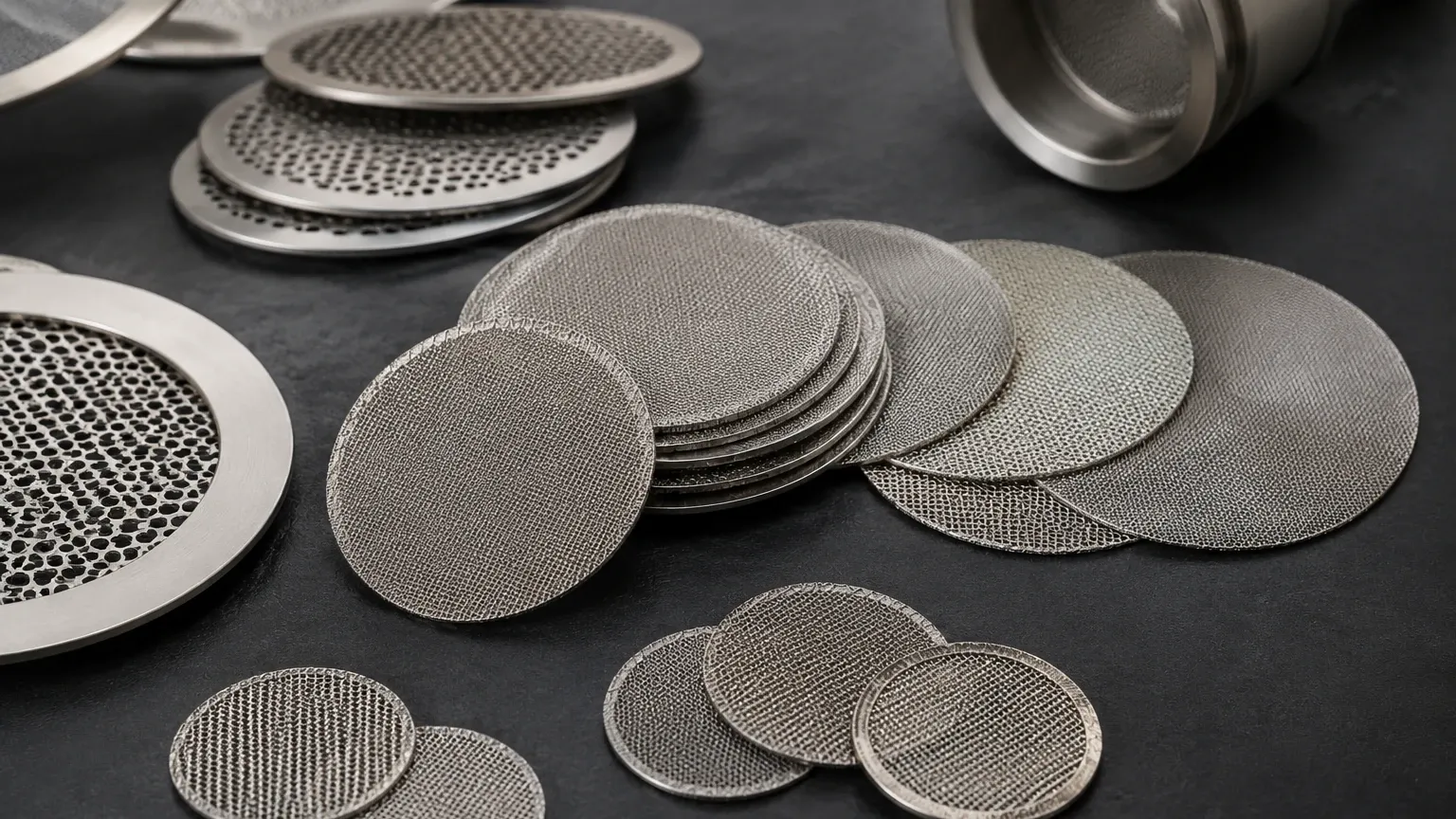
While a single-layer disc may suffice for basic straining, most industrial processes require the sophisticated performance of multi-layer Filter Discs & Packs. The structural design of these components is a key variable in the filter disc method, as it balances filtration fineness with mechanical support.
The Layering Strategy
In a typical multi-layer configuration, the discs are arranged to serve different functions:
1. Filtration Layer: The central layer(s) featuring the specific micron rating required for the process. This mesh is often the most delicate and requires protection.
2. Support Layer: Coarser mesh layers placed on either side of the filtration layer to provide rigidity and prevent the fine mesh from collapsing under high differential pressure.
3. Drainage Layer: Outermost layers that facilitate the even distribution of fluid across the entire surface of the disc, preventing localized blinding and extending the time between cleaning cycles.
Assembly Techniques
To ensure these layers act as a single cohesive unit, various assembly methods are employed. Spot welding is a common technique for securing the layers at specific points, ensuring they remain aligned during installation. For more rigorous applications, rim-binding (using an aluminum, stainless steel, or copper frame) provides a leak-proof edge seal and protects the mesh from fraying. This level of customization is vital for engineers who need to integrate the filter disc method into existing hardware with tight tolerances.
Technical Selection Criteria for Engineering Teams
When specifying components for the filter disc method, engineers must look beyond simple dimensions. Several technical parameters dictate the long-term viability of the filtration system.
Micron Rating and Porosity
The micron rating defines the size of the particles the disc is intended to retain. However, it is important to distinguish between nominal and absolute ratings. A nominal rating refers to the ability of the mesh to retain a percentage of particles of a certain size, whereas an absolute rating indicates the size of the largest spherical particle that can pass through the mesh. High-precision applications usually require absolute ratings to guarantee product quality.
Pressure Drop (ΔP) and Flow Rate
The filter disc method must account for the initial pressure drop across the clean media. A mesh that is too fine for the flow rate will cause an immediate spike in pressure, leading to energy inefficiency and potential system bypass. Engineers should calculate the flux—the volume of fluid passing through a unit area of the filter per unit of time—to ensure the disc diameter is appropriately sized for the pump capacity.
Dirt Holding Capacity (DHC)
DHC refers to the amount of contaminant the filter can retain before the pressure drop reaches a critical threshold. Multi-layer packs generally offer higher DHC than single layers because they can trap particles of varying sizes throughout the depth of the different mesh layers, rather than just on the surface.
Application-Specific Solutions and Performance Expectations
The versatility of the filter disc method allows it to be adapted to a wide range of industrial environments. Each application presents unique challenges that influence the design of the Filter Discs & Packs.
* Polymer Extrusion: In the plastics industry, filter discs are subjected to extreme temperatures (up to 400°C) and pressures. The method here focuses on removing "gels" and un-melted particles that could cause defects in the final product, such as film or fiber. Sintered wire mesh discs are often used here for their exceptional strength.
* Chemical and Petrochemical: Here, the primary concern is chemical compatibility. The filter disc method is used to clarify aggressive solvents and catalysts. The use of 316L or even specialty alloys like Hastelloy may be required to prevent corrosion.
* Food and Beverage: Filtration in this sector must meet stringent hygienic standards. Stainless steel discs are preferred because they are easy to clean and do not shed fibers into the product stream. The method is commonly used for clarifying juices, oils, and syrups.
* Hydraulic Systems: Precision metal filter components are used in hydraulic return lines and suction strainers. The filter disc method ensures that wear particles from pumps and valves do not circulate through the system, preventing premature component failure.
Total Cost of Ownership and Maintenance Protocols
For purchasing teams, the initial cost of Filter Discs & Packs is only one part of the economic equation. The filter disc method, when implemented correctly, focuses on reducing the Total Cost of Ownership (TCO) through durability and reusability.
Cleaning vs. Replacement
One of the primary advantages of stainless steel filter discs is their ability to be cleaned and reused. Depending on the contaminant, discs can be cleaned using ultrasonic baths, high-pressure water jets, or chemical solvents. This reusability significantly reduces the cost per gallon of filtered fluid compared to disposable synthetic filters. However, engineers must establish clear replacement cycles based on "fatigue life." Repeated cleaning and high-pressure cycles can eventually lead to wire fatigue and mesh breakage.
Quality Assurance and Validation
To ensure the reliability of the filter disc method, it is critical to source components from manufacturers that adhere to strict quality control standards. This includes material traceability (MTRs), bubble point testing to verify micron ratings, and dimensional inspections to ensure a perfect fit in the filter housing. At Kaifil, we prioritize these technical validations to provide our global customers with filtration solutions that perform predictably in demanding environments.
By focusing on material science, structural integrity, and application-specific engineering, the filter disc method remains a cornerstone of modern industrial processing. For technical professionals looking to optimize their filtration systems, selecting the right combination of mesh, layer configuration, and assembly technique is the key to achieving efficient and cost-effective performance.
