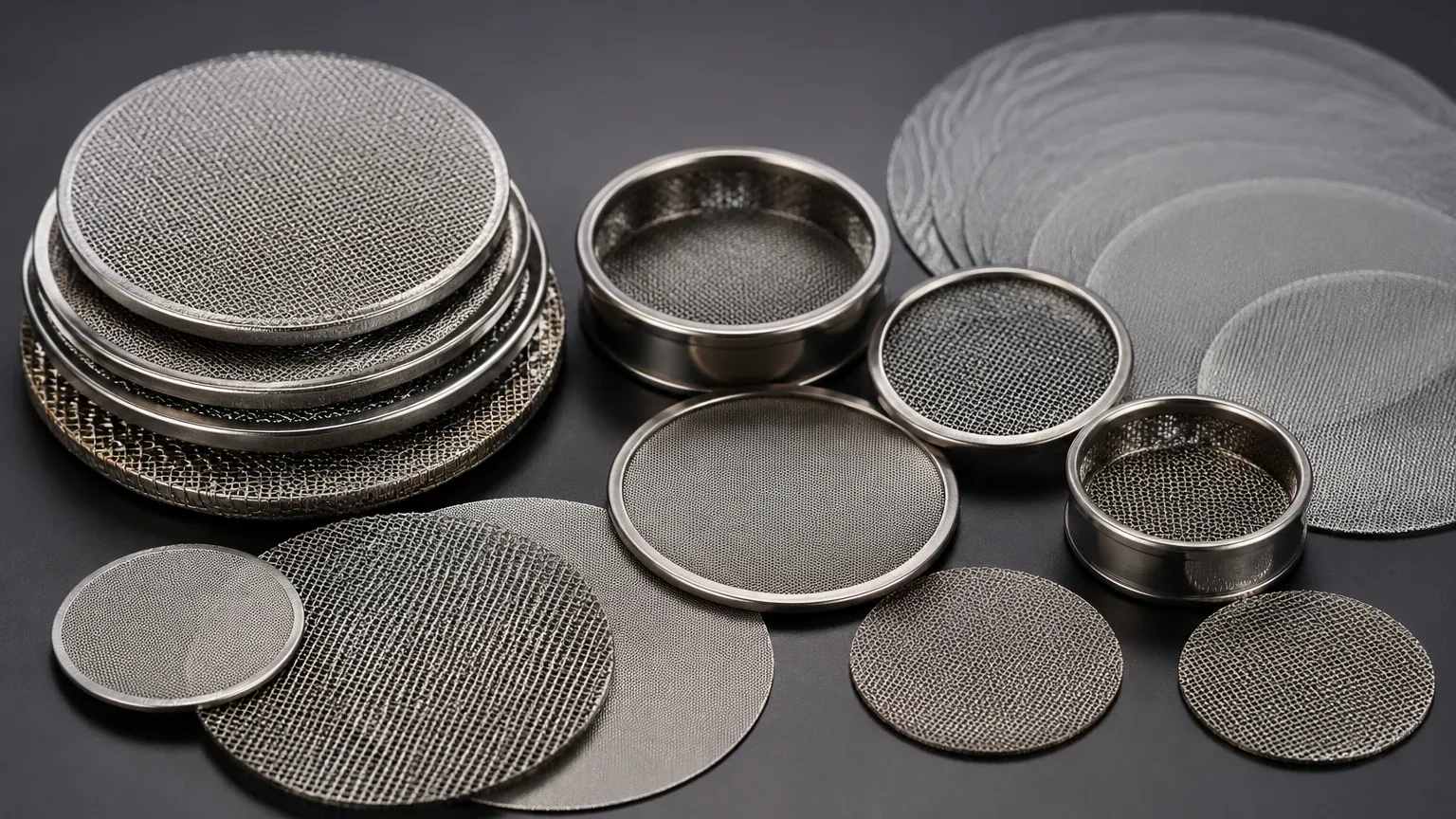
Filter Discs Qual
In industrial filtration, the term "qual" often refers to the qualification and quality assessment of components that must meet rigorous performance standards. For engineers and procurement specialists, assessing filter discs qual is a critical step in ensuring process integrity, especially in high-pressure or high-purity environments. Filter discs and packs are foundational elements in industries ranging from polymer extrusion and chemical processing to pharmaceutical manufacturing and hydraulic systems. Understanding the technical nuances of these components—from metallurgy to weave geometry—is essential for optimizing filtration efficiency and minimizing operational downtime.
Understanding Technical Specifications for Filter Discs
The performance of a filter disc is primarily determined by its material composition and the structure of the wire mesh used in its construction. Stainless steel is the industry standard due to its mechanical strength and resistance to thermal and chemical degradation.
Material Selection
Stainless steel grades 304, 316, and 316L are the most common choices.
- SS 304: Suitable for general industrial applications where basic corrosion resistance is required.
- SS 316: Contains molybdenum, providing enhanced resistance to chlorides and pitting, making it ideal for marine or chemical environments.
- SS 316L: The low-carbon version of 316, preferred for applications involving welding to prevent carbide precipitation and ensure maximum corrosion resistance at the joints.
Mesh Weave Types
The weave pattern dictates the filtration accuracy (micron rating) and the structural rigidity of the disc.
- Plain Weave: The most straightforward pattern where each warp wire crosses over and under each weft wire. It offers high open area and low pressure drop but is generally limited to coarser filtration.
- Twill Weave: Each warp wire passes over and under two weft wires, allowing for heavier wire diameters in a given mesh count, which increases the strength of the disc.
- Dutch Weave (Plain and Twill): These weaves use different diameters for warp and weft wires. This results in a dense, strong mesh with very fine triangular openings, ideal for high-pressure applications and fine particle retention.
Evaluating Filter Discs Qual: Key Performance Metrics
When qualifying a filter disc for a specific application, engineers must look beyond the basic dimensions. The "qual" of a filter component is defined by its ability to perform consistently under operational stress.
Filtration Accuracy and Micron Rating
It is vital to distinguish between nominal and absolute micron ratings. A nominal rating indicates the ability of the filter to retain a majority of particles of a specific size, whereas an absolute rating refers to the diameter of the largest hard spherical particle that will pass through the filter under specified test conditions. For critical processes, such as the protection of precision nozzles or pharmaceutical sterilization, absolute ratings are often required.
Flow Rate and Pressure Drop (Delta P)
The permeability of the filter disc determines how much fluid can pass through at a given pressure. A high-quality filter disc maximizes the open area while maintaining the required micron retention. Engineers must calculate the initial pressure drop to ensure the system’s pump capacity is sufficient and to establish a baseline for monitoring filter clogging.
Mechanical Integrity and Burst Pressure
In hydraulic systems or polymer melt filtration, filter discs are subjected to extreme pressures. The qualification process must include an assessment of the disc's burst pressure—the point at which the mesh deforms or ruptures. Multi-layer Filter Discs & Packs are often employed to enhance mechanical support, where a fine filtration layer is sandwiched between coarser, stronger support layers.
Manufacturing Processes and Quality Control
The manufacturing method significantly impacts the reliability of the filter disc. Precision in cutting and edge treatment is a hallmark of high filter discs qual.
Cutting Techniques
- Stamping: Efficient for high-volume production of standard sizes. However, it requires precise die maintenance to avoid burrs or mesh distortion at the edges.
- Laser Cutting: Offers extreme precision and clean edges without mechanical stress on the wire mesh. This is ideal for custom shapes or small-batch specialized components.
Edge Treatment and Binding
Loose wires at the periphery of a filter disc can migrate into the process stream, causing catastrophic failure in sensitive equipment. To prevent this, quality filter discs often feature:
- Spot Welding: Secures the layers of a multi-layer pack at specific points.
- Rim Binding: Using aluminum, stainless steel, or copper rims to encase the edges. This not only prevents wire migration but also provides a better sealing surface within the filter housing.
- Sintering: A process where the contact points of the wires are thermally bonded without melting. Sintered mesh discs offer the highest level of structural integrity and pore stability.
Material Compatibility and Selection Criteria
Selecting the right filter disc requires a deep dive into the chemical and thermal environment of the application. Failure to account for compatibility can lead to premature corrosion or mechanical failure.
Chemical Resistance
In chemical processing, the filter must withstand exposure to acids, alkalis, or organic solvents. While stainless steel is robust, certain environments may require exotic alloys like Hastelloy or Monel. The qualification process should include a review of the material's resistance to the specific chemicals present in the process stream at operating temperatures.
Temperature Limits
Stainless steel filter discs can typically operate at temperatures up to 400°C to 600°C, depending on the grade and the presence of oxidizing agents. For high-temperature gas filtration or molten polymer processing, the thermal expansion of the mesh must be considered to ensure the disc remains securely seated in its housing.
Common Challenges and Risk Mitigation
Engineers often face challenges such as media migration, clogging, and bypass. Addressing these during the selection phase is critical for long-term performance.
Preventing Media Migration
Media migration occurs when fragments of the filter material break off and enter the filtrate. This is often a result of poor edge welding or the use of low-quality wire. Specifying sintered mesh or rimmed edges is a primary strategy for mitigating this risk in high-purity applications like food and beverage or pharmaceutical production.
Managing Premature Clogging
Clogging, or blinding, happens when particles become wedged in the mesh openings. This can be mitigated by selecting a weave pattern with a higher open area or by using a graduated multi-layer pack. In a graduated pack, the outer layers catch larger particles, preventing the fine inner layer from becoming overwhelmed too quickly, thereby extending the service life.
Avoiding Bypass
Bypass occurs when fluid flows around the filter rather than through it. This is usually caused by improper sizing or poor sealing. Ensuring that the filter disc has a precise diameter and, if necessary, a compressible rim or gasket, is essential for maintaining a tight seal within the filter assembly.
Cost Considerations and Total Cost of Ownership (TCO)
While the initial purchase price of a filter disc is a factor, the total cost of ownership (TCO) provides a more accurate picture of value. TCO includes the cost of the filter, the labor for replacement, the cost of process downtime, and the potential cost of downstream equipment damage if a filter fails.
High-quality stainless steel discs may have a higher upfront cost than disposable or lower-grade alternatives, but their durability and cleanability often result in a lower TCO. Many stainless steel discs can be cleaned using ultrasonic baths or chemical solvents and reused multiple times, significantly reducing the long-term expenditure on consumables.
Customization and OEM Solutions
Every industrial process has unique requirements that standard off-the-shelf filters may not meet. Customization is a key aspect of filter discs qual. This includes:
- Custom Dimensions: Tailoring the diameter and thickness to fit proprietary housings.
- Specific Layer Configurations: Designing multi-layer packs with specific micron ratings for each layer to optimize dirt-holding capacity.
- Specialty Materials: Utilizing specific alloys for extreme environments.
Working with a manufacturer that understands the engineering behind filtration allows for the development of components that are perfectly aligned with the system's operational parameters. This collaborative approach ensures that the final product meets the necessary qualifications for safety, efficiency, and longevity.
Conclusion
Achieving high filter discs qual is not merely about choosing a mesh size; it is an engineering exercise that involves evaluating material science, weave geometry, manufacturing precision, and application-specific demands. By focusing on these technical details, engineers can ensure they select filter discs and packs that provide reliable, long-term performance in even the most demanding industrial environments. Whether the goal is to protect sensitive downstream equipment or to ensure the purity of a final product, the quality of the filtration component is the first line of defense in process optimization.