


Filter Packages
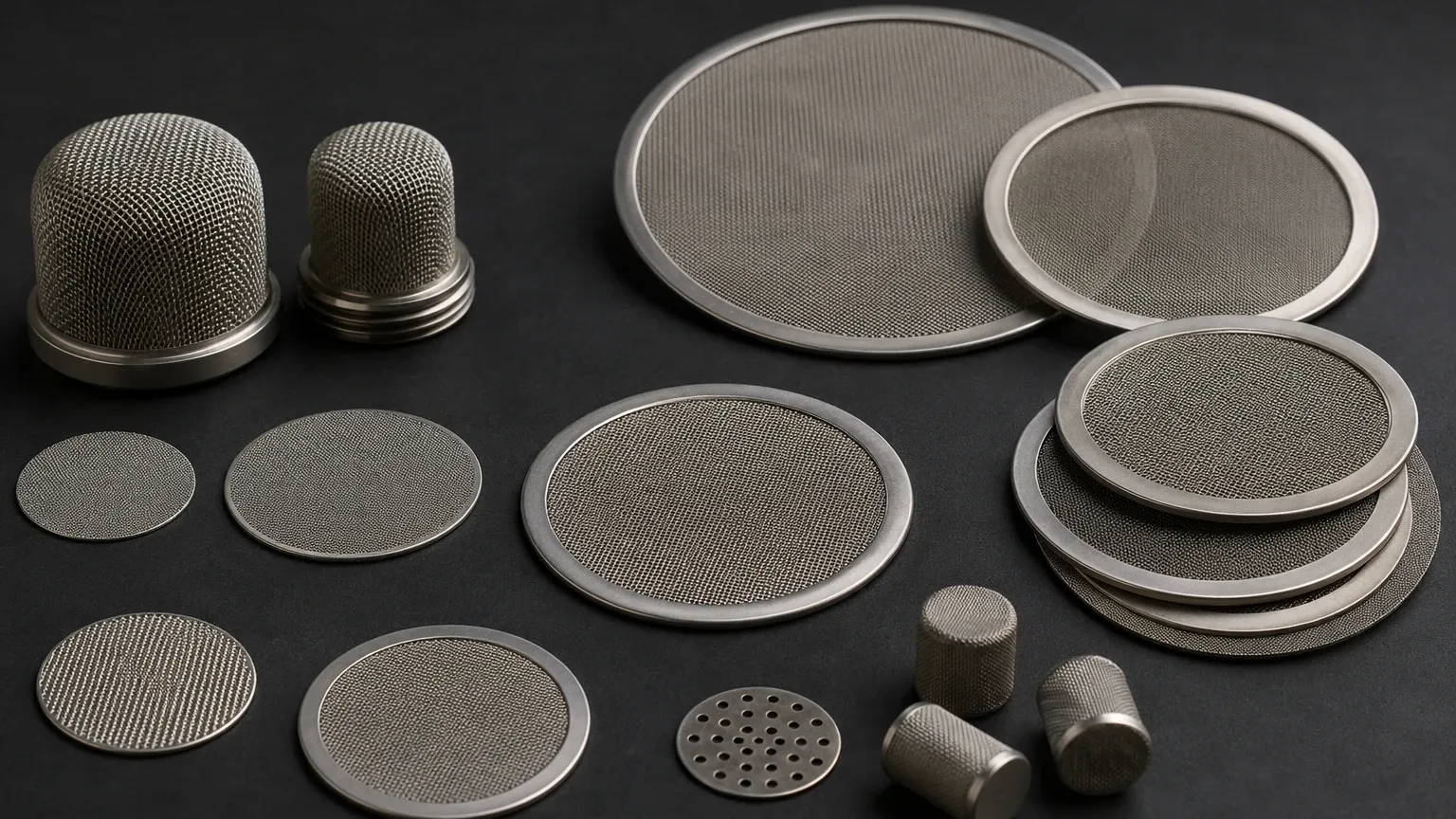
In the realm of industrial filtration, the term "filter packages" refers to specialized, multi-layered filtration components designed to withstand high pressures while maintaining precise particle retention. These components are critical in industries where fluid purity and equipment protection are paramount, such as polymer extrusion, chemical processing, and pharmaceutical manufacturing. Often categorized under Filter Discs & Packs, these assemblies are engineered to provide a balance between filtration fineness, mechanical strength, and flow capacity.
For engineers and procurement professionals, selecting the correct filter package is not merely a matter of choosing a mesh size; it involves a complex evaluation of material science, fluid dynamics, and mechanical engineering. This guide examines the technical specifications, construction methods, and application-specific considerations necessary for optimizing filtration performance in demanding industrial environments.
Understanding the Structure of Industrial Filter Packages
Unlike single-layer wire mesh, filter packages are composite structures. A single layer of fine mesh often lacks the mechanical integrity to survive the high differential pressures found in hydraulic systems or plastic extruders. To solve this, manufacturers stack multiple layers of stainless steel wire mesh in a specific sequence.
Multi-Layer Construction
A standard filter package typically follows a "sandwich" configuration. This involves a fine filtration layer positioned between coarser support layers. The coarser layers serve two functions: they protect the delicate fine mesh from mechanical damage during installation and operation, and they provide structural rigidity to prevent the mesh from deforming or "ballooning" under the force of the fluid flow.
Assembly Methods: Spot Welding vs. Rimmed Edges
How the layers are held together significantly impacts the performance and compatibility of the filter package:
* Spot-Welded Packs: Individual mesh layers are fused at specific points using resistance welding. This is a cost-effective method for applications where the filter is housed in a tight-fitting cavity that prevents bypass. Spot welding ensures the layers remain in the correct order during handling.
* Rimmed or Framed Packs: The edges of the mesh stack are enclosed in a metal rim, usually made of aluminum, stainless steel, or copper. The rim serves as a gasket, providing a superior seal against the housing wall to prevent unfiltered fluid from bypassing the media. Rimmed packages are preferred in high-pressure extrusion where even minor bypass can lead to product defects.
Material Selection and Chemical Compatibility
The durability of filter packages is largely determined by the alloys used in their construction. In the B2B industrial sector, stainless steel is the standard due to its thermal stability and corrosion resistance.
Stainless Steel 304 vs. 316L
* SS 304: This is the most common material for general industrial use. It offers excellent mechanical properties and is resistant to most atmospheric corrosion. It is suitable for food and beverage applications and standard hydraulic oil filtration.
* SS 316L: Containing molybdenum, 316L provides superior resistance to chlorides and acids. It is the preferred choice for chemical processing, pharmaceutical production, and marine environments. The "L" denotes low carbon content, which improves weldability and reduces the risk of intergranular corrosion at the weld sites.
Specialty Alloys
In extreme environments involving highly corrosive chemicals or temperatures exceeding 800°F (425°C), engineers may specify exotic alloys such as Inconel, Monel, or Hastelloy. These materials maintain their structural integrity and oxidation resistance where standard stainless steels would fail.
Engineering Configurations: Layering and Mesh Weaves
The efficiency of filter packages is defined by the weave types used in the stack. Engineering teams must specify these weaves based on the viscosity of the fluid and the nature of the contaminants.
Plain Weave and Twill Weave
Plain weave is the most straightforward pattern, offering high open areas and low pressure drops. It is typically used for the outer support layers. Twill weave allows for thicker wires and is used when greater mechanical strength is required without significantly sacrificing flow.
Dutch Weave (Plain and Twill)
Dutch weaves utilize a higher density of smaller diameter wires in the shute (weft) direction. This creates a "tortuous path" for the fluid, allowing for much finer filtration—down to 5 microns or less—while maintaining a robust structure. In a filter package, the Dutch weave layer acts as the primary filtration media.
Gradient Filtration
By stacking layers with decreasing micron ratings, a filter package can achieve gradient filtration. The outer coarse layers trap large particles, preventing them from clogging the inner fine layer. This distribution of contaminant loading extends the service life of the filter and reduces the frequency of system shutdowns for replacement.
Performance Metrics: Pressure Drop and Filtration Efficiency
When evaluating filter packages, engineers must focus on the relationship between the Clean Pressure Drop (CPD) and the Dirt Holding Capacity (DHC).
Pressure Drop (ΔP)
The pressure drop is the difference in pressure between the upstream and downstream sides of the filter. A well-designed filter package minimizes initial ΔP to conserve energy and maintain flow rates. Factors increasing ΔP include high fluid viscosity, high flow velocity, and overly dense mesh stacking.
Dirt Holding Capacity
This metric defines how much contaminant a filter can retain before the pressure drop reaches a critical terminal limit. In continuous processes like polymer melt filtration, a high DHC is essential to ensure long run times. If a filter package has insufficient DHC, the system will require frequent "screen changes," which increases operational costs and material waste.
Application-Specific Selection
The requirements for filter packages vary significantly across different industrial sectors:
Polymer and Plastic Extrusion
In the production of films, fibers, and resins, filter packages (often called screen packs) are used to remove "gels," un-melted polymer, and foreign contaminants. These packs must withstand pressures often exceeding 5,000 PSI. Precision is vital here; even a 20-micron contaminant can cause a break in a synthetic fiber or a hole in a thin plastic film.
Chemical and Petrochemical Processing
Filters in this sector must contend with aggressive solvents and high temperatures. The primary concern is chemical compatibility and the prevention of media migration—where fragments of the filter wire break off and contaminate the downstream product. High-quality sintered or spot-welded stainless steel packages are standard to ensure structural permanence.
Hydraulic and Lube Oil Systems
In these applications, the focus is on protecting sensitive valves and pumps from wear-inducing particles. Filter packages are often used as last-chance filters or suction strainers. They must be able to handle fluctuating flow rates and "cold start" conditions where oil viscosity is high.
Maintenance, Cleaning, and Replacement Cycles
One of the primary advantages of stainless steel filter packages is their cleanability. Unlike disposable paper or polymer filters, metal mesh can often be refurbished.
Cleaning Methods
* Ultrasonic Cleaning: Uses high-frequency sound waves in a chemical bath to dislodge particles from deep within the mesh layers.
* Burn-off (Pyrolysis): Used primarily in the polymer industry to melt and vaporize organic contaminants. This must be done in a controlled vacuum oven to prevent oxidation of the stainless steel.
* Chemical Cleaning: Involves soaking the packs in caustic or acidic solutions to dissolve specific types of buildup.
Determining Replacement
While cleaning is possible, it is not infinite. Each cleaning cycle can slightly degrade the wire diameter or the integrity of the welds. Engineers should monitor the "recovered" pressure drop after cleaning; if the pressure drop does not return to near-original levels, the package has reached its end of life and must be replaced to avoid risking a structural failure (blow-through).
Customization and OEM Considerations
For many industrial equipment manufacturers (OEMs), standard off-the-shelf discs are insufficient. Customization is often required to fit unique housing geometries or to meet specific filtration targets. Key variables for customization include:
1. Dimensional Tolerances: Ensuring the outside diameter (OD) fits perfectly within the breaker plate or housing to prevent bypass.
2. Layer Sequence: Custom-tailoring the stack (e.g., 20/40/60/40/20 mesh) to optimize for a specific fluid viscosity.
3. Edge Treatment: Choosing between raw edges, spot welding, or specialized rim materials like copper for better sealing in high-heat applications.
When sourcing filter packages, providing the manufacturer with detailed operating parameters—including flow rate, operating temperature, fluid type, and target micron rating—is essential for receiving a component that performs reliably under field conditions.
Conclusion
Filter packages are foundational components in modern industrial processing. By understanding the nuances of mesh weaves, material properties, and assembly techniques, engineering and purchasing teams can select filtration solutions that enhance product quality and protect expensive downstream equipment. Whether used in a simple hydraulic line or a complex polymer extrusion line, the right configuration of Filter Discs & Packs ensures operational efficiency and long-term cost savings.
