


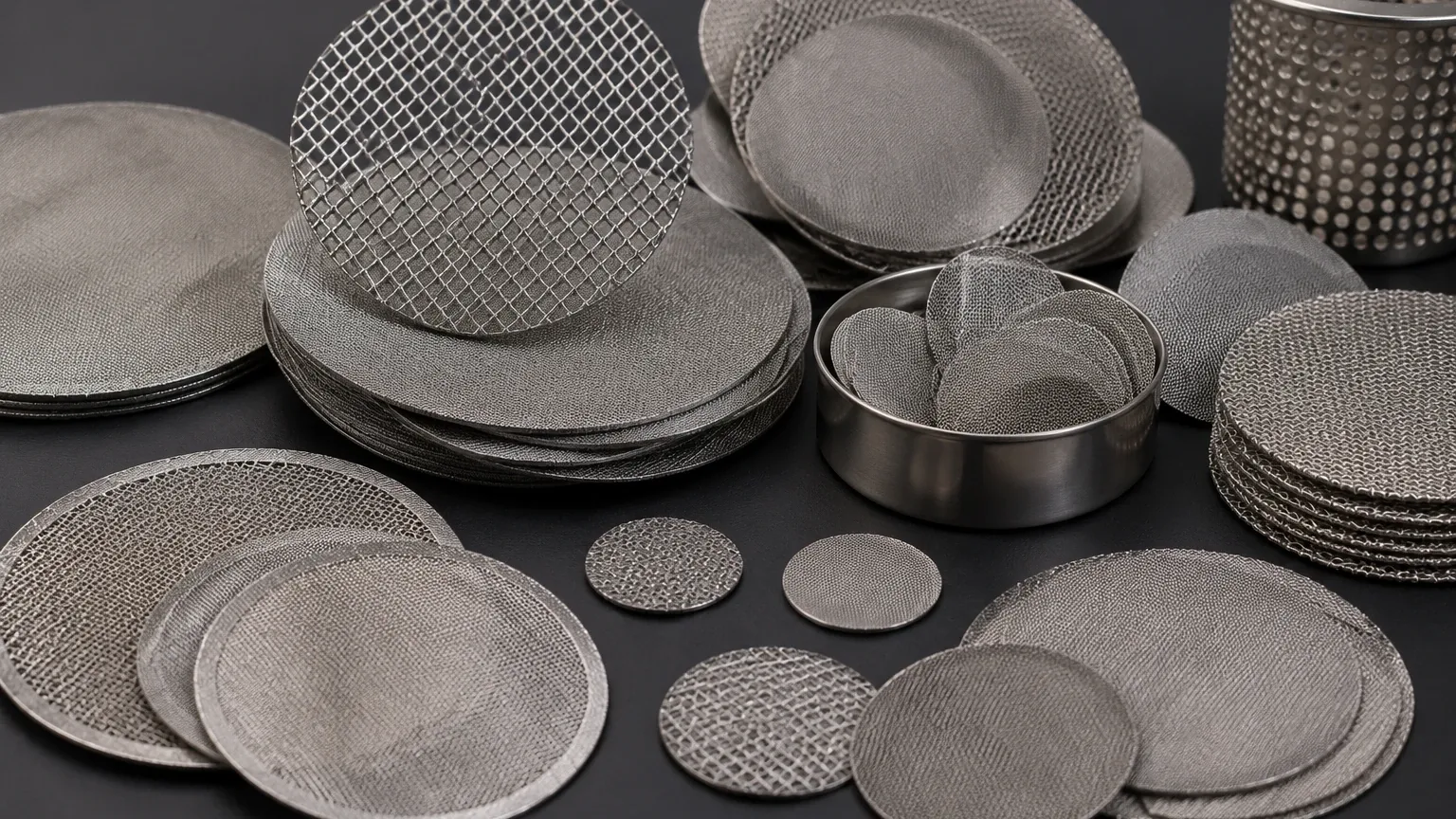
Filter Sample Pack
In the landscape of industrial filtration, the transition from a theoretical design to a functional production line requires rigorous validation. For engineers and procurement specialists in sectors such as chemical processing, pharmaceuticals, and hydraulic systems, the selection of filtration media is a critical decision that impacts both product purity and equipment longevity. A filter sample pack serves as an essential tool in this process, allowing technical teams to conduct empirical testing, verify material compatibility, and ensure that the specified Filter Discs & Packs meet the exacting demands of their specific application.
Selecting the right filtration component is rarely a one-size-fits-all endeavor. Factors such as flow rate, pressure drop, particle retention size, and chemical exposure vary significantly between a food-grade processing line and a high-pressure hydraulic circuit. By utilizing a filter sample pack, organizations can mitigate the risks associated with large-scale procurement and ensure that the chosen filtration solution is optimized for performance and cost-efficiency.
The Technical Composition of Industrial Filter Discs and Packs
To understand the value of a sample pack, one must first understand the technical complexity of the components it contains. Industrial filter discs and packs are typically constructed from stainless steel wire mesh, though the specific weave and structure are tailored to the application.
Wire Mesh Weave Types
The performance of a filter disc is primarily determined by its weave. Common patterns include:
* Plain Weave: The most straightforward weave where each warp wire crosses over and under each weft wire. This provides high flow rates and is suitable for general-purpose filtration.
* Twill Weave: Each weft wire passes over and under two warp wires, allowing for a heavier wire diameter and finer mesh counts. This is often used for high-load applications.
* Dutch Weave (Plain and Twill): These weaves utilize a higher density of wires in one direction, resulting in a tortuous path for the fluid. This configuration offers superior strength and precise micron ratings, making it ideal for high-pressure environments.
Single-Layer vs. Multi-Layer Construction
A filter sample pack often includes various structural configurations. Single-layer discs are cost-effective for simple straining tasks. However, for more demanding environments, multi-layer packs are utilized. These can be spot-welded or sintered together. Multi-layer designs often incorporate a fine filtration layer protected by coarser support layers, which prevents the fine mesh from deforming under high differential pressure.
Why Engineers Prioritize a Filter Sample Pack for R&D
In Research and Development (R&D), the primary goal is to prove a concept before moving to pilot production. A filter sample pack provides the physical media necessary to establish a baseline for performance. Engineers use these samples to address several critical questions during the prototyping phase.
Flow Resistance and Pressure Drop
Every filter introduces a degree of resistance into a system. If the pressure drop is too high, it can strain pumps and reduce overall system efficiency. By testing samples from a filter sample pack, engineers can measure the actual pressure drop across the media at various flow velocities. This data is vital for sizing pumps and ensuring the system operates within its designed energy envelope.
Particulate Retention Efficiency
While a mesh may have a nominal micron rating, its actual performance under real-world conditions—such as varying fluid viscosities or pulsating flows—can differ. Testing physical samples allows quality control teams to verify that the filtration media effectively captures the target contaminants without premature clogging.
Mechanical Integrity and Durability
In applications involving high-temperature fluids or abrasive particles, the mechanical durability of the filter is paramount. A sample pack allows for destructive and non-destructive testing to determine how well the wire mesh maintains its pore geometry under stress. This is particularly important for backwashing or ultrasonic cleaning cycles, where the filter must withstand repeated mechanical loads.
Key Evaluation Criteria for Industrial Filtration Samples
When a filter sample pack arrives at a facility, it should undergo a structured evaluation process. This ensures that the components provided by the manufacturer align with the technical specifications required for the final product.
Dimensional Accuracy and Tolerances
For a filter disc to function correctly, it must fit perfectly within its housing. Any gap between the disc edge and the housing wall creates a bypass path, rendering the filtration process ineffective. Evaluation should include precise measurements of the diameter, thickness, and flatness of the discs. In multi-layer packs, the alignment of the layers is also a critical check.
Edge Finishing and Sealing
The method used to finish the edges of a filter disc can significantly impact its performance. Samples may feature:
* Raw Edges: Suitable for applications where the disc is clamped tightly.
* Rimmed Edges: The disc is encased in a metal binding (often aluminum, stainless steel, or copper). This provides a better seal and prevents the fraying of wire mesh at the edges.
* Spot-Welded Edges: Used in multi-layer packs to maintain structural integrity during handling and installation.
Material Verification
In corrosive environments, such as chemical processing or marine applications, the grade of stainless steel is non-negotiable. While SS304 is standard, SS316L is often required for its superior resistance to pitting and crevice corrosion. A filter sample pack allows for material testing (such as XRF analysis) to confirm that the alloy meets the project's metallurgical requirements.
Customization and OEM Capabilities in Filter Production
One of the most significant advantages of working with a professional manufacturer like Kaifil is the ability to move beyond standard off-the-shelf components. A filter sample pack often serves as the starting point for a fully customized OEM solution.
Tailored Shapes and Geometries
While circular discs are common, many industrial systems require unique geometries. This includes rectangular screens, oval packs, or complex ring shapes with center holes. During the sampling phase, manufacturers can demonstrate their ability to produce these shapes with high precision using advanced cutting and stamping technologies.
Specialized Rimming Materials
The choice of rimming material is often dictated by the housing material and the operating temperature. For example, copper rims are frequently used in high-temperature polymer filtration because copper provides an excellent seal as it expands. Aluminum rims may be preferred for weight-sensitive applications or where cost is a primary driver. A comprehensive sample pack may include various rimming options to help engineers determine the best sealing strategy.
Filtration Layer Stacking
Engineers can specify the exact sequence of mesh layers in a pack. A common configuration might include a 20-mesh support layer, a 100-mesh drainage layer, and a 20-micron Dutch weave filtration layer. Testing different stacking sequences from a sample pack helps identify the optimal balance between filtration fineness and dirt-holding capacity.
Operational Considerations: Cleaning and Replacement Cycles
Beyond initial performance, the total cost of ownership (TCO) for filtration components is heavily influenced by their service life and cleanability. A filter sample pack allows maintenance teams to evaluate how easily the media can be restored to its original state.
Cleanability Testing
In many B2B applications, filters are not single-use. They are cleaned via backflushing, chemical baths, or ultrasonic tanks. By subjecting samples to repeated cleaning cycles, engineers can observe if the mesh pores become permanently blinded or if the structural welds begin to fail. This data is essential for projecting long-term operational costs.
Predicting Replacement Cycles
By monitoring the rate at which a sample filter reaches its terminal pressure drop during pilot testing, teams can estimate the expected service life in a full-scale environment. This allows for better inventory planning and prevents unscheduled downtime caused by unexpected filter failure.
Addressing Common Risks in Filter Procurement
Procuring industrial filters without a sampling phase introduces several risks that can lead to costly system failures or product recalls. A filter sample pack helps mitigate these risks by providing physical evidence of quality.
* Bypass Issues: As mentioned, poor dimensional tolerances lead to fluid bypassing the filter. Testing samples ensures the fit is secure.
* Media Migration: In low-quality filters, individual wires can break off and enter the downstream flow. This is a major concern in the food and beverage and pharmaceutical industries. Inspecting samples for weld integrity and mesh quality prevents this contamination.
* Chemical Incompatibility: If the mesh or rimming material reacts with the process fluid, it can lead to corrosion or fluid contamination. Immersion testing with sample discs is the most reliable way to confirm compatibility.
Transitioning from Testing to Implementation
Once the evaluation of the filter sample pack is complete and a specific configuration has been validated, the transition to full-scale production should be seamless. Working with a manufacturer that maintains strict quality control over both the sampling and production phases is vital. This ensures that the performance observed during the testing of a few samples is replicated across thousands of units in a production run.
For engineers, the documentation provided with the sample pack—including material certifications and micron rating reports—serves as the foundation for the technical data sheet of the final product. This documentation is often required for regulatory compliance, particularly in the pharmaceutical and food sectors where traceability is mandatory.
In conclusion, a filter sample pack is not merely a collection of parts; it is a critical component of the engineering design cycle. It provides the empirical data needed to optimize filtration performance, ensure mechanical reliability, and control operational costs. By investing the time to evaluate Filter Discs & Packs through a structured sampling process, industrial professionals can achieve superior filtration outcomes and maintain the integrity of their complex systems.
