


Filtered Packs Meaning
In the landscape of industrial filtration, the term "filtered packs"—often referred to interchangeably as filter packs or screen packs—carries a specific technical significance that extends far beyond a simple dictionary definition. For engineers and procurement specialists in sectors such as polymer extrusion, chemical processing, and hydraulic systems, understanding the filtered packs meaning is essential for optimizing production efficiency and ensuring product purity.
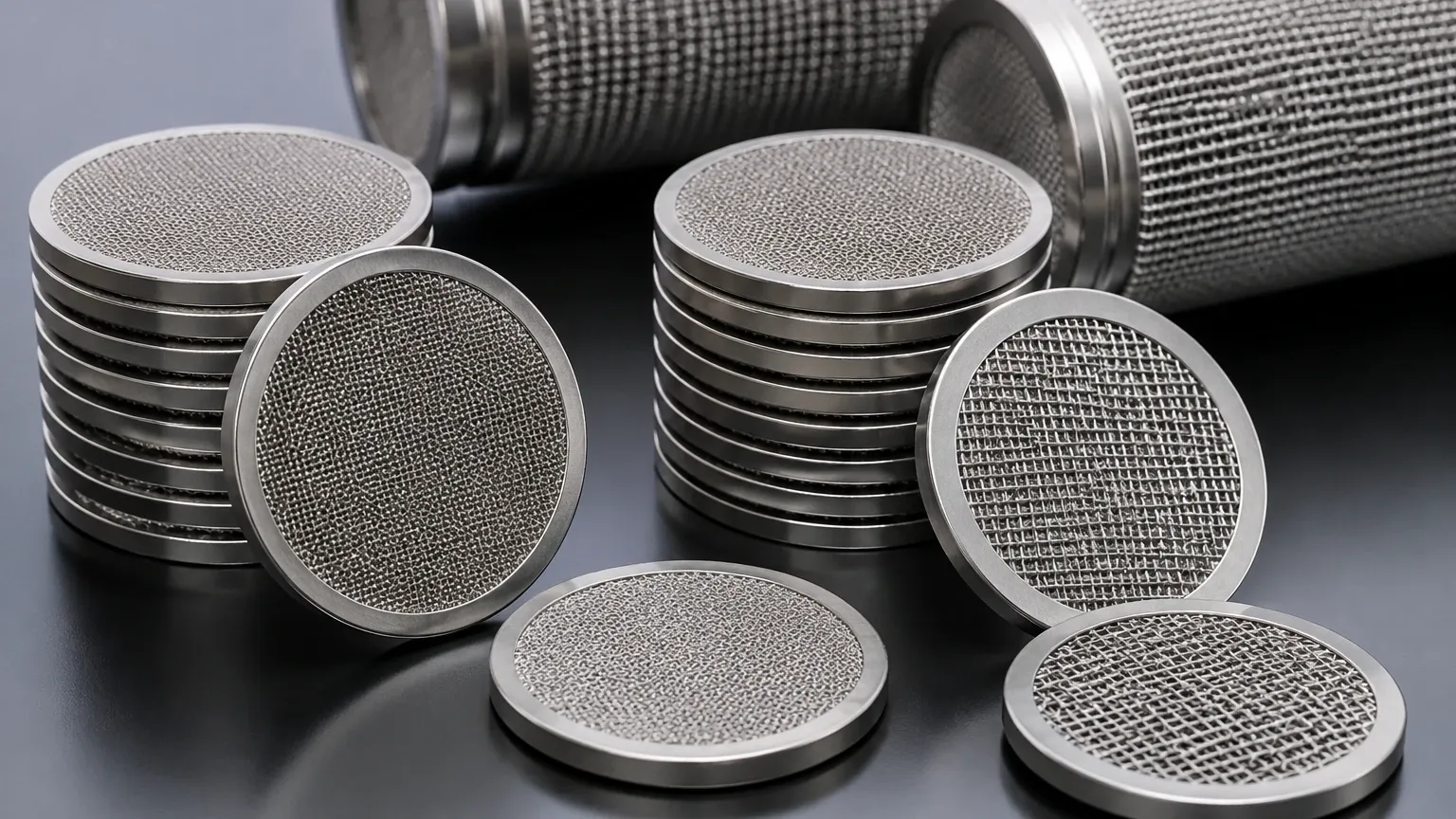
At its core, a filter pack is a precision-engineered assembly consisting of one or more layers of wire mesh, typically made from stainless steel, designed to remove contaminants from fluids, gases, or molten materials. Unlike a single-layer filter disc, a "pack" implies a strategic configuration of multiple layers intended to provide structural integrity, gradient filtration, and high-pressure resistance. This article explores the technical nuances of these components, their structural variations, and the engineering considerations that define their performance in demanding industrial environments.
Defining Filter Packs in Industrial Contexts
To understand the filtered packs meaning from a B2B perspective, one must look at the functional intent of the assembly. In high-viscosity applications, such as the extrusion of plastics or synthetic fibers, a single layer of fine mesh would likely collapse or tear under the immense pressure required to move the material through the system. A filter pack solves this by layering different mesh counts to create a robust filtration media.
In this context, the "meaning" of the pack is defined by its ability to perform three distinct roles simultaneously:
1. Contaminant Removal: Capturing particles of specific micron sizes to ensure the quality of the end product.
2. Structural Support: Providing the mechanical strength necessary to withstand high differential pressures without deforming.
3. Flow Optimization: Distributing the flow of the medium evenly across the surface area to prevent localized clogging and extend the service life of the filter.
By combining various layers, manufacturers like Kaifil can tailor Filter Discs & Packs to meet the exact requirements of a specific machine or process, balancing filtration fineness with the physical realities of the operating environment.
The Structural Composition of Filter Discs & Packs
The effectiveness of a filter pack is determined by its internal architecture. Most industrial packs follow a "sandwich" construction, where the layers are arranged according to their mesh count and wire diameter. A typical multi-layer pack consists of the following components:
The Filtration Layer
This is the functional heart of the pack. It consists of a fine wire mesh—often a Dutch weave or a high-mesh-count plain weave—that determines the micron rating of the filter. This layer is responsible for trapping the smallest impurities that could compromise the final product's integrity.
Support Layers
Positioned on either side of the filtration layer, these coarser meshes provide rigid support. They prevent the fine filtration mesh from being pushed through the holes of the breaker plate (in extrusion) or deforming under flow. These layers also help in protecting the delicate filtration media during installation and handling.
Drainage Layers
In complex multi-layer configurations, drainage layers are used to facilitate the movement of the filtered medium away from the filtration interface. This reduces the pressure drop across the pack and ensures that the flow remains consistent even as the filter begins to accumulate debris.
The Functional Advantages of Multi-Layered Configurations
Why use a multi-layered pack instead of a single, thick mesh? The answer lies in the principle of gradient filtration. When multiple layers are used, the pack can be designed to trap larger particles on the outer layers while allowing the inner, finer layers to focus on the smallest contaminants. This prevents the surface from blinding (clogging) prematurely.
Furthermore, the filtered packs meaning encompasses the concept of "depth." While wire mesh is primarily a surface filtration medium, a multi-layer pack introduces a degree of depth. As the fluid passes through the tortuous path created by the overlapping wires of different layers, it increases the probability of particle entrapment. This leads to a higher dirt-holding capacity compared to single-layer discs, which translates to longer run times between filter changes and reduced downtime for the facility.
Material Selection and Engineering Considerations
The choice of material is perhaps the most critical factor in defining the performance of Filter Discs & Packs. Because these components often operate in corrosive or high-temperature environments, stainless steel is the industry standard.
* Stainless Steel 304: Offers excellent corrosion resistance and is suitable for most standard industrial applications, including food and beverage processing.
* Stainless Steel 316/316L: Contains molybdenum, which provides superior resistance to chlorides and acids. This is the preferred material for pharmaceutical and chemical applications where chemical compatibility is a primary concern.
* Specialty Alloys: In extreme cases involving highly corrosive chemicals or temperatures exceeding 400°C, alloys like Inconel or Monel may be used, though stainless steel remains the most cost-effective and versatile choice for the majority of OEM requirements.
Engineers must also consider the weave type. A Plain Weave is simple and provides high flow rates, while a Dutch Weave (Plain or Twill) offers much higher strength and finer filtration ratings by packing more wires into a given area. Understanding these technical specifications is vital when discussing the filtered packs meaning with a manufacturer to ensure the component is fit for purpose.
Manufacturing Techniques: Spot Welding vs. Rimmed Edges
How the layers of a filter pack are held together significantly impacts its performance and ease of use. There are two primary methods used in the production of industrial filter packs:
Spot-Welded Packs
In this method, the layers are joined at several points around the perimeter or across the surface using resistance welding. Spot-welded packs are cost-effective and provide a low profile, making them ideal for applications with tight tolerances. However, the edges remain "raw," which can lead to fraying if not handled carefully.
Rimmed (Bound) Packs
Rimmed packs feature a metal frame—usually aluminum, stainless steel, or copper—that is crimped around the edge of the mesh layers. This "rim" serves several purposes:
* Leak Prevention: It acts as a gasket, ensuring a tight seal against the housing wall and preventing "bypass," where unfiltered material escapes around the edges of the filter.
* Safety and Handling: It covers the sharp edges of the wire mesh, making the packs safer for operators to handle.
* Structural Integrity: The rim provides a rigid frame that keeps the layers perfectly aligned even under extreme mechanical stress.
For high-pressure polymer extrusion, rimmed packs are often mandatory to ensure that no polymer bypasses the filtration zone, which could lead to defects in the final plastic film or fiber.
Application-Specific Selection Criteria
Understanding the filtered packs meaning requires looking at how they are applied in various industries. Each sector has unique demands that dictate the design of the pack.
* Polymer Extrusion: Packs are used in screen changers to remove "gels" and un-melted resin. The focus here is on pressure resistance and the ability to withstand temperatures up to 300°C.
* Chemical and Petrochemical: The emphasis is on chemical compatibility and precise micron ratings. Packs must resist corrosion from aggressive solvents and catalysts.
* Food and Beverage: Cleanability and material safety are paramount. Packs must be made from food-grade stainless steel and be free of any contaminants from the manufacturing process.
* Hydraulic Systems: Filter discs are used to protect sensitive valves and pumps from metal shavings and other particulates. Here, the focus is on high flow rates and low pressure drop.
When selecting a filter pack, engineers should confirm the required micron rating, the maximum operating pressure, the temperature range, and the chemical composition of the fluid being filtered.
Maintenance and Total Cost of Ownership (TCO)
While the initial purchase price of Filter Discs & Packs is a factor, the total cost of ownership is determined by the filter's service life and its impact on the overall process. A poorly designed pack that clogs quickly or fails under pressure can cause expensive unscheduled downtime and potential damage to downstream equipment.
Replacement Cycles
In most continuous processes, filter packs are considered consumables. The replacement cycle is typically triggered by a specific "pressure drop" (the difference in pressure before and after the filter). Once the pressure drop reaches a predetermined limit, the pack is replaced. High-quality packs from experienced manufacturers like Kaifil are designed to maximize the dirt-holding capacity, thereby extending the interval between replacements.
Cleaning and Reuse
In some applications, particularly those involving heavy-duty stainless steel meshes, filter packs can be cleaned using ultrasonic baths or chemical solvents. However, for fine-filtration packs used in high-precision industries, replacement is usually recommended to ensure 100% filtration integrity. The risk of residual contaminants or mesh deformation during the cleaning process often outweighs the cost savings of reuse.
Conclusion
The filtered packs meaning is rooted in the synergy of materials, weave types, and assembly methods. By moving beyond a single-layer approach and utilizing multi-layered Filter Discs & Packs, industrial operations can achieve a level of filtration precision and mechanical durability that is impossible with simpler components.
For engineers and purchasing teams, the key to success lies in detailed communication with the manufacturer. Providing specifics on the operating environment—such as flow rates, viscosity, and particle size distribution—allows for the creation of a customized filtration solution that optimizes performance and minimizes long-term costs. Whether through spot-welded simplicity or the robust sealing of a rimmed assembly, the right filter pack is a critical investment in the reliability and quality of industrial production.
