


How to Filter Japanese Packs
In the specialized field of polymer extrusion, synthetic fiber production, and high-pressure chemical processing, the term "Japanese packs" refers to a specific configuration of multi-layer wire mesh filters designed to meet the rigorous standards of precision machinery. These components, technically categorized under Filter Discs & Packs, are essential for ensuring the purity of high-viscosity fluids. Understanding how to filter Japanese packs effectively requires a deep dive into the engineering of the mesh, the structural integrity of the pack, and the operational parameters of the filtration system.
For engineers and procurement specialists, the challenge lies not just in sourcing a replacement part, but in ensuring that the filtration media can withstand extreme pressures while maintaining a consistent micron rating. This guide examines the technical nuances of these filtration components and provides actionable insights into their selection and application.
Understanding the Anatomy of Japanese Filter Packs
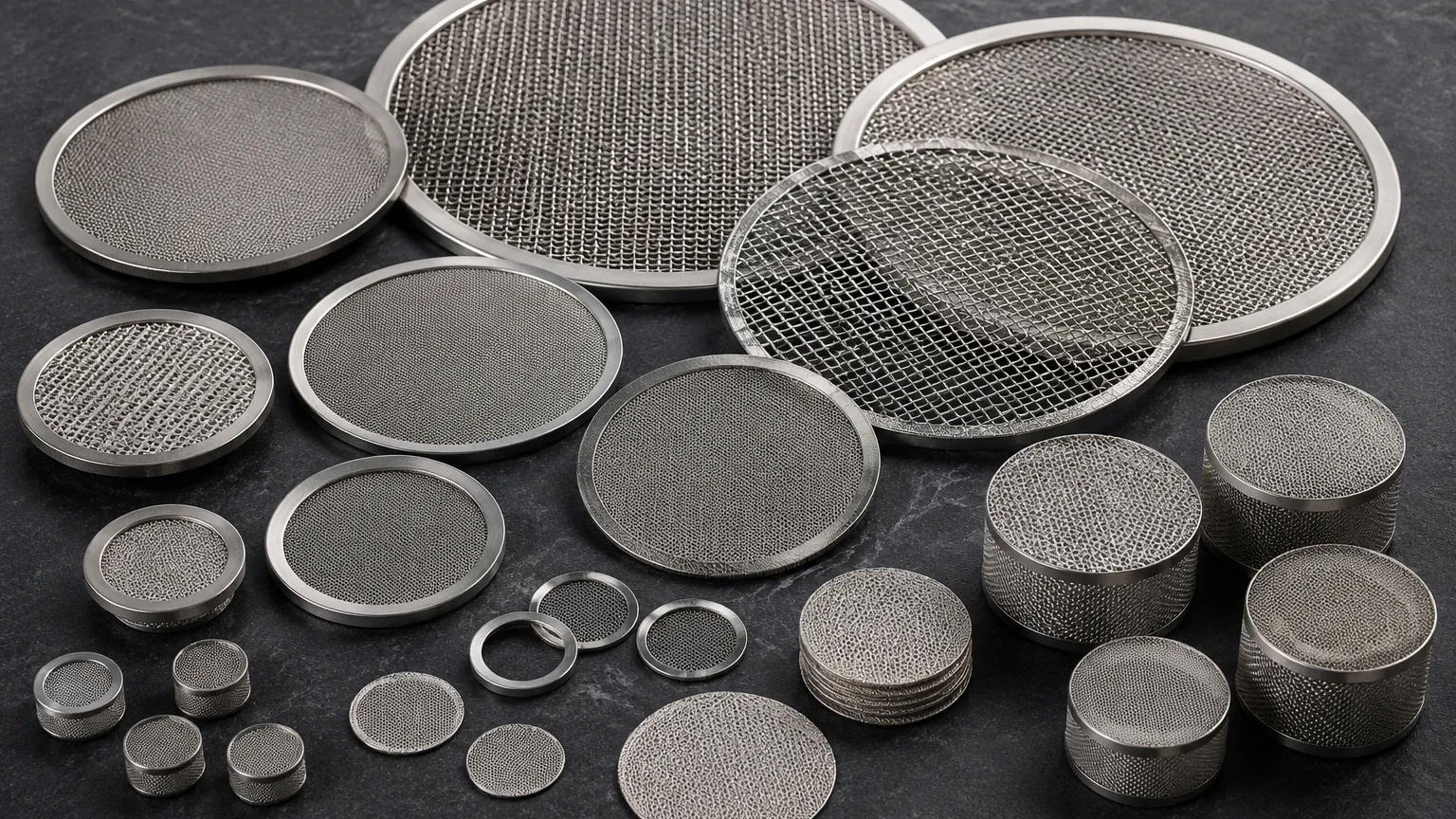
Japanese packs are typically multi-layered structures consisting of several grades of stainless steel wire mesh. Unlike simple single-layer discs, these packs are engineered to provide graduated filtration. This means the fluid first encounters a coarse mesh that removes larger contaminants, followed by progressively finer layers that capture microscopic particulates.
Layer Configuration and Sintering
A standard pack may consist of three to seven layers. The sequence usually includes:
1. Protective Layer: A coarse mesh that protects the finer internal layers from mechanical damage during handling and installation.
2. Filtration Layer: The core of the pack, often utilizing a Dutch weave or Twill Dutch weave to achieve precise micron ratings (ranging from 2 to 200 microns).
3. Support Layer: A heavy-duty mesh that provides structural rigidity, preventing the filtration layer from deforming under high differential pressure.
4. Drainage Layer: Ensures even flow distribution across the entire surface area of the pack.
In many high-end applications, these layers are sintered—a process where the wires are diffusion-bonded at their contact points under high heat and pressure. Sintering ensures that the pore size remains constant even under fluctuating pressures, which is a critical factor when considering how to filter Japanese packs in continuous production environments.
Technical Specifications: Weave Types and Materials
The performance of Filter Discs & Packs is largely determined by the metallurgy and the weaving technique used. For Japanese-style packs, the material of choice is almost exclusively stainless steel, specifically Grade 304 or 316L.
* Type 304 Stainless Steel: Suitable for general industrial applications where basic corrosion resistance is required.
* Type 316L Stainless Steel: Preferred for chemical processing and pharmaceutical applications due to its superior resistance to pitting and chloride-induced stress corrosion cracking.
Weave Patterns and Their Impact
When evaluating how to filter Japanese packs, the weave pattern of the filtration layer is the most important technical variable.
* Plain Weave: Each warp wire passes alternately over and under each weft wire. This is used for coarser filtration and provides high flow rates.
* Plain Dutch Weave: Uses a larger diameter warp wire and a smaller diameter weft wire. This creates a "tortuous path" for the fluid, offering high strength and excellent filtration accuracy.
* Twill Dutch Weave: Allows for the use of even finer wires, resulting in the highest filtration precision and the ability to handle heavy loads.
How to Filter Japanese Packs: Engineering Considerations
The process of "filtering" in this context refers to the successful integration and operation of the packs within a spin pack or extruder assembly. To achieve optimal results, several engineering factors must be confirmed.
1. Pressure Drop (Delta P)
Every filter pack introduces a resistance to flow, known as pressure drop. An improperly specified pack can lead to an excessive initial pressure drop, reducing the service life of the filter and potentially damaging the pump or the polymer melt. Engineers must calculate the clean pressure drop based on the fluid's viscosity, flow rate, and the effective filtration area of the pack.
2. Dirt Holding Capacity
The longevity of a Japanese pack is determined by its dirt-holding capacity. A multi-layer design significantly improves this capacity by distributing the contaminant load across multiple depths. When the pressure drop reaches a predetermined terminal limit, the pack must be replaced or cleaned.
3. Edge Sealing and Rimming
A defining characteristic of Japanese-style packs is the precision of their edges. To prevent "bypass"—where unfiltered fluid leaks around the edges of the disc—the packs are often rimmed with a soft metal like aluminum or a specialized stainless steel foil. This rim acts as a gasket when the pack is compressed within the housing. Understanding the exact tolerances of the housing is vital for selecting the correct rim thickness and material.
Common Challenges in High-Pressure Filtration
Operating high-pressure filtration systems involves navigating several risks that can compromise product quality. When discussing how to filter Japanese packs, two main issues frequently arise: media migration and pack deformation.
Media Migration
In lower-quality filter packs, individual wires may break or become dislodged, entering the downstream flow. This is catastrophic in fiber spinning or thin-film extrusion. High-quality Filter Discs & Packs utilize precision welding (often spot welding) or sintering to lock the wires in place, eliminating the risk of media migration.
Pack Deformation
Under extreme pressures, the center of a filter disc may bow or collapse. This changes the pore geometry and can lead to uneven filtration. To mitigate this, engineers must ensure the support layers are sufficiently robust for the expected operating pressure. In some cases, a perforated metal plate is used in conjunction with the mesh pack to provide additional mechanical reinforcement.
Selection Criteria for OEM and Custom Solutions
For facilities looking to optimize their filtration processes, moving beyond standard off-the-shelf components to customized Japanese packs is often necessary. When working with a manufacturer like Kaifil, the following information should be confirmed to ensure the replacement packs meet or exceed OEM specifications:
* Micron Rating (Absolute vs. Nominal): Always specify absolute micron ratings for critical applications to ensure no particles larger than the rating pass through.
* Operating Temperature: High temperatures can affect the tensile strength of the stainless steel and the integrity of the rimming material.
* Chemical Compatibility: Ensure the mesh and the rimming material (e.g., aluminum vs. copper vs. stainless steel) are compatible with the process fluid to prevent galvanic corrosion.
* Physical Dimensions: Precise measurements of the diameter and total thickness are required, as even a 0.1mm variance can prevent a proper seal.
Installation and Maintenance Best Practices
Even the highest quality Filter Discs & Packs will fail if handled or installed incorrectly. Because these packs are often used in "cleanroom" or high-purity environments, contamination during installation is a primary concern.
1. Inspection: Before installation, packs should be inspected for any signs of mesh fraying, rim deformation, or surface contamination.
2. Orientation: In multi-layer packs, ensure the pack is installed in the correct flow direction. Usually, the coarser side faces the upstream flow.
3. Seating: Ensure the pack sits flush within the housing. Any misalignment will prevent the rim from creating a hermetic seal, leading to bypass.
4. Torque Specifications: When tightening the filter housing, follow the manufacturer’s torque specifications. Over-tightening can crush the rim and damage the mesh, while under-tightening leads to leaks.
The Role of Japanese Packs in Modern Industry
The demand for higher quality synthetic fibers and ultra-pure chemicals has pushed the evolution of Filter Discs & Packs. The "Japanese pack" standard represents a commitment to precision that is now utilized globally. By focusing on the technical synergy between the wire mesh layers and the mechanical housing, industrial operators can achieve longer production runs and higher product yields.
When determining how to filter Japanese packs for your specific application, it is essential to partner with a manufacturer that understands the complexities of wire mesh dynamics. Factors such as the ratio of open area to wire diameter, the metallurgy of the alloy, and the precision of the spot-welded edges all contribute to the final performance of the filtration system.
In conclusion, mastering the use of these packs involves a rigorous approach to specification and a deep understanding of the fluid dynamics within the filtration chamber. By adhering to strict engineering standards and selecting high-performance materials, industrial facilities can ensure reliable, cost-effective filtration in even the most demanding environments.
