


Inlet Filter Pack Astral
In the landscape of industrial fluid management, the integrity of downstream components—such as high-pressure pumps, precision valves, and sensitive instrumentation—depends heavily on the efficiency of the primary filtration stage. An inlet filter pack astral serves as a critical barrier, designed to capture particulate contaminants before they can enter the internal mechanisms of a system. For engineers and procurement specialists, selecting the correct filtration component is not merely a matter of dimensions; it requires a deep understanding of material science, mesh geometry, and the mechanical stresses of the specific application environment.
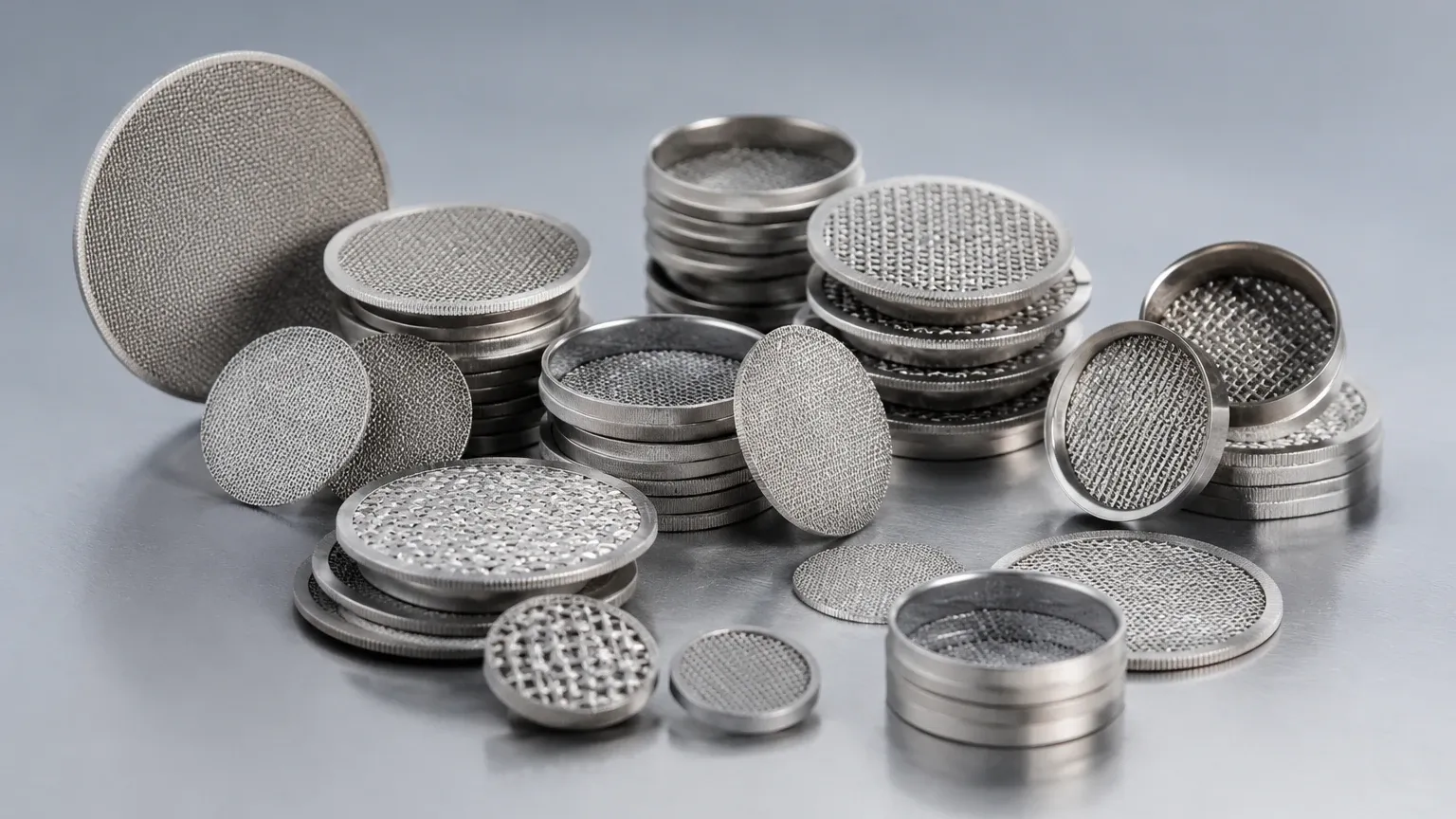
Industrial filtration solutions, particularly those involving stainless steel Filter Discs & Packs, are engineered to provide a balance between high flow rates and precise particle retention. When dealing with systems that specify an inlet filter pack astral, the focus shifts to durability and the ability to withstand varying pressure differentials without compromising the filtration media's structural integrity.
The Engineering Role of Inlet Filter Packs
The primary function of an inlet filter pack is to provide surface filtration that prevents debris from causing mechanical wear or blockages. In many industrial configurations, these packs are installed at the suction side of a pump or the entry point of a process line.
Protecting Downstream Assets
Inlet filtration is the first line of defense. In systems like those requiring an inlet filter pack astral, the presence of even microscopic abrasive particles can lead to cavitation in pumps or the erosion of valve seats. By utilizing high-quality stainless steel wire mesh, these filter packs ensure that only fluids meeting the required cleanliness standards pass through, thereby extending the mean time between failures (MTBF) for the entire system.
Maintaining Flow Dynamics
A common challenge in filtration design is the trade-off between filtration fineness and pressure drop. An improperly specified filter pack can create excessive resistance, leading to pump starvation or system inefficiency. Engineering a filter pack involves calculating the effective filtration area (EFA) to ensure that the flow velocity remains within optimal limits while still capturing the target particle size.
Technical Specifications of Filter Discs & Packs
When evaluating Filter Discs & Packs for industrial use, several technical parameters must be considered to ensure compatibility with the application requirements.
Material Selection: SS 304 vs. SS 316L
Stainless steel is the preferred material for industrial filter packs due to its exceptional mechanical strength and resistance to corrosion.
* Stainless Steel 304: Suitable for general industrial applications where basic corrosion resistance is required. It is cost-effective and provides excellent structural stability.
* Stainless Steel 316L: The "L" stands for low carbon, which enhances weldability and resistance to intergranular corrosion. This grade is essential for chemical processing, pharmaceutical, and marine environments where exposure to chlorides or acidic solutions is common.
Mesh Weave Types and Their Impact
The performance of an inlet filter pack astral is largely determined by the weave of the wire cloth used.
1. Plain Weave: The most common weave where each warp wire crosses over and under each shute wire. It offers a high open area and predictable flow characteristics.
2. Dutch Weave: This weave uses heavier warp wires and finer shute wires, resulting in a dense, strong mesh with very fine filtration openings. It is ideal for high-pressure applications where mechanical strength is paramount.
3. Twilled Weave: Allows for the use of heavier wires in a given mesh count, providing increased durability for heavy-duty filtration tasks.
Design and Construction of Multi-Layer Filter Packs
For many demanding industrial applications, a single layer of wire mesh is insufficient. Multi-layer filter packs are engineered to provide graduated filtration and enhanced mechanical support.
Layer Configuration
A typical multi-layer inlet filter pack astral may consist of three to five layers. The central layer is usually the "filtration layer," which dictates the micron rating. This is sandwiched between "support layers" of coarser mesh that prevent the fine filtration media from deforming under pressure. In some designs, a "drainage layer" is added to facilitate even fluid distribution across the disc surface.
Edge Finishing and Binding
To ensure the filter pack remains a cohesive unit and fits securely within its housing, various edge treatments are employed:
* Spot Welding: Multiple layers are fused at specific points around the perimeter. This is a cost-effective method for packs that will be held in place by a mechanical flange.
* Aluminum or Stainless Steel Rimming: The edges of the mesh layers are enclosed in a metal U-channel. This provides a smooth, rigid edge that prevents fraying and ensures a tight seal within the filter housing, which is crucial for preventing bypass in an inlet filter pack astral.
* Sintering: In high-performance scenarios, the layers are sintered together—diffused at a molecular level under heat and pressure—to create a permanent, porous metallic plate that cannot delaminate.
Performance Evaluation: Micron Rating and Pressure Drop
Engineers must distinguish between nominal and absolute filtration ratings when specifying an inlet filter pack astral.
Nominal vs. Absolute Filtration
* Nominal Rating: Indicates the ability of the filter to retain a majority of particles of a specific size (e.g., 95% of 20-micron particles). This is often sufficient for general intake protection.
* Absolute Rating: Refers to the diameter of the largest hard spherical particle that will pass through the filter under specified test conditions. This is critical for high-precision systems where no particle above a certain size can be tolerated.
Calculating Differential Pressure (ΔP)
The pressure drop across a filter pack is a function of fluid viscosity, flow rate, and the mesh's open area. As the filter accumulates debris, the ΔP will increase. It is vital to design the system with a clear understanding of the "clean pressure drop" and the "terminal pressure drop" at which the filter must be cleaned or replaced to avoid system damage.
Application Environments for Inlet Filter Pack Astral
These filtration components are utilized across a wide spectrum of industries, each with unique challenges.
Chemical and Petrochemical Processing
In these environments, filters must withstand aggressive solvents and high temperatures. The use of 316L stainless steel filter packs ensures that the media does not degrade or leach contaminants into the process stream.
Hydraulic and Lubrication Systems
Inlet filters protect sensitive hydraulic pumps from metal shavings and environmental dust. A robust inlet filter pack astral ensures that the hydraulic fluid remains within the ISO 4406 cleanliness standards required by modern high-pressure components.
Water Treatment and Desalination
Filtration packs used in water intake systems must resist biological fouling and corrosion from saline environments. Precision-engineered mesh allows for the removal of sand and organic matter while maintaining the high flow rates necessary for municipal or industrial water supply.
Maintenance and Replacement Considerations
One of the primary advantages of stainless steel Filter Discs & Packs is their cleanability. Unlike disposable polymer filters, metal filter packs can often be refurbished through various cleaning methods.
Cleaning Protocols
* Ultrasonic Cleaning: Uses high-frequency sound waves in a cleaning solution to dislodge fine particles trapped deep within the mesh layers.
* Backwashing: Reversing the flow of fluid through the filter to push contaminants off the surface. This is effective for surface-loading mesh weaves.
* Chemical Cleaning: Utilizing specific solvents or acids to dissolve scale or organic buildup, provided the chemical is compatible with the stainless steel grade.
Identifying the Replacement Cycle
Despite their durability, filter packs eventually reach the end of their service life. Indicators for replacement include:
* Permanent Pressure Drop: When the clean pressure drop after cleaning is significantly higher than the original specification, indicating deep-seated blinding.
* Mechanical Deformation: Signs of "dishing" or mesh distortion caused by pressure spikes.
* Structural Failure: Any breach in the mesh or separation of the rimming that could allow unfiltered fluid to bypass the media.
Selecting a Manufacturer for Custom Filtration Solutions
When sourcing an inlet filter pack astral, partnering with a manufacturer that offers OEM and customization capabilities is essential. Industrial systems often require non-standard diameters, unique layer combinations, or specific tolerances that off-the-shelf products cannot meet.
Engineering Support and Material Traceability
A reliable manufacturer should provide technical guidance on mesh selection and provide material certifications (MTRs) to ensure the stainless steel meets international standards. This traceability is particularly important in the pharmaceutical and food industries, where compliance is mandatory.
Quality Control in Production
Precision in the manufacturing of filter packs involves rigorous quality control, including bubble point testing to verify filtration accuracy and dimensional inspections to ensure a perfect fit in the target equipment. For critical applications like an inlet filter pack astral, consistency across production batches is vital for maintaining system performance across multiple installations.
Conclusion
The specification of an inlet filter pack astral is a technical decision that impacts the long-term reliability and efficiency of industrial fluid systems. By focusing on high-quality materials, precise weave geometries, and robust construction techniques, engineers can ensure that their equipment remains protected against the damaging effects of particulate contamination. Whether for hydraulic systems, chemical processing, or water treatment, the use of engineered stainless steel Filter Discs & Packs provides a durable and cost-effective solution for the most demanding filtration challenges.
