


L Filters
In industrial fluid processing and gas filtration, the geometry of a filtration system is often as critical as the media itself. Among the various configurations used to manage flow and pressure, L filters—characterized by their 90-degree inlet and outlet orientation—serve a vital role in space-constrained environments and applications requiring high-efficiency inline debris removal. These systems rely heavily on the internal filtration elements, specifically precision-engineered stainless steel components, to maintain system integrity and process purity.
For engineers and procurement specialists, selecting the correct internal components for these systems requires a deep understanding of material science, fluid dynamics, and mechanical durability. This guide examines the technical considerations of L filters, focusing on the integration of Filter Discs & Packs within these industrial systems to optimize performance and longevity.
Understanding the Engineering of L Filters and Filter Packs
The "L" configuration in industrial filtration refers to the right-angle flow path of the housing. This design is frequently chosen for its compact footprint and the ease with which the filter element can be accessed. Unlike T-type or Y-type strainers, L filters often allow for top-entry or side-entry maintenance that does not necessitate the complete disassembly of the piping system.
At the heart of these systems are the filter packs. These are not merely single layers of mesh but are often complex, multi-layered structures designed to handle specific pressure differentials and particulate loads. In an L filter housing, the flow typically enters through the side and is forced through a cylindrical or disc-shaped pack before exiting through the bottom (or vice versa). This path creates specific turbulence patterns that must be accounted for during the design of the filter mesh.
Engineering considerations for these packs include:
* Structural Rigidity: Because the flow hits the filter medium at an angle or under high velocity, the filter discs must be reinforced—often through spot welding or sintering—to prevent deformation.
* Effective Filtration Area (EFA): The 90-degree turn can sometimes lead to uneven distribution of particulates. High-quality packs are designed to maximize the available surface area to ensure uniform cake buildup and extended service life.
* Sealing Integrity: In L-shaped housings, the bypass of unfiltered fluid is a common risk. Precision-cut discs with compressed edges or specialized rims are essential to ensure a tight seal against the housing seat.
Material Selection and Compatibility for Industrial Filtration
The performance of l filters is fundamentally limited by the materials used in their construction. In the B2B industrial sector, stainless steel is the standard due to its mechanical strength and resistance to environmental degradation. However, the specific grade of steel must be matched to the chemical and thermal profile of the process.
Stainless Steel 304 vs. 316L
While Type 304 stainless steel is suitable for general-purpose water filtration and basic industrial applications, 316L is the preferred choice for more demanding environments. The addition of molybdenum in 316L provides superior resistance to chlorides and pitting, which is essential in chemical processing and marine applications. Furthermore, the "L" in 316L stands for "Low Carbon," which minimizes carbide precipitation during welding, ensuring that the filter packs remain corrosion-resistant at the joint points.
Advanced Alloys
For extreme conditions involving highly acidic or alkaline fluids, or temperatures exceeding 500°C, specialized alloys such as Monel, Inconel, or Hastelloy may be required. These materials are used in the construction of wire mesh filters to prevent premature failure due to stress corrosion cracking or high-temperature oxidation.
Performance Expectations: Filtration Accuracy and Flow Rates
When specifying Filter Discs & Packs for L filters, engineers must balance two competing factors: filtration fineness (micron rating) and flow resistance (pressure drop).
Micron Ratings: Absolute vs. Nominal
It is crucial to distinguish between nominal and absolute filtration ratings. A nominal rating refers to the ability of the mesh to retain a certain percentage of solids of a specific size. An absolute rating, common in pharmaceutical and high-precision chemical applications, indicates that the mesh will stop 99.9% of particles above a certain micron size. For l filters used in hydraulic systems or polymer melt processing, absolute ratings are often required to protect downstream components from catastrophic wear.
Managing Pressure Drop (Delta P)
The pressure drop across a filter pack is a function of the mesh weave type and the number of layers.
* Plain Weave: Offers the highest flow rates but lower structural strength for fine filtration.
* Dutch Weave: Provides a much denser structure, allowing for very fine micron ratings while maintaining high mechanical strength. This is ideal for high-pressure l filters.
* Multi-layer Sintered Packs: By bonding multiple layers of different mesh counts together, engineers can create a depth-filtration effect. This allows the pack to trap larger particles in the outer layers while the inner layers provide the final precision cut, significantly reducing the rate of pressure increase over time.
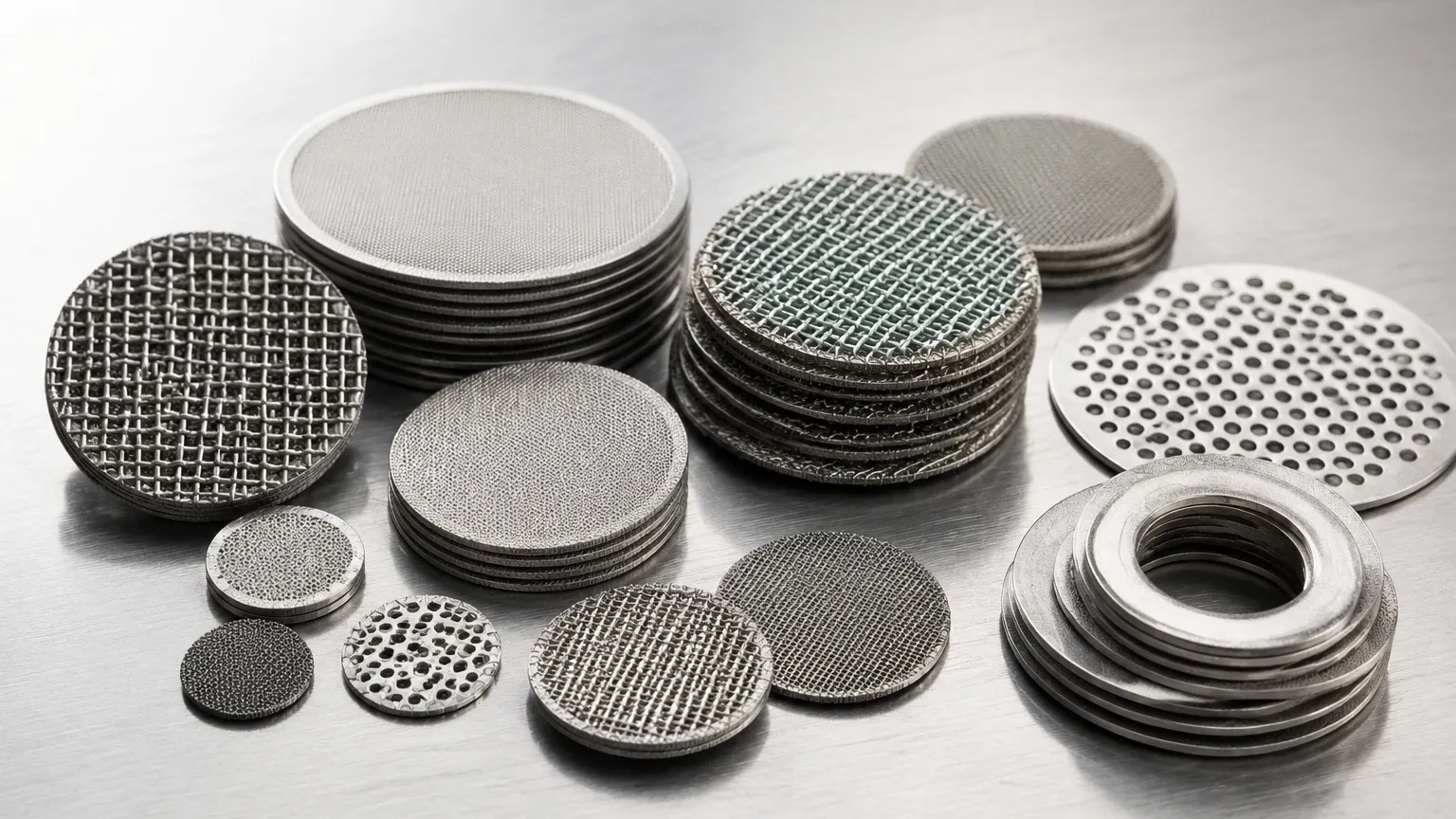
Customization Options for Specific Industrial Applications
Off-the-shelf solutions rarely meet the stringent requirements of specialized industrial equipment. Customization is often necessary to ensure that the filter element fits the specific internal geometry of the L filter housing and meets the process requirements.
Edge Treatments and Framing
Filter discs can be supplied with various edge finishes depending on the installation method. For systems where the disc is clamped between flanges, a metal rim (often aluminum or stainless steel) is added to provide a crush-resistant seal. In other applications, spot-welded edges or plasma-cut edges are used to prevent fraying of the wire mesh and to facilitate easier handling during replacement.
Shape and Layering
While circular discs are the most common, L filters may require oval, rectangular, or ring-shaped packs. The layering sequence can also be customized. For example, a five-layer sintered mesh might consist of a fine filtration layer protected by two coarser support layers and two outer drainage layers. This configuration is particularly effective in high-viscosity fluid filtration, such as in the production of resins or food oils.
Maintenance, Replacement Cycles, and Total Cost of Ownership
A common question for purchasing teams is whether to opt for disposable or cleanable filter elements. Stainless steel Filter Discs & Packs are generally cleanable, which offers a significant advantage in terms of the Total Cost of Ownership (TCO) compared to polymer-based filters.
Determining Replacement Cycles
The replacement or cleaning cycle is typically triggered by a pre-defined pressure drop limit. In automated systems, differential pressure sensors monitor the inlet and outlet of the l filters. Once the Delta P reaches a critical threshold, the system is either back-washed or the pack is removed for ultrasonic cleaning.
Factors that influence the replacement cycle include:
1. Contaminant Loading: The concentration and type of solids in the process stream.
2. Cleaning Efficiency: How effectively the mesh can be restored to its original permeability. Over time, "blinding" (permanent clogging) may occur, necessitating a full replacement.
3. Mechanical Fatigue: Repeated cleaning and high-pressure cycles can eventually cause wire fatigue, leading to mesh breakage and potential downstream contamination.
Cost Considerations
While the initial investment in a high-quality stainless steel pack is higher than that of a temporary mesh, the reduction in downtime, the elimination of frequent disposal costs, and the protection of expensive downstream machinery (like pumps and nozzles) result in a lower TCO over the life of the project.
Selecting the Right Filter Discs & Packs for Your L Filter System
To ensure the successful implementation of l filters in your facility, engineers should confirm the following technical data points before finalizing a specification:
* Fluid Chemistry: Ensure the stainless steel grade is compatible with the pH and chemical composition of the fluid.
* Operating Temperature: Confirm that the mesh and any sealing materials can withstand the maximum process temperature.
* Maximum Differential Pressure: The pack must be designed to withstand the highest possible pressure drop without collapsing or bypassing.
* Particle Size Distribution: Understanding the size and shape of the contaminants allows for the selection of the optimal weave type and micron rating.
By focusing on these technical parameters, procurement and engineering teams can select filtration components that provide reliable, long-term performance in even the most demanding industrial environments. For those seeking high-performance, customized solutions, exploring specialized Filter Discs & Packs is the most effective way to ensure system efficiency and product purity.
In conclusion, l filters are a cornerstone of modern industrial piping and fluid management. Their success depends entirely on the precision and quality of the internal filter packs. By prioritizing material integrity, custom engineering, and a thorough understanding of flow dynamics, industrial operators can achieve optimized filtration results that support both operational excellence and cost-efficiency.
