


L Filter Cartridge
In the landscape of industrial liquid and gas processing, the L filter cartridge represents a critical component for achieving high-purity results in demanding environments. These cartridges are engineered to provide robust mechanical strength, chemical resistance, and precise filtration ratings. For engineers and procurement professionals, understanding the technical nuances of these components—ranging from material selection to the integration of specialized filter media—is essential for optimizing system performance and reducing long-term operational costs.
As a specialized manufacturer of stainless steel filtration solutions, Kaifil focuses on providing components that withstand the rigors of chemical processing, pharmaceutical production, and hydraulic systems. This guide explores the engineering principles behind the L filter cartridge and how it interfaces with other filtration elements to deliver reliable performance.
Understanding the Design and Functionality of L Filter Cartridges
The "L" designation in filter cartridges often refers to specific length configurations or series designs intended for standardized industrial housings. These cartridges are typically characterized by their cylindrical shape, designed to maximize surface area within a compact footprint. Unlike disposable polymer filters, industrial-grade L filter cartridges often utilize metallic media, such as stainless steel wire mesh or sintered metal fibers, to handle high temperatures and corrosive fluids.
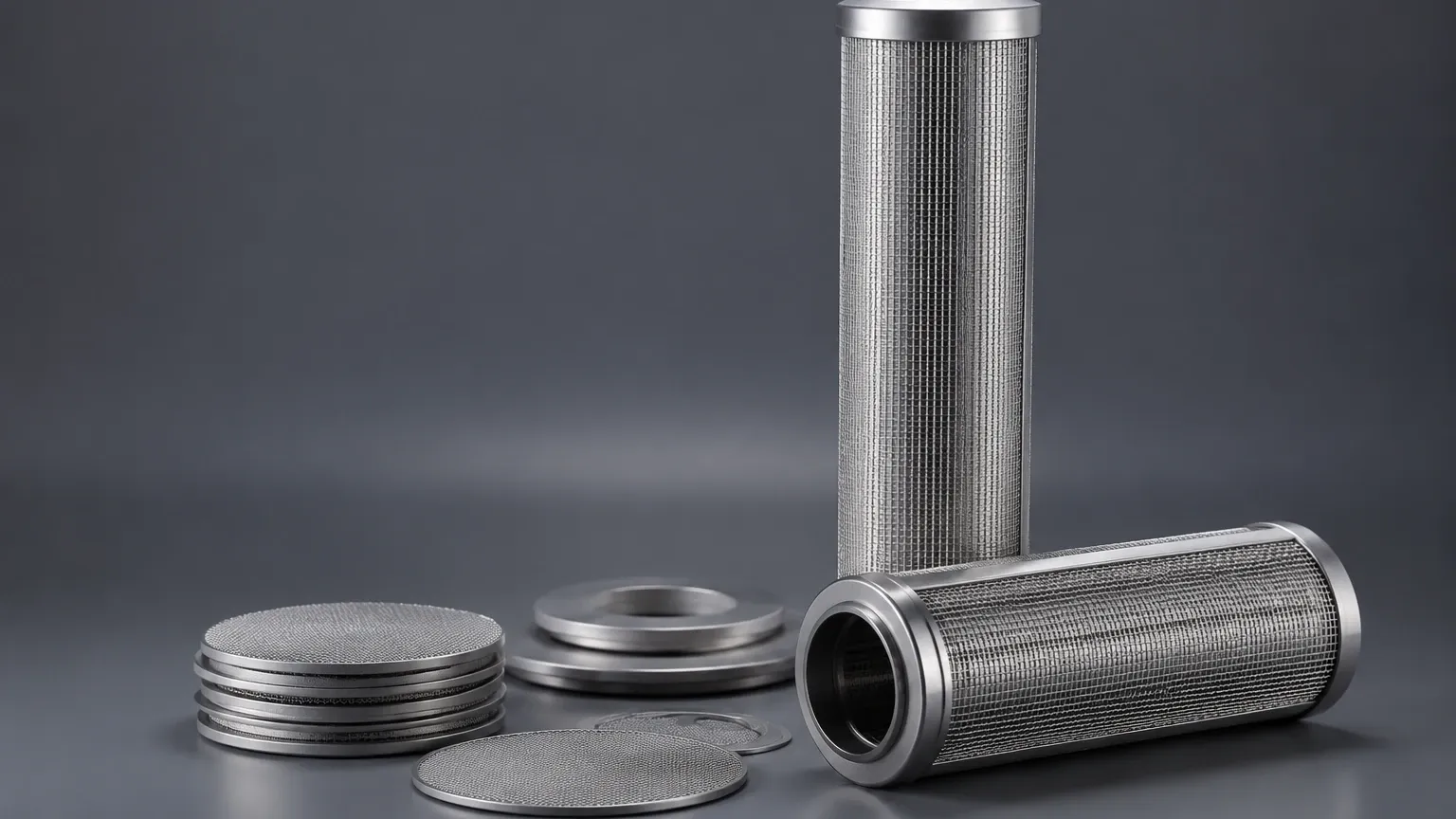
The functionality of these cartridges relies on a multi-layer construction. The core is usually a perforated support tube that provides structural integrity against high differential pressures. Surrounding this core is the primary filtration media, which can be pleated to increase the effective filtration area or wrapped in multiple layers for depth filtration. The outer layer often includes a protective shroud or mesh to prevent mechanical damage during installation and handling.
Key design considerations for these cartridges include:
* End Cap Configurations: Standardized fittings such as DOE (Double Open End), SOE (Single Open End) with 222 or 226 O-rings, and threaded connections ensure compatibility with existing filter housings.
* Seal Integrity: High-quality gaskets and O-rings made from Viton, EPDM, or PTFE are used to prevent bypass, ensuring that all fluid passes through the filtration media.
* Structural Support: For high-viscosity fluids or high-pressure applications, internal and external support cages are essential to prevent media collapse.
Material Engineering: Why Stainless Steel is the Preferred Choice
For most B2B industrial applications, the material of construction is the primary determinant of a filter cartridge's lifespan and effectiveness. Stainless steel, particularly grades 304, 316, and 316L, is the industry standard for several reasons:
Corrosion and Chemical Resistance
In chemical processing and water treatment, filters are frequently exposed to aggressive solvents, acids, and bases. Stainless steel 316L, with its low carbon content and addition of molybdenum, offers superior resistance to pitting and crevice corrosion. This makes it ideal for the L filter cartridge when used in marine environments or with chlorinated fluids.
Thermal Stability
Polymeric filters often fail or lose structural integrity at temperatures exceeding 100°C. In contrast, stainless steel cartridges can operate effectively at temperatures up to 300°C or higher, depending on the seal materials used. This is vital for steam filtration, hot oil processing, and high-temperature gas applications.
Cleanability and Sustainability
One of the most significant advantages of metallic cartridges is that they are cleanable and reusable. Through backwashing, ultrasonic cleaning, or chemical soaking, the accumulated contaminants can be removed, restoring the filter's original flow characteristics. This reduces the total cost of ownership (TCO) by eliminating the need for frequent replacement and reducing waste disposal costs.
The Role of Filter Discs & Packs in Cartridge Construction
While the cartridge is the final assembly, its performance is dictated by the quality of the internal media. In many advanced filtration systems, the primary filtration stage utilizes specialized components to achieve precise micron ratings. For instance, high-performance Filter Discs & Packs are often integrated into the end caps or used as pre-filtration layers within the cartridge assembly.
These discs and packs are manufactured by layering multiple sheets of wire mesh, which are then spot-welded or rim-bound to create a stable filtration unit. By combining different mesh counts—such as a fine filtration layer protected by coarser support layers—engineers can achieve a high dirt-holding capacity without sacrificing flow rate. In an L filter cartridge, these packs serve as the final barrier, ensuring that even under fluctuating pressure, the particle retention remains consistent.
Using high-quality Filter Discs & Packs within the cartridge design allows for:
* Precise Micron Control: Achieving absolute ratings from 1 micron to 200 microns.
* Enhanced Mechanical Strength: The layered structure of packs resists deformation better than single-layer mesh.
* Customized Flow Paths: Engineers can specify the layering sequence to optimize for depth or surface filtration based on the specific contaminant profile.
Technical Specifications and Selection Criteria
Selecting the correct L filter cartridge requires a detailed analysis of the application's technical requirements. Engineers must look beyond the physical dimensions and evaluate the following metrics:
Micron Rating: Absolute vs. Nominal
A nominal rating indicates the filter's ability to retain a majority of particles of a specific size, whereas an absolute rating guarantees the retention of 99.9% (Beta 1000) of particles at that size. For critical applications like pharmaceutical sterile air filtration or catalyst recovery, absolute-rated cartridges are mandatory.
Differential Pressure (ΔP)
The pressure drop across the filter is a key indicator of efficiency. A high initial ΔP suggests that the filter may be undersized for the flow rate, while a rapid increase in ΔP during operation indicates high contaminant loading. Cartridges should be selected to operate within a specific pressure range to avoid media rupture or bypass.
Flow Rate and Viscosity
The flow capacity of an L filter cartridge is inversely proportional to the fluid's viscosity. When filtering heavy oils or polymers, the surface area must be significantly increased (often through pleating) to maintain an acceptable flow rate without exceeding the maximum allowable differential pressure.
Industrial Applications: From Chemical Processing to Pharmaceuticals
The versatility of the L filter cartridge makes it a staple in various sectors. Its robust construction allows it to handle the unique challenges of different industrial workflows.
* Chemical and Petrochemical: Used for the filtration of polymers, solvents, and fuels. The ability to withstand aggressive chemicals and high pressures is paramount here.
* Food and Beverage: In this sector, cartridges must meet FDA and EU food contact regulations. Stainless steel cartridges are used for clarifying syrups, filtering edible oils, and removing particulates from CO2 used in carbonation.
* Pharmaceutical and Biotech: Precision is the priority. Cartridges are used for pre-filtration of active pharmaceutical ingredients (APIs) and for protecting sensitive downstream equipment like chromatography columns.
* Hydraulic and Lubrication Systems: Protecting high-precision valves and pumps from wear-inducing particles. The L filter cartridge ensures fluid cleanliness levels meet ISO 4406 standards.
Maintenance, Cleaning, and Replacement Cycles
To maximize the lifespan of a stainless steel L filter cartridge, a structured maintenance program is required. Unlike disposable filters, which are discarded when the terminal pressure drop is reached, metallic cartridges can be refurbished.
1. In-Situ Backwashing: Many systems are designed to reverse the flow of fluid through the cartridge to dislodge surface-level contaminants. This is effective for coarse particles and non-adhesive cakes.
2. Ultrasonic Cleaning: For deep-seated contaminants within the mesh layers, ultrasonic baths use high-frequency sound waves to create cavitation bubbles that gently scrub the metal surfaces.
3. Chemical Cleaning: Soaking the cartridge in specific detergents or solvents can dissolve organic build-up or scale that mechanical cleaning cannot reach.
It is important to note that while these cartridges are reusable, they do have a finite lifespan. Repeated cleaning cycles and exposure to high pressure can eventually lead to "media migration" or fatigue cracks in the mesh. Regular inspection under magnification is recommended to ensure the integrity of the filtration layers.
Customization and OEM Solutions for Specialized Filtration
Standard off-the-shelf cartridges do not always meet the requirements of specialized industrial machinery. This is where custom engineering becomes vital. Manufacturers like Kaifil work closely with OEM partners to develop bespoke L filter cartridge solutions tailored to specific operating conditions.
Customization options include:
* Variable Layering: Adjusting the number and type of mesh layers within the cartridge to target specific particle distributions.
* Specialty Alloys: Utilizing Monel, Inconel, or Hastelloy for environments involving extreme heat or highly acidic conditions where standard 316L may fail.
* Unique Geometry: Designing cartridges with non-standard lengths or diameters to fit proprietary housing designs.
* Reinforced Cores: Engineering extra-thick internal support tubes for applications involving extreme pressure surges or high-viscosity fluids.
By collaborating with a manufacturer that understands both the metallurgy and the fluid dynamics of filtration, purchasing teams can ensure they receive a product that balances performance with durability.
Conclusion: Optimizing Filtration Performance
The L filter cartridge is more than just a consumable; it is an engineered component that plays a vital role in process efficiency and product quality. By selecting the right materials, understanding the importance of integrated components like Filter Discs & Packs, and adhering to rigorous maintenance protocols, industrial operators can achieve superior filtration results.
When evaluating filtration partners, it is essential to prioritize technical expertise and manufacturing quality. A well-designed stainless steel cartridge not only protects downstream equipment but also contributes to a more sustainable and cost-effective production cycle. Whether for chemical, food, or hydraulic applications, the right filtration solution starts with a deep understanding of the specific challenges of the environment and a commitment to precision engineering.
