How to Filter One Piece Packs
In high-pressure industrial environments such as polymer extrusion, chemical processing, and fiber spinning, the efficiency of a filtration system often hinges on the integrity of the filter media assembly. Engineers frequently move away from loose mesh screens toward integrated solutions. Understanding how to filter one piece packs effectively requires a deep dive into the mechanical structure, material compatibility, and fluid dynamics of multi-layer assemblies. These components, often referred to as rimmed or spot-welded packs, are designed to provide a cohesive filtration barrier that simplifies installation and enhances performance consistency.
Understanding the Structure of One Piece Filter Packs
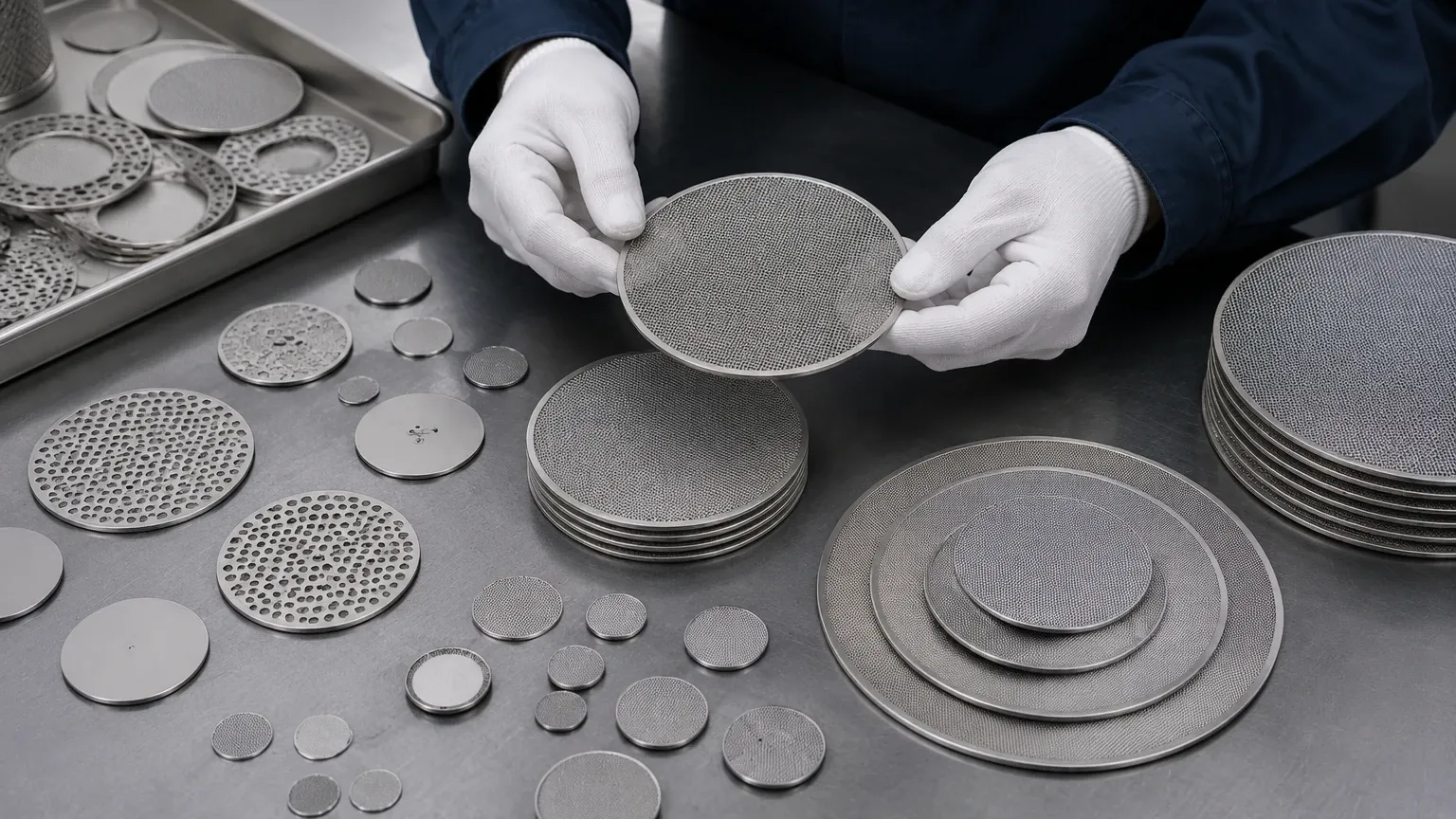
A "one piece pack" is essentially a multi-layer composite of stainless steel wire cloth that has been permanently joined. Unlike loose discs that must be stacked manually into a machine, these packs are engineered as a single unit. The primary benefit of this design is the elimination of bypass risks and the assurance that the layers remain in the correct sequence during high-pressure cycles.
Layer Configuration and Hierarchy
Typically, a one-piece pack consists of three distinct functional layers:
1. The Drainage/Support Layer: Located on the downstream side, this is a coarse mesh with high mechanical strength. Its role is to support the finer layers against the pressure of the fluid and to provide a clear path for the filtrate to reach the breaker plate.
2. The Filtration Layer: This is the heart of the pack, often featuring a fine Dutch weave or square weave mesh. The micron rating of this layer determines the filtration accuracy of the entire assembly.
3. The Protective/Buffer Layer: Positioned on the upstream side, this layer protects the fine filtration mesh from mechanical damage during installation and helps distribute the incoming flow of raw material evenly across the surface.
Binding Methods
To maintain the "one piece" integrity, manufacturers like Kaifil utilize two primary binding methods. Spot welding involves fusing the layers at specific points along the perimeter or across the surface. This is cost-effective and suitable for applications where the pack is housed in a tight-fitting recessed cavity. Rim binding, on the other hand, involves crimping a metal U-channel (usually aluminum, stainless steel, or copper) around the edge. This provides a superior seal and prevents any individual wires from fraying or migrating into the process stream.
Engineering Considerations for Selecting One Piece Packs
When determining how to filter one piece packs in a specific industrial application, engineers must evaluate several technical variables to ensure the assembly does not become a bottleneck or a point of failure.
Micron Rating and Particle Retention
The selection of the filtration layer must align with the purity requirements of the end product. In polymer extrusion, for instance, removing gels or carbonized particles requires precise micron control. However, selecting a mesh that is too fine can lead to premature blinding and excessive pressure buildup. Engineers must balance the Absolute Micron Rating (the size of the largest particle that can pass through) with the Nominal Micron Rating (the average pore size).
Differential Pressure (Delta P)
The pressure drop across a clean filter pack is a critical metric. A high initial Delta P indicates that the filter area may be insufficient or the mesh weave is too restrictive for the fluid's viscosity. Filter Discs & Packs must be designed to withstand the maximum expected differential pressure without deforming. If the support layer is insufficient, the fine mesh can be pushed into the holes of the breaker plate, a phenomenon known as "dimpling," which compromises filtration integrity.
Material Compatibility
Stainless steel 304 is the standard for many general industrial applications due to its balance of cost and corrosion resistance. However, in pharmaceutical or highly acidic chemical environments, Stainless Steel 316L is preferred due to its higher molybdenum content, which provides superior resistance to pitting and crevice corrosion. For extremely high-temperature processes, specialized alloys like Inconel or Monel may be required to maintain tensile strength.
How to Filter One Piece Packs: Installation and Integration
The physical installation of a one-piece pack is simpler than loose mesh, but it requires strict adherence to orientation and sealing protocols to be effective.
Proper Orientation
One of the most common errors in industrial filtration is installing a multi-layer pack backward. Because one-piece packs are asymmetric, the coarse support layer must always face downstream (toward the breaker plate). If installed in reverse, the fine filtration layer lacks the necessary mechanical support and will likely rupture under the force of the process flow. Many manufacturers now include directional markings or use different rim materials to help operators identify the correct orientation.
Sealing and Bypass Prevention
The effectiveness of a filter pack is nullified if the fluid can bypass the media by flowing around the edges. In a rimmed one-piece pack, the rim itself often acts as a gasket. When the filter housing is tightened, the rim compresses against the seating surface, creating a mechanical seal. Engineers should confirm the tolerances of the filter cavity; if the cavity is too large, the pack may shift, leading to edge leakage.
Integration with Breaker Plates
The breaker plate serves as the foundation for the filter pack. It must be inspected regularly for flatness and hole-pattern integrity. If the breaker plate is worn or warped, the one-piece pack will not seat correctly. Furthermore, the hole diameter of the breaker plate should be compatible with the mesh count of the pack's support layer to prevent the mesh from being forced into the openings.
Performance Evaluation and Replacement Cycles
To optimize the process of how to filter one piece packs, a data-driven approach to maintenance is required. Relying on fixed time intervals for replacement often leads to either wasted filter life or unexpected downtime.
Monitoring Pressure Spikes
The most reliable indicator of a spent filter pack is a steady increase in differential pressure. As the pores of the filtration layer capture contaminants, the effective open area decreases, forcing the pump to work harder to maintain flow. Most modern extrusion and chemical lines are equipped with pressure transducers upstream and downstream of the filter. A "terminal pressure" should be established—this is the point at which the risk of pack rupture or pump strain outweighs the benefit of continued production.
Analyzing Filter Cake
Upon removal, the one-piece pack should be inspected. The distribution of the filter cake (the layer of debris on the upstream side) can reveal flow distribution issues. An uneven cake suggest that the fluid is not hitting the filter face uniformly, which could be a sign of poor housing design or an obstructed inlet. This analysis helps engineers refine their filtration strategy for the next cycle.
Cleaning vs. Replacement
While some heavy-duty stainless steel filter packs can be cleaned using ultrasonic baths or pyrolysis (burn-off) ovens, many one-piece packs are treated as semi-disposable components. The decision to clean depends on the value of the pack versus the cost and risk of the cleaning process. If a pack is cleaned, it must be integrity-tested (e.g., via a bubble point test) to ensure the mesh pores have not been enlarged or damaged during the cleaning cycle.
Customization Options for Demanding Applications
Industrial filtration is rarely a one-size-fits-all endeavor. Customizing one-piece packs allows engineers to solve specific process challenges that standard off-the-shelf components cannot address.
Geometry and Shape
While circular discs are the most common, many extrusion systems require oval, kidney-shaped, or rectangular packs. Precision laser cutting or die-stamping ensures that these complex shapes fit perfectly into the machine's filter slide or changer. Accurate dimensions are critical for preventing "dead zones" where material can stagnate and degrade.
High-Density Weaves
For applications requiring sub-10-micron filtration, such as in the production of high-grade optical films or fine synthetic fibers, one-piece packs can be constructed using multi-layered sintered wire cloth or metal fiber felt. These materials offer higher dirt-holding capacity and lower initial pressure drops compared to standard square weave mesh, though they represent a higher initial investment.
OEM Specifications and Prototyping
Working with a manufacturer that understands OEM requirements is essential for purchasing teams. Providing detailed specifications—including wire diameter, mesh count, and alloy grade—ensures that the replacement packs perform identically to the original equipment. Prototyping different layer combinations can also help engineers find the "sweet spot" between filtration fineness and the length of the production run.
Total Cost of Ownership and Procurement Guidance
When evaluating how to filter one piece packs from a procurement perspective, the focus should shift from the unit price to the Total Cost of Ownership (TCO). A cheaper, lower-quality pack may save money upfront but can lead to significant losses if it fails prematurely.
The Cost of Downtime
In continuous manufacturing processes, the cost of stopping a line to replace a failed filter pack can reach thousands of dollars per hour. A high-quality one-piece pack with a robust rim and high-grade stainless steel mesh reduces the frequency of these interruptions. By extending the interval between filter changes, the TCO is significantly reduced.
Quality Control Standards
Purchasing teams should verify that their supplier adheres to strict quality control measures. This includes material traceability (MTRs) to ensure the stainless steel is the grade specified, and dimensional inspections to ensure the packs fit the machinery without modification. For critical applications, requesting a bubble point test or a pressure-drop simulation can provide peace of mind before a large order is placed.
Supply Chain Reliability
Given the specialized nature of these components, maintaining a reliable supply chain is paramount. Engineers should work with manufacturers who offer customized stocking programs or short lead times for custom designs. This prevents the need to hold excessive inventory while ensuring that production never halts due to a lack of filtration components.
Conclusion
Mastering how to filter one piece packs involves a combination of mechanical understanding, material science, and rigorous process monitoring. By selecting the correct layer configuration, ensuring proper installation orientation, and monitoring differential pressure, industrial operators can achieve high levels of product purity and process stability. Whether used in the delicate filtration of pharmaceuticals or the heavy-duty demands of polymer recycling, integrated filter packs remain a cornerstone of modern industrial efficiency. Focusing on quality construction and technical compatibility ensures that these components deliver reliable performance in the most demanding environments.