


Photo Filter Packs
In high-precision industrial manufacturing, the integrity of filtration components directly dictates the quality of the final output. Among the various configurations available, photo filter packs—specifically those utilizing photochemical etching or designed for high-precision chemical and optical processes—represent a pinnacle of engineering accuracy. These components are essential in environments where standard mechanical punching or traditional wire mesh weaving cannot meet the stringent tolerance requirements. For engineers and procurement specialists, understanding the technical nuances of Filter Discs & Packs is critical for optimizing process efficiency and ensuring long-term equipment reliability.
The Role of Precision in Industrial Filtration
Industrial filtration is not merely about removing contaminants; it is about controlling the flow and purity of media under extreme conditions. Photo filter packs are often employed in applications such as polymer melt filtration, chemical fiber production, and the manufacturing of optical-grade materials. In these sectors, even microscopic irregularities in a filter's surface can lead to flow disturbances, pressure drops, or the bypass of undesirable particulates.
The term "photo filter packs" in a B2B industrial context often refers to filter assemblies that incorporate photo-etched metal components. Photochemical etching (PCE) allows for the creation of complex hole patterns and ultra-fine apertures in stainless steel and other alloys without the thermal stress associated with laser cutting or the mechanical burrs caused by die-stamping. This results in a filter disc with perfectly smooth edges and precise geometry, which is vital for maintaining laminar flow and preventing material stagnation.
Engineering Considerations: Etching vs. Traditional Methods
When selecting between traditionally manufactured wire mesh discs and photo-etched filter packs, engineers must evaluate the specific demands of their application. Traditional wire mesh is excellent for high-porosity and general-purpose filtration. However, when the application requires specific hole shapes (such as conical or hexagonal) or extremely high structural rigidity at a thin gauge, photo-etched components offer distinct advantages.
Burr-Free Manufacturing
One of the primary benefits of photo-etched components within a filter pack is the absence of burrs. In mechanical punching, the shearing force always leaves a microscopic edge. In high-velocity fluid environments, these burrs can break off, becoming contaminants themselves, or they can cause localized turbulence. Photo-etched discs are chemically milled, ensuring that every aperture is clean and consistent across the entire surface of the disc.
Tolerance and Consistency
Photo-etching allows for tolerances as tight as ±0.01mm. For multi-layer filter packs, this consistency ensures that when layers are stacked—whether through spot welding or aluminum/stainless steel rimming—the alignment of the filtration media remains exact. This precision is particularly important in "photo" applications where light transmission or chemical consistency is the primary metric of success.
Material Selection for Filter Discs & Packs
The performance of a filter pack is heavily dependent on the metallurgy of its components. Most industrial filter packs are constructed from stainless steel due to its balance of mechanical strength and chemical resistance.
1. 304 Stainless Steel: The standard choice for general industrial applications. It provides good corrosion resistance and is cost-effective for water treatment or basic chemical processing.
2. 316L Stainless Steel: Preferred for pharmaceutical, food and beverage, and highly corrosive chemical environments. The low carbon content and the addition of molybdenum enhance resistance to pitting and crevice corrosion, especially in chloride-rich environments.
3. Specialty Alloys: In extreme cases involving high temperatures or aggressive acids, materials like Inconel, Monel, or Hastelloy may be used within the pack structure to ensure the filter does not degrade during the production cycle.
When designing photo filter packs, the choice of material also affects the etching speed and the precision of the aperture geometry. Engineers must coordinate with manufacturers to ensure the selected alloy is compatible with the intended chemical cleaning cycles (such as ultrasonic cleaning or chemical solvent baths) used to extend the filter's service life.
Structural Configuration: Single-Layer vs. Multi-Layer Packs
Filter packs are rarely composed of a single sheet of material. Instead, they are engineered as composite structures to balance filtration fineness with structural integrity.
Single-Layer Discs
Used primarily in low-pressure applications or as a final "polishing" stage. These are often photo-etched plates that provide a specific micron rating while maintaining a slim profile.
Multi-Layer Sintered or Welded Packs
To handle high-pressure differentials, multiple layers of wire mesh and etched plates are combined. A typical configuration might include:
* A Support Layer: A coarse, high-strength mesh that provides structural rigidity.
* The Filtration Layer: A fine wire mesh or a photo-etched disc that determines the actual micron rating.
* A Drainage Layer: Positioned to ensure the filtered fluid can exit the pack efficiently without creating backpressure.
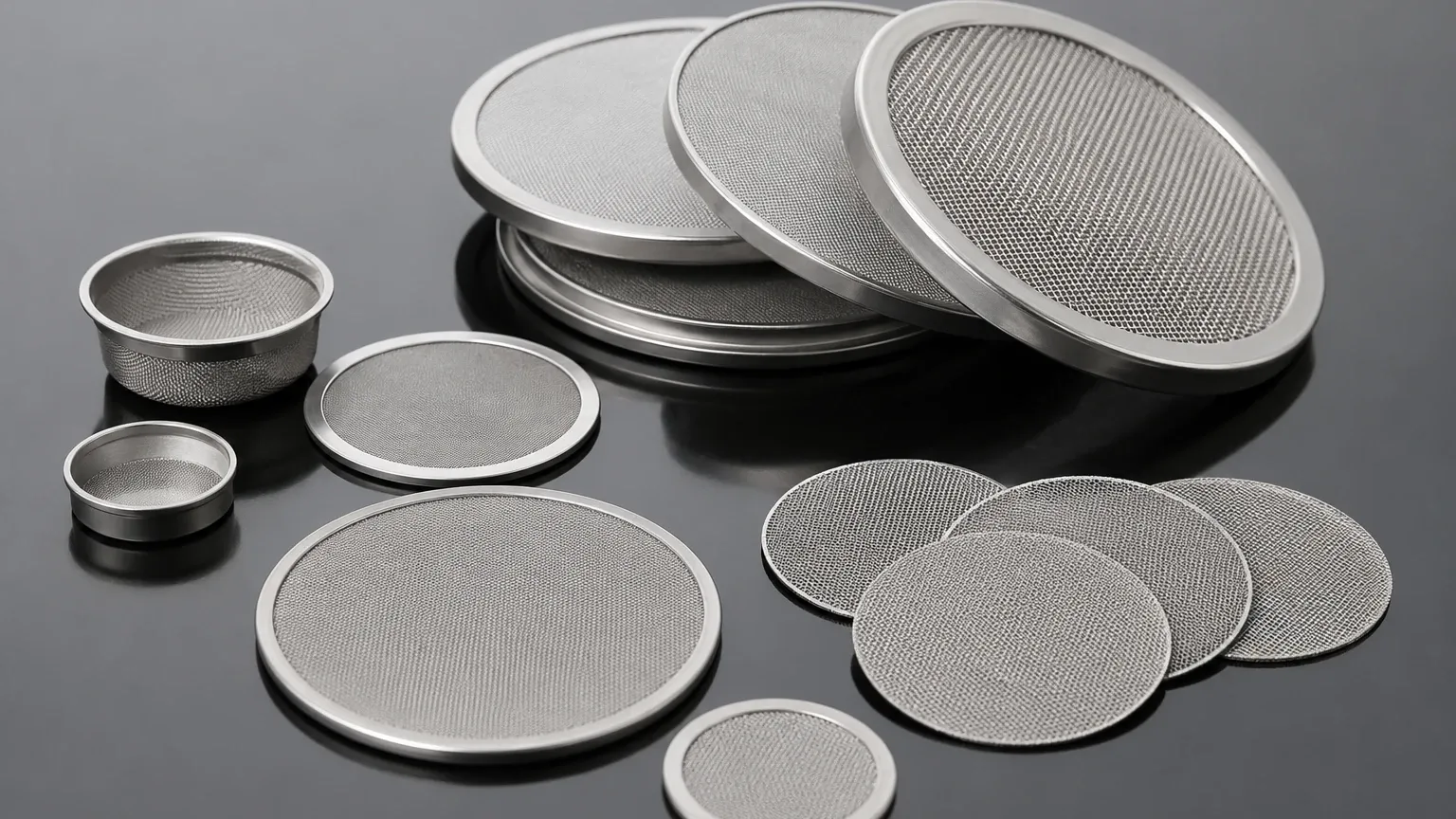
These layers are often bound together by a metal rim (frame). The rimming process—using materials like aluminum, copper, or stainless steel—prevents the edges of the mesh from fraying and ensures a tight seal within the filter housing, preventing bypass.
Applications in High-Tech Industries
While the term "photo filter" might suggest photography, in the B2B manufacturing world, these packs are integral to the production of the hardware and materials that make modern imaging possible.
Semiconductor and Electronics
In the production of silicon wafers and electronic components, the chemicals used for etching and cleaning must be filtered to sub-micron levels. Photo-etched filter packs provide the necessary precision to remove particles that could cause defects in microcircuitry.
Polymer and Resin Filtration
In the extrusion of high-quality films and fibers, the presence of "gels" or degraded polymer particles can ruin a production run. Filter packs used in these extruders must withstand high temperatures (up to 300°C) and high pressures while providing a uniform flow path to prevent the polymer from overheating in dead zones.
Optical and Laboratory Equipment
Precision is paramount in laboratory settings where fluids are analyzed based on their light-scattering properties. Any particulate matter introduced by a low-quality filter can skew results. Photo-etched packs ensure that the filtration process itself does not introduce noise into the analytical system.
Evaluation Criteria for Procurement and Engineering
When sourcing Filter Discs & Packs, procurement teams should look beyond the initial unit cost and focus on the total cost of ownership (TCO). A lower-quality filter that requires frequent replacement or causes system downtime is significantly more expensive than a high-precision component.
Key Technical Specifications to Confirm:
* Micron Rating: Is it absolute or nominal? For high-precision photo applications, absolute ratings are usually required.
* Pressure Drop ($ΔP$): What is the clean pressure drop at the intended flow rate? High-quality etched packs are designed to maximize open area while maintaining strength.
* Cleaning Compatibility: Can the filter be backwashed or cleaned via pyrolysis? Stainless steel packs are generally preferred for their ability to be reused after specialized cleaning.
* Edge Finish: For packs used in sensitive housings, a smooth, rimmed edge is necessary to prevent damage to the equipment's internal seals.
Common Risks and Quality Assurance
The primary risk in utilizing sub-standard filter packs is "media migration." This occurs when the wires of a mesh or the fragments of a poorly etched plate break loose and enter the downstream flow. To mitigate this, reputable manufacturers like Kaifil employ rigorous quality control measures, including bubble point testing and microscopic inspection of aperture consistency.
Another risk is bypass. If the diameter of the filter disc is not held to a tight tolerance, or if the rimming is uneven, fluid will take the path of least resistance around the filter rather than through it. Ensuring that your supplier can provide material certifications and dimensional inspection reports is a critical step in the procurement process.
Conclusion
Photo filter packs represent a specialized segment of the filtration market where engineering precision meets industrial durability. By leveraging technologies like photochemical etching and advanced multi-layer stacking, these components provide the reliability needed for the world’s most demanding manufacturing processes. Whether you are filtering aggressive chemicals, high-viscosity polymers, or sensitive optical fluids, the selection of the right filter disc configuration is a fundamental decision that impacts both product quality and operational efficiency.
When evaluating your next filtration requirement, consider the long-term benefits of precision-engineered solutions. High-performance filter products, designed with specific application requirements in mind, ensure that your industrial environment remains productive and your output remains uncompromised.
