


What Is the Filter That Everyone Is Using
In the landscape of industrial manufacturing, particularly within sectors like polymer extrusion, chemical processing, and pharmaceutical production, efficiency is often dictated by the reliability of filtration components. When procurement managers and process engineers ask, "what is the filter that everyone is using?" they are typically searching for a solution that balances cost-effectiveness with high-pressure durability and precision. In most high-performance industrial environments, the answer is the stainless steel wire mesh filter, specifically configured as Filter Discs & Packs.
These components have become the industry standard because they address the fundamental challenges of modern production: the need for high-purity output under extreme temperatures and pressures. Whether it is removing impurities from molten plastic or ensuring the clarity of a chemical solvent, these filters provide a level of consistency that synthetic or disposable alternatives cannot match.
Understanding Filter Discs & Packs: The Industrial Standard
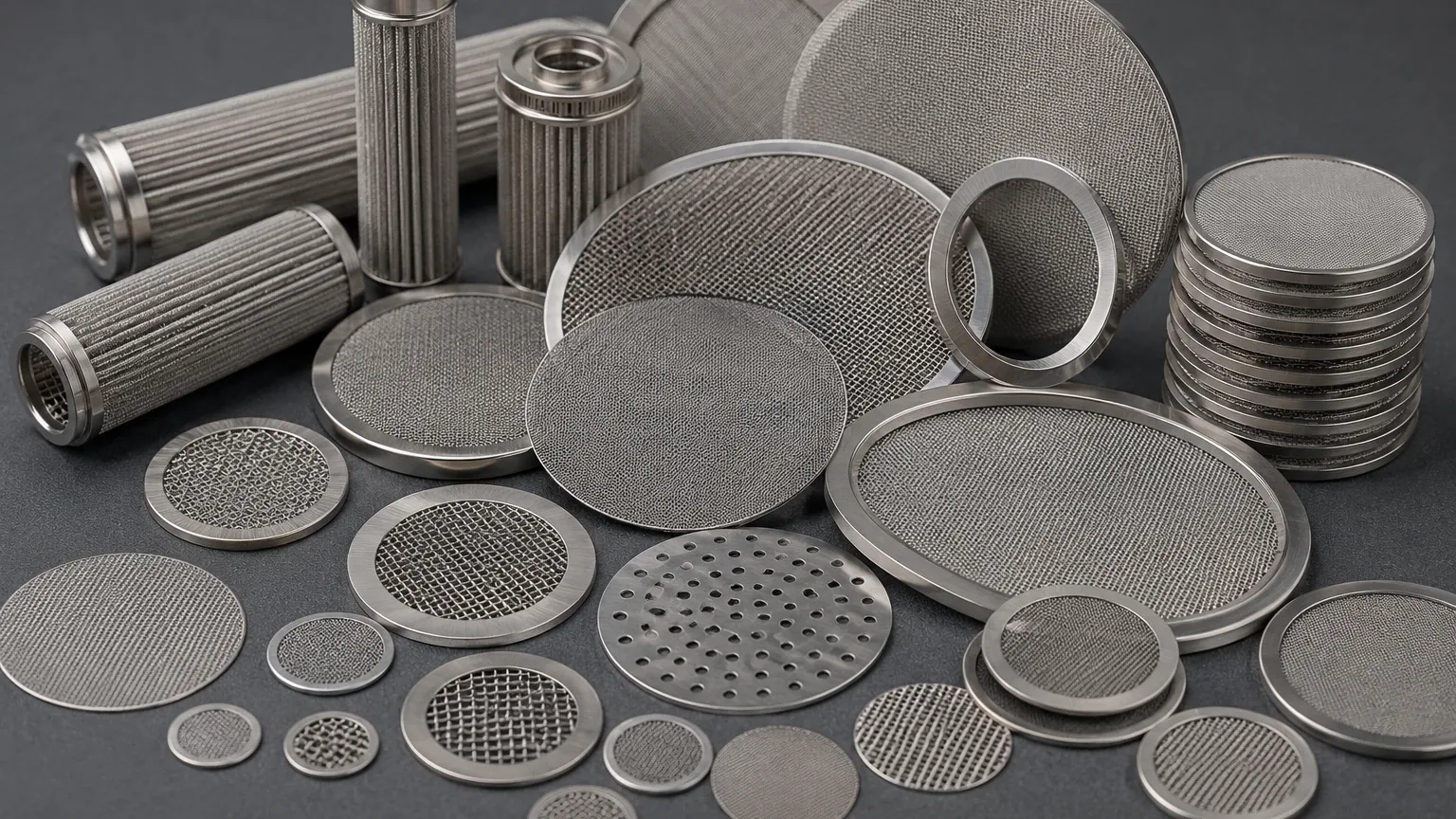
At its core, a filter disc is a circular or shaped piece of wire mesh, often cut to precise tolerances to fit into a specific housing or recessed plate. However, the "filter that everyone is using" in more demanding applications is rarely a single sheet of mesh. Instead, it is a multi-layered pack.
Filter Discs & Packs are engineered by layering different mesh counts to achieve a specific filtration goal. A typical pack might consist of a fine filtration layer sandwiched between two or more coarser support layers. This construction serves several purposes:
1. Structural Integrity: The coarse layers provide the mechanical strength necessary to withstand high differential pressures without the fine mesh deforming or tearing.
2. Graduated Filtration: By using layers of varying density, the pack can capture larger particles on the outer layers while the inner layer performs the final, high-precision filtration. This prevents the fine mesh from blinding (clogging) prematurely.
3. Flow Distribution: Multi-layer packs help to distribute the flow of the medium evenly across the entire surface area, reducing localized pressure spikes.
These packs can be supplied as loose layers or bound together. Spot-welded packs are common for ease of handling, while rimmed packs—which feature an aluminum or stainless steel border—provide a superior seal and prevent bypass in high-pressure systems.
Why Stainless Steel Wire Mesh is the Preferred Material
When investigating what is the filter that everyone is using, the material composition is as important as the geometry. Stainless steel, specifically grades 304, 316, and 316L, is the dominant choice for several technical reasons.
Corrosion and Chemical Resistance
In chemical processing and oil filtration, the medium is often corrosive. Stainless steel 316L contains molybdenum, which provides enhanced resistance to pitting and crevice corrosion in chloride-rich environments. This ensures that the filter does not degrade or leach metallic impurities into the product stream.
Thermal Stability
Many industrial processes, such as plastic extrusion, operate at temperatures exceeding 300°C. Synthetic filters would melt or lose structural integrity at these levels. Stainless steel maintains its mechanical properties across a wide temperature range, ensuring consistent pore size and filtration accuracy even under thermal stress.
Cleanability and Reusability
Unlike disposable paper or polymer filters, stainless steel Filter Discs & Packs can often be cleaned and reused. Techniques such as ultrasonic cleaning, chemical baths, or burnout furnaces (for polymer removal) allow facilities to extend the lifespan of their filtration components. This significantly reduces the total cost of ownership and minimizes industrial waste.
Key Applications: Where These Filters Are Essential
The ubiquity of these filters is best demonstrated by their presence across diverse industries. If you look into a high-output production line today, you are likely to find these components at critical junctions.
Polymer and Plastic Extrusion
In the plastics industry, melt filtration is critical. Recycled resins or raw pellets often contain contaminants that can ruin the finish of a blown film or clog the tiny holes in a spinneret. Filter packs are placed against a breaker plate to catch these impurities. The ability to withstand the immense pressure of the extruder screw is why these are the filters everyone is using in this sector.
Chemical and Petrochemical Refining
Refining processes require the separation of catalysts or the removal of particulates from aggressive solvents. The precision of woven wire mesh allows engineers to select a specific micron rating that ensures the purity of the final chemical product without significantly impeding flow rates.
Food and Beverage Processing
Safety and hygiene are paramount in food production. Stainless steel is a food-grade material that is easy to sterilize. Filter discs are used in the filtration of syrups, oils, and beverages to ensure that no foreign matter enters the packaging stage.
Hydraulic and Water Treatment
In hydraulic systems, even microscopic particles can cause catastrophic pump failure. High-pressure filter discs protect sensitive valves and actuators. Similarly, in specialized water treatment, these filters serve as a durable pre-filtration stage for reverse osmosis or UV treatment systems.
Engineering Considerations: Selecting the Right Disc or Pack
Choosing the correct filter involves more than just matching a diameter. Engineers must evaluate several technical parameters to ensure the filter performs as expected within its specific environment.
Micron Rating: Nominal vs. Absolute
One of the most common points of confusion when discussing what is the filter that everyone is using is the micron rating.
* Nominal Rating: Refers to the ability of the filter to retain a major percentage (usually 60% to 90%) of particles of a certain size.
* Absolute Rating: Refers to the diameter of the largest hard spherical particle that will pass through the filter under specified test conditions. For critical applications, an absolute rating is usually required to guarantee product purity.
Mesh Weave Types
The way the wires are woven significantly impacts performance.
* Plain Weave: The most common and economical, suitable for general filtration.
* Dutch Weave: Uses larger diameter warp wires and smaller diameter shute wires, resulting in a dense, strong mesh with very fine filtration capabilities.
* Twill Weave: Allows for a heavier wire to be used for a given mesh count, increasing the durability of the disc.
Pressure Drop (Delta P)
Every filter introduces a restriction to the flow. A well-engineered filter pack minimizes the initial pressure drop while providing sufficient surface area to accommodate contaminant loading. If the pressure drop is too high, it can lead to system inefficiency or even mechanical failure of the filter housing.
Common Challenges and Performance Optimization
Even the most widely used filters can fail if not applied correctly. Understanding these challenges is key to optimizing a production line.
Media Migration and Bypass
If a filter disc is not sized correctly for its housing, or if the edges are not properly sealed, "bypass" occurs. This is where the fluid takes the path of least resistance around the filter rather than through it. Using rimmed packs or precision-cut discs with tight tolerances is the standard engineering solution to this problem.
Blinding and Premature Clogging
Blinding occurs when the pores of the mesh are blocked by particles that are exactly the same size as the openings. To combat this, engineers often use a "gradient" pack design, where the outermost layer is slightly coarser than the target contaminant size, allowing for deeper particle penetration and preventing a surface cake from forming too quickly.
Mechanical Fatigue
In systems with pulsating flow or frequent start-stop cycles, the wire mesh can undergo fatigue. This is why the support layers in a filter pack are so critical; they dampen the mechanical stress on the fine filtration wires, preventing cracks and wire displacement.
Customization and OEM Solutions: Beyond Standard Sizes
While there are standard sizes for many machines, the reality of industrial engineering is that many systems require bespoke solutions. Manufacturers like Kaifil specialize in providing customized Filter Discs & Packs that meet exact application requirements.
Customization options include:
* Unique Geometries: Not all filters are circular. Rectangular, oval, or complex annular shapes are often required for specific machine designs.
* Specialty Alloys: For environments where even 316L stainless steel is insufficient, alloys like Monel, Inconel, or Hastelloy can be used to provide extreme heat or acid resistance.
* Layer Configuration: Depending on the viscosity of the fluid and the nature of the contaminants, a pack might consist of anywhere from two to twenty layers of mesh.
By working closely with a manufacturer, engineering teams can move beyond asking "what is the filter that everyone is using" and instead develop "the filter that is perfect for this specific process."
Conclusion: Making an Informed Purchasing Decision
The reason why stainless steel Filter Discs & Packs are the filters that everyone is using across the industrial world is simple: they offer a predictable, durable, and versatile solution to complex separation problems. They provide the mechanical strength to survive high-pressure environments and the material stability to resist chemical and thermal degradation.
When selecting a filtration partner, it is essential to look for a manufacturer that understands the engineering nuances of wire mesh. Factors such as weave precision, welding quality, and material certification are not just details—they are the variables that determine whether a production line runs smoothly or suffers from frequent, costly downtime. By focusing on high-quality stainless steel components and customized pack designs, industrial operators can ensure long-term efficiency and superior product quality.
