


Y Filters
In industrial fluid handling and piping systems, the protection of sensitive downstream equipment is a primary engineering concern. Debris, scale, and particulate matter can cause significant damage to pumps, control valves, flow meters, and heat exchangers. Y filters, commonly referred to as Y-strainers, serve as the frontline defense in these systems. Their name is derived from their physical configuration, where a side cylinder branches off the main pipe at an angle, creating a "Y" shape that houses the filtration element.
For engineers and procurement professionals, understanding the technical nuances of y filters—specifically the internal mesh components that dictate performance—is essential for maintaining system integrity and minimizing total cost of ownership. This guide examines the mechanical design, material considerations, and selection criteria for industrial Y-type filtration solutions.
Engineering Fundamentals of Y Filters
The primary function of a Y filter is the mechanical removal of solids from flowing liquids, gases, or steam. Unlike T-type strainers or basket strainers, the Y-shaped design is particularly advantageous in high-pressure environments and applications where space is limited. The compact footprint allows for installation in both horizontal and vertical piping runs, provided the "leg" of the Y points downward to effectively trap and retain debris.
From a fluid dynamics perspective, the Y filter operates by forcing the process media through a perforated screen or wire mesh element located in the slanted branch. As the fluid passes through the mesh, particles larger than the mesh opening are captured. Because the debris is collected in a pocket away from the main flow path, the risk of re-entrainment is reduced, although the accumulation of solids will eventually lead to an increase in differential pressure.
One of the defining characteristics of y filters is their versatility. They are utilized across a vast spectrum of industries, from steam lines in power plants to chemical processing and water treatment. However, the effectiveness of the housing is entirely dependent on the quality and specifications of the internal filtration medium.
The Core Component: Filter Discs & Packs
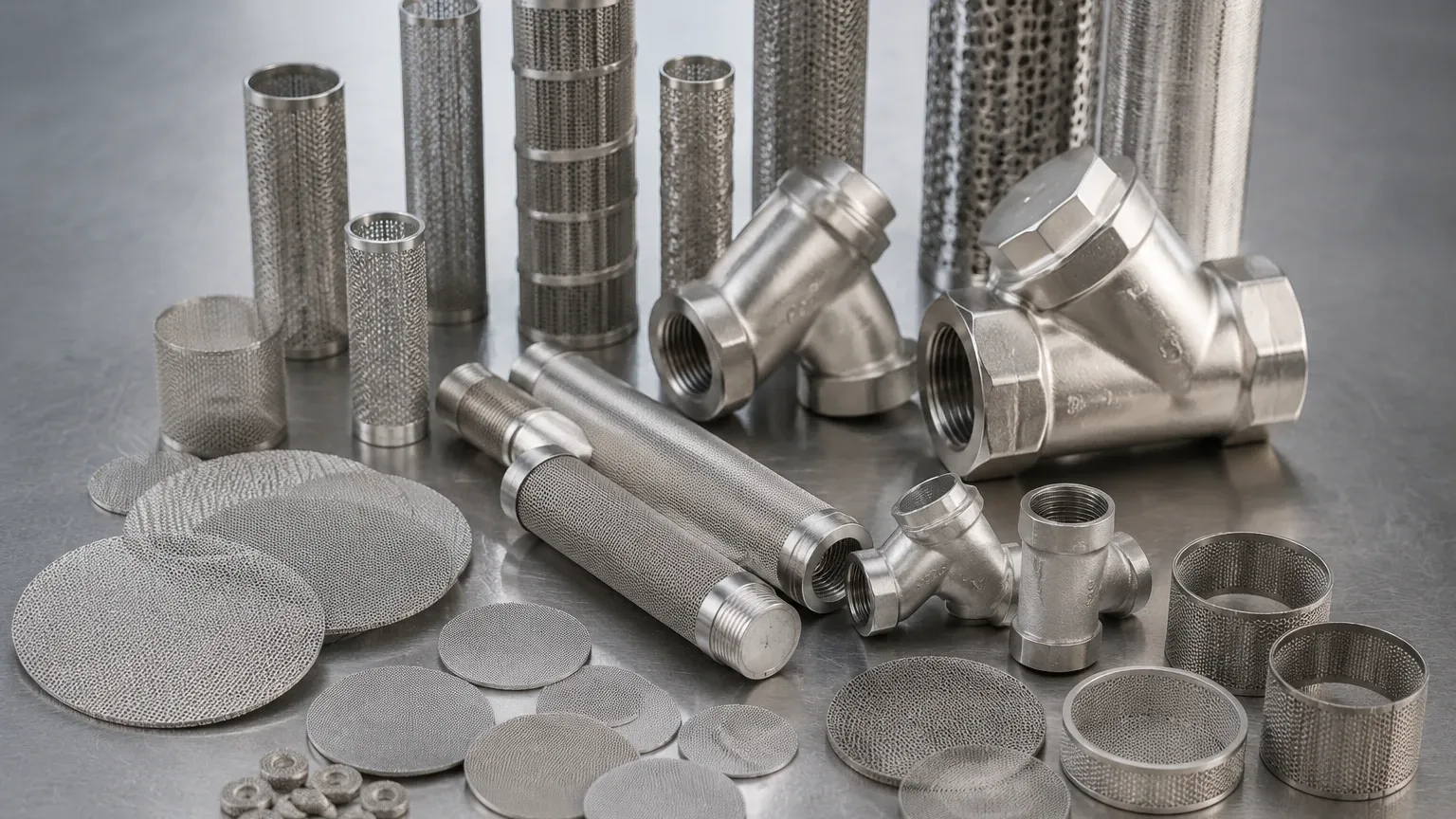
While the cast or fabricated body of the Y filter provides the structural housing, the internal element is the component that performs the actual filtration. In many high-precision or heavy-duty industrial applications, standard perforated screens are insufficient. Engineers often specify Filter Discs & Packs to achieve the required micron rating and structural rigidity.
Filter discs and multi-layer packs are engineered to fit precisely within the strainer basket or support frame. These components are often constructed from multiple layers of stainless steel wire mesh, which are sintered or spot-welded together. This multi-layer construction provides several technical advantages:
1. Enhanced Mechanical Strength: Single-layer meshes can deform or "balloon" under high differential pressure. Multi-layer packs utilize coarser backing meshes to provide structural support to the fine filtration layer.
2. Precise Micron Control: By combining different weave types, such as plain weave for support and Dutch weave for fine filtration, manufacturers can achieve precise particle retention ranging from several millimeters down to 5 microns.
3. Improved Cleanability: Sintered mesh packs are easier to clean via backwashing or ultrasonic methods compared to deep-bed filters or disposable cartridges, making them ideal for the permanent installations typical of Y-strainers.
When selecting internal elements for y filters, it is critical to confirm the effective filtration area. A common mistake in procurement is focusing solely on the pipe size without accounting for the open area ratio of the mesh, which directly impacts the frequency of maintenance cycles.
Material and Mesh Selection for Industrial Applications
The choice of material for both the Y filter body and the internal mesh is dictated by the chemical composition of the fluid, the operating temperature, and the required durability. In most industrial B2B contexts, stainless steel is the gold standard due to its corrosion resistance and mechanical properties.
Stainless Steel Grades
* Type 304: Suitable for general-purpose applications, including water treatment and mild chemical environments. It offers good strength and oxidation resistance at a cost-effective price point.
* Type 316L: The preferred choice for pharmaceutical, food and beverage, and marine applications. The addition of molybdenum provides superior resistance to chlorides and pitting corrosion.
* Specialty Alloys: For highly aggressive environments, such as concentrated acids or high-temperature steam, alloys like Monel, Hastelloy, or Inconel may be required for the wire mesh components.
Mesh Weave Types
The geometry of the wire mesh determines how the y filters interact with the particulate matter. A Plain Weave is the most common, offering a straight-through flow path and easy cleaning. However, for finer filtration requirements, a Twilled Dutch Weave provides a denser structure with higher strength, allowing for the capture of much smaller particles without sacrificing the integrity of the filter pack.
Key Performance Metrics: Pressure Drop and Flow Rate
In any filtration system, there is an inherent trade-off between filtration fineness and flow resistance. This is measured as "Pressure Drop" or Delta P (ΔP). For engineers, calculating the clean pressure drop is a vital step in system design. If the initial pressure drop is too high, it indicates that the filter is undersized or the mesh is too fine for the application, which will lead to premature clogging and potential pump cavitation.
Several factors influence the pressure drop in y filters:
* Viscosity of the Fluid: Higher viscosity fluids require larger mesh openings or increased surface area to maintain flow rates.
* Specific Gravity: The density of the fluid affects the velocity and the force exerted on the filter element.
* Mesh Open Area: This is the percentage of the total mesh surface that is actually open for fluid passage. High-strength sintered packs often have lower open areas than single-layer screens, requiring a larger filter body to compensate.
To optimize performance, it is recommended to size y filters so that the initial pressure drop does not exceed 2 psi (0.14 bar) for liquid service. As debris accumulates, the pressure drop will rise. Most industrial systems include pressure gauges upstream and downstream of the filter to monitor this change, signaling when the internal Filter Discs & Packs require cleaning or replacement.
Maintenance and Operational Considerations
The primary advantage of the Y filter design is the ease of maintenance. Most Y-strainers are equipped with a "blow-off" port in the cap of the branch. By installing a blow-off valve, operators can flush out accumulated debris without stopping the flow or dismantling the piping. This is particularly useful in steam applications where sediment (scale) can be cleared periodically.
However, for more thorough cleaning, the filter must be opened. This process involves:
1. System Depressurization: Ensuring the line is safe to open.
2. Cap Removal: Unscrewing the bolted or threaded cap to access the filter element.
3. Inspection: Checking the wire mesh for signs of "blinding" (permanent clogging), corrosion, or mechanical damage. Even high-quality stainless steel elements can suffer from fatigue if subjected to constant pressure fluctuations.
4. Gasket Replacement: Every time a Y filter is opened, the gasket or O-ring should be inspected and typically replaced to ensure a leak-proof seal upon reassembly.
In critical applications, such as hydraulic systems or high-purity chemical lines, manual cleaning may not be sufficient. In these cases, replacing the internal filter packs with fresh, factory-cleaned components is the safest way to ensure continued performance and prevent downstream contamination.
Customization and OEM Solutions
Standard off-the-shelf y filters are suitable for many utility applications, but demanding industrial processes often require customized solutions. This is where the expertise of a specialized manufacturer like Kaifil becomes invaluable. Customization options for filtration elements include:
* Bespoke Dimensions: Tailoring the diameter and length of filter packs to fit non-standard strainer housings.
* Reinforced Edges: Adding spot-welded frames or aluminum/stainless steel bindings to the edges of filter discs to prevent fraying and ensure a secure fit within the housing.
* Multi-Stage Filtration: Designing packs with graduated density, where larger particles are caught by an outer layer and finer particles by an inner layer, significantly extending the service life of the element.
* Material Certification: Providing full traceability (MTRs) for materials used in pharmaceutical or food-grade applications, ensuring compliance with international standards.
When evaluating a supplier for y filters and their components, engineers should confirm the manufacturer's ability to handle custom mesh counts and wire diameters. The ability to produce high-performance Filter Discs & Packs that meet specific micron ratings is the difference between a system that runs reliably and one that suffers from frequent downtime.
Conclusion: Selecting the Right Filtration Strategy
Integrating y filters into an industrial system is a strategic decision that impacts the longevity of the entire infrastructure. By focusing on the technical specifications of the internal mesh elements—including material grade, weave type, and structural reinforcement—purchasing teams can ensure they are not just buying a piece of hardware, but implementing a robust filtration solution.
Before finalizing a purchase, technical professionals should confirm the following:
* What is the maximum allowable pressure drop for the system?
* Are the chemical properties of the fluid compatible with the chosen stainless steel grade?
* Does the mesh element provide the necessary structural integrity for the expected flow velocities?
* Is the filtration area sufficient to allow for reasonable maintenance intervals?
By addressing these questions and sourcing high-quality components designed for industrial rigors, companies can achieve efficient, durable, and cost-effective filtration performance across their operations.
