


Y Filter 2
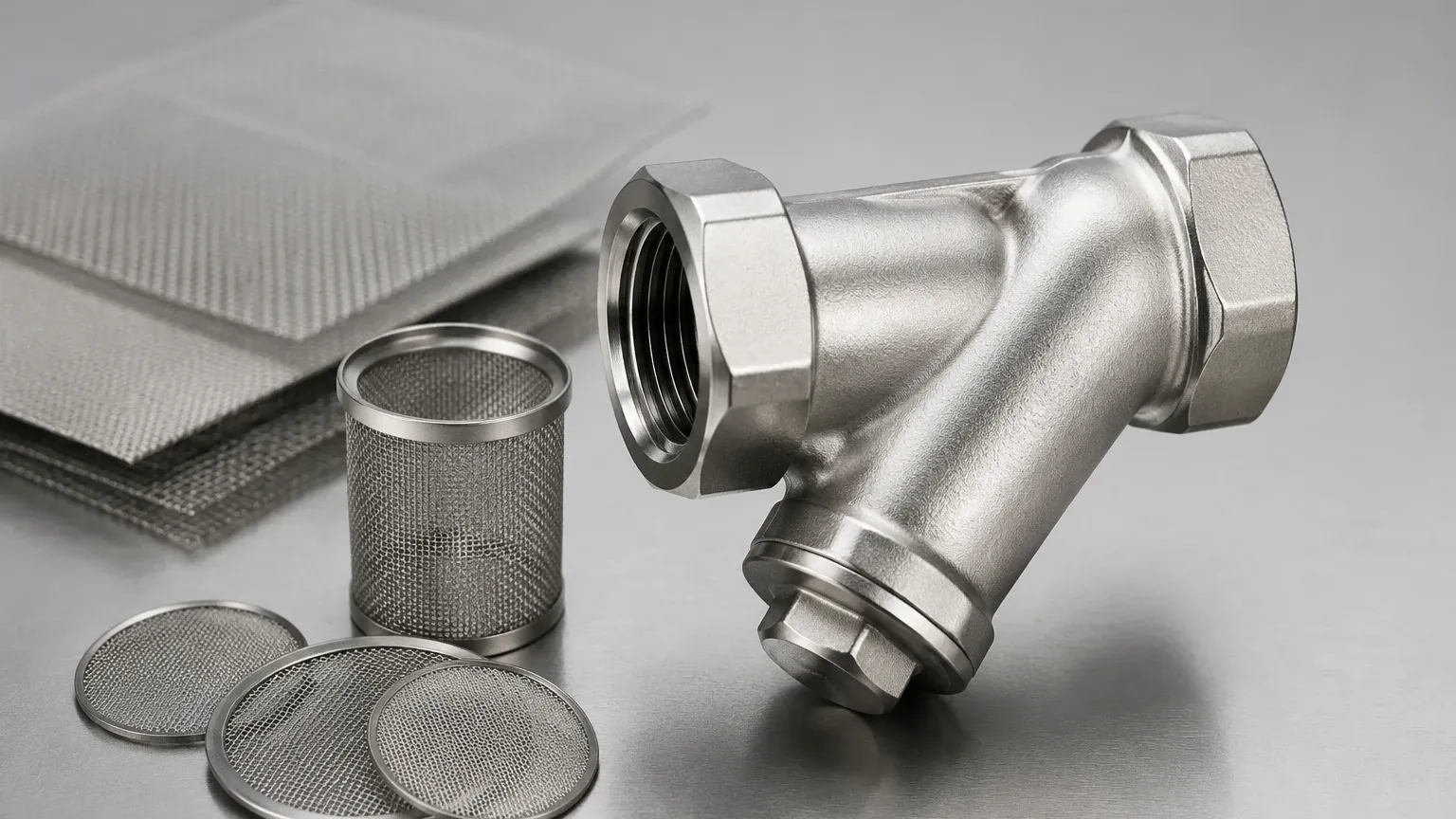
In industrial fluid handling and processing, the protection of sensitive downstream equipment is a primary engineering concern. The "Y Filter 2"—often referring to 2-inch Y-strainers or the secondary stage in a multi-stage filtration sequence—serves as a critical line of defense against particulate contamination. While the outer housing provides the structural integrity to withstand system pressures, the internal filtration media, specifically Filter Discs & Packs, determines the actual efficiency and reliability of the process.
For engineers and procurement teams, selecting the correct internal configuration for a Y-filter involves more than just matching a pipe size. It requires a deep understanding of material science, fluid dynamics, and the specific mechanical stresses of the application environment. This guide examines the technical nuances of these systems, focusing on the precision components that drive performance.
Understanding the Role of Y Filter 2 in Industrial Systems
A Y-filter is named for its shape, which allows for the collection of solids in a diagonal leg that can be cleaned without interrupting the main flow in some configurations, or by temporary shutdown in others. The "2" designation typically signifies a 2-inch nominal pipe size or a secondary filtration stage designed to capture finer particles that have bypassed a primary coarse strainer.
In a secondary filtration role (Stage 2), the requirements for the filter media become significantly more stringent. While a primary filter might target large debris like scale or weld slag, the secondary stage often targets specific micron-rated particles to protect high-pressure pumps, spray nozzles, or heat exchangers. At this stage, the use of multi-layered packs becomes essential to balance filtration fineness with mechanical strength.
Mechanical Function and Flow Dynamics
As fluid enters the Y-filter, it is forced through the internal mesh cylinder or disc assembly. The change in direction and velocity within the Y-junction promotes the settling of heavier particles into the collection leg. However, the finer particles remain entrained in the fluid and must be captured by the wire mesh. The efficiency of this capture is a function of the mesh weave, the wire diameter, and the total open area of the filter pack.
Material Selection for High-Performance Filter Discs & Packs
The choice of material for the internal elements of a Y Filter 2 is dictated by the chemical compatibility of the process fluid and the operating temperature. Stainless steel remains the industry standard due to its versatility and durability.
Stainless Steel Grades
1. AISI 304: The most common grade, offering excellent resistance to atmospheric corrosion and many organic and inorganic chemicals. It is suitable for food and beverage applications and general industrial water treatment.
2. AISI 316/316L: Containing molybdenum, this grade provides superior resistance to chlorides and acids. It is the preferred choice for chemical processing, pharmaceutical manufacturing, and marine environments where pitting corrosion is a risk.
3. Specialty Alloys: For extreme environments involving high temperatures or highly aggressive chemicals, alloys such as Monel, Hastelloy, or Inconel may be utilized in the construction of filter packs.
Weave Types and Their Impact
The geometry of the weave in the filter discs determines the particle retention characteristics:
* Plain Weave: Offers a high open area and low pressure drop, ideal for high-flow applications with relatively coarse particulate.
* Twill Weave: Allows for heavier wires in a given mesh count, increasing the mechanical strength of the disc.
* Dutch Weave (Plain and Twill): These weaves feature a higher density of wires in one direction, creating a tortuous path for the fluid. This results in much finer filtration ratings (down to 5-10 microns) while maintaining the structural integrity required for high-pressure systems.
Engineering Parameters: Pressure Drop and Filtration Accuracy
When specifying internal components for a Y Filter 2, engineers must calculate the balance between filtration accuracy (micron rating) and the allowable pressure drop ($ΔP$).
Calculating Delta P
Every filter introduces a restriction to the flow. As the filter disc captures particles, the effective open area decreases, and the pressure drop increases. If the initial $ΔP$ is too high due to an overly restrictive mesh selection, the system's energy efficiency decreases, and the risk of element collapse increases.
Engineers should look for filter packs that maximize the "Effective Filtration Area" (EFA). By using pleated designs or multi-layered sintered mesh packs, it is possible to increase the surface area within the same physical footprint of a standard 2-inch Y-filter, thereby extending the time between cleaning cycles.
Micron Rating: Absolute vs. Nominal
It is vital to distinguish between nominal and absolute filtration ratings when selecting Filter Discs & Packs.
* Nominal Rating: Indicates the ability to retain a major weight percentage of particles of a certain size. It is an approximation.
* Absolute Rating: Refers to the diameter of the largest hard spherical particle that will pass through the filter under specified test conditions. For critical protection in a Stage 2 Y-filter, absolute-rated mesh is generally required to ensure no damaging particles reach downstream components.
Customization and OEM Capabilities for Precision Filtration
Standard off-the-shelf filter elements often fail to meet the specific needs of specialized industrial processes. Customization is frequently required in the following areas:
Layer Configuration
Modern filter packs often consist of multiple layers of wire mesh. A typical high-performance configuration might include:
1. Drainage Layer: A coarse mesh that provides structural support and ensures fluid can flow freely away from the filtration layer.
2. Filtration Layer: The precision-woven mesh that defines the micron rating.
3. Protection Layer: A mesh that protects the fine filtration layer from mechanical damage during handling or back-pulsing.
Edge Treatment and Assembly
For a Y Filter 2, the seal between the filter element and the housing is a common point of failure. Custom filter discs can be manufactured with specialized edge treatments, such as aluminum or stainless steel rims, or spot-welded borders. These treatments ensure that the fluid cannot bypass the filter media (a phenomenon known as "fluid bypass") and provide a rigid surface for gaskets to seat against.
Maintenance Protocols and Service Life Optimization
The longevity of a Y-filter system depends heavily on the maintenance of its internal mesh. Unlike disposable polymer filters, stainless steel filter packs are designed for reuse, but they require proper handling.
Cleaning Methods
1. Backwashing: Reversing the flow of fluid to dislodge particles trapped on the surface of the mesh. This is effective for surface-loading weaves like plain weave.
2. Ultrasonic Cleaning: Utilizing high-frequency sound waves in a cleaning solvent to remove deeply embedded particles from complex Dutch weave packs. This is the most thorough method for restoring the original $ΔP$.
3. Chemical Cleaning: Using specific acids or alkalis to dissolve organic or mineral deposits. Material compatibility must be verified to ensure the cleaning agent does not degrade the stainless steel or the welds.
Replacement Cycles
While stainless steel is durable, it is not infinite. Fatigue from pressure pulsations and thinning of the wire due to erosion will eventually necessitate replacement. Engineers should monitor the "Clean Pressure Drop" after each cleaning cycle. If the clean $ΔP$ begins to rise steadily, it indicates that the mesh is becoming permanently blinded or deformed, and a new filter pack should be commissioned.
Cost-Benefit Analysis: Stainless Steel vs. Alternative Media
In the procurement phase for Y Filter 2 components, the initial cost of stainless steel filter discs and packs is higher than that of plastic or paper alternatives. However, the Total Cost of Ownership (TCO) tells a different story.
Durability and Waste Reduction
Stainless steel elements can withstand higher temperatures (up to 500°C or higher depending on the alloy) and higher differential pressures than synthetic media. Furthermore, because they are cleanable, they eliminate the recurring cost of purchasing and disposing of single-use filters. In high-volume industrial settings, the reduction in hazardous waste disposal costs alone can justify the investment in premium metal filtration components.
Process Stability
Precision-manufactured wire mesh provides a consistent pore size that does not migrate or unload under pressure surges. This stability ensures that the downstream equipment is protected consistently throughout the production cycle, preventing costly unscheduled downtime and repairs to sensitive components like 2-inch control valves or flow meters.
Technical Confirmation Before Purchase
Before finalizing a specification for a Y Filter 2 or its internal components, technical professionals should confirm the following data points with their manufacturer:
* Fluid Viscosity: High-viscosity fluids require a larger open area to maintain flow rates.
* Particulate Loading: The concentration and type of solids (slimy, abrasive, or fibrous) will dictate the best weave type.
* Maximum Differential Pressure: The assembly must be engineered to withstand the maximum pump pressure in the event of a total blockage.
* Housing Dimensions: Precise tolerances are required for the internal diameter and seating depth to prevent bypass.
By focusing on these engineering realities, companies can ensure that their filtration systems provide the necessary protection and efficiency for long-term industrial operation. Whether for chemical processing, water treatment, or hydraulic systems, the integrity of the Filter Discs & Packs remains the most significant factor in the success of the Y-filter installation.
