


10 Micron Mesh
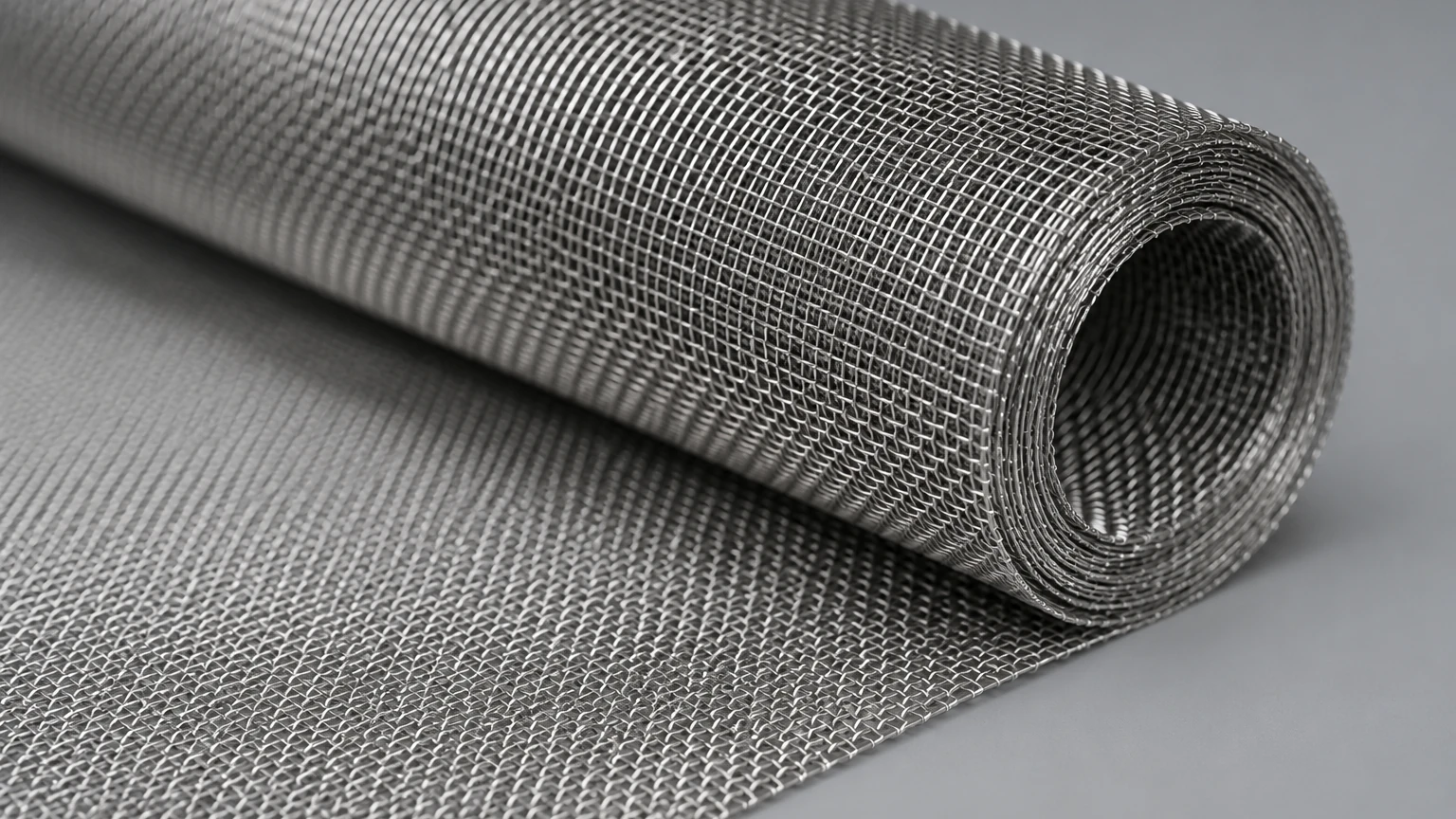
In industrial filtration, the move toward finer particle retention often leads engineers to the 10 micron threshold. At this level, filtration transitions from simple debris removal to precision separation, requiring a deep understanding of material science, weave geometry, and fluid dynamics. 10 micron mesh is a specialized category of stainless steel wire cloth designed to intercept particles that are invisible to the naked eye—roughly one-tenth the diameter of a human hair.
Selecting the correct 10 micron mesh involves more than just identifying a pore size. It requires balancing the physical constraints of wire diameter against the operational demands of flow rate, pressure drop, and mechanical durability. For technical professionals and purchasing teams, understanding these nuances is essential for optimizing the performance and longevity of filtration systems.
Understanding the Engineering Specifications of 10 Micron Mesh
The term "10 micron" refers to the filtration rating, but in the context of metal mesh, this rating can be classified as either nominal or absolute. This distinction is critical for engineers designing systems for high-purity environments.
Absolute vs. Nominal Filtration
An absolute 10 micron rating implies that the mesh will stop 100% of particles 10 microns or larger. In stainless steel wire mesh, this is typically achieved through complex weave patterns like Twilled Dutch Weave. A nominal rating, conversely, indicates that the mesh will stop a significant percentage (often 60% to 90%) of particles at that size. When sourcing components from a Main Page of a manufacturer, it is vital to specify which rating your application requires to avoid bypass or premature clogging.
The Geometry of Fine Filtration
At the 10-micron level, a standard square weave (where the warp and shute wires are of equal diameter and spaced evenly) becomes physically impractical. The wires required would be so thin that the mesh would lack the structural integrity to withstand even moderate fluid pressure. Consequently, 10 micron filtration is almost exclusively achieved through Dutch Weave technologies. These weaves use larger warp wires and smaller, tightly packed shute wires to create a dense, three-dimensional filtration path.
Weave Structures: Achieving Precision at the 10 Micron Level
The performance of 10 micron mesh is dictated by its weave pattern. Because the openings are so small, the way the wires overlap determines not only the filtration accuracy but also the "tortuous path" the fluid must take.
Plain Dutch Weave (PDW)
In a Plain Dutch Weave, the warp wires remain straight while the shute wires are woven over and under them, packed closely together. This creates a mesh with no visible light passing through it if viewed directly. While PDW can reach fine filtration levels, achieving a true 10-micron rating often requires the more advanced Twilled Dutch Weave.
Twilled Dutch Weave (TDW)
TDW is the standard for 10 micron mesh applications. In this structure, each shute wire passes over two warp wires and then under two warp wires. This allows for the use of even finer shute wires, resulting in a higher number of wires per inch. The result is a mesh with a very high density and a precise pore size distribution. TDW provides a smoother surface and better mechanical strength than plain weaves of similar micron ratings, making it ideal for high-pressure hydraulic and chemical applications.
Sintered Wire Mesh
For applications where 10 micron mesh must withstand extreme pressure or frequent backwashing, engineers often specify sintered mesh. This process involves layering the 10 micron filtration layer between coarser support layers and bonding them together in a high-temperature vacuum furnace. Sintering prevents wire migration and ensures that the 10-micron pores remain dimensionally stable under mechanical stress.
Material Selection and Durability
Material compatibility is a primary concern when integrating 10 micron mesh into industrial processes. Stainless steel is the industry standard due to its balance of cost, availability, and resistance to environmental degradation.
1. Stainless Steel 304: Suitable for general industrial use where high-level corrosion resistance is not the primary concern. It is often used in food and beverage applications where the environment is relatively neutral.
2. Stainless Steel 316L: The "L" stands for low carbon, which improves weldability and resistance to intergranular corrosion. 316L is the preferred choice for 10 micron mesh in pharmaceutical and chemical processing due to its superior resistance to chlorides and organic acids.
3. Specialty Alloys: In highly aggressive environments, such as those involving high-concentration sulfuric acid or high-temperature aerospace applications, alloys like Hastelloy or Inconel may be used. However, these are significantly more complex to weave at 10-micron tolerances.
Performance Metrics: Flow Rate and Pressure Drop
One of the most significant challenges with 10 micron mesh is the inherent resistance it poses to fluid flow. As pore size decreases, the open area of the mesh also decreases, leading to a higher pressure drop ($ΔP$) across the filter media.
Calculating Effective Filtration Area
To compensate for the low permeability of 10 micron mesh, engineers must maximize the Effective Filtration Area (EFA). This is frequently achieved by pleating the mesh. Pleating allows a much larger surface area of 10 micron material to be housed within a compact filter cartridge. By increasing the EFA, the velocity of the fluid passing through the mesh (flux) is reduced, which lowers the initial pressure drop and extends the service life of the filter.
Dirt Holding Capacity
10 micron mesh is primarily a surface filtration medium. Particles are trapped on the upstream side of the mesh. Because the pores are so small, the mesh can reach its dirt-holding limit quickly if the fluid has a high concentration of fine solids. In such cases, it is standard engineering practice to use a multi-stage filtration approach, where a 40 or 20-micron pre-filter removes larger contaminants before the fluid reaches the 10 micron mesh.
Industrial Applications for 10 Micron Mesh
Hydraulic and Lubrication Systems
In high-performance hydraulic systems, particles as small as 10 microns can cause catastrophic wear on pumps, valves, and actuators. 10 micron mesh is used in suction and return line filters to maintain the ISO 4406 cleanliness codes required by modern machinery manufacturers.
Pharmaceutical and Biotechnology
During the production of Active Pharmaceutical Ingredients (APIs), 10 micron mesh is used for solvent recovery and catalyst retention. The ability of stainless steel mesh to be sterilized via autoclaving or Steam-in-Place (SIP) makes it a superior choice to polymer-based filters in these regulated environments.
Food and Beverage Processing
10 micron mesh is used for the final polishing of syrups, oils, and beverages. It ensures that the final product is free of microscopic particulates that could affect clarity or shelf stability. Because stainless steel is inert, it does not leach chemicals into the product, meeting FDA and stringent safety standards.
Polymer Filtration
In the production of synthetic fibers and plastic films, 10 micron mesh is used in "spin packs" or melt filters. These filters remove gel particles and impurities from molten polymer before it is extruded through spinnerets. The mesh must withstand temperatures exceeding 300°C and pressures up to several hundred bar.
Selection Guide: What Engineers Should Confirm
Before finalizing a purchase or design specification for 10 micron mesh, technical teams should confirm the following parameters with their manufacturer:
* Operating Temperature: Ensure the mesh and any bonding agents (like epoxy or solder used in cartridge assembly) can withstand the maximum process temperature.
* Differential Pressure ($ΔP$): What is the maximum pressure the mesh will encounter before cleaning or replacement is required? Does the design include a support core to prevent the mesh from collapsing?
* Chemical Compatibility: Beyond the fluid itself, consider the chemicals used for Cleaning-in-Place (CIP). A mesh that is compatible with the process fluid might fail during a caustic wash.
* Cleaning Requirements: Is the mesh intended to be disposable or reusable? 10 micron mesh can often be cleaned using ultrasonic baths or back-pulsing, but the weave must be robust enough to handle these forces.
* Customization Options: Does the application require a specific diameter, a pleated configuration, or a custom-welded fitting? Working with a specialist like Kaifil allows for the development of bespoke filtration components that integrate seamlessly into existing hardware.
Maintenance and Cleaning Procedures
Because 10 micron mesh represents a significant investment compared to coarse screens, extending its service life through proper maintenance is a priority for B2B operators. Unlike depth filters, which must be discarded once saturated, stainless steel mesh can often be restored to near-original permeability.
Ultrasonic Cleaning
This is the most effective method for 10 micron mesh. High-frequency sound waves create cavitation bubbles that dislodge particles trapped deep within the Dutch weave. This process is gentle enough to clean the fine wires without causing mechanical deformation.
Backwashing and Back-pulsing
In automated systems, a momentary reversal of flow (back-pulsing) can clear the surface of the mesh. However, for 10 micron mesh, the back-pulse pressure must be carefully regulated. If the pressure is too high, it can stretch the weave, altering the micron rating. If it is too low, it will fail to clear the dense shute wires.
Chemical Cleaning
For organic contaminants or scale buildup, chemical soaking may be necessary. It is imperative to ensure that the cleaning agent does not cause pitting in the stainless steel, as even microscopic pits can compromise the integrity of a 10-micron pore.
Conclusion
10 micron mesh is a critical component in the pursuit of process purity and equipment protection. By selecting the appropriate weave structure, material grade, and mechanical support, engineers can achieve reliable filtration performance even in the most demanding industrial environments. Whether integrated into a complex hydraulic system or used for fine chemical separation, the precision of 10 micron mesh remains a cornerstone of modern industrial engineering. For those seeking specific configurations or technical support in developing custom filtration solutions, reviewing the capabilities of a specialized manufacturer is the recommended next step in the procurement process.
