


Bed Reactor
In the landscape of industrial chemical processing, the bed reactor stands as a cornerstone technology for catalytic and non-catalytic reactions. Whether utilized in petrochemical refining, pharmaceutical synthesis, or environmental remediation, the efficiency of these systems depends heavily on the internal components that manage fluid flow and catalyst containment. For engineers and procurement specialists, understanding the nuances of bed reactor design—specifically the integration of high-performance filtration—is essential for optimizing yield and protecting downstream equipment.
A bed reactor typically involves a vessel where a fluid (gas or liquid) is passed through a bed of solid material, often a catalyst. The physical structure of this bed and the hardware used to support it determine the reactor's thermal stability, pressure drop, and overall throughput. To ensure these systems operate within their designed parameters, custom stainless steel filtration solutions are required to prevent catalyst migration and manage particulate matter.
Fundamentals of Fixed and Fluidized Bed Reactors
Industrial reactors are generally categorized by the state of the solid bed during operation. The two most common configurations are the fixed-bed reactor and the fluidized-bed reactor.
In a fixed-bed reactor, the catalyst particles are held stationary within a vessel. The reactants flow through the voids between the particles. This design is favored for its simplicity and high conversion rates per unit mass of catalyst. However, the primary challenge in a fixed-bed reactor is the management of pressure drop and the prevention of "channeling," where the fluid finds a path of least resistance, bypassing large sections of the catalyst. High-precision wire mesh screens and support grids are vital here to ensure uniform distribution and to keep the catalyst bed securely in place.
Conversely, a fluidized-bed reactor involves passing fluid through the solid particles at speeds high enough to suspend the solids, making the mixture behave like a fluid. This provides excellent heat transfer and uniform temperature distribution, which is critical for exothermic reactions. The engineering challenge in a fluidized-bed reactor shifts toward catalyst retention. Because the particles are in constant motion, they are prone to attrition—breaking down into smaller "fines" that can escape the reactor. Specialized metal filter cartridges and cyclones are necessary to capture these fines and return them to the bed or protect the rest of the process stream.
Critical Filtration Functions in Bed Reactor Systems
Filtration within a bed reactor is not merely about removing debris; it is a functional component of the reaction chemistry and mechanical integrity. There are three primary roles that stainless steel filtration components play in these environments:
1. Catalyst Retention: The most immediate need is keeping the expensive catalyst inside the reactor. Whether using a support grid at the bottom of a fixed bed or a series of plenum filters in a fluidized system, the filter must have a micron rating fine enough to block the catalyst while maintaining high permeability.
2. Flow Distribution: Proper reaction kinetics require the fluid to contact the catalyst surface evenly. Porous metal plates and wire mesh laminates can be engineered to provide a specific resistance, helping to distribute the incoming gas or liquid across the entire cross-section of the bed reactor.
3. Downstream Protection: If catalyst particles escape, they can cause catastrophic wear on pumps, valves, and compressors. High-efficiency filtration at the reactor outlet acts as a final barrier, ensuring the purity of the product and the longevity of the plant infrastructure.
For those seeking specific technical specifications or custom designs for these components, visiting the Main Page of a specialized manufacturer like Kaifil provides a comprehensive overview of available materials and filtration accuracies.
Material Selection and Chemical Compatibility
Selecting the right material for reactor internals is a high-stakes decision. The environment inside a bed reactor often involves high temperatures, fluctuating pressures, and corrosive chemical agents. Stainless steel is the industry standard due to its mechanical strength and resistance to oxidation.
* 304/304L Stainless Steel: Suitable for general industrial applications where corrosion risks are moderate and temperatures do not exceed 400°C.
* 316L Stainless Steel: The preferred choice for pharmaceutical and chemical processing. The addition of molybdenum provides superior resistance to chlorides and organic acids. The "L" (low carbon) designation is crucial for components that require welding, as it prevents intergranular corrosion in the heat-affected zone.
* High-Nickel Alloys: In extreme cases involving high-temperature sulfidation or highly acidic environments, alloys such as Monel or Inconel may be required for the filter mesh or support structures.
Beyond chemical compatibility, engineers must consider the mechanical stress placed on the filter. In a bed reactor, the weight of the catalyst bed can be several tons. The filtration media must be supported by heavy-duty perforated plates or structural skeletons to prevent deformation under load.
Managing Pressure Drop and Flow Distribution
Pressure drop is a critical metric in any bed reactor operation. An excessive pressure drop increases the energy requirements for pumps and compressors and can lead to mechanical failure of the reactor internals. The filtration media must be designed to offer the lowest possible resistance while still meeting the required filtration efficiency.
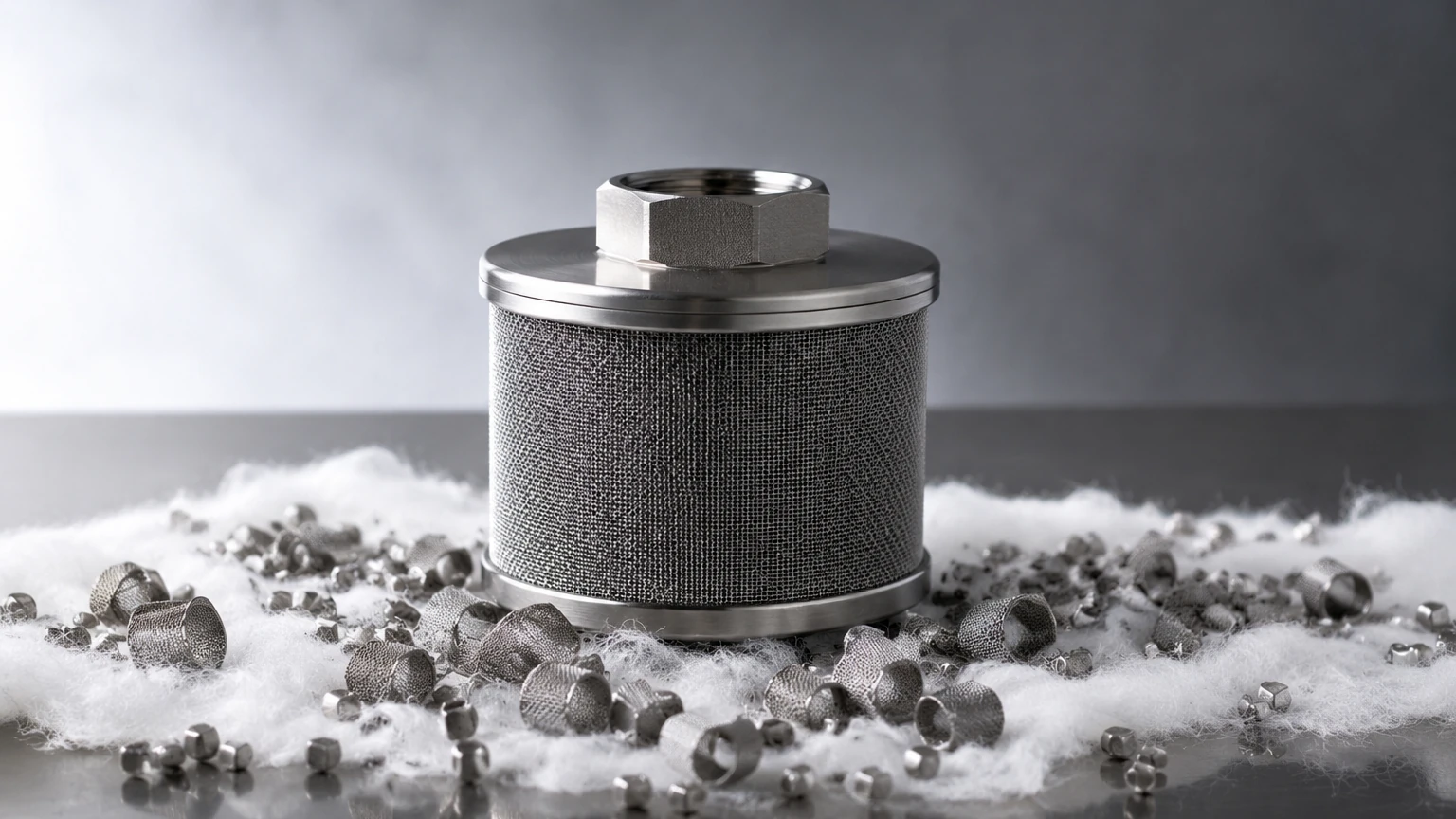
Precision-woven wire mesh is often superior to non-woven media in these applications because of its predictable pore geometry and high open-area percentage. By utilizing multi-layer sintered mesh, engineers can combine a fine filtration layer with several coarser support layers. This creates a robust, integrated component that handles high differential pressures without compromising the micron rating.
Furthermore, the distribution of flow at the inlet of the bed reactor is essential for preventing "hot spots." If the fluid concentrates in one area, the local catalyst may deactivate prematurely due to overheating, while other areas remain underutilized. Sintered porous metals are frequently used as distribution plates to create a uniform "gas cushion" before the fluid enters the catalyst bed.
Addressing Catalyst Migration and Fines Recovery
Catalyst attrition is an inevitable reality in many bed reactor processes, particularly in fluidized systems. As particles collide with each other and the reactor walls, they wear down into microscopic fines. If these fines are not managed, they can lead to product contamination and environmental compliance issues.
To combat this, secondary filtration stages are often installed. These may include:
* Internal Cyclones: For initial bulk separation in gas-phase reactors.
* Sintered Metal Cartridges: These provide high-efficiency capture of sub-micron fines. Unlike disposable filters, stainless steel cartridges can be cleaned via backpulsing or ultrasonic baths, making them a cost-effective long-term solution for continuous processes.
* Magnetic Separators: In cases where the catalyst has magnetic properties, specialized magnetic filtration can be used in conjunction with mechanical mesh to enhance recovery rates.
Custom OEM Filtration Components for Reactor Design
No two bed reactor applications are identical. Variations in vessel diameter, catalyst size, operating temperature, and fluid viscosity necessitate a customized approach to filtration. Standard off-the-shelf filters rarely meet the rigorous demands of a specialized chemical process.
Working with an OEM manufacturer allows for the development of bespoke filtration components. This includes custom-shaped support grids, conical filters for reactor outlets, and specialized pleated cartridges that maximize surface area within a limited footprint. Engineering teams should confirm the following data points before finalizing a custom filter design:
* Maximum Operating Temperature and Pressure: To determine material grade and wall thickness.
* Fluid Properties: Including pH, viscosity, and flow rate.
* Catalyst Characteristics: Particle size distribution (PSD) and shape.
* Cleaning Requirements: Whether the filter needs to be cleaned in-situ (CIP) or removed for external maintenance.
By addressing these factors during the design phase, operators can significantly reduce the total cost of ownership by extending the interval between maintenance shutdowns.
Maintenance and Longevity: Optimizing the Total Cost of Ownership
The lifespan of filtration components in a bed reactor is a major factor in the facility's operational budget. While stainless steel filters have a higher initial cost than polymer or glass fiber alternatives, their durability and cleanability provide a much lower total cost of ownership over time.
Regular monitoring of the differential pressure across the filter is the most effective way to track performance. A gradual increase in pressure typically indicates the buildup of fines or "coking" (carbon deposits). In many bed reactor systems, backwashing—reversing the flow of fluid to dislodge particles—can extend the life of the filter element significantly. If the fouling is severe, chemical cleaning or thermal burnout may be required to restore the filter's permeability.
When a filter eventually reaches the end of its service life, it is vital to replace it with a component that matches the original engineering specifications exactly. Even minor deviations in mesh weave or alloy composition can lead to premature failure or reduced reaction efficiency.
Conclusion
The bed reactor remains a vital tool in modern industry, and its success is inextricably linked to the quality of its internal filtration and support systems. By selecting high-quality stainless steel components, engineers can ensure stable flow distribution, effective catalyst retention, and long-term process reliability. From the initial material selection to the implementation of custom OEM designs, every technical decision impacts the safety and profitability of the operation. For further information on selecting the appropriate filtration media for industrial applications, reviewing product options and application support on the Main Page is a recommended next step for technical professionals.
