


Duplex Basket Type Strainer
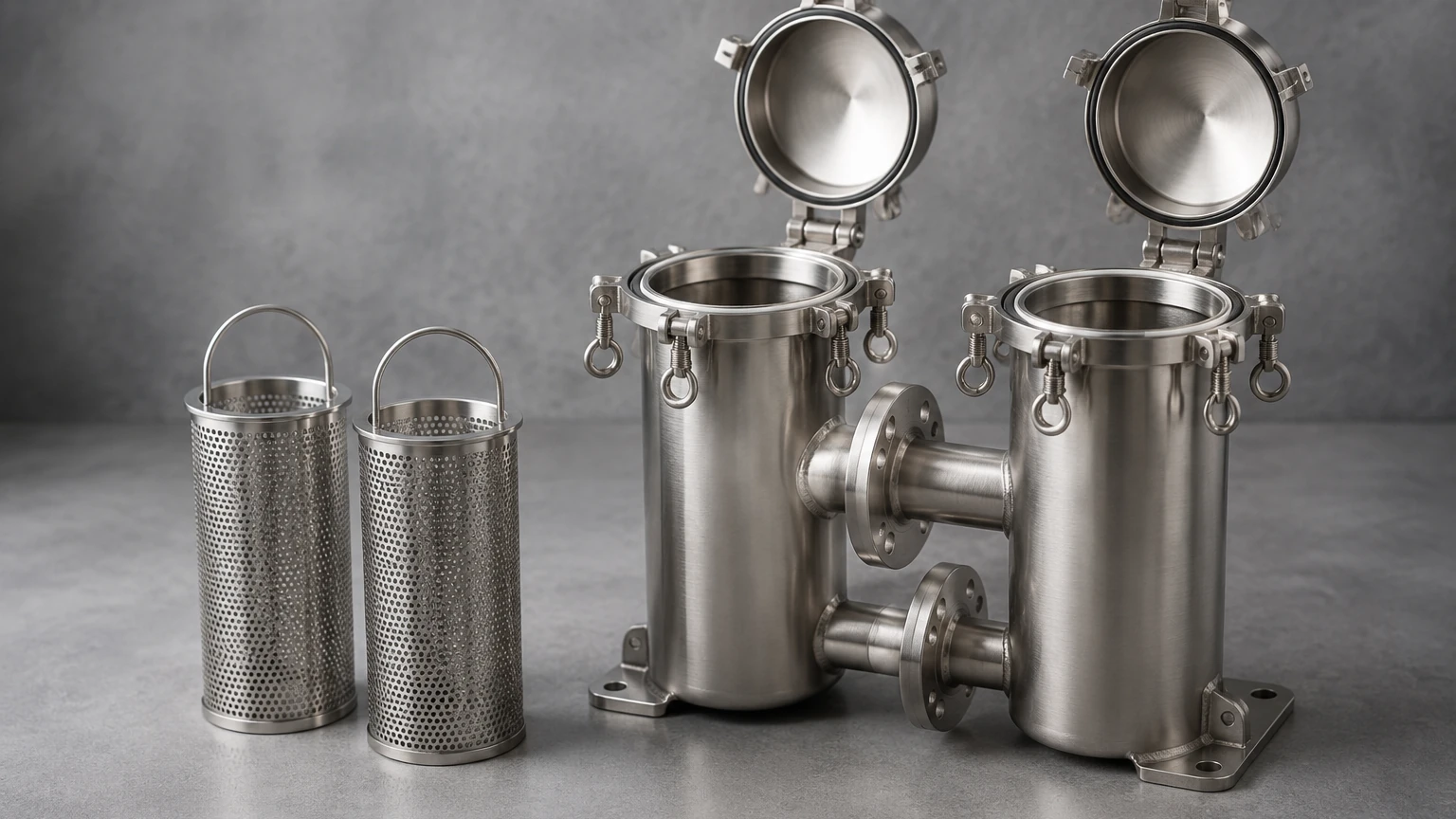
In industrial fluid handling, the requirement for continuous operation often dictates the choice of filtration hardware. A duplex basket type strainer is a critical component designed for piping systems where the flow cannot be shut down for basket cleaning. Unlike simplex strainers, which require the process to stop during maintenance, the duplex configuration utilizes two separate strainer chambers connected by a diversion valve. This allows one chamber to remain in operation while the other is isolated for cleaning or servicing.
For engineers and procurement professionals, selecting a duplex basket type strainer involves more than simply matching pipe sizes. It requires a deep understanding of fluid dynamics, material compatibility, and the specific mechanical requirements of the application. As a specialized manufacturer of stainless steel filtration solutions, Kaifil provides the technical expertise necessary to integrate these components into demanding industrial environments.
Engineering Principles of Duplex Filtration
The fundamental advantage of a duplex basket type strainer lies in its integrated change-over mechanism. This mechanism typically consists of a ball valve, a butterfly valve, or a tapered plug valve, depending on the pressure rating and the viscosity of the fluid. When the pressure gauge indicates that the active basket is becoming clogged—signaled by an increase in differential pressure—the operator can shift the lever or actuate the valve to redirect the flow to the clean, standby chamber.
This "zero-downtime" capability is essential in industries such as chemical processing, power generation, and marine engineering. In these sectors, even a momentary interruption in flow can lead to equipment damage, process instability, or significant economic loss. The duplex design ensures that the downstream equipment, such as pumps, nozzles, and heat exchangers, remains protected from particulate matter at all times.
Material Selection and Chemical Compatibility
When specifying a duplex basket type strainer, material selection is the primary factor influencing the unit's longevity and safety. Stainless steel is the industry standard for high-performance filtration due to its resistance to corrosion, oxidation, and mechanical stress.
1. AISI 304 Stainless Steel: Suitable for general industrial applications, water treatment, and food and beverage processes where moderate corrosion resistance is required.
2. AISI 316/316L Stainless Steel: Preferred for pharmaceutical and chemical applications. The addition of molybdenum enhances resistance to chlorides and acetic acids, making it ideal for marine environments and aggressive chemical streams.
3. Specialty Alloys: For highly corrosive or high-temperature environments, custom alloys may be required to prevent pitting and stress corrosion cracking.
Beyond the housing, the internal basket—the actual filtration element—must be constructed from materials that can withstand the differential pressure generated as debris accumulates. Kaifil specializes in custom stainless steel filter cartridges and wire mesh components that provide the structural integrity needed for these high-pressure environments. For more information on our full range of manufacturing capabilities, you can visit our Main Page.
Basket Configuration and Filtration Accuracy
The performance of a duplex basket type strainer is largely determined by the design of the internal basket. There are two primary layers to consider: the structural support and the filtration media.
Perforated Baskets
For coarse filtration, a perforated metal basket is often sufficient. These are typically defined by the hole diameter and the "open area" percentage. A higher open area reduces the initial pressure drop but may compromise the mechanical strength of the basket if not properly engineered.
Wire Mesh Liners
When finer filtration is required (measured in microns), a stainless steel wire mesh liner is added to the perforated basket. The mesh provides the precision required to capture small particles, while the perforated metal provides the necessary support to prevent the mesh from collapsing under hydraulic load. Engineers must specify the micron rating based on the smallest particle that could potentially damage downstream components.
Magnetic Inserts
In hydraulic and lubrication systems, metallic wear particles are common. A duplex basket type strainer can be equipped with magnetic inserts within the basket to capture fine ferrous particles that might otherwise pass through the mesh. This provides an additional layer of protection for precision bearings and pump internals.
Hydraulic Performance and Pressure Drop Considerations
One of the most common mistakes in filter selection is undersizing the unit, leading to an excessive initial pressure drop ($ΔP$). The total pressure drop across a duplex basket type strainer is the sum of the drop through the housing and the drop through the clean basket.
As the basket collects debris, the effective open area decreases, and the $ΔP$ increases exponentially. It is standard engineering practice to size a strainer so that the clean pressure drop does not exceed 2 PSI (0.14 bar) at the maximum flow rate. Furthermore, the ratio of the basket's open area to the internal pipe cross-sectional area (the "area ratio") should ideally be at least 6:1 to ensure a reasonable service interval between cleanings.
Engineers must also consider the viscosity of the fluid. High-viscosity liquids, such as heavy oils or resins, create significantly higher pressure drops than water. In these cases, the duplex basket type strainer may need to be oversized or equipped with specialized pleated elements to increase the available surface area.
Operational Safety and Maintenance Protocols
While the duplex design allows for maintenance during operation, strict safety protocols must be followed to prevent accidents. The isolated chamber must be properly vented and drained before the cover is opened.
Change-Over Procedure
1. Equalization: Before switching, a small equalization valve is often opened to fill the standby chamber with fluid and equalize the pressure. This prevents a sudden pressure surge or "water hammer" when the main valve is turned.
2. Switching: The diversion valve is moved to the standby chamber.
3. Venting: The air trapped in the newly active chamber is vented through a top-mounted vent plug.
4. Isolation and Cleaning: The dirty chamber is drained, the cover is removed, and the basket is cleaned or replaced.
Gasket and Seal Integrity
Because duplex strainers are often used in high-pressure or hazardous chemical lines, the integrity of the cover seals is paramount. Common materials include EPDM, Viton (FKM), and PTFE. The choice depends on the chemical nature of the fluid and the operating temperature. Regular inspection of these seals during basket cleaning is a critical maintenance step to prevent external leaks.
Customization and OEM Solutions
Standard off-the-shelf strainers may not meet the specific spatial or performance requirements of complex industrial skids. Customization is often necessary to optimize the filtration system. This can include:
* Custom Inlet/Outlet Orientations: To fit into tight piping layouts.
* Specialized Coatings: For added chemical resistance or to meet food-grade standards.
* Automated Backwashing: In some high-flow applications, the duplex system can be automated to switch and flush the standby chamber without manual intervention.
* Differential Pressure Sensors: Integrating electronic sensors into the control system for real-time monitoring and automated alerts.
Kaifil works closely with global customers to develop these customized filtration components. By focusing on precision manufacturing and material science, we ensure that every duplex basket type strainer meets the rigorous demands of its intended application.
Total Cost of Ownership (TCO)
When evaluating the purchase of a duplex basket type strainer, the initial acquisition cost is only one part of the equation. The Total Cost of Ownership (TCO) includes:
* Maintenance Labor: How easily can the baskets be accessed and cleaned?
* Consumables: The cost and frequency of replacing mesh liners or gaskets.
* Energy Costs: Excessive pressure drop increases the load on pumps, leading to higher electricity consumption over the life of the system.
* Downtime Prevention: The value of avoiding unscheduled shutdowns is often the most significant factor in justifying the investment in a high-quality duplex system.
By selecting a robust, well-engineered strainer from a reputable manufacturer, companies can significantly reduce their long-term operational costs and improve process reliability.
Conclusion
The duplex basket type strainer is an indispensable tool for maintaining fluid purity in continuous-flow industrial processes. Its ability to provide uninterrupted filtration while allowing for safe, online maintenance makes it a preferred choice for critical infrastructure. Whether the application involves cooling water, fuel oil, chemical reagents, or liquid food products, the correct specification of materials, micron ratings, and valve mechanisms is vital.
For engineers seeking reliable, high-performance filtration components, understanding the nuances of basket design and hydraulic performance is the first step toward an optimized system. Kaifil remains committed to providing the technical support and manufacturing excellence required to deliver these solutions to the global market. To explore our specific product offerings and technical resources, please visit our Main Page.
