


2000 Cfm Dust Collector
In industrial environments, maintaining air quality and managing particulate matter is a critical operational requirement. A 2000 CFM dust collector represents a versatile mid-range solution capable of handling the filtration needs of multiple smaller workstations or a single high-volume production machine. Selecting the correct system requires a deep understanding of airflow dynamics, particulate characteristics, and the technical specifications of filtration media.
For engineers and facility managers, the goal is not merely to move air, but to do so efficiently while ensuring the longevity of the filtration components. This guide examines the engineering principles, material considerations, and selection criteria essential for implementing an effective 2000 CFM dust collection system.
Understanding the Capacity and Application of a 2000 CFM Dust Collector
The rating of 2000 CFM (Cubic Feet per Minute) refers to the volume of air the collector's blower can move through the system under specific conditions. However, in a B2B industrial context, the nominal CFM is only one part of the equation. The actual performance of a 2000 CFM dust collector is dictated by the system's total static pressure and the nature of the dust being captured.
Industrial Applications
Systems at this capacity are commonly deployed in sectors such as:
* Chemical Processing: Capturing fine powders and preventing cross-contamination.
* Food and Beverage: Managing organic dust in environments requiring high hygiene standards.
* Pharmaceuticals: Ensuring cleanroom-adjacent air quality and handling active ingredients.
* Metalworking: Extracting grinding dust, fumes, and fine metal shavings.
When evaluating a 2000 CFM system, it is vital to distinguish between "fan-only" CFM and "operating" CFM. The latter accounts for the resistance (static pressure) created by the ductwork, the filter media, and the collection hoods. For a detailed look at high-performance filtration components that support these systems, you can visit the Main Page of professional manufacturers like Kaifil.
Engineering Considerations: Airflow, Static Pressure, and Velocity
Designing a system around a 2000 CFM dust collector requires precise calculations to prevent dust from settling in the ducts (which causes clogs and fire hazards) and to ensure the filter media is not overwhelmed.
Duct Velocity
To keep particulate matter suspended in the airstream, the transport velocity must be maintained. For most industrial dust, a velocity of 3,500 to 4,500 Feet per Minute (FPM) is required. If the velocity drops too low, the 2000 CFM rating becomes irrelevant as the system will fail to transport the dust to the collector.
Static Pressure (SP)
Static pressure is the resistance to airflow. A 2000 CFM dust collector must be paired with a blower capable of overcoming the SP of the entire circuit. Factors contributing to SP include:
* Filter Resistance: As filters load with dust, resistance increases.
* Duct Length and Bends: Each elbow and foot of ducting adds friction.
* Hood Design: The entry point of the dust often creates significant pressure drops.
Engineers must ensure that the blower curve for the 2000 CFM unit can maintain the required airflow at the calculated total static pressure of the facility's layout.
Filter Media Selection for High-Performance Systems
The heart of any 2000 CFM dust collector is the filter media. While many standard systems use polyester or paper cartridges, demanding industrial applications often require more robust materials, such as stainless steel wire mesh or sintered metal components.
The Advantage of Stainless Steel Filtration
In industries involving high temperatures, corrosive chemicals, or stringent cleaning protocols, stainless steel filters offer several technical advantages:
* Thermal Stability: Unlike synthetic fabrics, stainless steel can operate in environments exceeding 500°F without losing structural integrity.
* Chemical Resistance: Stainless steel resists oxidation and corrosion from acidic or alkaline vapors.
* Cleanability: Metal filters can be cleaned via ultrasonic baths, back-pulsing, or chemical washing, extending the replacement cycle significantly compared to disposable cartridges.
Air-to-Cloth Ratio
The Air-to-Cloth (A/C) ratio is the volume of air passing through one square foot of filter media. For a 2000 CFM dust collector, if the system has 400 square feet of filter area, the A/C ratio is 5:1.
* High A/C Ratios (e.g., 10:1): Suitable for coarse, non-abrasive dust but leads to faster filter wear.
* Low A/C Ratios (e.g., 2:1): Necessary for very fine, light, or abrasive dust to prevent "blinding" the filter.
Selecting the right A/C ratio ensures that the velocity of the air passing through the filter pores does not force particles so deep into the media that they cannot be removed during the cleaning cycle.
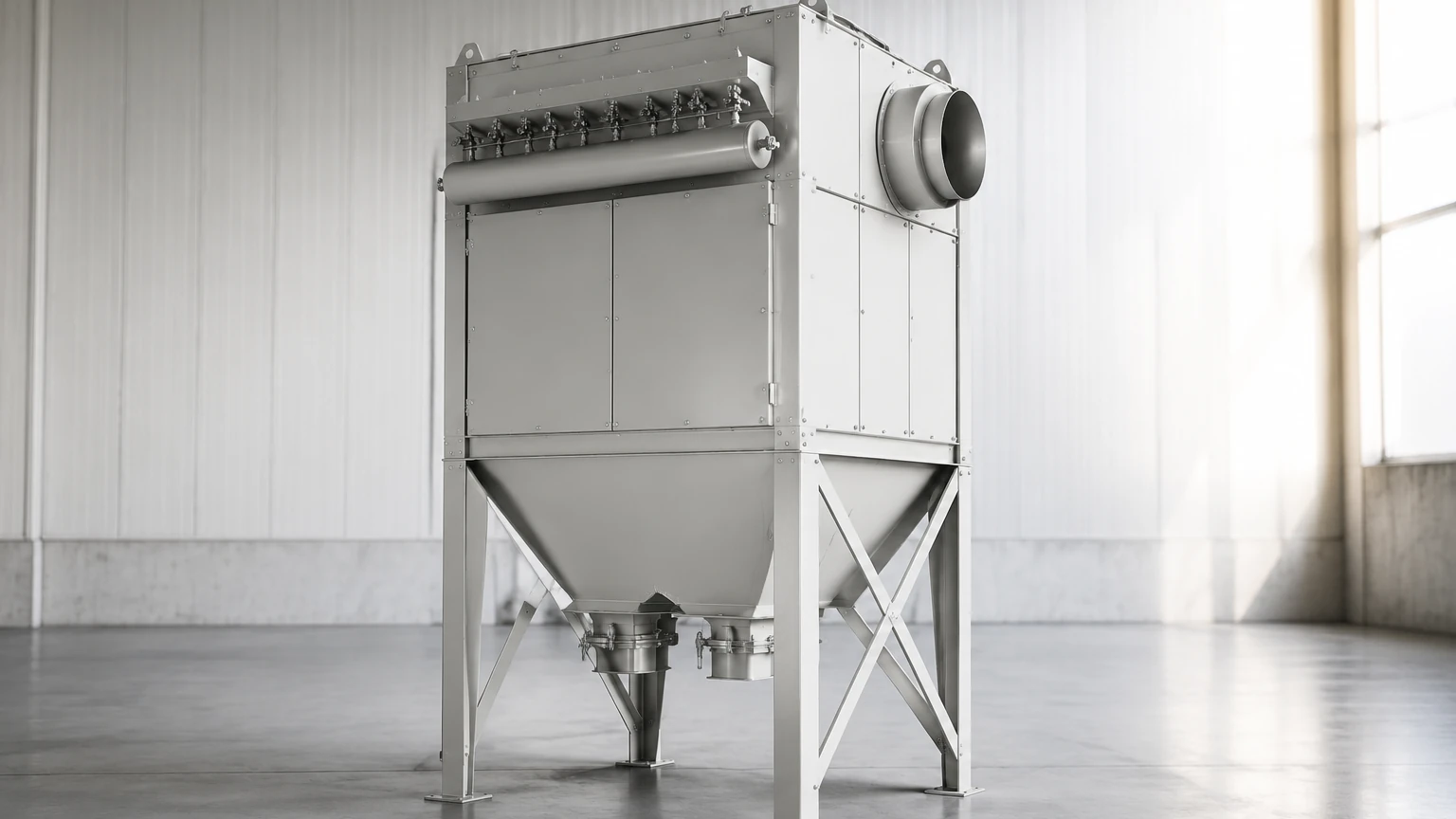
System Design and Component Integration
A 2000 CFM dust collector is rarely a standalone unit; it is a component of a larger integrated system. Proper integration involves several key sub-systems.
Pre-Separators and Cyclones
If the waste stream contains large chips or heavy debris, a pre-separator or cyclone should be installed before the 2000 CFM dust collector. This removes the bulk of the material, allowing the primary filters to focus on the fine, respirable dust, thereby reducing the frequency of pulse-cleaning and extending filter life.
Discharge Systems
How the collected dust is removed from the hopper is critical for continuous operation. Options include:
* Rotary Valves: Provide an air-tight seal while continuously discharging dust into a bin or conveyor.
* Slide Gates: Suitable for batch processing where the system is turned off before emptying.
* Drum Kits: Simple collection into 55-gallon drums, common in smaller 2000 CFM setups.
Explosion Venting and Fire Suppression
If the dust being collected is combustible (such as sugar, flour, wood, or certain metals), the 2000 CFM dust collector must be equipped with explosion relief panels and back-draft dampers to comply with NFPA standards. Failure to account for dust explosibility is a major risk in industrial filtration design.
Maintenance, Durability, and Total Cost of Ownership
When purchasing a 2000 CFM dust collector, the initial acquisition cost is often eclipsed by the long-term operational expenses. Engineers should focus on the Total Cost of Ownership (TCO), which includes energy consumption, filter replacement, and maintenance labor.
Pulse-Jet Cleaning Systems
Most modern 2000 CFM units use a pulse-jet cleaning system. This uses blasts of compressed air to knock the dust cake off the filters. The efficiency of this system depends on the quality of the valves and the structural rigidity of the filter support. Custom stainless steel filter cages and cartridges can prevent the deformation that often leads to leaks in cheaper, mass-produced units.
Monitoring Differential Pressure
Installing a differential pressure gauge is the most effective way to monitor filter health. A sudden drop in pressure may indicate a torn filter (leaking), while a steady increase indicates that the filters are reaching the end of their functional life and require replacement or deep cleaning.
Energy Efficiency
Using a Variable Frequency Drive (VFD) on a 2000 CFM dust collector allows the motor to adjust its speed based on the actual demand. If only half the workstations are active, the VFD reduces the CFM, saving significant energy and reducing the wear on the filter media.
Critical Pre-Purchase Verification for Engineers
Before finalizing the specifications for a 2000 CFM dust collector, technical professionals should confirm several data points with their equipment or filter supplier:
1. Micron Rating vs. Efficiency: Do not just look at the micron rating. Confirm the MERV rating or the percentage efficiency at a specific micron size (e.g., 99.9% at 0.5 microns).
2. Material Compatibility: Ensure the filter media and gaskets are compatible with the chemical composition of the dust and any potential vapors.
3. Customization Requirements: Determine if standard off-the-shelf cartridges will suffice or if the application requires custom-engineered stainless steel filtration components for extreme conditions.
4. Replacement Lead Times: Inquire about the availability of replacement filters. Proprietary filter shapes can lead to long downtimes if the OEM has supply chain issues.
5. Regulatory Compliance: Verify that the system meets local EPA, OSHA, or ATEX requirements for the specific dust type being handled.
By focusing on these technical boundaries, purchasing teams can move beyond generic marketing claims and select a 2000 CFM dust collector that provides reliable, long-term performance in demanding industrial environments. For those seeking specialized filtration components to optimize these systems, exploring the engineering resources available on the Main Page of industry experts is a recommended next step.
