


3 a Sanitary
In the realm of industrial processing, particularly within the food, beverage, and pharmaceutical sectors, the term "3-A sanitary" represents a critical benchmark for equipment design and hygiene. Established by 3-A Sanitary Standards, Inc. (3-A SSI), these standards are formulated to ensure that equipment can be cleaned effectively, thereby preventing microbial contamination and ensuring product safety. For engineers and procurement professionals, understanding the technical nuances of 3-A compliance is essential when selecting filtration components such as stainless steel wire mesh filters and filter cartridges.
3-A Sanitary Standards are not merely suggestions; they are rigorous engineering criteria that dictate how equipment must be designed, fabricated, and installed. When a filter component is described as meeting 3-A requirements, it implies that every aspect of its construction—from the raw materials to the final surface finish—has been scrutinized for cleanability and durability in high-hygiene environments.
Understanding 3-A Sanitary Standards in Industrial Filtration
The primary objective of 3-A Sanitary Standards is to protect public health by ensuring that food and pharmaceutical contact surfaces are easy to clean and inspect. In filtration applications, this is particularly challenging because filters, by their nature, are designed to trap particles. If a filter is not designed according to sanitary principles, those trapped particles can become breeding grounds for bacteria, leading to biofilms that are resistant to standard cleaning protocols.
For a filtration system to be considered sanitary, it must facilitate "Clean-in-Place" (CIP) or "Sterilize-in-Place" (SIP) procedures. This means the filter housing and the internal elements must allow cleaning solutions or steam to reach every surface without the need for complete disassembly. The 3-A SSI provides specific standards (such as Standard 10- for filters) that outline the geometry, material properties, and assembly methods required to achieve this level of hygiene.
Key Design Principles for 3-A Sanitary Equipment
Engineering a filter for 3-A sanitary compliance involves several fundamental design principles that differentiate these components from standard industrial filters. These principles focus on eliminating "dead zones" or crevices where product can accumulate and stagnate.
Crevice-Free Construction
All internal surfaces must be smooth and continuous. In stainless steel filtration, this often involves specialized welding techniques. For example, TIG (Tungsten Inert Gas) or plasma welding is used to ensure that joints are fully penetrated and ground flush. Any lap joints or spot welds that create microscopic gaps are strictly prohibited, as these gaps are impossible to reach with CIP chemicals.
Radii and Geometry
3-A standards specify minimum radii for all internal corners. Sharp 90-degree angles are avoided because they are difficult to scrub mechanically or flush with fluid. Instead, a minimum radius (typically 1/8 inch or 3.2 mm) is required to ensure that the flow of cleaning agents can effectively remove debris from every corner of the filter housing and the filter element support structure.
Self-Draining Capabilities
Sanitary filters must be designed to be self-draining. This means that when the system is shut down or the cleaning cycle is complete, no liquid should remain trapped inside the filter body. Horizontal surfaces are typically avoided or sloped toward a discharge point. This prevents the pooling of stagnant water or product, which is a primary cause of microbial growth between production batches.
Material Integrity and Surface Finish Requirements
The choice of materials is a cornerstone of 3-A sanitary compliance. In the manufacturing of high-performance filtration solutions, Kaifil emphasizes the use of materials that are non-toxic, non-absorbent, and resistant to corrosion.
Stainless Steel Selection
Stainless steel 304 and 316L are the industry standards for sanitary applications. 316L is often preferred for filtration because the addition of molybdenum provides superior resistance to pitting and crevice corrosion, especially when exposed to chlorides or the acidic/alkaline chemicals used in CIP cycles. The "L" designation stands for low carbon, which is crucial for preventing carbide precipitation during welding, ensuring the joints remain as corrosion-resistant as the base metal.
Surface Roughness (Ra)
One of the most measurable aspects of 3-A compliance is the surface finish, quantified as Roughness Average (Ra). For food and dairy applications, 3-A SSI typically requires a maximum Ra of 32 micro-inches (0.8 μm) for all product contact surfaces. Achieving this finish often requires a combination of mechanical polishing and electropolishing. Electropolishing is particularly effective for complex wire mesh structures, as it removes microscopic peaks and valleys, resulting in a mirror-like finish that significantly reduces the ability of bacteria to adhere to the surface.
The Role of Sealing and Gaskets in Sanitary Systems
While the metal components of a filter are vital, the seals and gaskets are often the most vulnerable points in a sanitary system. 3-A standards require that all elastomers and plastics used in seals be FDA-compliant (under 21 CFR 177.2600) and capable of withstanding the operating temperatures and chemical exposures of the process.
Common materials include:
* EPDM: Excellent for steam and hot water applications, though limited in oil-heavy environments.
* PTFE (Teflon): Highly resistant to almost all chemicals and high temperatures, but less resilient (harder to compress) than elastomers.
* Silicone: Often used in pharmaceutical applications due to its high purity and flexibility at various temperatures.
* FKM (Viton): Used when high chemical resistance and high temperatures are required simultaneously.
In a 3-A design, the seal must be "hygienic," meaning the gasket should sit flush with the internal pipe or housing wall. If the gasket is recessed or protrudes into the flow path, it creates a turbulence zone or a crevice that compromises the sanitary integrity of the system.
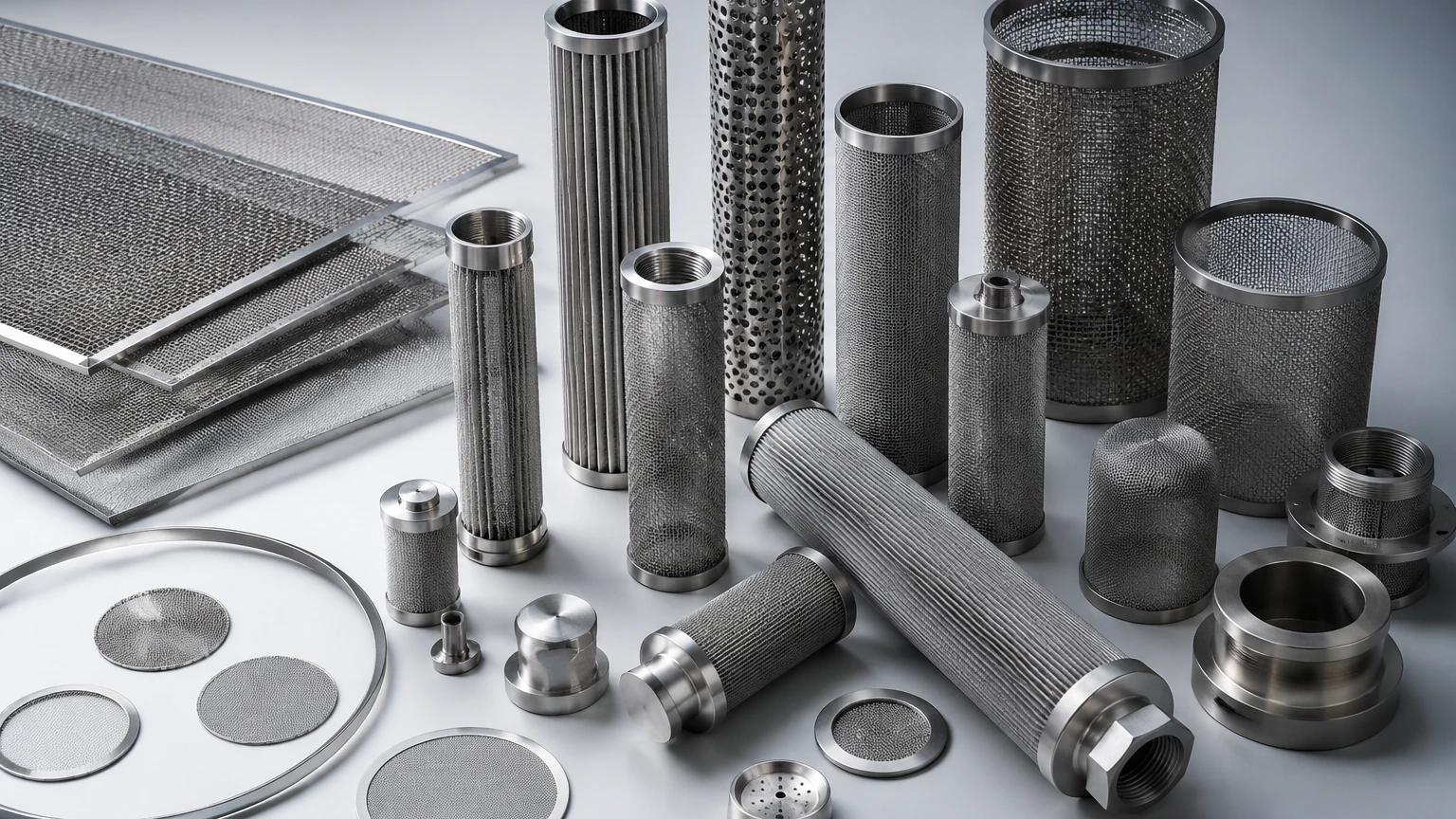
Clean-in-Place (CIP) and Sterilize-in-Place (SIP) Considerations
For modern B2B industrial operations, downtime is a major cost driver. Therefore, filtration systems must be compatible with automated cleaning processes. CIP involves circulating a series of water rinses, caustic detergents, and acid washes through the system at high velocities. A 3-A compliant filter must be structurally robust enough to handle the pressure drops associated with these high-flow cleaning cycles without deforming the filter mesh or damaging the internal supports.
SIP, which uses saturated steam at temperatures typically between 121°C and 134°C, places even greater thermal stress on filtration components. Engineers must ensure that the filter media—whether it is a multi-layer sintered wire mesh or a pleated stainless steel cartridge—can withstand the thermal expansion and contraction cycles of SIP without losing its filtration rating or structural integrity.
Common Risks and Mitigation Strategies in Sanitary Filtration
Failure to adhere to 3-A sanitary principles can lead to significant operational risks, including product recalls, equipment damage, and regulatory fines. One of the most common risks is the development of biofilm. Once a biofilm is established in a crevice or on a rough surface, it becomes extremely difficult to remove with standard CIP, often requiring manual scrubbing and lengthy downtime.
Another risk is "rouging," a form of corrosion common in high-purity water and steam systems. While 316L stainless steel is resistant, it is not immune. Regular passivation—a chemical treatment that restores the protective chromium oxide layer on the steel—is necessary to maintain the sanitary status of the filter over its lifecycle.
To mitigate these risks, engineers should:
1. Verify Certifications: Ensure that the components are manufactured by a facility that understands 3-A SSI principles.
2. Inspect Welds: Use borescope inspections to verify that internal welds are smooth and free of pits.
3. Monitor Pressure Differential: An unexpected rise in pressure drop can indicate that the filter is not being fully cleaned during CIP cycles, suggesting a need for process adjustment.
Selecting a Partner for Custom 3-A Sanitary Solutions
When sourcing filtration components, it is not enough to simply buy a "standard" filter. Many industrial applications require customized dimensions, specific filtration ratings (from sub-micron to several hundred microns), and unique housing configurations. This is where the expertise of a specialized manufacturer becomes invaluable.
Kaifil provides a wide range of custom stainless steel filtration solutions designed to meet the rigorous demands of sanitary environments. By focusing on precision manufacturing and high-grade materials, they ensure that every filter cartridge and wire mesh component supports the hygiene goals of the end-user. Whether you are designing a new processing line or upgrading an existing system, consulting with technical experts on material selection and filtration accuracy is the best way to ensure long-term performance.
For more information on the full range of custom filtration products and technical specifications, you can visit the Main Page to explore how specialized engineering can optimize your sanitary processing operations.
Conclusion: The Value of 3-A Compliance
Investing in 3-A sanitary filtration is an investment in the reliability and safety of the entire production process. By adhering to these standards, companies reduce the risk of contamination, extend the life of their equipment, and simplify their cleaning protocols. For the engineer, the focus remains on the details: the Ra value of the finish, the integrity of the welds, and the compatibility of the seals. When these elements are correctly addressed through professional manufacturing and design, the result is a filtration system that performs consistently in even the most demanding industrial environments.
