


Melt Filter
In high-temperature industrial processing, particularly within the polymer, chemical, and fiber industries, the integrity of the final product depends heavily on the efficiency of the melt filtration process. A melt filter is a critical component designed to remove solid contaminants, gels, and undispersed additives from molten materials—most commonly thermoplastic polymers—before they reach the die or the final molding stage. For engineers and technical procurement teams, selecting the correct melt filtration system is not merely a matter of sizing; it involves a deep understanding of rheology, metallurgy, and fluid dynamics.
Industrial melt filtration operates under extreme conditions, often involving pressures exceeding 300 bar and temperatures reaching up to 400°C. At these levels, the physical properties of the filter media must remain stable to ensure consistent flow and filtration accuracy. As a specialized manufacturer of stainless steel filtration solutions, Kaifil provides the technical expertise required to navigate these complexities, ensuring that filtration components meet the rigorous demands of modern extrusion and recycling lines.
The Engineering Role of Melt Filtration in Industrial Processing
The primary function of a melt filter is to protect the quality of the end product and the longevity of downstream equipment. In polymer extrusion, contaminants such as degraded polymer (black specks), metal fragments, or foreign particles can cause structural weaknesses in films, fibers, or molded parts. Furthermore, these contaminants can damage expensive precision dies or clog the tiny orifices of spinnerets in fiber production.
From an engineering perspective, the melt filter acts as a controlled pressure barrier. As the filter media captures particles, the differential pressure (ΔP) across the filter increases. Managing this pressure drop is essential for maintaining a stable process. A sudden spike in pressure can indicate filter blinding, leading to potential mechanical failure or process downtime. Conversely, a filter with insufficient resistance may allow bypass or fail to capture smaller particles that compromise product clarity or tensile strength.
Technical Considerations for Filter Media Selection
Selecting the appropriate media for a melt filter requires a balance between filtration fineness, flow resistance, and mechanical strength. In the context of stainless steel filtration, three primary types of media are commonly utilized:
1. Sintered Metal Fiber Felt
Sintered metal fiber felt is often the preferred choice for high-viscosity melt filtration. It consists of non-woven stainless steel fibers that are sintered together to create a high-porosity structure. This media offers a high dirt-holding capacity and low initial pressure drop. For engineers, the advantage of fiber felt lies in its depth filtration characteristics, which allow it to capture gels and deformable particles more effectively than surface-type filters.
2. Multi-Layer Sintered Wire Mesh
For applications requiring precise surface filtration and high mechanical stability, multi-layer sintered wire mesh is the standard. By diffusion-bonding multiple layers of stainless steel wire cloth, manufacturers create a rigid structure that resists deformation under high pressure. The pore size remains constant even under fluctuating loads, making it ideal for applications where absolute micron ratings are critical.
3. Sintered Metal Powder
In specific chemical or high-pressure hydraulic applications where extremely fine filtration is required, sintered metal powder components may be used. These provide a very dense and robust filtration barrier, though they typically exhibit higher pressure drops compared to fiber felt or mesh.
Rheology and Its Impact on Filtration Performance
The behavior of the melt under shear and temperature—its rheology—is a defining factor in filter design. High-viscosity polymers require larger filtration areas to maintain acceptable flow rates without exceeding the mechanical limits of the filter housing.
When specifying a melt filter, engineers must consider the shear sensitivity of the material. If the pressure drop across the filter is too high, it can induce localized heating or mechanical degradation of the polymer chains. This is particularly relevant in the production of high-performance plastics or medical-grade polymers. Customizing the pleat density and the internal support structures of a filter cartridge allows for an optimized flow path that minimizes residence time and prevents stagnant zones where polymer degradation could occur.
Evaluating Filtration Accuracy: Absolute vs. Nominal
A common point of confusion in the procurement of melt filters is the distinction between nominal and absolute micron ratings.
* Nominal Rating: This refers to an efficiency figure (e.g., 90% or 95%) at a specific micron size. It indicates that the filter will stop a majority of particles at that size, but some may pass through.
* Absolute Rating: This indicates that 99.9% or more of particles at the specified micron size will be retained. In critical applications like film blowing or fine fiber spinning, absolute ratings are necessary to prevent "fish-eyes" or fiber breaks.
At Kaifil, we emphasize the importance of matching the micron rating to the specific requirements of the downstream process. Over-filtering (using a finer mesh than necessary) leads to unnecessarily high pressure drops and shorter filter life, increasing the total cost of ownership.
Maintenance, Cleaning, and Replacement Cycles
Melt filters are consumables, but their service life can be extended through proper maintenance and cleaning protocols. Because stainless steel filters are durable, they are often designed to be cleaned and reused multiple times. Common industrial cleaning methods include:
* Pyrolysis (Burn-off): Heating the filter in a controlled, oxygen-deprived environment to decompose the polymer into carbon and gas.
* Ultrasonic Cleaning: Using high-frequency sound waves in a chemical bath to dislodge fine particles from deep within the filter media.
* Chemical Solvent Cleaning: Utilizing specific solvents to dissolve the remaining polymer or contaminants.
Determining the replacement cycle involves monitoring the rate of pressure increase over several cleaning cycles. Eventually, the "clean" pressure drop (the ΔP immediately after cleaning) will begin to rise, indicating that the filter media is becoming permanently fouled with inorganic contaminants or that the pore structure is collapsing. At this point, the filter must be replaced to maintain process efficiency.
Customization and OEM Integration
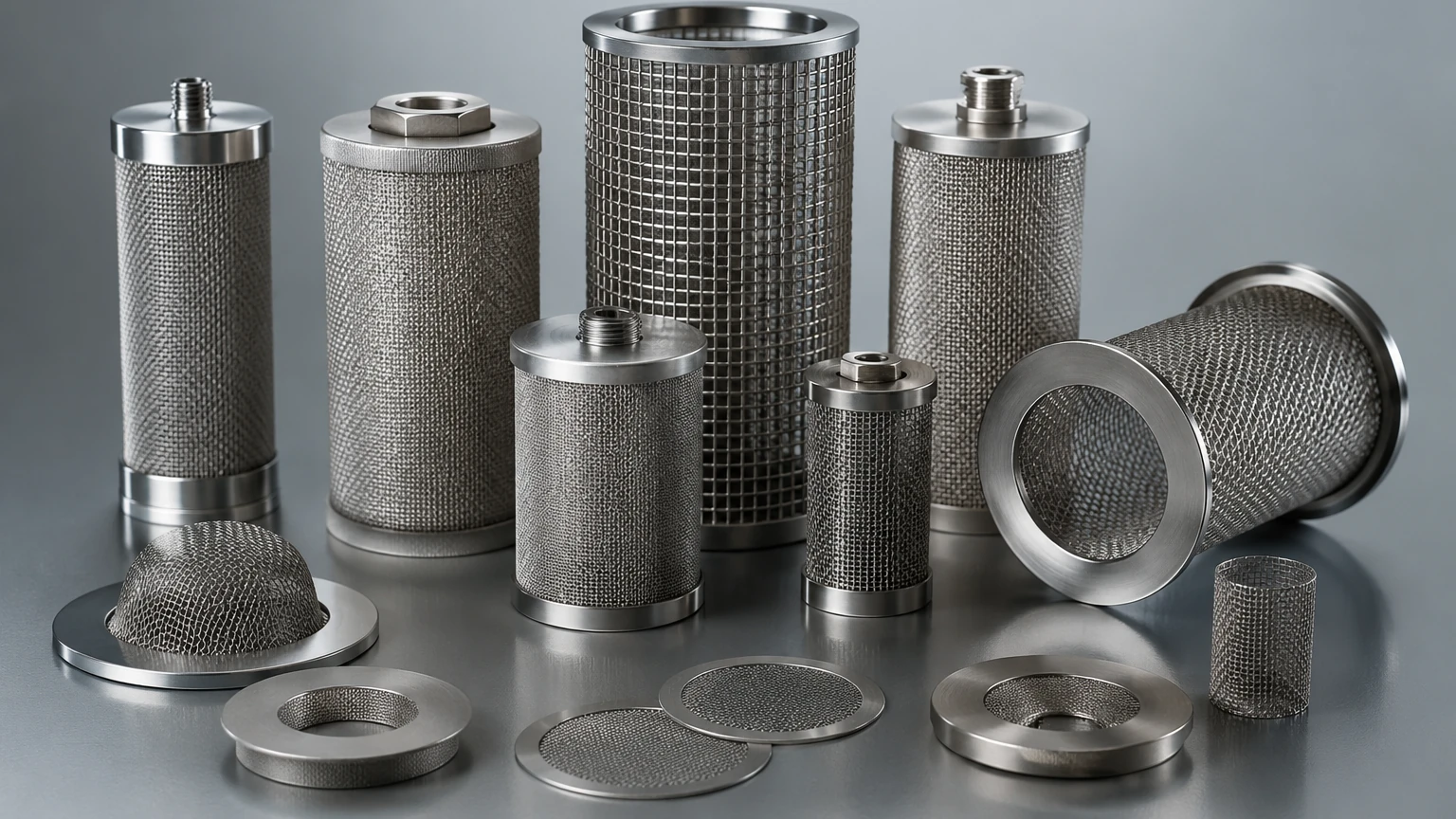
No two extrusion lines are identical, and off-the-shelf filtration components often fail to meet the specific geometric or performance requirements of specialized machinery. Customization is a core strength of Kaifil’s manufacturing process. When developing a custom melt filter, several variables can be adjusted:
1. End Cap Configurations: Standard threaded connections, flange mounts, or custom bayonet fittings to ensure a leak-proof seal within the housing.
2. Support Cores: Heavy-duty perforated or spiral-welded inner cores designed to withstand high collapse pressures.
3. Layer Composition: Combining different mesh counts or fiber diameters to create a graduated filtration structure that maximizes dirt-holding capacity.
4. Alloy Selection: While 304 and 316L stainless steel are standard, applications involving corrosive additives or high-temperature gases may require Hastelloy or other nickel-based alloys.
Engineers should work closely with the manufacturer during the design phase to confirm these parameters. Providing data on the polymer type, flow rate, operating temperature, and the nature of the contaminants allows for the engineering of a filter that balances performance with longevity.
Total Cost Considerations for Technical Buyers
When evaluating melt filter options, the initial purchase price is only one component of the total cost. Technical buyers must also consider:
* Process Downtime: How long does it take to change the filter? Continuous screen changers or duplex filter systems can minimize this, but they require high-quality filter inserts to function reliably.
* Yield Loss: Filters that cause high pressure drops or inconsistent flow can lead to out-of-specification products, which represents a significant financial loss in high-volume production.
* Energy Consumption: Higher pressure drops require more energy from the extruder motor to maintain flow. Optimizing filter design for lower ΔP can result in measurable energy savings over the life of the system.
By focusing on high-quality stainless steel components, operations can achieve more stable production runs and fewer unplanned interventions. Reliable filtration is an investment in the stability of the entire manufacturing chain.
Conclusion
The selection of a melt filter is a technical decision that impacts every aspect of industrial production, from the mechanical safety of the equipment to the aesthetic and structural quality of the final product. Understanding the nuances of filter media, rheological impacts, and maintenance requirements is essential for any engineer or purchasing professional in the field.
Kaifil specializes in providing the precision-engineered stainless steel components necessary for these demanding environments. Whether you are looking for standard replacements or a fully customized filtration solution for a new application, our team is equipped to support your technical requirements. For more information on our capabilities and to explore our full range of industrial filtration products, please visit our Main Page.
Before finalizing a specification, it is recommended to confirm the exact operating environment, including peak pressure, chemical compatibility of the melt, and the desired filtration efficiency. This ensures that the resulting filter component provides the durability and precision required for your specific industrial application.
