


3 Inch Line Air Filter
In industrial compressed air and gas systems, the efficiency of downstream equipment and the quality of the final product depend heavily on the integrity of the filtration system. A 3 inch line air filter is a critical component for medium-to-high flow applications, typically found in main distribution lines or large-scale branch lines. These filters are designed to remove contaminants such as atmospheric dust, pipe scale, oil aerosols, and moisture, which can otherwise lead to pneumatic tool failure, valve corrosion, and product contamination.
Selecting the right filtration solution requires a deep understanding of fluid dynamics, material compatibility, and the specific demands of the industrial environment. As a specialist in stainless steel filtration, Kaifil provides engineered solutions that prioritize durability and precision. When evaluating a 3 inch line air filter, engineers must look beyond simple pipe size and consider the total performance profile of the housing and the internal filter element.
Understanding the Role of a 3 Inch Line Air Filter in Industrial Systems
A 3-inch connection size generally indicates a high-volume system. In these environments, the air filter serves as a primary defense mechanism. Unlike smaller point-of-use filters, a 3 inch line air filter must handle significant flow rates (often measured in hundreds or thousands of Standard Cubic Feet per Minute, or SCFM) without inducing excessive pressure drops that compromise energy efficiency.
Contaminants in a compressed air system are categorized into three main types: solids (particulates), liquids (water and oil), and vapors. A robust filtration setup often involves a multi-stage approach. For instance, a coarse pre-filter might remove large particulates and bulk liquids, followed by a high-efficiency coalescing filter for oil aerosols, and finally, a particulate filter to catch any remaining desiccant dust or fine debris. For industries like chemical processing or pharmaceuticals, where sterile air is a requirement, the 3-inch line may also incorporate specialized stainless steel cartridges capable of withstanding steam sterilization.
Engineering Specifications for 3-Inch Filtration Components
When specifying a 3 inch line air filter, technical professionals must analyze several key performance metrics to ensure the component is fit for purpose.
Flow Capacity and Velocity
The flow capacity of a filter is not determined solely by the port size. It is a function of the internal geometry and the surface area of the filter media. If the air velocity through the filter media is too high, it can lead to "breakthrough," where contaminants are forced through the pores, or it can cause structural damage to the element. Engineers should verify the rated SCFM at specific operating pressures (typically 100 PSIG) to ensure the filter does not become a bottleneck.
Maximum Operating Pressure and Temperature
Standard aluminum housings may suffice for general plant air, but demanding industrial applications often require the resilience of stainless steel. A 3 inch line air filter must be rated for the maximum surge pressures of the system. Furthermore, in applications involving high-temperature gases or heat-of-compression dryers, the seals and filter media must be capable of maintaining integrity at elevated temperatures without off-gassing or degrading.
Pressure Drop (Delta P)
Pressure drop represents the energy cost of filtration. A clean 3 inch line air filter should ideally exhibit a very low initial pressure drop (usually less than 2-3 PSI). As the filter accumulates debris, the differential pressure increases. Monitoring this Delta P is essential; once it reaches a certain threshold (often 8-10 PSI), the energy cost of the compressor working harder to overcome the restriction outweighs the cost of replacing or cleaning the filter element.
Material Selection: The Advantages of Stainless Steel Construction
While various materials are used in filter manufacturing, stainless steel remains the gold standard for high-performance industrial filtration. Kaifil specializes in custom stainless steel filtration solutions because this material addresses the most common failure points in industrial environments.
1. Corrosion Resistance: Compressed air lines often contain moisture, which leads to rust in carbon steel components. Stainless steel (specifically 304 or 316L grades) is impervious to this oxidation, ensuring that the filter housing itself does not become a source of particulate contamination.
2. Chemical Compatibility: In chemical processing or specialized gas filtration, the air may carry trace amounts of corrosive vapors. Stainless steel provides the necessary chemical resistance to prevent structural pitting or seal failure.
3. Hygiene and Cleanability: For food, beverage, and pharmaceutical applications, the 3 inch line air filter must meet stringent sanitary standards. Stainless steel surfaces can be polished to specific Ra (Roughness Average) values to prevent bacterial growth and allow for effective Clean-in-Place (CIP) or Sterilize-in-Place (SIP) procedures.
4. Structural Integrity: Under high-pressure or high-pulsation conditions, metal filter elements offer superior mechanical strength compared to synthetic or paper-based media. This prevents the media from collapsing or shedding fibers into the downstream flow.
To explore the full range of material options and engineering capabilities, you can visit the Main Page for detailed technical specifications on stainless steel filter cartridges and housings.
Filter Element Types for 3-Inch Line Applications
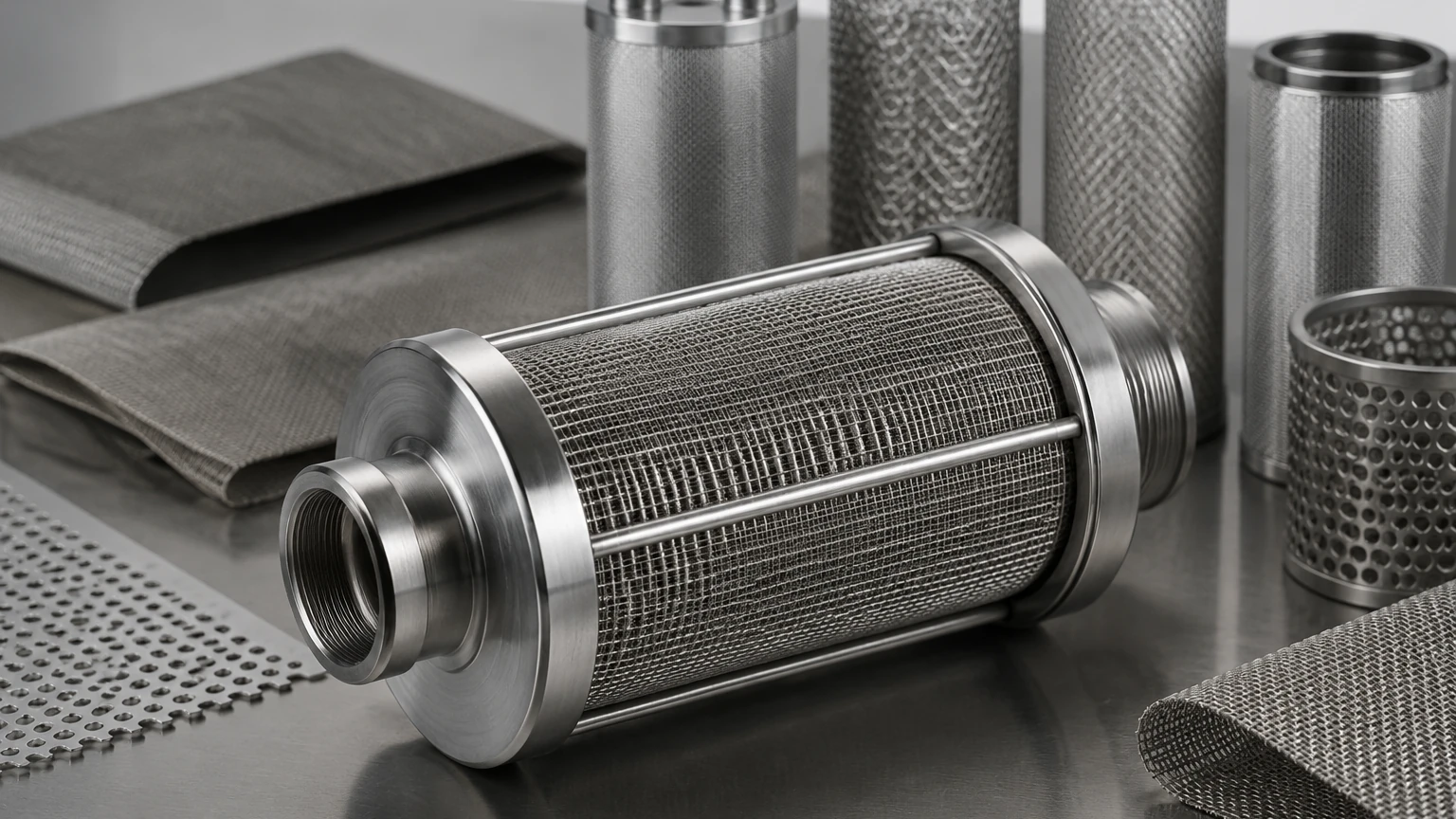
The "heart" of the 3 inch line air filter is the element itself. Depending on the required filtration accuracy, several types of stainless steel elements may be utilized:
Stainless Steel Wire Mesh Filters
These are typically used for coarse filtration or as pre-filters. They consist of precisely woven wire cloth. The advantage of wire mesh is its high porosity and the ability to be cleaned and reused multiple times. They are excellent for removing large scale and debris from the air stream before it reaches more sensitive fine filters.
Sintered Metal Elements
Sintered metal filters are created by fusing metal powders or fibers under high heat and pressure. This creates a porous, rigid structure with highly controlled pore sizes. Sintered elements are ideal for high-pressure applications where absolute filtration ratings are required. They offer exceptional depth filtration and can be backwashed or ultrasonically cleaned.
Pleated Stainless Steel Cartridges
To maximize the surface area within a 3-inch housing, the filter media is often pleated. This design significantly increases the dirt-holding capacity and lowers the initial pressure drop. Pleated cartridges are frequently used in high-flow gas applications where long service intervals are a priority.
Integration and Installation: Connection Standards and Housing Design
A 3 inch line air filter must be seamlessly integrated into the existing piping infrastructure. There are two primary connection types used at this scale:
* NPT/BSPT Threaded Connections: Common in many industrial plants, threaded connections are suitable for standard pressure ranges and offer a relatively simple installation process. However, for 3-inch lines, threading can be cumbersome and prone to leaks if not properly sealed.
* Flanged Connections (ANSI/DIN): For high-pressure systems or applications requiring frequent removal for maintenance, flanged connections are preferred. They provide a more robust mechanical joint and allow the filter housing to be dropped out of the line without disturbing the surrounding pipework.
In addition to the connections, the housing design should include a manual or automatic drain. Since air filters often act as separators for moisture and oil, a reliable drainage mechanism is essential to prevent the collected liquid from being re-entrained into the air stream.
Maintenance Protocols and Total Cost of Ownership (TCO)
When calculating the cost of a 3 inch line air filter, purchasing managers should look beyond the initial sticker price and consider the Total Cost of Ownership. This includes the cost of replacement elements, the energy cost associated with pressure drop, and the labor required for maintenance.
Reusable stainless steel elements, while requiring a higher initial investment, often provide a lower TCO over the life of the system. Instead of disposing of expensive synthetic cartridges every few months, a stainless steel element can be cleaned and returned to service.
Monitoring and Replacement Cycles
Maintenance schedules should be data-driven. Installing differential pressure gauges across the 3 inch line air filter allows maintenance teams to see exactly when the filter is becoming loaded. In critical applications, these gauges can be equipped with electronic sensors that alert the central control room when a filter change-out is required. Neglecting this can lead to "choking" the system, resulting in reduced tool performance and increased wear on the air compressor.
Key Factors to Confirm Before Specifying a 3 Inch Line Air Filter
Before finalizing a purchase or design specification, engineers should confirm the following details with their filtration partner:
* Micron Rating: Is the requirement for "nominal" or "absolute" filtration? Absolute ratings are necessary for critical processes where no particles above a certain size can be tolerated.
* Fluid Properties: Is the filter handling standard compressed air, or is it a specialized gas like nitrogen, CO2, or steam? This affects seal material (O-rings) and housing alloy selection.
* Environmental Conditions: Will the filter be installed outdoors, in a marine environment, or in a wash-down area? This may necessitate specific exterior coatings or high-grade 316L stainless steel.
* Compliance Standards: Does the filter need to meet specific industry certifications, such as FDA compliance for food contact or ASME pressure vessel codes for high-pressure safety?
* Customization Requirements: Does the application require non-standard port configurations, specialized mounting brackets, or integrated bypass valves?
Kaifil works closely with global customers to develop high-performance filter products that meet these specific application requirements. By focusing on precision manufacturing and material integrity, we ensure that every 3 inch line air filter provides dependable service in even the most demanding industrial environments.
For technical professionals seeking to optimize their filtration performance, understanding the nuances of 3-inch line systems is the first step toward achieving a reliable, cost-effective, and efficient compressed air infrastructure. Whether the goal is protecting sensitive analytical equipment or ensuring the purity of a production line, the choice of filtration technology remains a cornerstone of industrial engineering excellence.
