


3 Stage Air Filtration System
In industrial environments, the requirement for high-purity air is not merely a matter of environmental compliance but a critical factor in process integrity, equipment longevity, and product quality. A 3 stage air filtration system represents the standard engineering approach to achieving these goals by progressively removing contaminants of varying sizes and characteristics. By utilizing a tiered strategy, facilities can optimize filtration efficiency while significantly reducing the operational costs associated with premature filter failure and excessive energy consumption.
For engineers and procurement specialists, understanding the technical nuances of each stage—from the coarse pre-filtration to the precision final stage—is essential for selecting a system that balances performance with durability. This guide examines the architecture of these systems, the role of specialized materials like stainless steel, and the engineering considerations necessary for industrial implementation.
The Architecture of a 3 Stage Air Filtration System
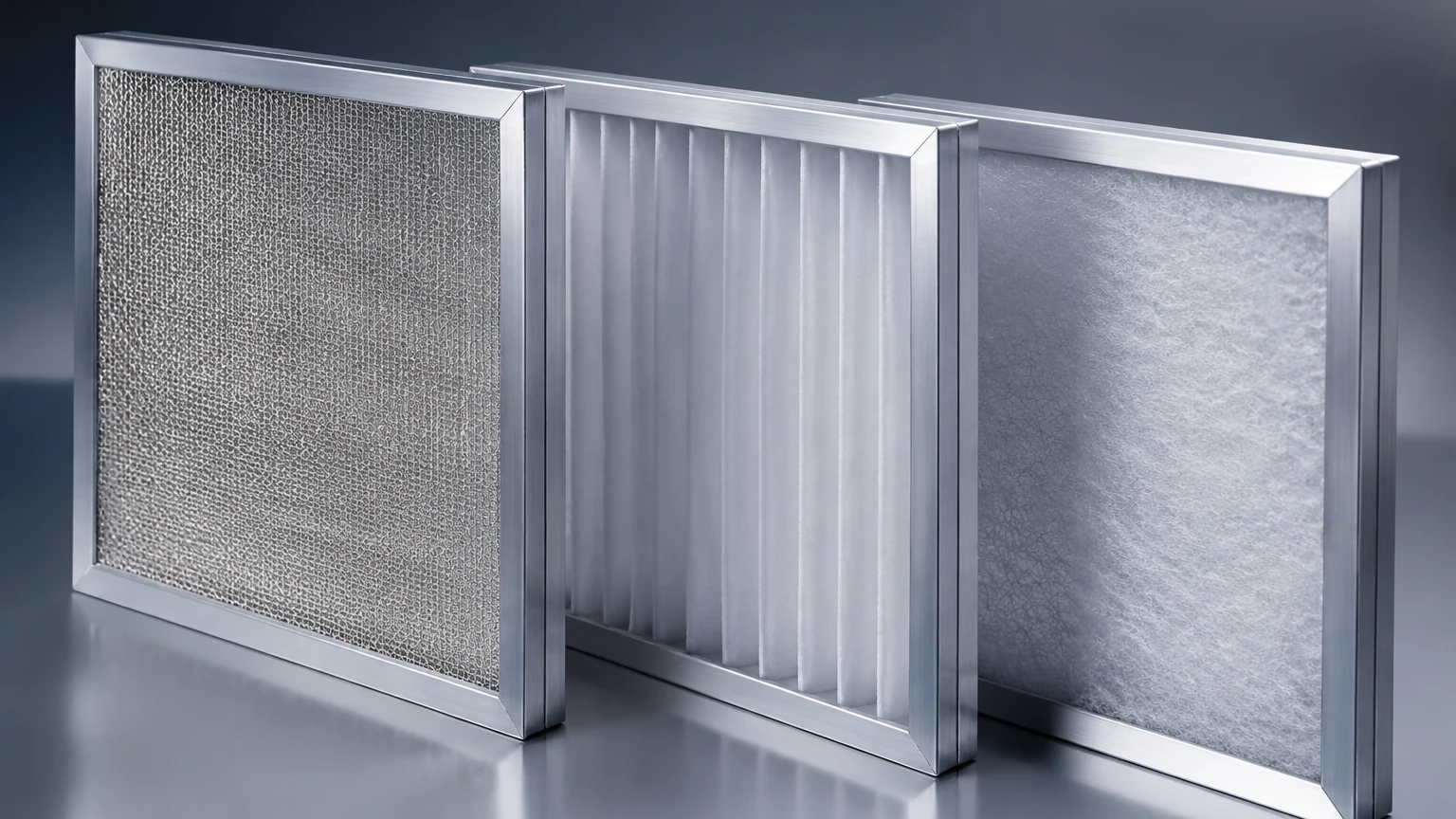
The fundamental principle of a 3 stage air filtration system is the distribution of the contaminant load across different media. This prevents the most expensive, high-efficiency filters from becoming clogged with large debris, thereby extending their service life and maintaining consistent airflow.
Stage 1: Primary Pre-Filtration
The first stage is designed to capture large particulate matter, typically defined as particles 10 microns and larger (PM10). In industrial settings, this often includes dust, lint, metal shavings, or large organic debris. The primary objective here is to protect the downstream components.
For many heavy-duty applications, stainless steel wire mesh or pleated metal filters are preferred for this stage. Unlike synthetic or paper media, metal pre-filters offer high mechanical strength and can often be cleaned and reused, which is a significant factor in reducing the total cost of ownership. These filters typically fall within the G3 to G4 range under ISO 16890 or MERV 1-8 under ASHRAE standards.
Stage 2: Secondary Intermediate Filtration
The second stage targets smaller particles, generally in the range of 1 to 10 microns. This stage serves as a bridge, removing the bulk of the remaining airborne contaminants that would otherwise overwhelm the final high-efficiency filter. Common media for this stage include multi-pocket bag filters or deep-pleated cartridges.
In chemical processing or high-temperature environments, the intermediate stage may utilize finer grades of stainless steel mesh or sintered metal fiber. This stage is crucial for removing aerosols and fine dust, ensuring that the air reaching the final stage is already significantly purified.
Stage 3: Final High-Precision Filtration
The third and final stage provides the highest level of purification. Depending on the application, this may involve HEPA (High-Efficiency Particulate Air) filters or ultra-fine sintered metal cartridges capable of capturing sub-micron particles (0.3 microns and smaller).
In sterile environments such as pharmaceutical manufacturing or food processing, the final stage must ensure that the air is free of microbial contaminants. For technical specifications and to explore specific component options for these stages, engineers can refer to the Main Page of specialized manufacturers to evaluate material compatibility and filtration ratings.
Engineering Considerations: Material Selection and Durability
When designing or specifying a 3 stage air filtration system, the choice of material is as important as the filtration rating itself. While synthetic media are common in standard HVAC applications, industrial processes often demand the resilience of stainless steel.
Corrosion and Chemical Resistance
In industries such as chemical processing or marine environments, air streams may contain corrosive gases or high humidity. Standard galvanized steel or aluminum frames and synthetic media can degrade rapidly under these conditions. Stainless steel (specifically grades 304 and 316L) provides the necessary resistance to oxidation and chemical attack, ensuring the structural integrity of the filter housing and the media itself.
Temperature Stability
Many industrial exhaust or process air systems operate at temperatures exceeding the limits of polyester or fiberglass media. A 3 stage air filtration system utilizing stainless steel components can operate effectively at temperatures up to 500°C (and higher with specific alloys). This thermal stability prevents media migration—where filter fibers break off and contaminate the air stream—which is a common failure mode in high-temperature synthetic filtration.
Pressure Drop and Energy Efficiency
The "Delta P" (ΔP) or pressure drop across the filtration system is a direct indicator of energy consumption. As filters load with contaminants, resistance increases, requiring the blowers or compressors to work harder. By using a well-designed 3-stage approach, the pressure drop is managed more effectively. The coarse pre-filter maintains a low initial resistance, while the intermediate stage manages the bulk of the loading, allowing the final stage to operate within its optimal pressure range for a longer duration.
Application-Specific Configurations
The configuration of a 3 stage air filtration system must be tailored to the specific contaminants and environmental conditions of the facility.
1. Food and Beverage Processing
In food production, air filtration is critical for preventing cross-contamination and ensuring product safety. The system often requires moisture-resistant pre-filters to handle steam or humidity from cooking processes. The final stage usually involves food-grade stainless steel housings and HEPA-rated media that comply with FDA or local health regulations. Clean-in-place (CIP) capabilities are often a requirement for metal components in these systems.
2. Pharmaceutical and Biotechnology
These sectors require the highest levels of air purity. The 3-stage approach typically starts with a high-capacity pre-filter, followed by a MERV 14-16 intermediate filter, and concludes with a HEPA or ULPA final filter. Because these facilities often use aggressive cleaning agents, the durability of the filter frames and support structures is paramount. Stainless steel is the industry standard here due to its non-leaching properties and ability to withstand rigorous sterilization protocols.
3. Hydraulic and Heavy Machinery
Air breathers for hydraulic reservoirs often employ a 3-stage design to prevent environmental dust and moisture from entering the system. The first stage might be a coarse metal screen, the second a desiccant layer for moisture removal, and the third a high-efficiency synthetic or metal fiber media to capture fine silt. This protects sensitive hydraulic valves and pumps from abrasive wear.
Performance Evaluation and Maintenance
To maintain the efficacy of a 3 stage air filtration system, a proactive maintenance schedule based on empirical data is required. Relying solely on calendar-based replacement often leads to either wasted filter life or compromised air quality.
Monitoring Differential Pressure
Each stage of the filtration system should ideally be equipped with a differential pressure gauge (such as a Magnehelic gauge). By monitoring the pressure drop across each individual stage, maintenance teams can identify exactly which filter needs attention. For example, a rapid spike in the first stage's pressure suggests a change in the ambient environment (e.g., nearby construction or a process leak), while a steady rise in the third stage indicates the natural end of the system's lifecycle.
Cleaning vs. Replacement
One of the primary advantages of incorporating stainless steel wire mesh or sintered metal filters into the 3-stage design is cleanability. Depending on the contaminant, these filters can be cleaned using ultrasonic baths, back-flushing, or chemical solvents. This is particularly beneficial in the first and second stages, where the bulk of the particulate is captured. Engineers must evaluate the cost of cleaning (including labor and chemicals) against the cost of replacement media to determine the most economical path.
Avoiding Common Risks in System Specification
When purchasing or designing a 3 stage air filtration system, there are several technical pitfalls that can undermine performance:
* Bypassing: If the filter frames are not properly sealed within the housing, air will take the path of least resistance, bypassing the media entirely. This is especially dangerous in the third stage, where even a small leak can compromise the entire process.
* Incompatible Face Velocity: Every filter media has an optimal face velocity (the speed of the air as it hits the filter surface). If the velocity is too high, particles may be pushed through the media (strike-through); if it is too low, the system may not be cost-effective.
* Under-specifying the Pre-filter: Choosing a pre-filter that is too coarse will lead to the rapid loading of the expensive second and third stages. The first stage should be selected based on a particle size analysis of the specific environment.
Conclusion
Implementing a 3 stage air filtration system is a strategic investment in industrial efficiency. By progressively removing contaminants through a logical hierarchy of media, facilities can achieve superior air purity while protecting their equipment and reducing long-term operational costs. For industrial applications involving high temperatures, corrosive elements, or the need for reusable components, stainless steel filtration solutions provide a level of durability that synthetic alternatives cannot match.
When evaluating options for a new or upgraded system, it is vital to consult with manufacturers who understand the engineering requirements of your specific industry. Detailed product specifications and customization capabilities can be found on the Main Page, providing the technical foundation needed to design a filtration solution that meets both performance and budgetary requirements. By focusing on material quality, pressure drop management, and precise stage configuration, engineers can ensure their air filtration systems deliver reliable performance in even the most demanding B2B environments.
