


Absorber Tower
In industrial gas processing and chemical manufacturing, the absorber tower—also known as a gas scrubber or absorption column—serves as a critical vessel for mass transfer. Its primary function is to remove one or more soluble components from a gas stream by contacting it with a liquid solvent. This process is fundamental to environmental compliance, product recovery, and feedstock purification across sectors such as petrochemicals, pharmaceuticals, and power generation.
For engineers and procurement teams, understanding the internal dynamics of an absorber tower is essential for optimizing performance and ensuring equipment longevity. While the tower shell provides the structure, the efficiency of the absorption process relies heavily on the internal components, including liquid distributors, packing materials, and high-precision filtration elements like mist eliminators.
Fundamental Principles of Absorber Tower Operation
The operation of an absorber tower is based on the principle of mass transfer between a gas phase and a liquid phase. In most industrial applications, this is achieved through counter-current flow: the gas stream enters from the bottom and rises upward, while the liquid solvent is introduced at the top and flows downward. As the two phases interact, the target solute is transferred from the gas to the liquid based on solubility and concentration gradients.
Key factors influencing the efficiency of an absorber tower include:
* Contact Surface Area: The greater the surface area where gas and liquid meet, the more efficient the mass transfer. This is why towers are filled with structured or random packing.
* Residence Time: The duration the gas remains in contact with the liquid must be sufficient for the chemical or physical absorption to occur.
* Gas-to-Liquid (G/L) Ratio: Engineers must precisely calculate the flow rates of both phases to ensure the solvent is not saturated before it reaches the bottom of the tower.
* Temperature and Pressure: Absorption is generally exothermic; lower temperatures and higher pressures typically favor the absorption of gases into liquids.
The Role of Internal Components in Filtration and Separation
An absorber tower cannot function effectively as a hollow shell. It requires a sophisticated array of internals designed to manage fluid dynamics and prevent the loss of process fluids. This is where precision-engineered components, such as those provided by specialized manufacturers like Kaifil, become indispensable.
Liquid Distributors
To ensure the packing is wetted uniformly, liquid distributors are installed at the top of the tower. Poor distribution leads to "channeling," where the gas and liquid move through separate paths, drastically reducing contact efficiency and leaving portions of the tower underutilized.
Packing Support Plates
These structures hold the weight of the tower packing while allowing for the free flow of gas upward and liquid downward. They must be designed with a high open area to minimize pressure drop, which can otherwise increase energy consumption for blowers and compressors.
Wire Mesh Mist Eliminators (Demisters)
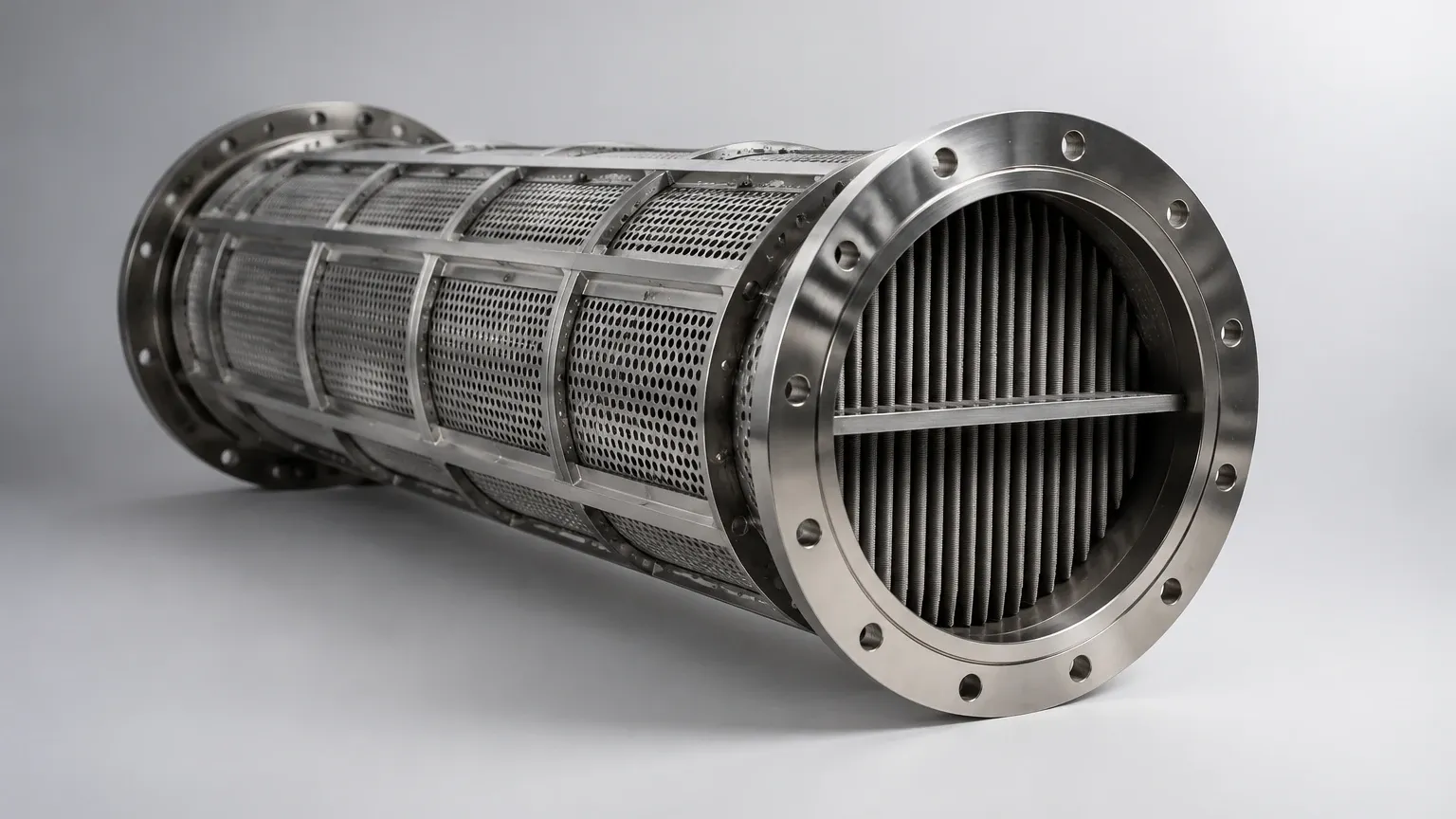
As gas rises through the tower, it often entrains small liquid droplets. If these droplets are not removed before the gas exits the top, it results in product loss, downstream equipment corrosion, and environmental non-compliance. Stainless steel wire mesh mist eliminators are the standard solution for this challenge. These components utilize a dense matrix of knitted wire mesh to intercept droplets through inertial impaction, allowing them to coalesce and drain back into the column. For high-performance filtration solutions, engineers often consult the Main Page of specialist manufacturers to determine the appropriate mesh density and wire diameter for their specific flow conditions.
Material Selection for Harsh Operating Environments
Absorber towers often handle highly corrosive substances, such as sulfuric acid, ammonia, or hydrogen sulfide. Consequently, the material selection for both the tower internals and the filtration components is a primary engineering consideration.
1. Stainless Steel 304/316L: These are the most common materials for industrial filtration due to their excellent balance of corrosion resistance and mechanical strength. 316L is preferred in chloride-rich environments or where mild acids are present.
2. Duplex Stainless Steels: In applications involving high stress and aggressive chemical environments, duplex grades offer superior resistance to stress corrosion cracking compared to standard austenitic steels.
3. Super Alloys: For extreme conditions involving high-temperature flue gases or concentrated corrosive agents, alloys like Monel, Inconel, or Hastelloy may be required for mist eliminators and support grids to prevent premature failure.
Selecting the wrong material can lead to rapid degradation of the wire mesh, resulting in "breakthrough" where liquid droplets bypass the filtration stage, potentially damaging downstream turbines or reactors.
Engineering Considerations for Efficiency and Pressure Drop
One of the most significant challenges in absorber tower design is balancing filtration efficiency with pressure drop. Every internal component placed in the path of the gas stream creates resistance. A high pressure drop requires more power from the system's fans or compressors, leading to increased operational costs (OPEX).
When specifying wire mesh filters or demisters for an absorber tower, engineers must evaluate:
* Face Velocity: The speed at which the gas hits the filter surface. If the velocity is too high, droplets may be re-entrained; if it is too low, the inertial impaction mechanism fails.
* Mesh Geometry: The crimp, wire diameter, and void fraction of the mesh determine the surface area available for droplet capture and the resulting resistance to gas flow.
* Clogging Potential: In gas streams containing particulates or where the liquid solvent may crystallize, the filtration components must be designed to resist fouling. Custom stainless steel cartridges or multi-layer mesh structures can be engineered to provide depth filtration, extending the time between maintenance cycles.
Maintenance and Longevity of Internal Components
Even the most robustly designed absorber tower requires a structured maintenance program. The internal filtration elements are often the first to show signs of wear or fouling. Common issues include:
* Scaling and Fouling: Mineral deposits from the liquid solvent or particulates from the gas stream can coat the wire mesh, reducing the open area and spiking the pressure drop.
* Corrosion/Erosion: High-velocity gas streams can cause mechanical erosion, while chemical attack can thin the wires of a demister pad, eventually leading to structural failure.
* Mechanical Displacement: Surges in gas flow can sometimes dislodge internal components if they are not securely fastened with heavy-duty support grids.
Regular inspections should involve checking the pressure differential across the mist eliminator. A sudden increase usually indicates fouling, while a sudden decrease may indicate a hole in the mesh or a bypassed seal. Cleaning protocols often involve backwashing with a compatible solvent or ultrasonic cleaning for removable stainless steel filter cartridges.
Selection Criteria for Custom Filtration Solutions
Standard off-the-shelf components rarely meet the specific needs of complex industrial absorber towers. Customization is often necessary to match the specific chemistry, flow rate, and purity requirements of a facility. When sourcing components, purchasing teams should confirm the following with their manufacturer:
* Filtration Accuracy: What is the minimum droplet size that must be captured (e.g., 99% of droplets over 5 microns)?
* Structural Integrity: Will the support grids handle the weight of the mesh when it is fully saturated with liquid?
* Custom Geometry: Does the component need to fit into a non-standard tower diameter or around internal piping?
* Total Cost of Ownership: While high-grade alloys or custom-knitted mesh may have a higher upfront cost, their ability to reduce downtime and prevent downstream damage often results in a lower total cost over the equipment's lifecycle.
By focusing on high-quality stainless steel filtration and separation components, operators can ensure that their absorber towers run at peak efficiency with minimal environmental impact. For those seeking technical specifications on wire mesh filters, cartridges, and custom industrial filtration components, visiting the Main Page provides a comprehensive overview of available engineering solutions and material options.
In conclusion, the absorber tower is a cornerstone of industrial processing. Its success depends on the precise coordination of gas-liquid contact and the subsequent separation of phases. By prioritizing the quality and engineering of internal components—particularly the mist eliminators and support structures—industrial facilities can achieve reliable, cost-effective, and compliant operations.
