


Air Cleaner Foam Sheets
In the landscape of industrial filtration, air cleaner foam sheets represent a versatile and essential component for managing air quality and protecting sensitive machinery. While often overshadowed by high-precision stainless steel cartridges or HEPA systems, these foam elements serve as the first line of defense in diverse environments ranging from heavy-duty industrial compressors to specialized chemical processing equipment. Understanding the technical nuances of foam media—including porosity, material composition, and structural integration—is critical for engineers and procurement professionals tasked with optimizing filtration performance and minimizing operational costs.
At Kaifil, our focus on high-performance filtration solutions often involves the integration of various media types to achieve specific engineering goals. While we specialize in custom stainless steel filtration, we recognize that air cleaner foam sheets are frequently utilized as pre-filters or integrated components within larger filtration assemblies. This guide provides a technical deep dive into the selection and application of foam sheets from an industrial perspective.
Understanding Air Cleaner Foam Sheets in Industrial Applications
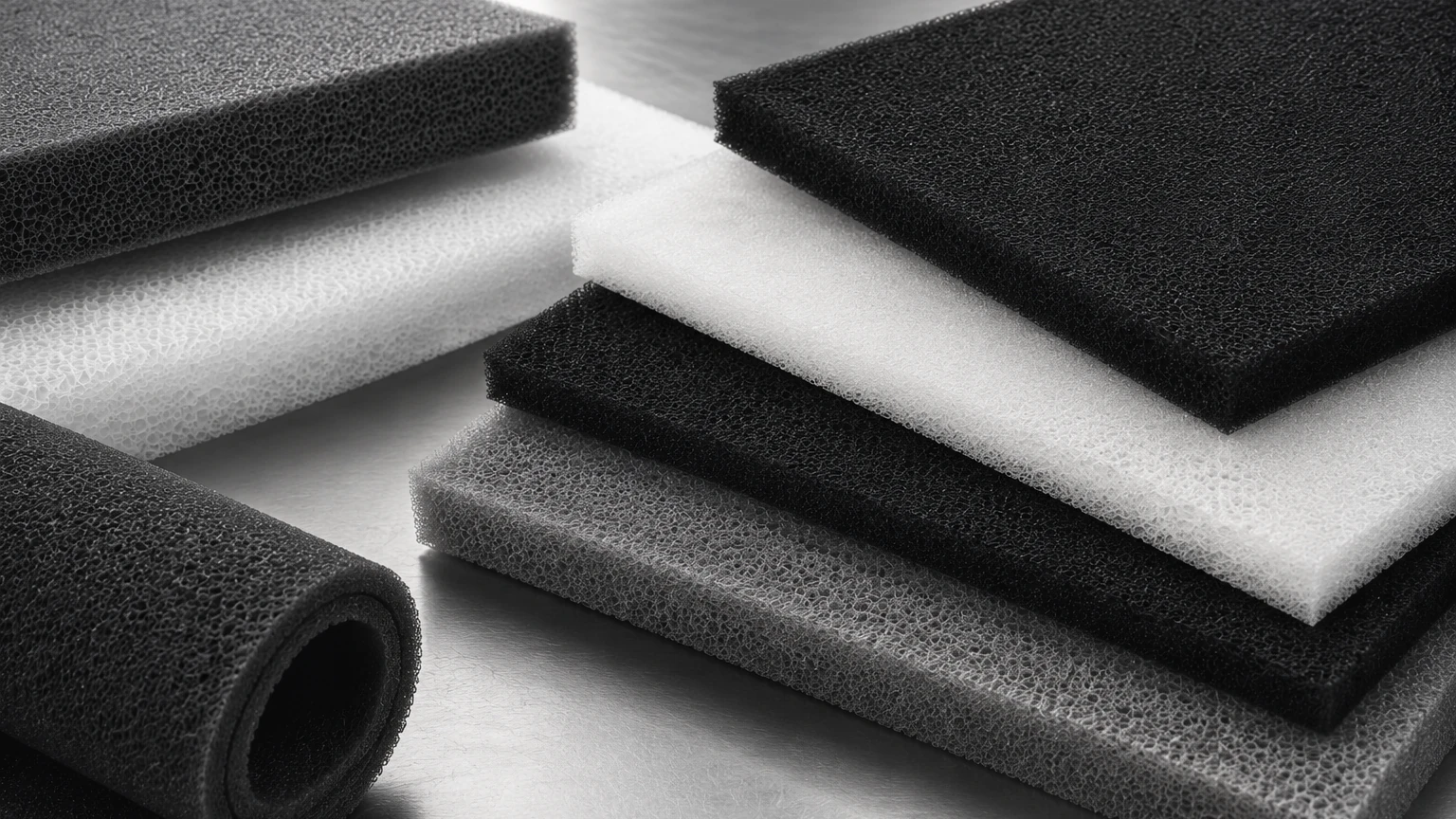
Air cleaner foam sheets are typically manufactured from reticulated polyurethane foam. Unlike standard "closed-cell" foam used for packaging or insulation, reticulated foam undergoes a process—often thermal or chemical—that removes the thin cell membranes, leaving behind a three-dimensional skeletal structure. This "open-cell" architecture is what allows air to flow through the media while trapping particulate matter.
In industrial settings, these sheets function through depth filtration. Unlike surface filters (such as fine wire mesh or paper), which trap particles on a single plane, foam sheets capture contaminants throughout the entire thickness of the material. This characteristic provides a significant advantage in terms of dust-holding capacity, making them ideal for high-dust environments where a surface filter would clog prematurely.
Technical Specifications: PPI and Porosity
The primary metric used to define air cleaner foam sheets is Pores Per Inch (PPI). This measurement dictates both the filtration efficiency and the resistance to airflow (pressure drop). Selecting the correct PPI is a balancing act between the size of the particles that need to be captured and the volume of air required by the system.
* 10 to 30 PPI (Coarse): These sheets are used for heavy-duty pre-filtration. They excel at capturing large debris, insects, and coarse dust. They offer extremely low resistance to airflow and are often used as a primary stage to protect more expensive, finer filters downstream.
* 45 to 75 PPI (Medium): This range is common in standard industrial air intake systems. It provides a balance of effective particle capture for medium-sized dust while maintaining a manageable pressure drop.
* 80 to 100+ PPI (Fine): Fine foam sheets are used where higher filtration efficiency is required. While they capture smaller particles, they also exhibit higher initial pressure drop and may require more frequent cleaning or replacement.
Engineers must also consider the "void volume" of the foam, which typically exceeds 95%. This high porosity ensures that even as the filter accumulates dust, there remains a significant amount of open space for air to pass through, extending the service life between maintenance cycles.
Material Performance and Chemical Compatibility
Not all air cleaner foam sheets are created equal. The chemical makeup of the polyurethane determines how the filter will perform when exposed to environmental stressors like moisture, oils, and temperature fluctuations. There are two primary types of polyurethane foam used in filtration:
Polyester Polyurethane Foam
Polyester-based foams generally offer superior mechanical strength and better resistance to hydrocarbons, such as oils and fuels. This makes them the preferred choice for air cleaners in engines, compressors, and hydraulic power units where oil mist or fuel vapors are present. However, they are susceptible to hydrolysis (degradation when exposed to high humidity and heat over long periods).
Polyether Polyurethane Foam
Polyether-based foams are highly resistant to moisture and microbial growth. They are the standard for applications involving water treatment, high-humidity HVAC systems, and outdoor environments where the filter may be exposed to rain. While they have slightly lower tensile strength than polyester foams, their longevity in wet conditions is significantly higher.
When specifying foam sheets, it is essential to confirm the operating environment. For instance, a filter used in a chemical processing plant may require specialized flame-retardant additives or UV stabilizers if the intake is located outdoors. For more detailed technical specifications and custom engineering support, visit the Main Page of our site.
The Role of Foam Sheets in Multi-Stage Filtration Systems
In many high-demand industrial applications, air cleaner foam sheets are not used in isolation. Instead, they serve as a critical component of a multi-stage filtration strategy. By pairing foam sheets with stainless steel wire mesh or pleated cartridges, engineers can achieve a "graduated density" filtration effect.
In this configuration, the foam sheet acts as a sacrificial pre-filter. It captures the bulk of the coarse particulate matter, which prevents the finer, more expensive stainless steel filter from blinding (clogging). This setup significantly extends the total system's service life and reduces the frequency of intensive cleaning for the precision metal components.
At Kaifil, we often design custom housings that incorporate a replaceable foam wrap around a permanent stainless steel core. This hybrid approach combines the high-capacity depth filtration of foam with the structural integrity and precision of metal mesh.
Engineering Evaluation: Pressure Drop and Dust Holding Capacity
When integrating air cleaner foam sheets into a system, engineers must evaluate the relationship between the Face Velocity (the speed of air hitting the filter surface) and the Pressure Drop (the loss in air pressure as it passes through the media).
1. Initial Pressure Drop: The resistance of a clean filter. This must be low enough to ensure the system (e.g., an engine or blower) can operate at peak efficiency.
2. Terminal Pressure Drop: The point at which the filter is so loaded with dust that the system can no longer function effectively.
Foam sheets are prized for their high dust-holding capacity. Because the particles are trapped within the tortuous path of the foam's skeletal structure, the pressure drop increases more linearly compared to paper or fabric filters, which often show an exponential increase in resistance once the surface is coated. This predictable performance allows maintenance teams to schedule filter cleanings based on pressure differential sensors with high accuracy.
Customization and Integration with Metal Filtration Components
One of the primary challenges in using foam sheets is their lack of inherent structural rigidity. In high-velocity air streams, a standard foam sheet may deform or be sucked into the intake. To solve this, industrial filters often utilize a support structure.
Customization options include:
* Lamination: Foam can be heat-bonded or adhesive-bonded to a stainless steel wire mesh backing. This provides the filtration benefits of the foam with the mechanical strength of the metal.
* Die-Cutting: Precision die-cutting allows foam sheets to be shaped into complex gaskets or circular inserts that fit perfectly within specialized industrial housings.
* Impregnation: Foam can be treated with specialized oils (tackifiers) to increase its ability to hold very fine dust, or with carbon to provide odor and gas-phase filtration.
Kaifil provides the engineering expertise to combine these materials into a single, high-performance unit. Whether you require a custom-sized foam insert or a complex assembly featuring stainless steel support, our manufacturing capabilities ensure that the final product meets the exact tolerances required by your application.
Maintenance, Cleaning, and Replacement Cycles
A major advantage of air cleaner foam sheets in a B2B context is their reusability. Unlike many paper-based filters, high-quality reticulated foam can often be cleaned and returned to service, which lowers the total cost of ownership (TCO).
Cleaning Procedures
Industrial foam filters should be cleaned using mild detergents and warm water. It is vital to avoid harsh solvents that can break down the polyurethane polymer. After washing, the foam must be thoroughly rinsed and allowed to air dry completely. In some applications, a light coating of filter oil is reapplied to the foam to restore its original filtration efficiency.
Replacement Indicators
Despite their durability, foam sheets eventually reach the end of their functional life. Signs that a foam sheet must be replaced rather than cleaned include:
* Friability: The foam becomes brittle or starts to crumble when touched, indicating UV or chemical degradation.
* Permanent Compression Set: The foam fails to return to its original shape after being compressed, which can lead to bypass (air leaking around the edges of the filter).
* Increased Baseline Pressure Drop: If the pressure drop remains high even after a thorough cleaning, it indicates that fine particulates have become permanently lodged deep within the foam structure.
Selection Criteria for Procurement and Engineering Teams
Before purchasing air cleaner foam sheets, technical teams should confirm several key factors to ensure the product is fit for purpose:
1. Airflow Requirements: What is the CFM (Cubic Feet per Minute) required by the equipment? This will dictate the minimum surface area and maximum PPI of the foam.
2. Contaminant Profile: What is the nature of the dust? Is it oily, abrasive, or moisture-laden? This determines whether polyester or polyether foam is appropriate.
3. Environmental Constraints: Will the filter be exposed to extreme temperatures or caustic chemicals? Stainless steel mesh reinforcement may be necessary for high-temperature or high-pressure environments.
4. Regulatory Compliance: Does the application require specific fire ratings (such as UL 94 HF-1) or food-grade certifications (FDA compliance)?
By addressing these questions during the design and procurement phase, companies can avoid costly downtime and equipment damage. For organizations looking to optimize their filtration processes through high-quality materials and custom engineering, reviewing product options and application support on our Main Page is a recommended next step.
Conclusion
Air cleaner foam sheets are a fundamental yet highly technical component of modern industrial filtration. Their ability to provide high-capacity depth filtration, combined with the possibility of cleaning and reuse, makes them an economically sound choice for many applications. However, the performance of these filters is heavily dependent on the correct specification of PPI, material type, and structural support. By integrating foam media with robust stainless steel components, manufacturers like Kaifil help industries achieve the perfect balance of durability and filtration precision, ensuring that critical machinery remains protected in even the most demanding environments.
