


Inline Filter Housing
In industrial fluid processing, the integrity of a system often depends on the efficiency of its filtration components. An inline filter housing serves as a critical pressure vessel designed to be integrated directly into a piping system, providing a streamlined path for fluids to pass through a filtration medium. Unlike batch filtration systems that may require significant floor space and complex manifolding, an inline filter housing is engineered for continuous flow, minimal footprint, and high-pressure durability. For engineers and procurement teams, selecting the correct housing is not merely a matter of sizing a pipe connection; it requires a deep understanding of fluid dynamics, material compatibility, and the specific demands of the industrial environment.
At Kaifil, we specialize in manufacturing high-performance stainless steel filtration solutions. For a comprehensive overview of our capabilities and product range, technical professionals are encouraged to visit our Main Page to review technical specifications and customization options.
The Role of Inline Filter Housing in Industrial Processes
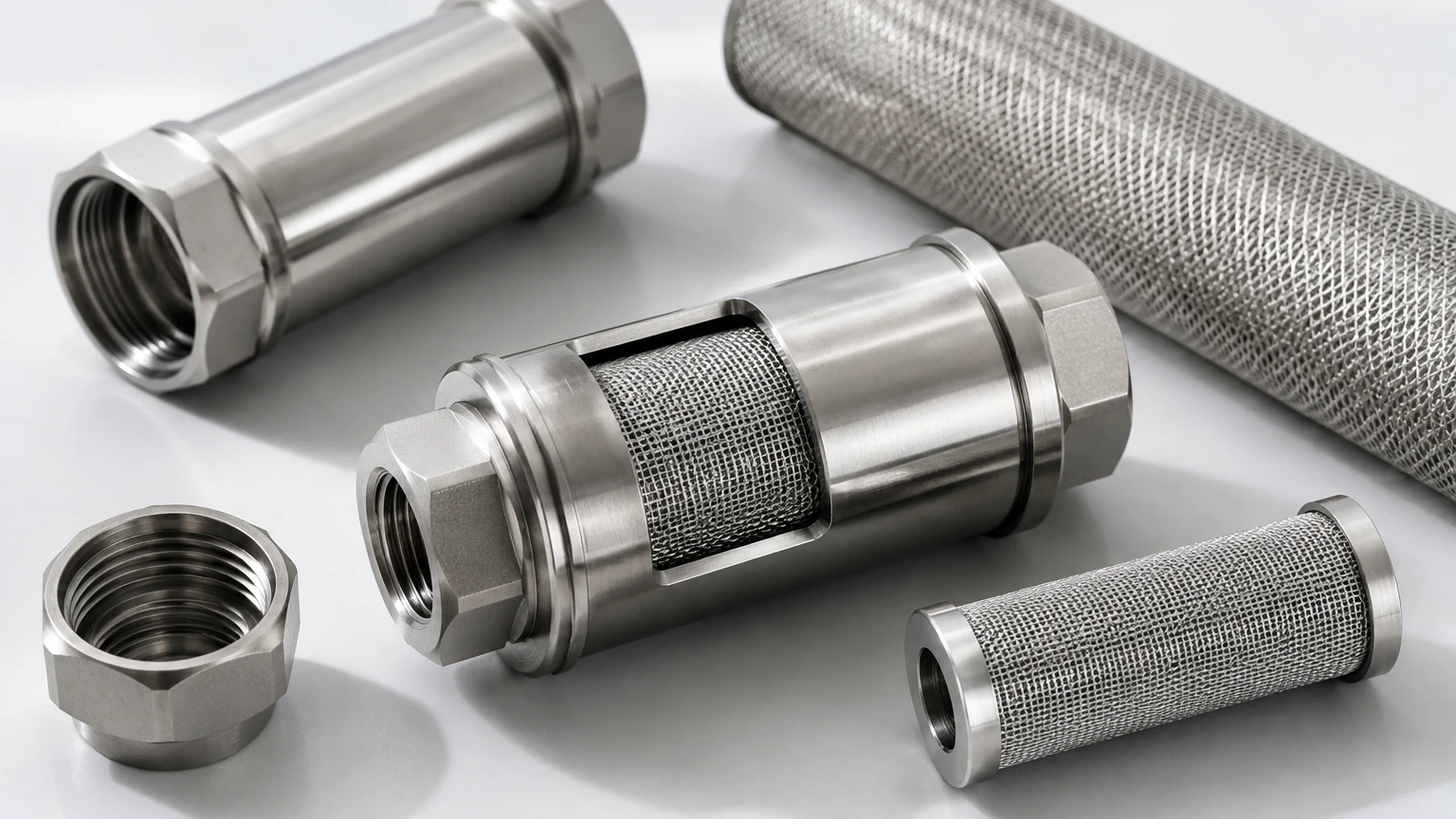
The primary function of an inline filter housing is to hold a filter element—such as a stainless steel wire mesh cartridge or a sintered metal filter—securely in place while directing the fluid flow through the media. By positioning the filter "in-line" with the existing pipework, the system maintains a consistent flow direction, which reduces turbulence and minimizes the pressure drop across the filtration stage.
These housings are indispensable in protecting downstream equipment. In hydraulic systems, they prevent particulate matter from damaging sensitive pumps and valves. In chemical processing, they ensure that raw materials meet purity standards before entering a reactor. In the food and beverage industry, sanitary-grade inline housings are used to remove contaminants while adhering to strict hygiene standards. The versatility of the inline filter housing makes it a staple in sectors ranging from water treatment to pharmaceutical manufacturing.
Engineering Considerations: Material and Construction
When specifying an inline filter housing, the choice of material is the most significant factor affecting longevity and safety. Most industrial applications demand stainless steel due to its mechanical strength and resistance to corrosion.
Stainless Steel Grades: 304 vs. 316L
Stainless steel 304 is often sufficient for general industrial water filtration and non-corrosive fluids. However, for applications involving chlorides, acids, or high-purity requirements, Type 316L stainless steel is the industry standard. The addition of molybdenum in 316L provides superior resistance to pitting and crevice corrosion, which is essential for chemical processing and marine environments. Furthermore, the "L" (low carbon) designation ensures that the housing remains resistant to intergranular corrosion after welding, preserving the structural integrity of the vessel.
Pressure Ratings and Compliance
Industrial housings must be designed to withstand the maximum operating pressure of the system, including potential pressure surges. Engineering teams should confirm that the housing meets relevant standards, such as ASME Section VIII for pressure vessels or PED (Pressure Equipment Directive) in Europe. The wall thickness, flange ratings, and closure mechanisms (such as swing bolts or V-band clamps) must all be calculated based on the intended operating temperature and pressure.
Evaluating Flow Dynamics and Filtration Efficiency
A common challenge in filtration design is balancing filtration accuracy with flow capacity. The internal geometry of an inline filter housing determines how the fluid enters the chamber and distributes across the filter element.
Pressure Drop ($ΔP$)
The pressure drop is the difference in pressure between the inlet and the outlet of the housing. A high initial pressure drop indicates that the housing or the element is undersized for the required flow rate, which leads to increased energy consumption and shortened filter life. Engineers must calculate the "clean pressure drop" and establish a "terminal pressure drop" at which the filter element must be cleaned or replaced.
Seal Integrity and Gasket Selection
No matter how precise the filter element is, the system will fail if fluid can bypass the media. The internal sealing arrangement of the inline filter housing is paramount. Depending on the chemical nature and temperature of the fluid, seals may be constructed from:
* Buna-N (Nitrile): Standard for water and oils.
* EPDM: Excellent for hot water, steam, and dilute acids.
* Viton (FKM): High-temperature resistance and compatibility with aggressive chemicals.
* PTFE/Teflon: Near-universal chemical resistance, though with less elasticity.
Types of Inline Filter Housings and Their Applications
Depending on the volume of fluid and the required filtration surface area, several configurations of inline housings are available.
Single-Cartridge Housings
Ideal for low to medium flow rates, these housings contain a single filter element. They are compact and easy to maintain, making them suitable for point-of-use filtration or side-stream loops. In many industrial settings, these are used as "police filters" to catch any stray particles before a final discharge point.
Multi-Cartridge Housings
For high-volume applications, such as large-scale water treatment or bulk chemical transfer, multi-cartridge housings are used. By housing multiple elements in a single vessel, the total filtration surface area is increased, allowing for higher flow rates and longer service intervals without increasing the footprint of the piping system significantly.
Sanitary Inline Housings
In the pharmaceutical and food industries, the internal and external surfaces of the housing must be polished to a specific Ra (Roughness Average) to prevent bacterial growth. These housings typically feature Tri-clamp connections and are designed with no "dead legs" where fluid could stagnate. They are compatible with Clean-in-Place (CIP) and Steam-in-Place (SIP) protocols.
Maintenance and Operational Longevity
The total cost of ownership (TCO) for an inline filter housing is heavily influenced by how easily it can be serviced. In a B2B environment, downtime is costly. Therefore, selecting a housing with a user-friendly closure system is essential.
Monitoring Performance
To maximize the life of the filter elements and ensure the safety of the system, inline housings should be equipped with differential pressure gauges. These gauges provide a real-time visual or electronic signal indicating when the filter is becoming clogged. Automated systems can use this data to trigger a bypass or shut down the flow to prevent element collapse.
Replacement Cycles
The replacement cycle for the internal components depends on the solids loading of the fluid. However, the housing itself, if manufactured from high-quality stainless steel and maintained properly, can last for decades. Regular inspection of the O-rings and the integrity of the internal support structures is recommended to prevent bypass and ensure consistent performance.
Customization and OEM Solutions
Standard off-the-shelf housings may not always meet the unique spatial or technical constraints of a specialized industrial plant. This is where custom manufacturing becomes vital. At Kaifil, we understand that engineers often require specific modifications, such as:
* Custom Inlet/Outlet Orientations: To fit into existing, cramped piping layouts.
* Specialized Coatings: Such as Halar or PTFE lining for extreme chemical resistance.
* Heating Jackets: For fluids that must be maintained at a specific temperature to prevent solidification or high viscosity.
* Custom Micron Ratings: Tailoring the internal support to accommodate specific wire mesh or sintered metal media.
By working closely with an OEM manufacturer, purchasing teams can ensure that the inline filter housing is perfectly matched to the application, reducing the need for field modifications and ensuring long-term reliability.
Conclusion: Making an Informed Selection
Selecting the right inline filter housing requires a balance of mechanical engineering, chemistry, and operational foresight. By focusing on material quality, pressure safety, and ease of maintenance, industrial facilities can achieve efficient filtration that protects their equipment and ensures product quality. Whether you are designing a new system or upgrading an existing line, confirming the technical specifications with a knowledgeable manufacturer is the best way to optimize your filtration process.
For those seeking reliable, custom-engineered stainless steel filtration components, exploring the options available on our Main Page provides a starting point for technical consultation and procurement. Understanding the nuances of flow rates, pressure drops, and material compatibility will lead to a more robust and cost-effective industrial filtration solution.
