


Air Conditioner Foam Filter
In industrial and commercial HVAC systems, the air conditioner foam filter serves as a primary line of defense against airborne particulates. While often perceived as a simple component, the engineering behind foam filtration involves complex trade-offs between airflow resistance, dust-holding capacity, and material durability. For technical professionals and facility engineers, selecting the correct foam media is critical to maintaining system efficiency and protecting downstream components like evaporator coils and blowers from fouling.
Industrial-grade foam filters are typically constructed from open-cell polyurethane or polyether materials. Unlike closed-cell foams used for insulation, open-cell structures consist of a skeletal network of strands that allow air to pass through while trapping dust and debris within the depth of the media. Understanding the technical specifications of these filters is essential for optimizing the performance of industrial cooling systems.
Technical Specifications and Material Composition
The performance of an air conditioner foam filter is primarily defined by its pore structure, usually measured in Pores Per Inch (PPI). Industrial foam filters typically range from 10 PPI (very coarse) to 60 PPI (fine).
Pore Density (PPI)
* 10 to 20 PPI: These filters offer low resistance to airflow and are used as pre-filters to capture large particles, such as lint and hair. They are common in high-velocity systems where maintaining a low pressure drop is the priority.
* 30 to 45 PPI: This is the standard range for most industrial air conditioning applications. It provides a balance between filtration efficiency and airflow, effectively capturing medium-sized dust particles.
* 60 PPI and Above: These are used in specialized environments requiring higher filtration efficiency. However, they necessitate more frequent maintenance due to their tendency to clog quickly, which can lead to significant pressure drops.
Polyurethane vs. Polyether Foam
Polyurethane foam is the most common material due to its high tensile strength and elasticity. However, in environments with high humidity or exposure to moisture, polyether foam is often preferred. Polyether exhibits superior hydrolytic stability, meaning it is less likely to degrade or "crumble" when exposed to water over long periods. For engineers managing cooling systems in tropical climates or high-moisture industrial processes, specifying polyether foam is a critical durability consideration.
Engineering Evaluation: Pressure Drop and Efficiency
When integrated into an HVAC system, the air conditioner foam filter introduces a specific level of resistance known as pressure drop (ΔP). This is a vital metric for engineers because an excessive pressure drop forces the fan motor to work harder, increasing energy consumption and potentially leading to system failure.
Initial vs. Final Pressure Drop
The initial pressure drop is the resistance of a clean filter. As the filter captures dust, the "dust cake" builds up, and the resistance increases. The final pressure drop is the point at which the filter must be cleaned or replaced to prevent damage to the HVAC unit. In industrial settings, sensors are often used to monitor the differential pressure across the filter bank to automate maintenance alerts.
Filtration Efficiency and MERV Ratings
While foam filters are generally categorized as low-to-medium efficiency filters (often falling within the MERV 1 to 4 range according to ASHRAE 52.2 standards), their efficiency can be enhanced through depth loading. Because the foam is a three-dimensional matrix, it traps particles throughout its thickness, not just on the surface. This allows foam filters to maintain a more consistent airflow over time compared to thin, surface-loading paper filters.
Industrial Applications and Environmental Resilience
In industrial environments, air conditioner foam filters must withstand conditions that would cause standard residential filters to fail. These factors include chemical exposure, temperature fluctuations, and mechanical stress.
Chemical Resistance
Industrial facilities often have trace amounts of oils, solvents, or cleaning agents in the air. Polyurethane foam is generally resistant to petroleum products and many common chemicals, but it can swell or degrade when exposed to strong acids or bases. Engineers must verify the chemical compatibility of the foam media with the specific pollutants present in the facility.
Temperature Stability
Standard AC foam filters are designed to operate within a temperature range of -40°C to 90°C (-40°F to 194°F). If the cooling system is located near high-heat processes, such as furnaces or heavy machinery, the foam may lose its structural integrity. In such cases, high-temperature synthetic foams or metal mesh alternatives are required.
For organizations requiring high-performance filtration components that exceed the capabilities of standard foam, exploring specialized manufacturing options is necessary. You can Review product options and application support to understand how custom metal filtration solutions can complement or replace foam media in demanding industrial environments.
The Role of Metal Support Structures
A critical but often overlooked aspect of the air conditioner foam filter is the frame and support structure. In industrial units, foam media is rarely used in isolation. It is typically housed within a rigid frame, often made of galvanized steel, aluminum, or stainless steel.
Preventing Media Bypass
If the foam media is not securely held against the frame, air will take the path of least resistance and bypass the filter entirely. This "bypass air" carries unfiltered dust directly onto the evaporator coils, leading to reduced heat transfer efficiency and increased biological growth (mold) on damp surfaces. Precision-engineered frames with internal support grids ensure that the foam remains flat and sealed against the edges of the filter housing.
Metal Mesh Reinforcement
In high-velocity systems, the force of the air can cause foam to deform or "suck" into the ductwork. To prevent this, engineers often specify a layer of expanded metal or stainless steel wire mesh on the downstream side of the foam. This reinforcement provides the necessary structural rigidity to maintain the filter's shape under high static pressure.
Maintenance, Cleaning, and Total Cost of Ownership
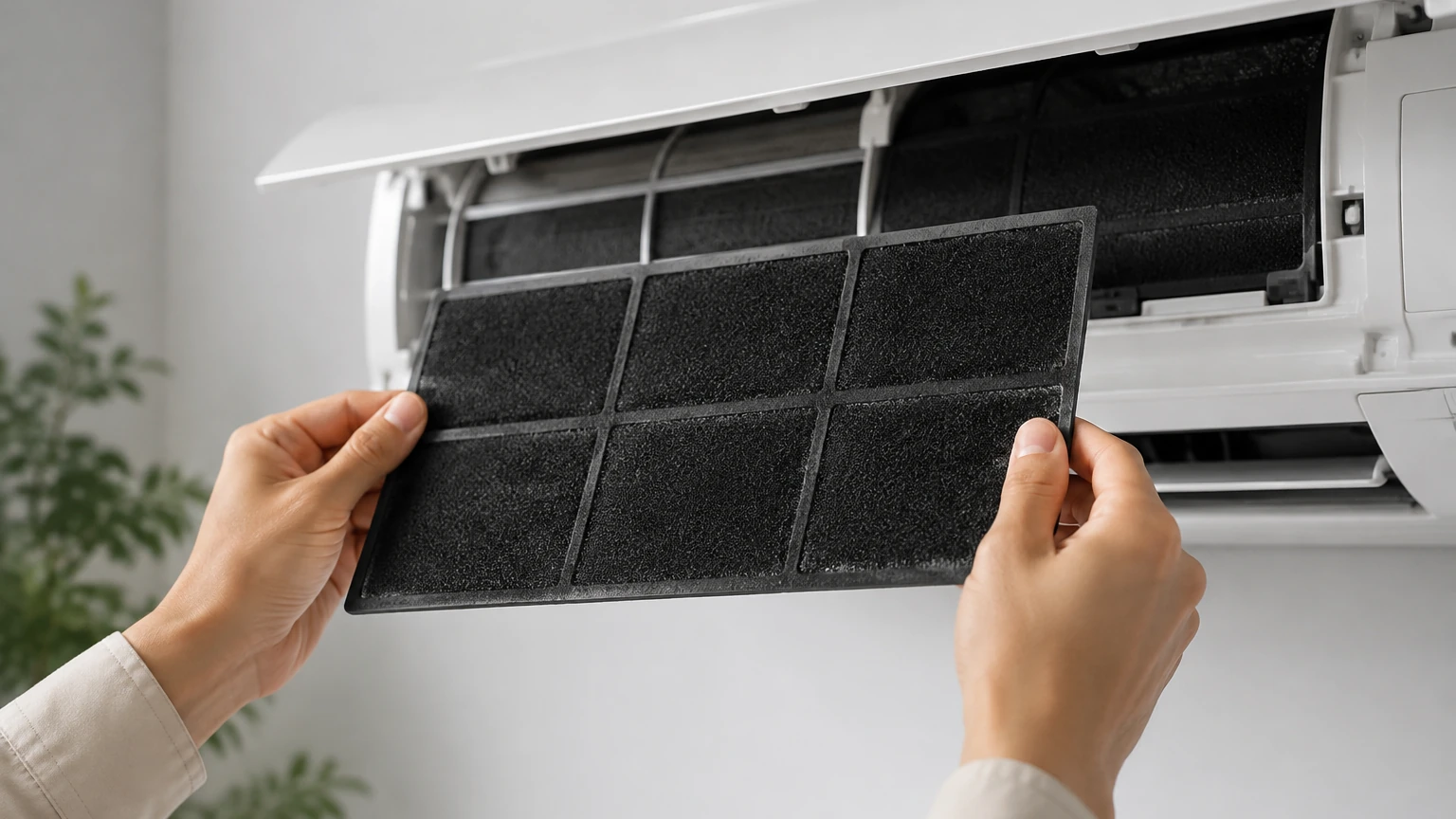
One of the primary advantages of the air conditioner foam filter in a B2B context is its washability. Unlike pleated paper filters, which are disposable, foam filters can be cleaned and reused multiple times, significantly reducing the total cost of ownership (TCO) and environmental waste.
Cleaning Protocols
1. Dry Cleaning: For light dust, vacuuming the intake side of the filter can extend the time between wet cleanings.
2. Wet Cleaning: Foam filters should be washed with warm water and a mild detergent. It is crucial to avoid harsh chemicals that could break down the polymer bonds in the foam.
3. Drying: The filter must be completely dry before reinstallation. Damp filters can promote the growth of mold and bacteria within the HVAC system.
Replacement Indicators
Despite being washable, foam filters have a finite lifespan. Over time, the repeated cycles of loading and cleaning will cause the cell walls to thin and eventually break down. Indicators that a foam filter needs replacement include:
* Visible "Friability": The foam becomes brittle or sheds small particles when touched.
* Permanent Discoloration: Stains that cannot be removed by washing often indicate deep-seated biological growth or chemical saturation.
* Loss of Shape: If the foam no longer fits snugly in its frame, bypass will occur.
Customization for OEM and Specialized Equipment
For manufacturers of industrial equipment, off-the-shelf air conditioner foam filters are often insufficient. Customization is frequently required in terms of dimensions, PPI ratings, and flame retardancy.
Flame Retardant Additives
In many jurisdictions, industrial air filters must meet specific fire safety standards, such as UL 94 HF-1. Foam can be treated with flame retardant additives during the manufacturing process to ensure it does not contribute to the spread of fire within a building's ventilation system.
Custom Die-Cutting
Modern CNC die-cutting allows for foam filters to be produced in complex shapes to fit the unique footprints of specialized cooling units used in telecommunications, medical imaging equipment, and server racks. This precision ensures a perfect seal, which is paramount for protecting sensitive electronics from dust ingress.
Conclusion: Selecting the Right Solution
The air conditioner foam filter remains a staple of industrial HVAC design due to its versatility, low cost, and ease of maintenance. However, the selection process must be guided by technical data rather than price alone. Engineers must account for PPI ratings, material compatibility, and the necessity of structural support to ensure long-term system reliability.
When standard foam solutions reach their limits—particularly in terms of temperature resistance, chemical durability, or mechanical strength—transitioning to precision metal filtration components is the logical engineering step. For more information on high-durability filtration designs and custom manufacturing, visit the Main Page to explore professional solutions tailored to complex industrial requirements.
