


Air Filter 5 Micron
In industrial environments, the precision of air filtration directly impacts the longevity of machinery, the purity of chemical processes, and the safety of the working environment. An air filter 5 micron rating represents a critical threshold in particulate control, sitting at the transition point between coarse pre-filtration and high-precision fine filtration. For engineers and procurement professionals, selecting a 5-micron solution requires a deep understanding of material science, fluid dynamics, and the specific demands of the application environment.
At this scale—where one micron is one-millionth of a meter—filtration is no longer just about "blocking" dust; it is about managing microscopic contaminants that can cause catastrophic wear in pneumatic systems or contaminate sensitive food and pharmaceutical batches. This guide explores the technical considerations, material advantages, and engineering parameters essential for implementing effective 5-micron air filtration.
Understanding the 5-Micron Filtration Threshold
To put the 5-micron scale into perspective, a human hair typically ranges from 50 to 70 microns in diameter, while the smallest particle visible to the naked eye is approximately 40 microns. An air filter 5 micron rated is designed to capture particles eight times smaller than what a human can see.
In industrial air systems, particles in the 5-to-10-micron range are often the most damaging to moving parts. In pneumatic cylinders and valves, these particles act as abrasives, scoring surfaces and degrading seals, which leads to internal leakage and system inefficiency. By implementing a 5-micron filter, facilities can effectively remove the bulk of atmospheric dust, pollen, and mechanical wear debris before it reaches sensitive downstream components.
Absolute vs. Nominal Ratings
When evaluating a 5-micron filter, it is vital to distinguish between nominal and absolute ratings. A nominal rating refers to a filter's ability to retain a major weight percentage (usually 60% to 90%) of particles of a certain size. In contrast, an absolute rating implies that the filter will capture 99.9% or more of particles at that micron size. For critical industrial applications, such as vent filters for chemical storage tanks or sterile air for packaging, absolute-rated stainless steel mesh is often the preferred choice due to its predictable performance.
Material Selection for Industrial 5-Micron Filters
While synthetic fibers and paper are common in light-duty applications, industrial-grade 5-micron filtration often demands the durability of stainless steel. Stainless steel wire mesh and sintered metal components offer structural advantages that polymers cannot match, particularly in high-temperature or corrosive environments.
Stainless Steel Wire Mesh
Woven wire mesh, specifically in 304 or 316L grades, provides a precise pore structure. For a 5-micron requirement, specialized weaves like Dutch Twill or Reverse Dutch Weave are utilized. These weaves create a tortuous path for air, ensuring that 5-micron particles are trapped within the mesh layers while maintaining a high open area for airflow.
Sintered Metal Filters
For applications involving high pressure or extreme heat, sintered metal fiber or sintered mesh is utilized. Sintering involves bonding multiple layers of wire mesh or metal fibers through a thermal-pressure process without the use of binders. This results in a porous metal structure that is exceptionally strong and capable of maintaining a 5-micron rating even under significant mechanical stress. This material is ideal for steam filtration or high-pressure pneumatic lines where a fiber-shedding synthetic filter would fail.
Performance Metrics: Efficiency and Pressure Drop
The primary challenge in engineering a 5-micron air filter is balancing filtration efficiency with the pressure drop (Delta P). Every filter introduces resistance to the airflow; as the pore size decreases to 5 microns, the resistance naturally increases.
Initial Pressure Drop
Engineers must calculate the initial pressure drop to ensure the system’s compressor or blower can maintain the required flow rate. A well-designed 5-micron stainless steel cartridge maximizes the surface area—often through pleating—to reduce the velocity of the air passing through the media. Lower face velocity results in a lower pressure drop and higher particle retention efficiency.
Dirt Holding Capacity
The longevity of a filter is determined by its dirt-holding capacity. As particles accumulate on the surface of a 5-micron mesh, the pores gradually bridge over, increasing the pressure drop. In industrial B2B settings, the goal is to select a filter that offers the longest possible service interval before reaching the "terminal pressure drop," at which point the filter must be cleaned or replaced.
Engineering Challenges in Demanding Environments
Standard air filters often fail when exposed to the rigors of heavy industry. When specifying a 5-micron solution, several environmental factors must be addressed:
1. Temperature Extremes: In applications like oven exhaust filtration or hot gas recovery, temperatures can exceed 200°C. Synthetic filters will melt or degrade, whereas 316L stainless steel filters can operate effectively at temperatures up to 500°C or higher, depending on the alloy.
2. Chemical Compatibility: Industrial air may contain vapors from solvents, acids, or bases. Stainless steel provides excellent resistance to a wide array of chemicals, preventing the filter media from becoming brittle or dissolving over time.
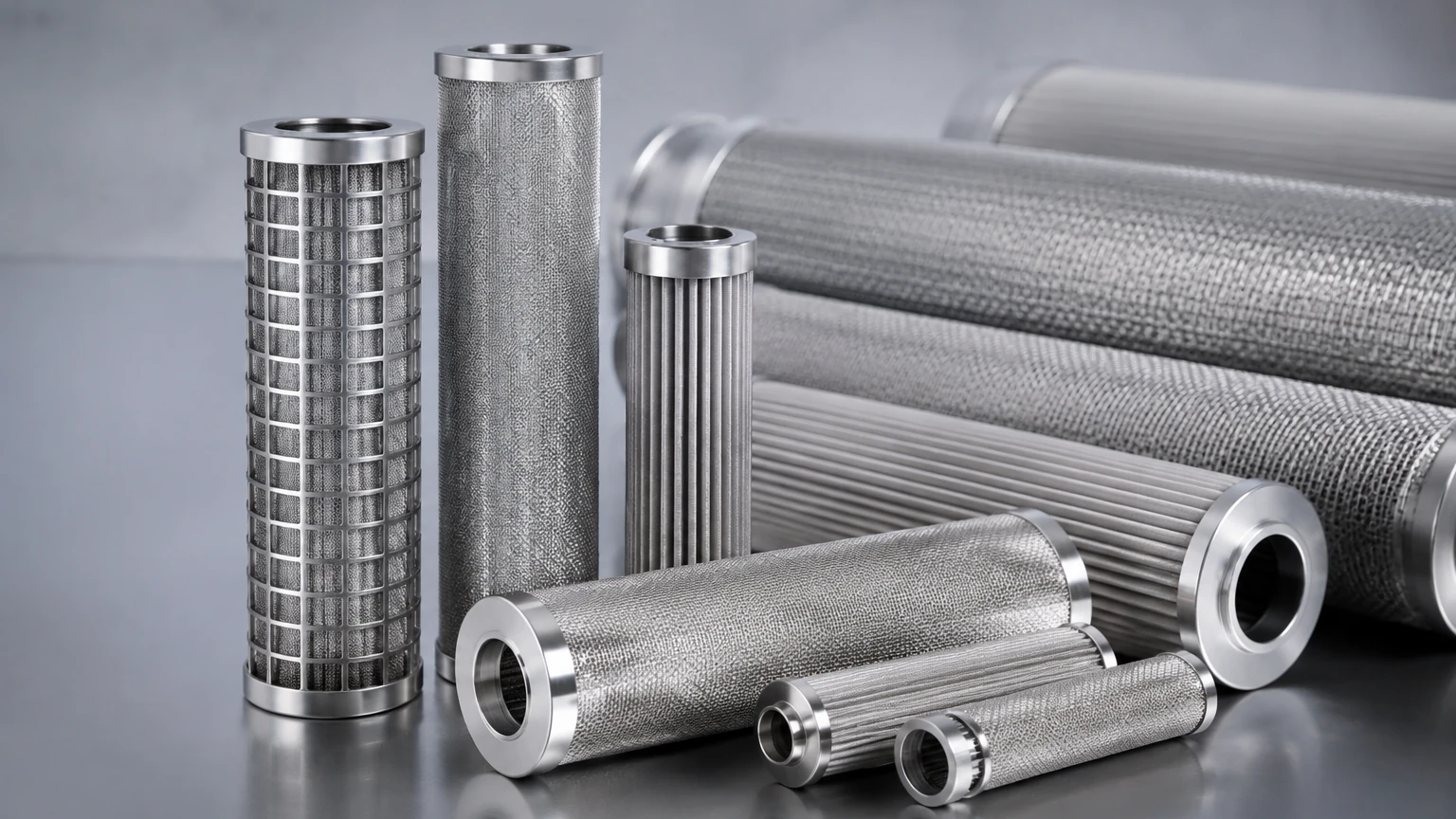
3. Structural Integrity: In high-pressure pneumatic systems, filters are subjected to rapid pressure fluctuations. A 5-micron filter must have the collapse strength to withstand these pulses without deforming. Metal filter cartridges are engineered with internal support cores to handle these stresses.
Industrial Applications for 5-Micron Air Filtration
The 5-micron rating is a standard requirement across several specialized sectors where air quality is non-negotiable.
Food and Beverage Processing
In the food industry, compressed air often comes into direct contact with the product (e.g., during bottling or aeration). A 5-micron stainless steel filter serves as an essential stage in removing particulates and oil aerosols from the air stream, ensuring compliance with food safety standards. Because stainless steel is non-toxic and easy to sterilize, it is the material of choice for these sanitary applications.
Pharmaceutical Manufacturing
Pharmaceutical cleanrooms and process equipment require rigorous air quality control. 5-micron filters are frequently used as pre-filters for HEPA systems or as point-of-use filters for pneumatic conveying systems that transport powdered ingredients. The ability to validate the filtration efficiency of a metal mesh filter makes it a reliable component in highly regulated environments.
Hydraulic System Breathers
As hydraulic fluid levels fluctuate in a reservoir, air is drawn in from the surrounding environment. If this air is not filtered, atmospheric dust enters the hydraulic oil. A 5-micron air breather filter prevents these microscopic contaminants from entering the system, significantly extending the life of hydraulic pumps and valves.
Maintenance and Total Cost of Ownership (TCO)
For procurement teams, the initial purchase price of a filter is only one part of the TCO. While disposable 5-micron filters may have a lower upfront cost, they require frequent replacement and generate significant waste.
Cleanability and Reusability
One of the primary advantages of stainless steel 5-micron filters is that they are cleanable. Methods such as ultrasonic cleaning, backflushing, or chemical cleaning can remove captured particulates and restore the filter to near-original pressure drop levels. This reusability makes metal filters more cost-effective over the long term, especially in processes with high particulate loads.
Monitoring and Replacement Cycles
To optimize maintenance, industrial systems should be equipped with differential pressure gauges. By monitoring the pressure drop across the 5-micron filter, maintenance teams can perform cleanings based on actual performance data rather than arbitrary calendar dates. This prevents premature servicing and ensures the system always operates within its designed efficiency parameters.
Customization and OEM Solutions
No two industrial systems are identical. Often, a standard off-the-shelf filter will not meet the specific spatial or flow requirements of a specialized machine. This is where customized filtration solutions become essential. Customization options for 5-micron filters include:
* Custom Dimensions: Tailoring the length and diameter of the filter cartridge to fit existing housings.
* End Cap Configurations: Providing specific fittings such as NPT threads, flange mounts, or O-ring seals (e.g., 222 or 226 styles) to ensure a leak-proof interface.
* Reinforced Structures: Adding outer cages or internal supports for applications with extreme pressure differentials.
By working with a manufacturer that specializes in custom stainless steel filtration, engineers can ensure that their 5-micron air filter is perfectly integrated into their system for maximum performance.
Conclusion
Selecting an air filter 5 micron rated involves more than just picking a pore size; it requires a holistic look at the operating environment, the required cleanliness levels, and the long-term maintenance strategy. For industrial applications where reliability and durability are paramount, stainless steel filtration components offer a superior solution compared to disposable media. Their resistance to heat, chemicals, and mechanical stress ensures that sensitive processes remain protected under the most demanding conditions.
For more information on high-performance filtration components and custom engineering support, visit the Main Page to explore our full range of stainless steel wire mesh and filter cartridge solutions. Whether you are designing a new pneumatic system or optimizing an existing chemical process, choosing the right 5-micron filtration partner is the first step toward operational excellence.
