


American Melt Blown & Filtration
In the landscape of industrial separation, the term american melt blown & filtration represents a cornerstone of depth filtration technology. Originally popularized for its cost-effectiveness and versatility in liquid and gas applications, melt blown media has evolved from simple disposable cartridges to sophisticated engineering components. For engineers and procurement specialists, understanding the technical nuances of this technology—and where it intersects with high-performance metal alternatives—is essential for optimizing process efficiency and ensuring system longevity.
Industrial filtration requirements in North America and globally demand rigorous standards for purity, flow rate, and chemical compatibility. While traditional melt blown filters are often associated with polymeric materials like polypropylene, the engineering principles behind them inform the development of more durable, custom stainless steel filtration solutions. This guide examines the technical foundations, material considerations, and selection criteria necessary for navigating the complexities of modern industrial filtration.
The Fundamentals of Melt Blown Filtration Technology
Melt blown filtration is a non-woven manufacturing process that produces a dense web of microfibers. The process involves extruding a thermoplastic resin through a die containing hundreds of small orifices. High-velocity hot air then attenuates these extruded strands into extremely fine fibers, which are collected on a rotating mandrel to form a cylindrical filter element.
The defining characteristic of this technology is the creation of a "tortuous path." As fluid passes through the depth of the filter media, particles are trapped within the complex network of fibers. Unlike surface filtration, which relies on a single layer to block contaminants, depth filtration utilizes the entire thickness of the media. This allows for a high dirt-holding capacity and a gradual increase in pressure drop, which is critical for maintaining stable flow in continuous industrial processes.
In the context of american melt blown & filtration, the graduated density of the fiber structure is a key engineering advantage. By varying the fiber diameter and packing density during production, manufacturers can create filters with a "graded pore structure." This means larger particles are trapped on the outer layers, while finer particles are captured deeper within the media, preventing premature surface blinding and extending the service life of the filter.
Material Science in American Melt Blown & Filtration Systems
Material selection is the primary determinant of a filter’s performance in challenging environments. In standard applications, polypropylene is the most common material due to its broad chemical resistance and hydrophobic nature. However, industrial environments often present conditions that exceed the physical limits of polymers.
Polymeric Media Limitations
Standard melt blown cartridges are typically limited to operating temperatures below 80°C (176°F). Furthermore, they may lack the structural integrity required for high-pressure differentials or high-viscosity fluids. In chemical processing or steam filtration, polymeric fibers can undergo thermal degradation or chemical swelling, leading to fiber migration—a phenomenon where filter fragments contaminate the downstream filtrate.
The Stainless Steel Alternative
For applications requiring extreme durability, stainless steel (primarily grades 304 and 316L) serves as the superior alternative to traditional melt blown media. Stainless steel wire mesh and sintered metal filters provide the same depth-filtration benefits but with significantly higher mechanical strength. These materials can withstand temperatures exceeding 500°C and are resistant to a vast array of corrosive agents. When engineers evaluate american melt blown & filtration options for heavy-duty hydraulic systems or high-temperature gas streams, the transition to custom metal components often provides a more reliable, long-term solution.
Performance Evaluation: Efficiency, Capacity, and Pressure Drop
When selecting filtration components, engineers must look beyond nominal micron ratings. The performance of any filtration system is defined by three critical metrics: filtration efficiency, dirt-holding capacity, and initial pressure drop.
1. Filtration Efficiency (Beta Ratio): Efficiency describes the percentage of particles of a specific size that the filter can remove. In high-precision industries, "absolute" ratings are preferred over "nominal" ratings. An absolute-rated filter ensures that 99.9% of particles at the specified micron level are captured. This is particularly vital in pharmaceutical and food and beverage applications where microbial control is paramount.
2. Dirt-Holding Capacity (DHC): This refers to the total mass of contaminants a filter can retain before reaching its terminal pressure drop. A higher DHC directly correlates to longer intervals between filter changes, reducing downtime and labor costs. The graded density found in high-quality american melt blown & filtration products is designed specifically to maximize this metric.
3. Pressure Drop (ΔP): The resistance to flow caused by the filter media. A high initial pressure drop limits the available "headroom" for contaminant loading. Engineering the fiber matrix to provide low resistance while maintaining high efficiency is the hallmark of advanced manufacturing.
Engineering Selection: Customizing Filtration for Industrial Success
Off-the-shelf solutions rarely meet the specific needs of complex industrial systems. Customization is often required to ensure that the filter housing, seals, and media are perfectly aligned with the process fluid. When consulting with a manufacturer like Kaifil, engineers should be prepared to confirm several technical parameters:
* Fluid Compatibility: Beyond the primary fluid, consider trace chemicals, additives, or cleaning agents (such as CIP chemicals) that the filter will encounter.
* Flow Dynamics: Is the flow steady, or are there frequent pressure surges? Sintered metal and reinforced wire mesh filters are better suited for pulsating flows than standard melt blown polymers.
* End-Cap Configurations: Proper sealing is essential to prevent bypass. Common configurations include Double Open End (DOE), 222/Fin, and 226/Flat. Ensuring the filter fits the existing housing without bypass is a critical check during the procurement phase.
* Micron Requirement: Over-filtering (selecting a micron rating much finer than necessary) leads to unnecessarily high pressure drops and frequent replacements. Conversely, under-filtering risks downstream equipment damage.
For those seeking to explore specific configurations and technical support for their unique applications, visiting the Main Page provides access to comprehensive product data and engineering expertise.
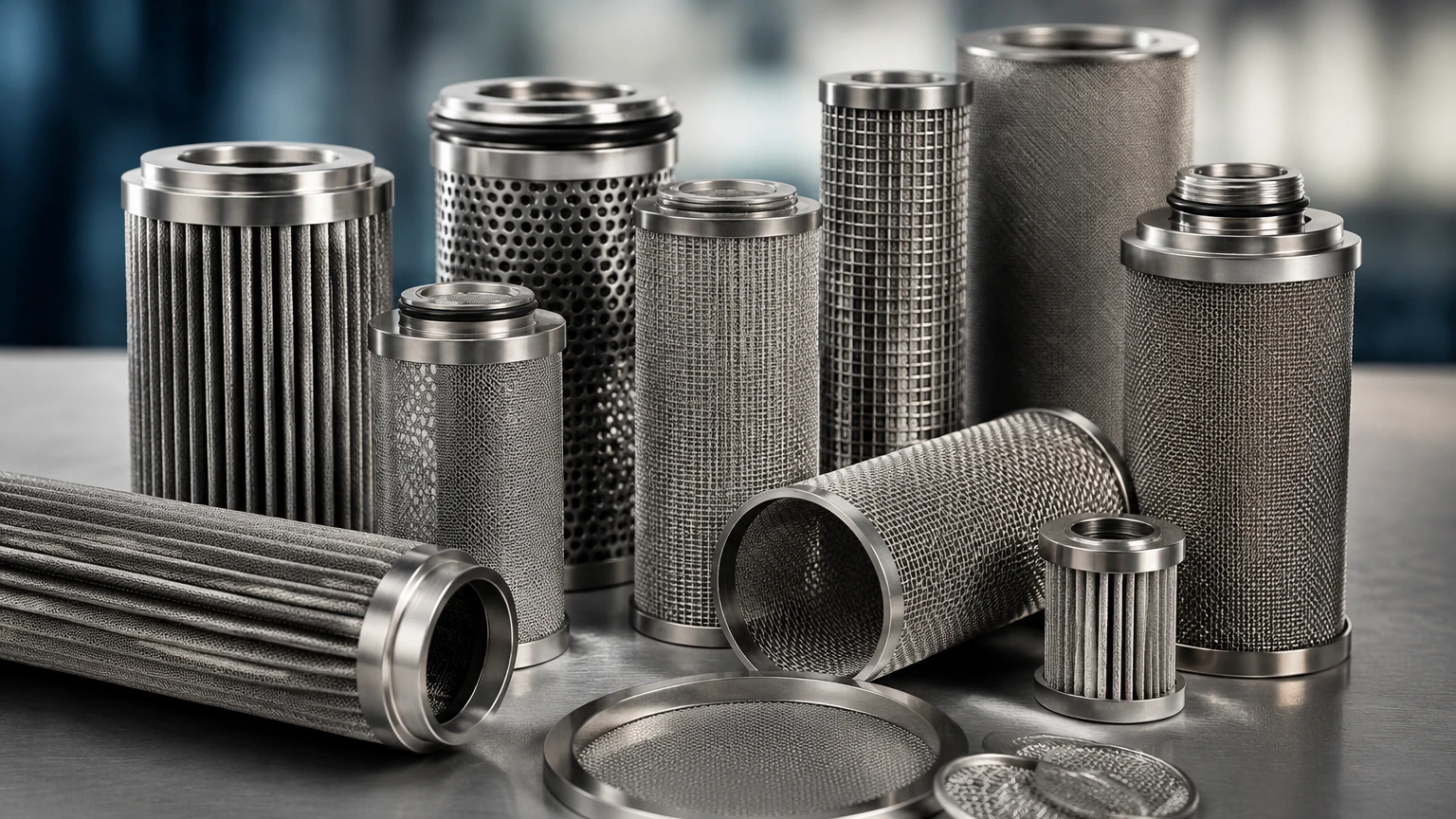
Comparative Analysis: Sintered Metal vs. Polymeric Melt Blown Media
While the term american melt blown & filtration often brings to mind the disposable polypropylene cartridges used in water treatment, industrial engineers must often choose between these disposables and cleanable metal media. The choice usually hinges on the "Total Cost of Ownership" (TCO) and the specific hazards of the application.
Disposable Melt Blown Media:
* Pros: Low initial purchase price, easy disposal, wide availability.
* Cons: High recurring costs, environmental waste, limited temperature/pressure range, risk of fiber shedding.
Sintered Stainless Steel Media:
* Pros: Extremely high durability, cleanable and reusable, no fiber migration, handles high viscosity and high temperatures.
* Cons: Higher initial capital expenditure, requires a cleaning infrastructure (ultrasonic baths or backwashing systems).
In industries such as polymer melt filtration or oil and gas refining, the structural integrity of sintered metal is non-negotiable. The ability to withstand high differential pressures without collapsing ensures that the process remains safe and the end product remains pure.
Operational Maintenance and Total Cost Considerations
The true cost of a filtration system is not found on the invoice of the filter element alone. It includes the cost of downtime, the labor required for change-outs, the cost of waste disposal, and the potential risk of product loss due to filtration failure.
In many american melt blown & filtration applications, switching from a low-cost disposable to a high-quality, customized stainless steel filter can result in a lower TCO over a 24-month period. For example, in a hydraulic system where fluid cleanliness is critical for pump life, a more robust metal filter might prevent a catastrophic component failure that would cost tens of thousands of dollars in repairs.
Furthermore, the environmental impact of filtration is becoming a significant factor for modern enterprises. Disposable cartridges contribute to landfill waste and, if contaminated with hazardous chemicals, can be expensive to dispose of. Cleanable stainless steel solutions align with corporate sustainability goals by significantly reducing the volume of waste generated by the filtration process.
Industry Applications for Advanced Filtration
The application of these filtration principles spans a diverse range of sectors, each with its own set of regulatory and technical challenges:
* Chemical Processing: Filters must handle aggressive solvents and varying pH levels. Stainless steel 316L is often the standard here due to its resistance to pitting and crevice corrosion.
* Food and Beverage: Filtration media must be FDA-compliant and capable of withstanding Clean-in-Place (CIP) cycles. Precision wire mesh ensures that no contaminants enter the food chain.
* Pharmaceuticals: High-purity steam and sterile air filtration require absolute-rated media that can be validated for performance.
* Water Treatment: From pre-filtration for Reverse Osmosis (RO) systems to sediment removal, the graduated density of melt blown structures provides the necessary protection for sensitive membranes.
Conclusion
Navigating the world of american melt blown & filtration requires a balance of theoretical knowledge and practical engineering experience. Whether your application demands the high-volume capacity of traditional melt blown depth filters or the extreme resilience of custom-engineered stainless steel components, the goal remains the same: achieving consistent, reliable separation at the lowest possible operational cost.
By focusing on material compatibility, precise micron ratings, and structural integrity, engineers can design filtration systems that not only meet current production needs but also provide a margin of safety for future process intensifications. For detailed specifications on custom metal filtration solutions and to consult with technical experts on your specific requirements, visit the Main Page to review product options and application support.
