


Aquaculture Filtration Systems
In modern industrial aquaculture, particularly within Recirculating Aquaculture Systems (RAS) and intensive flow-through operations, the efficiency of aquaculture filtration systems is the primary determinant of biological stability and operational profitability. Maintaining precise water quality parameters requires a sophisticated multi-stage approach where mechanical filtration serves as the first line of defense. By effectively removing suspended solids, uneaten feed, and metabolic waste, these systems prevent the accumulation of organic loads that would otherwise compromise biological filters and endanger aquatic health.
For engineers and facility managers, selecting the appropriate filtration technology involves more than simply choosing a micron rating. It requires a deep understanding of fluid dynamics, material compatibility in corrosive environments, and the long-term mechanical reliability of the components. As a specialist in custom stainless steel filtration, Kaifil provides the technical framework necessary to evaluate and implement high-performance filtration solutions tailored to these demanding environments.
The Role of Mechanical Filtration in Modern Aquaculture
Mechanical filtration is the process of physically removing particulate matter from the water column. In aquaculture filtration systems, the primary goal is the rapid removal of solid waste before it can break down into dissolved ammonia and nitrites. Solid waste in aquaculture typically consists of fish feces and uneaten feed pellets, which vary in size and density.
Primary Solids Removal
Primary filtration usually targets particles larger than 50 to 100 microns. This is often achieved using drum filters or large-scale screen filters. The efficiency of this stage directly impacts the performance of downstream components, such as bio-reactors and UV sterilizers. If primary solids are not effectively captured, they can coat the surfaces of bio-media, leading to anaerobic zones, or shield pathogens from UV radiation.
Fine Particulate Capture
Secondary or fine filtration targets particles in the 20 to 50-micron range. At this level, stainless steel wire mesh and precision filter cartridges become essential. These components provide the structural integrity required to maintain consistent pore sizes under varying pressure differentials, ensuring that fine solids are trapped without the media deforming or bypassing. For more information on specific component designs, technical teams often refer to the Main Page to evaluate available mesh configurations.
Engineering Considerations: Material Selection and Durability
The choice of material for aquaculture filtration systems is critical, especially when dealing with brackish or marine environments. While plastic components are common in small-scale hobbyist setups, industrial-grade aquaculture demands the durability and precision of metal filtration media.
Stainless Steel Grades: 304 vs. 316L
For freshwater applications, Type 304 stainless steel may suffice for certain structural components. However, for most industrial aquaculture applications—and virtually all marine systems—Type 316L stainless steel is the industry standard. The addition of molybdenum in 316L provides significantly enhanced resistance to pitting and crevice corrosion caused by chlorides. In high-salinity environments, the use of sub-standard materials leads to rapid structural failure and the potential leaching of heavy metals into the water, which can be toxic to sensitive species.
Structural Integrity and Pressure Tolerance
Unlike fabric or plastic mesh, stainless steel wire mesh maintains its geometric stability under high flow rates and pressure spikes. In pressurized aquaculture filtration systems, such as those used in hydraulic loops or intake manifolds, the filter media must withstand backwashing cycles without fatigue. Kaifil’s manufacturing process focuses on ensuring that the weave density and wire diameter are optimized for both filtration accuracy and mechanical strength.
Performance Evaluation: Flow Rates and Micron Efficiency
When specifying a filter for an aquaculture system, engineers must balance the required filtration fineness (micron rating) with the desired flow rate and the allowable pressure drop (Delta P).
Understanding Micron Ratings
In the context of aquaculture, "nominal" vs. "absolute" micron ratings are vital distinctions. A nominal rating indicates that the filter will trap a high percentage of particles of a certain size, while an absolute rating (common in precision stainless steel cartridges) ensures that no particles larger than the specified size pass through. For most RAS applications, a high-quality nominal mesh is sufficient for solids removal, provided it is cleaned regularly.
Flow Velocity and Flux Rates
The flux rate—the volume of water passing through a unit area of filter media—must be carefully managed. If the velocity is too high, soft organic solids (like fish waste) can be sheared and forced through the mesh, reducing filtration efficiency. Conversely, if the filter area is too small for the flow rate, the pressure drop will increase rapidly, leading to frequent cleaning cycles and increased energy consumption by the pumps.
Managing Operational Risks: Biofouling and Corrosion
Aquaculture environments are biologically active, which presents unique challenges for filtration hardware. Two of the most significant risks are biofouling and electrochemical corrosion.
Biofouling Mitigation
Biofouling occurs when bacteria, algae, and other organisms colonize the surface of the filter media. This creates a biological film that narrows the effective pore size, leading to premature clogging. Stainless steel filters are advantageous here because they can withstand aggressive cleaning protocols, including high-pressure water jets, chemical soaking (with compatible agents), and even ultrasonic cleaning. The smooth surface of electropolished stainless steel can also reduce the rate at which biofilms adhere to the mesh.
Galvanic Corrosion in Marine Systems
In saltwater aquaculture filtration systems, the presence of dissimilar metals in the same piping loop can lead to galvanic corrosion. It is essential to ensure that all metal components—housings, mesh, and support structures—are metallurgically compatible. Utilizing high-grade 316L stainless steel across the filtration assembly minimizes the risk of localized corrosion cells that could compromise the system's seal or structural integrity.
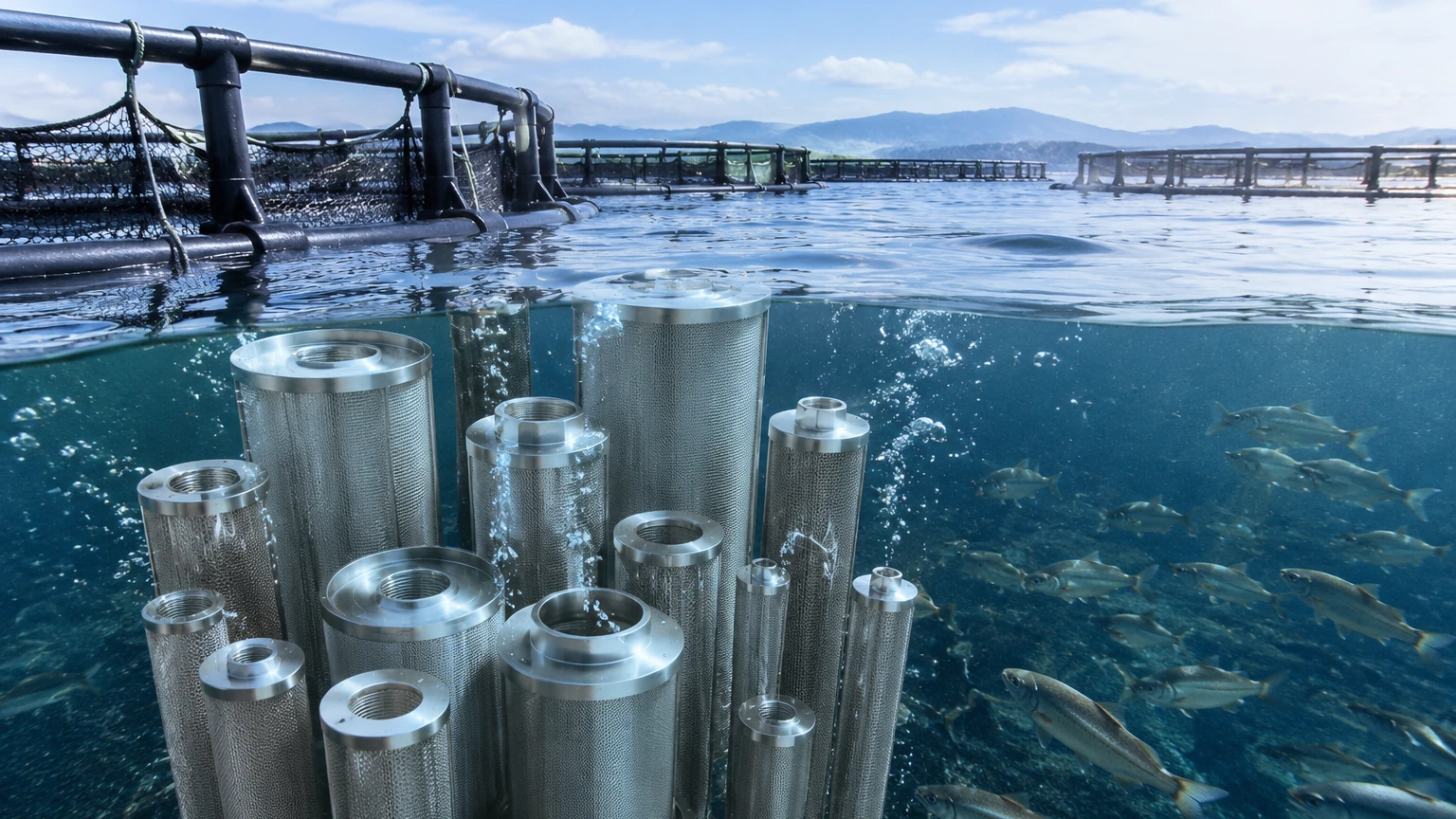
Customization and Integration for Scalable Systems
No two aquaculture facilities are identical. Differences in species, stocking density, and water source necessitate customized filtration strategies. Standard off-the-shelf filters often fail to meet the specific spatial or hydraulic requirements of a large-scale facility.
Tailored Mesh Configurations
Customization allows for the selection of specific weave types, such as plain weave, twilled weave, or Dutch weave. For aquaculture, a plain or twilled square mesh is often preferred for its high open area and ease of cleaning. However, for specialized intake filters where high strength and fine filtration are required simultaneously, a Dutch weave might be more appropriate.
OEM and Integration Support
For equipment manufacturers (OEMs) building complete aquaculture filtration systems, the ability to source custom-dimensioned filter cartridges or screen panels is essential. This ensures that the filtration component fits perfectly within the proprietary housing, preventing bypass—a common failure point where water flows around the filter media rather than through it. Technical consultation during the design phase can help identify the most cost-effective balance between filter lifespan and filtration performance.
Total Cost of Ownership and Selection Strategy
While the initial capital expenditure (CAPEX) for stainless steel aquaculture filtration systems may be higher than for plastic alternatives, the total cost of ownership (TCO) is often significantly lower when considering the lifespan of the equipment.
1. Reduced Replacement Frequency: Stainless steel components can last for years, whereas plastic mesh may require frequent replacement due to UV degradation, chemical embrittlement, or mechanical wear.
2. Lower Maintenance Labor: Properly designed stainless steel filters with automated backwash systems reduce the man-hours required for manual cleaning and media replacement.
3. Energy Efficiency: By maintaining a lower and more consistent pressure drop, high-quality metal filters reduce the load on system pumps, leading to long-term energy savings.
Before finalizing a purchase, purchasing teams should confirm the following with their supplier:
* Material Certification: Ensure the stainless steel grade is verified for the specific water chemistry.
* Cleaning Compatibility: Verify that the filter can withstand the intended cleaning methods (e.g., backwashing pressure or chemical agents).
* Scalability: Determine if the filter design can handle future increases in biomass or flow rates.
Conclusion
Effective aquaculture filtration systems are the backbone of sustainable and profitable aquatic production. By prioritizing material quality, mechanical durability, and precise engineering, facility managers can ensure stable water parameters and minimize operational downtime. Stainless steel filtration solutions, such as those developed by Kaifil, offer the reliability required to handle the high organic loads and corrosive environments typical of modern industrial aquaculture. For technical specifications and to explore customized filtration components, visit the Main Page to consult with engineering experts on your specific application needs.
