


Coalescing Filter Market
In the landscape of industrial separation technology, the coalescing filter market represents a critical segment driven by the increasing demand for high-purity process fluids and the protection of downstream equipment. Coalescing filtration is a specialized process used to separate liquid aerosols and droplets from a gas stream, or to separate two immiscible liquids, such as water from fuel. As industrial processes become more complex and sensitive to contamination, the role of high-performance coalescing components has moved from a secondary consideration to a primary engineering requirement.
For engineers and procurement professionals, navigating the coalescing filter market requires a deep understanding of fluid dynamics, material science, and the specific operational challenges of their industry. Whether in chemical processing, oil and gas, or food and beverage production, the choice of a coalescing system directly impacts operational uptime, maintenance costs, and product quality.
Understanding the Mechanics of Coalescence
To effectively evaluate the coalescing filter market, it is essential to understand the underlying physics that distinguish these filters from standard particulate filters. Coalescing is not merely a mechanical straining process; it involves three distinct stages: capture, coalescence, and drainage.
1. Capture: As the contaminated fluid passes through the filter media—often composed of borosilicate microfibers or specialized stainless steel mesh—small droplets are captured through mechanisms such as inertial impaction, interception, and Brownian diffusion.
2. Coalescence: Once captured, these tiny droplets move along the fibers of the media. As they encounter other droplets, they merge (coalesce) into larger drops.
3. Drainage: When the droplets reach a sufficient mass where the force of gravity or the flow of the fluid overcomes the surface tension holding them to the media, they drain away from the filter element into a collection sump.
In the current market, the efficiency of this process is measured by the filter's ability to reduce oil carryover or water content to parts-per-million (ppm) levels. High-quality stainless steel supports and precision-engineered media are vital to ensuring that the filter can withstand the differential pressure generated during these stages without media migration or structural failure.
Market Drivers and Industrial Demand
The growth of the coalescing filter market is fueled by several macro-industrial trends. One of the most significant is the global push for energy efficiency. In compressed air systems, for example, the presence of oil and water aerosols increases friction and causes corrosion in pneumatic tools and actuators. By implementing high-efficiency coalescing filters, plants can reduce energy loss and extend the lifespan of expensive machinery.
Another driver is the tightening of environmental and safety regulations. In the chemical and pharmaceutical sectors, the purity of process gases and liquids is non-negotiable. Contamination can lead to entire batches of product being scrapped, resulting in significant financial loss. Consequently, there is a rising demand for filters that offer consistent performance under high-pressure and high-temperature conditions—areas where stainless steel filtration solutions excel.
Technical Engineering Considerations for Filter Selection
When sourcing from the coalescing filter market, engineers must look beyond the initial purchase price and focus on technical specifications that align with their specific application. Key considerations include:
Material Compatibility
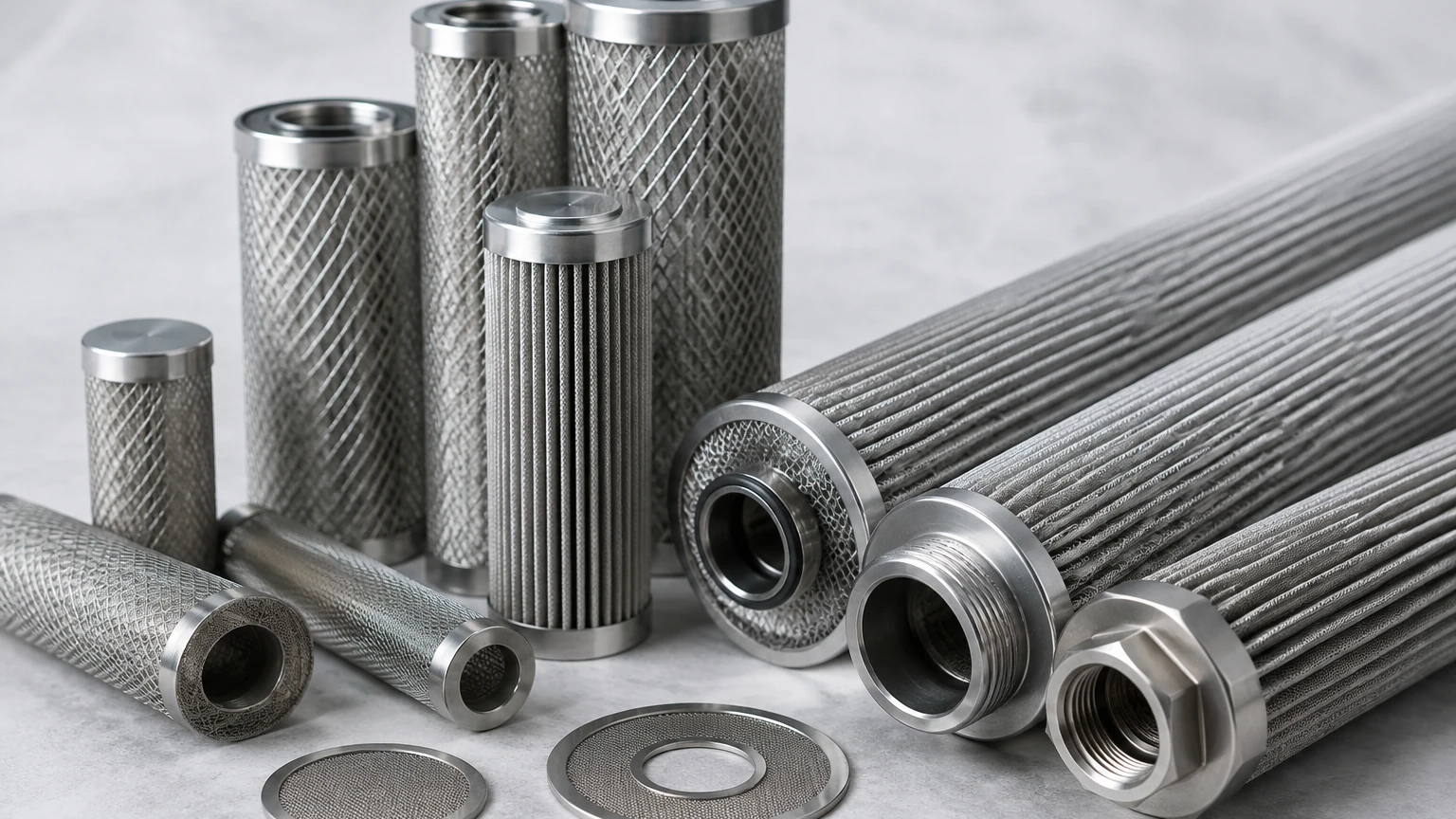
The choice of housing and media material is paramount. While polymer-based media are common for standard applications, industrial environments involving corrosive chemicals or extreme temperatures require stainless steel. Stainless steel filter cartridges offer superior chemical resistance and structural integrity, ensuring that the filter does not degrade or leach contaminants into the process stream. For more information on specialized material options, engineers can visit the Main Page to explore technical specifications.
Filtration Efficiency and Micron Rating
Coalescing filters are typically rated by their ability to remove particles and aerosols of a certain size. In gas-liquid coalescence, filters are often expected to remove 99.9% of aerosols down to 0.3 microns. In liquid-liquid applications, the focus is on reducing the concentration of the dispersed phase (e.g., water in oil) to a specific ppm limit. Engineers must verify these ratings through standardized testing protocols, such as ISO 12500-1 for compressed air filters.
Pressure Drop and Energy Consumption
The "Delta P" or differential pressure across a filter is a critical metric for total cost of ownership. A high initial pressure drop means the system's compressor or pump must work harder, increasing energy costs. The coalescing filter market is currently seeing a shift toward pleated designs and optimized pore structures that maximize surface area, thereby reducing pressure drop while maintaining high efficiency.
Sector-Specific Applications
The requirements for coalescing technology vary significantly across different industrial sectors. Understanding these nuances is key to selecting the right partner in the coalescing filter market.
Chemical and Petrochemical Processing
In these industries, coalescing filters are used to protect sensitive catalysts and to separate hydrocarbons from water streams. The presence of aggressive solvents and high operating pressures necessitates the use of robust metal filtration components. Custom-designed stainless steel wire mesh filters are often utilized here due to their ability to be cleaned and reused, providing a more sustainable and cost-effective solution than disposable glass-fiber elements.
Food and Beverage Industry
Hygiene is the primary concern in food and beverage applications. Coalescing filters used in the production of food-grade CO2 or compressed air for packaging must comply with FDA and international food safety standards. Stainless steel is the preferred material because it can withstand rigorous Clean-in-Place (CIP) and Sterilize-in-Place (SIP) procedures without compromising the filtration media.
Hydraulic and Lubrication Systems
Water is one of the most common and damaging contaminants in hydraulic systems. It leads to oil oxidation, additive depletion, and component corrosion. Coalescing filters in the hydraulic market are designed to remove both free and emulsified water, ensuring the reliability of high-pressure hydraulic circuits in manufacturing and mobile equipment.
Evaluating Total Cost of Ownership (TCO)
A common mistake in the coalescing filter market is focusing solely on the acquisition cost. A lower-priced filter may have a shorter service life, higher pressure drop, or lower filtration efficiency, leading to higher long-term expenses. To calculate the true TCO, engineers should consider:
* Replacement Frequency: How often does the element need to be changed? Stainless steel and high-durability media may have a higher upfront cost but offer significantly longer service intervals.
* Disposal Costs: Disposable filters generate waste and may require specialized disposal if they have captured hazardous materials. Cleanable metal filters can mitigate these costs.
* Downstream Impact: The cost of a filter is negligible compared to the cost of repairing a damaged turbine or replacing a contaminated batch of chemicals. High-efficiency coalescence is an insurance policy for the entire production line.
The Role of Customization and OEM Solutions
Standard off-the-shelf filters often fall short in demanding industrial applications where space is limited, flow rates are unconventional, or chemical compatibility is complex. This has led to a growing niche within the coalescing filter market for OEM and customized filtration solutions.
Manufacturers like Kaifil specialize in bridging the gap between standard products and specific engineering needs. By providing custom stainless steel filter cartridges and precision metal components, they allow engineers to specify dimensions, filtration grades, and end-cap configurations that perfectly match their equipment. This level of customization ensures optimal flow distribution and maximizes the coalescing effect, which is often difficult to achieve with generic components.
Conclusion and Future Outlook
The coalescing filter market is poised for continued evolution as industries move toward smarter, more efficient production methods. The integration of sensors for real-time monitoring of differential pressure and the development of advanced multi-stage filtration systems are just a few of the innovations on the horizon.
For technical professionals, the key to success lies in partnering with manufacturers who understand the engineering rigors of industrial filtration. By focusing on material quality, precise manufacturing, and application-specific design, organizations can ensure their filtration systems provide the reliability and performance required in today's competitive landscape. For those seeking to optimize their filtration processes or explore custom OEM possibilities, reviewing the available technical resources and product options on the Main Page is a recommended first step in the procurement process.
