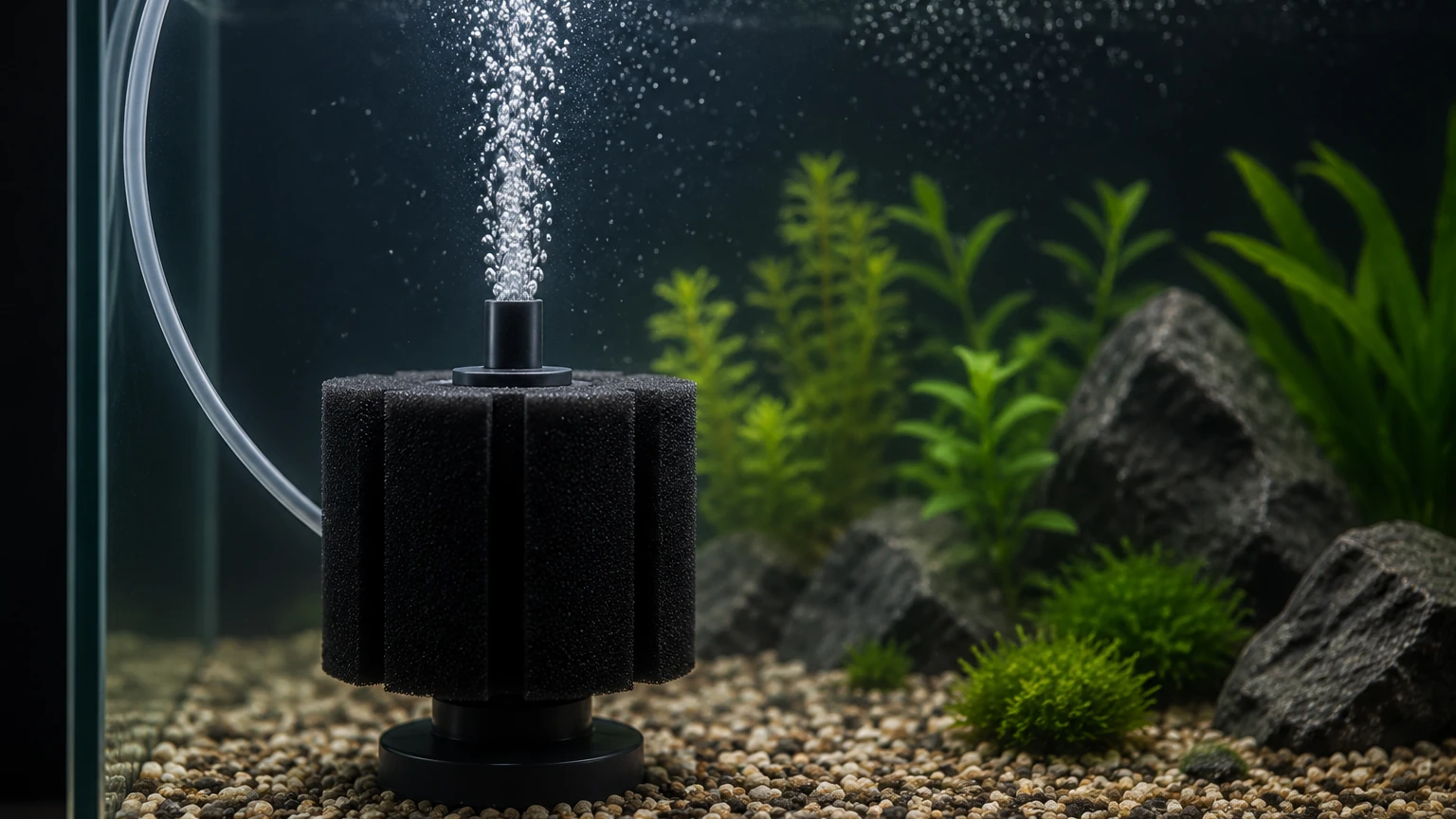
Aquarium Foam Filter
In the field of aquatic life support systems (LSS) and industrial water treatment, the aquarium foam filter remains a fundamental component for achieving both mechanical and biological filtration. While often associated with hobbyist setups, the engineering principles behind foam filtration—specifically porosity, surface area, and fluid dynamics—are critical for engineers designing large-scale aquaculture facilities, public aquaria, and specialized research laboratories. Understanding the technical specifications of foam media, its limitations in high-load environments, and the transition toward more robust materials like stainless steel mesh is essential for optimizing system performance and longevity.
The Engineering Principles of Foam Filtration
An aquarium foam filter operates as a depth filtration medium. Unlike surface filters that trap particles on a single plane, foam utilizes its internal cellular structure to capture debris throughout its volume. This process is governed by several physical mechanisms:
1. Mechanical Interception: As water passes through the tortuous paths of the foam, suspended solids larger than the pore size are physically trapped.
2. Biological Colonization: The high internal surface area of open-cell foam provides a substrate for nitrifying bacteria (*Nitrosomonas* and *Nitrobacter*). These microorganisms convert toxic ammonia into nitrite and then into relatively harmless nitrate, a process vital for maintaining water chemistry.
3. Hydrodynamics: The flow rate through the foam must be carefully balanced. If the velocity is too high, the contact time for biological filtration is insufficient; if too low, the oxygen supply to the aerobic bacteria decreases, leading to anaerobic pockets and system failure.
For industrial applications, the selection of an aquarium foam filter is not merely about size but about the specific Pores Per Inch (PPI) rating. PPI determines the balance between filtration efficiency and the frequency of maintenance.
Technical Specifications: PPI and Porosity
In professional filtration design, foam is categorized by its PPI rating, which typically ranges from 10 to 100. Each rating serves a specific functional purpose within a multi-stage filtration system:
* 10-20 PPI (Coarse): Used primarily for mechanical pre-filtration. These foams have large pores that trap heavy debris without significantly impeding flow. They are less prone to clogging and are often used as the first stage to protect finer downstream components.
* 30-50 PPI (Medium): This range offers a balance between mechanical trapping and biological surface area. It is the standard for most commercial aquarium foam filter applications where moderate clarity and stable bio-loads are required.
* 60-100 PPI (Fine): These foams provide exceptional water clarity by trapping very fine particulates. However, they possess a high resistance to flow (pressure drop) and require frequent cleaning or replacement to prevent pump strain and bypass.
Engineers must calculate the "Face Velocity"—the speed of water entering the foam surface—to ensure the medium does not compress under hydraulic pressure. Compression reduces the effective pore size and can lead to premature clogging and channeling, where water finds a path of least resistance, leaving the rest of the filter medium unused.
Limitations of Synthetic Foam in Industrial Environments
While synthetic foams (usually polyether or polyurethane) are cost-effective, they present several challenges in demanding industrial or commercial aquatic environments. For professionals evaluating long-term infrastructure, the following limitations must be considered:
1. Structural Integrity and Compression
Under the high flow rates required for large-scale aquaculture, soft foam media can compress. This deformation alters the filtration characteristics and can lead to unpredictable pressure spikes. In contrast, rigid filtration components, such as those found on the Kaifil Main Page, maintain their geometry regardless of flow fluctuations.
2. Chemical and Thermal Sensitivity
Synthetic foams can degrade when exposed to certain water treatments, ozone, or high temperatures. Over time, the polymer chains break down, leading to "shedding," where small plastic particles enter the water column. This is particularly problematic in sensitive pharmaceutical or food-grade aquatic research where water purity is paramount.
3. Maintenance and Bio-Fouling
Foam is notoriously difficult to clean thoroughly. While it can be rinsed, deep-seated organic matter often remains, leading to the gradual buildup of refractory organics. In industrial settings, this necessitates frequent replacement cycles, which increases the Total Cost of Ownership (TCO) and generates significant waste.
Transitioning to High-Performance Metal Filtration
For many industrial-scale aquatic applications, engineers are moving away from traditional foam media in favor of stainless steel wire mesh and precision metal filter cartridges. This transition is driven by the need for precision, durability, and ease of sterilization.
Stainless steel filters offer several advantages over the standard aquarium foam filter:
* Absolute Micron Ratings: Unlike foam, which has a nominal (approximate) rating, stainless steel mesh provides an absolute micron rating. This allows engineers to guarantee that no particles above a certain size pass through the system.
* Cleanability and Reusability: Metal filters can be backwashed, ultrasonically cleaned, or chemically sanitized without degrading. This eliminates the need for frequent media replacement.
* High Flow Capacity: Due to the thin profile of wire mesh compared to the thick depth of foam, stainless steel filters can handle significantly higher flow rates with lower pressure drops.
In systems where foam is still used for biological filtration, stainless steel mesh is often employed as a high-efficiency pre-filter to remove the bulk of mechanical waste, thereby extending the life and efficiency of the biological foam stage.
Selection Criteria for Commercial Aquatic Filtration
When specifying filtration components for a commercial or industrial aquatic system, purchasing teams and engineers should evaluate the following criteria:
1. Total Suspended Solids (TSS) Load: High TSS environments require a multi-stage approach. Using a coarse aquarium foam filter or a stainless steel screen as a primary stage is essential to prevent the secondary fine filters from clogging.
2. Flow Rate and Pressure Drop: Calculate the maximum allowable pressure drop ($ΔP$) for the pump system. Foam media will see a gradual increase in $ΔP$ as it loads with debris, whereas cleanable metal filters can be restored to baseline levels regularly.
3. Target Particle Size: Determine the smallest particle that must be removed. If the requirement is below 50 microns, foam is often insufficient or requires excessive maintenance, making precision metal mesh a more viable technical choice.
4. Operational Environment: Consider exposure to UV light, ozone, or cleaning chemicals. If the system requires frequent disinfection, 316L stainless steel components are superior to synthetic polymers.
Maintenance Cycles and Total Cost of Ownership
The initial cost of an aquarium foam filter is low, but the operational costs can be deceptive. In a B2B context, the labor required to remove, clean, and reinstall foam media across dozens or hundreds of units is a significant expense. Furthermore, the risk of system crashes due to clogged foam can lead to the loss of expensive aquatic stock or research data.
By integrating more durable filtration solutions, such as custom stainless steel cartridges, facilities can move toward automated backwashing systems. This reduces manual labor and provides a more stable environment for aquatic life. When evaluating filtration upgrades, it is helpful to Review product options and application support to determine which materials best suit the specific chemical and physical demands of the project.
Customization for Specialized Applications
No two industrial aquatic systems are identical. A public aquarium's shark exhibit has vastly different filtration needs than a zebrafish research lab or a recirculating aquaculture system (RAS) for tilapia. Customization is key to efficiency.
For instance, custom-sized stainless steel filter baskets can be designed to fit existing sumps, replacing standard foam blocks with a more durable and high-flow alternative. These custom components can be engineered with specific mesh weaves—such as plain, twilled, or Dutch weave—to optimize for high flow or fine particle retention depending on the specific stage of the LSS.
Conclusion
While the aquarium foam filter is a versatile tool for mechanical and biological filtration, its application in industrial and commercial sectors requires a deep understanding of material science and fluid engineering. For high-demand environments, the limitations of synthetic foam often necessitate a move toward precision-engineered metal filtration. By selecting the right PPI for foam or upgrading to stainless steel mesh, engineers can ensure water clarity, biological stability, and operational efficiency. For those seeking to optimize their industrial filtration systems, exploring advanced manufacturing capabilities and customized metal components is the next logical step in system evolution.