


Cuno Oil Filter
In the landscape of industrial fluid management, the term cuno oil filter often refers to a specific legacy of edge filtration and disc-stack technology that has served the power generation, marine, and heavy manufacturing sectors for decades. Originally developed to handle high-viscosity lubricants and heavy fuel oils, these filters rely on a mechanical principle of separation that differs significantly from modern synthetic or paper media. For engineers and maintenance professionals today, understanding the operational mechanics, material requirements, and modern stainless steel alternatives is essential for maintaining system integrity and optimizing the total cost of ownership.
Industrial filtration is rarely a one-size-fits-all solution. When dealing with lubricating oils, hydraulic fluids, or process chemicals, the choice of filtration hardware impacts everything from pump longevity to downstream product purity. As a professional manufacturer of custom stainless steel filtration solutions, Kaifil specializes in engineering the components that meet these rigorous industrial standards. Whether you are maintaining legacy systems or designing new filtration assemblies, evaluating the technical specifications of your oil filtration system is the first step toward operational efficiency.
The Engineering Principles of Edge Filtration
The fundamental design of a traditional cuno oil filter often involves a series of metallic discs and spacers stacked on a central shaft. This configuration creates precise gaps—the "edges"—through which the oil must pass. Contaminants larger than the gap are trapped on the outer surface of the stack. This mechanical approach is particularly effective for high-viscosity fluids where traditional depth media might suffer from excessive pressure drops or structural collapse.
One of the primary advantages of this design is its robustness. Unlike disposable cartridges, metal disc filters can withstand significant differential pressure ($ΔP$). In heavy industrial applications, oil viscosity can fluctuate wildly based on temperature. A cold start in a hydraulic system or a turbine lubrication loop can create high-pressure surges that would rupture standard pleated filters. Stainless steel edge filters and wire mesh components are engineered to maintain their structural integrity under these stresses, ensuring that the bypass valve is not triggered prematurely, which would allow unfiltered oil to circulate through the system.
Material Selection: Why Stainless Steel Prevails
When evaluating a cuno oil filter or its modern equivalent, material science plays a critical role in performance. While some legacy filters used brass or carbon steel, modern industrial standards increasingly demand stainless steel—specifically Grades 304, 316, and 316L.
1. Corrosion Resistance: Industrial oils are rarely pure. They often contain additives, moisture, or combustion byproducts that can become acidic over time. Stainless steel 316L, with its molybdenum content, provides superior resistance to pitting and crevice corrosion, which is vital for filters used in chemical processing or marine environments.
2. Temperature Stability: Oil filtration in power plants or metal-working facilities often occurs at elevated temperatures. Stainless steel maintains its mechanical properties at temperatures where polymers and adhesives used in standard filters would degrade.
3. Cleanability: One of the most significant shifts in industrial filtration is the move away from consumables. A stainless steel filter element, whether it is a disc stack or a precision wire mesh cartridge, can be cleaned and reused. This reduces the environmental impact and eliminates the recurring cost of replacement elements.
For those seeking technical specifications or custom manufacturing capabilities for these high-performance components, visiting the Main Page of a specialized manufacturer like Kaifil provides insight into the precision engineering required for these materials.
Filtration Accuracy and Micron Ratings
A common question among engineers is how to reconcile the micron rating of a cuno oil filter with the requirements of modern machinery. In the context of oil filtration, we must distinguish between nominal and absolute filtration ratings.
* Nominal Rating: This indicates the filter's ability to retain the majority of particles of a specific size. Edge filters are often rated nominally because the mechanical gap can occasionally allow elongated particles to pass through if they are oriented longitudinally.
* Absolute Rating: This is the diameter of the largest hard spherical particle that will pass through the filter under specified test conditions. For critical hydraulic systems or high-speed bearings, absolute filtration is often required to prevent "silt" buildup that leads to component wear.
When replacing or upgrading a cuno oil filter system, it is crucial to analyze the particle size distribution of the contaminants. If the system is protecting a high-tolerance servo valve, a secondary fine-mesh stainless steel filter may be necessary to augment the primary edge filter. Kaifil’s expertise in wire mesh and sintered metal allows for the creation of multi-layered filtration media that combine the high dirt-holding capacity of edge filters with the precision of fine wire cloth.
Flow Rates and Pressure Drop Considerations
The efficiency of an oil filter is not just measured by what it stops, but by what it lets through—specifically, the flow of oil. The relationship between flow rate, viscosity, and pressure drop is governed by the physical characteristics of the filter media.
In a cuno oil filter assembly, the open area of the disc stack determines the initial pressure drop. As the filter accumulates debris, the effective open area decreases, and $ΔP$ increases. Engineers must calculate the "clean pressure drop" to ensure that the pump can maintain the required flow at the highest expected viscosity (usually at the lowest operating temperature).
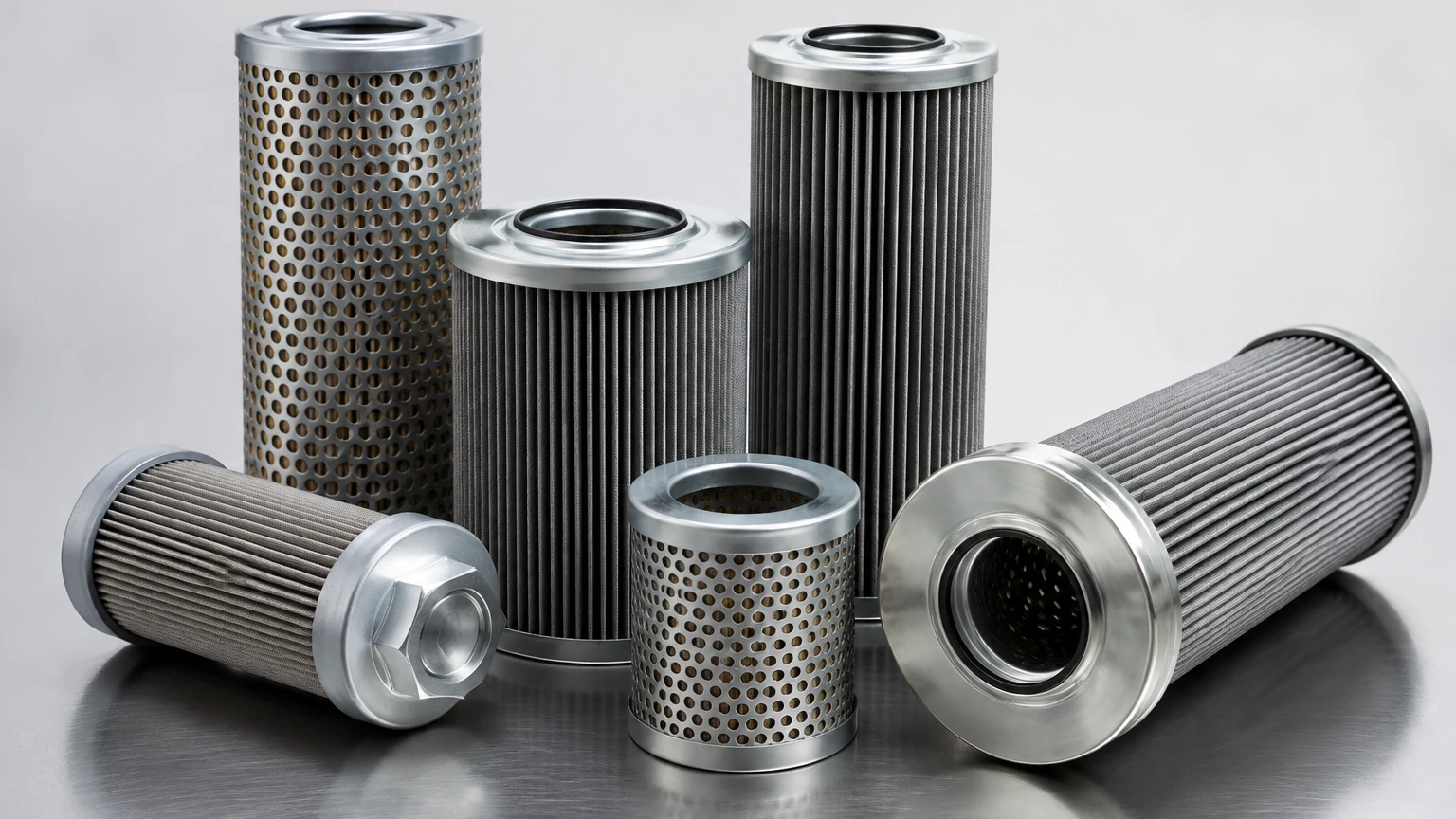
If the pressure drop is too high, it can lead to cavitation in the pump or cause the filter housing to vibrate, leading to fatigue in the piping. By utilizing customized stainless steel filter cartridges with optimized pleat geometries or specific wire diameters, manufacturers can maximize the filtration surface area within the same footprint, effectively lowering the pressure drop and extending the service interval.
Customization and OEM Solutions
Many industrial facilities operate equipment that is decades old, where original cuno oil filter parts may be difficult to source or no longer meet modern environmental standards. This is where custom manufacturing becomes essential.
OEM and customized filtration solutions allow for the retrofitting of legacy housings with modern, high-efficiency stainless steel elements. This process involves several engineering steps:
* Dimensional Verification: Ensuring the new element fits the existing housing and seals correctly to prevent bypass.
* Media Selection: Choosing between wedge wire, woven mesh, or sintered metal based on the specific contaminant profile and cleaning requirements.
* Structural Reinforcement: Adding internal cores or external cages to handle high-pressure differentials or flow surges.
By working with a manufacturer like Kaifil, purchasing teams can secure reliable components that are tailored to their specific application, rather than relying on generic off-the-shelf parts that may not provide the necessary durability.
Maintenance and the Total Cost of Ownership
The transition from disposable filters to permanent, cleanable stainless steel solutions is often driven by a Total Cost of Ownership (TCO) analysis. While the initial capital expenditure for a high-quality stainless steel oil filter is higher than a disposable cartridge, the long-term savings are substantial.
1. Elimination of Disposal Costs: Used oil filters are often classified as hazardous waste. The cost of proper disposal can exceed the cost of the filter itself over time.
2. Reduced Downtime: Clean-in-place (CIP) systems or manual cleaning of metal filters can often be performed faster than sourcing and replacing specialized disposable cartridges.
3. Consistency: Metal filters do not suffer from "media migration," where fibers from the filter itself break off and enter the downstream flow—a common failure mode in low-quality disposable filters.
To maintain a cuno oil filter system effectively, maintenance teams should implement a regular cleaning schedule based on differential pressure readings. For stainless steel elements, ultrasonic cleaning is often the most effective method, as it can remove fine particles lodged deep within the mesh or disc gaps without damaging the metal structure.
Selecting the Right Partner for Industrial Filtration
Choosing a filtration solution involves more than just matching a part number. It requires an understanding of the fluid dynamics, chemical compatibility, and mechanical stresses of the specific industrial environment. For engineers tasked with maintaining or upgrading oil filtration systems, the focus should remain on technical reliability and precision manufacturing.
Kaifil provides the engineering depth and manufacturing capability to produce high-performance stainless steel filter components that serve as excellent alternatives to traditional cuno oil filter designs. From material selection to final production, the focus is on delivering a product that ensures the longevity of your industrial machinery.
For more information on product options, technical specifications, and application support for custom filtration components, you can explore the Main Page of our site. Whether your application involves chemical processing, hydraulic systems, or heavy industrial lubrication, selecting a partner with a proven track record in metal filtration is the most effective way to ensure operational success.
