


Aquios Filtrion Fi1000 Commercial Filtration System
In the landscape of commercial water treatment, the balance between effective scale prevention and high-flow filtration is a primary engineering challenge. The Aquios Filtrion Fi1000 commercial filtration system represents a specific approach to decentralized water conditioning, designed to address both particulate removal and mineral scale accumulation without the use of traditional salt-based ion exchange. For engineers and facility managers, understanding the technical parameters, material compatibility, and operational limits of such systems is essential for ensuring long-term equipment protection and process efficiency.
Industrial filtration often requires a multi-stage approach to protect downstream components like boilers, heat exchangers, and sensitive instrumentation. While the Fi1000 is a integrated unit, its performance depends on the same principles of fluid dynamics and material science that govern custom industrial filtration solutions. This guide examines the technical specifications of the Fi1000 and discusses the engineering considerations necessary for integrating commercial-grade filtration into broader industrial frameworks.
Technical Architecture of the Fi1000 System
The Aquios Filtrion Fi1000 commercial filtration system is engineered as a high-capacity, salt-free water conditioning unit. Unlike traditional water softeners that replace calcium and magnesium ions with sodium, this system utilizes a sequestering agent—typically a food-grade polyphosphate—to prevent minerals from adhering to internal surfaces.
From an engineering perspective, the system’s architecture is defined by three main components:
1. The Housing Assembly: Usually constructed from high-impact polymers, the housing must withstand consistent line pressure and occasional surges. In more demanding industrial environments, engineers often look toward stainless steel alternatives for higher temperature and pressure ratings.
2. The Dual-Purpose Cartridge: The core of the system is a 5-micron pleated polyester filter combined with a slow-release polyphosphate core. This design aims to provide mechanical filtration and chemical conditioning in a single footprint.
3. Inlet/Outlet Manifolds: The Fi1000 typically features 1.5-inch NPT ports to accommodate high flow rates, minimizing the pressure drop across the system.
Performance Metrics: Flow Rates and Pressure Management
One of the most critical factors in selecting a commercial filtration system is the service flow rate. The Aquios Filtrion Fi1000 commercial filtration system is rated for approximately 15 to 20 gallons per minute (GPM). For technical professionals, this rating must be balanced against the allowable pressure drop (delta P) within the system.
In any filtration setup, as the filter media captures particulate matter, the resistance to flow increases. A system that starts with a high initial pressure drop will reach its terminal pressure differential more quickly, leading to more frequent maintenance cycles. The Fi1000’s use of pleated media is a deliberate engineering choice to maximize surface area, thereby extending the time between cartridge replacements and maintaining a lower pressure drop compared to depth-style filters of the same micron rating.
Scale Prevention and Chemical Compatibility
The "softening" aspect of the Fi1000 is technically a conditioning process. The polyphosphate media creates a thin protective layer on metallic surfaces and keeps hardness minerals in suspension. This is particularly valuable in commercial kitchens, laundries, and small-scale industrial cooling loops where scale buildup can reduce heat transfer efficiency by as much as 40%.
However, engineers must verify chemical compatibility. While polyphosphates are generally safe for plumbing, their interaction with specific industrial chemicals or high-temperature processes must be evaluated. In applications where chemical purity is paramount, such as in pharmaceutical or high-end chemical processing, a more robust mechanical filtration approach using precision-engineered components may be required. For those seeking specialized industrial-grade filtration components, visiting the Main Page of a dedicated manufacturer can provide insights into custom stainless steel solutions that offer higher chemical resistance.
Material Selection: Polymer vs. Stainless Steel
While the Aquios Filtrion Fi1000 commercial filtration system is effective for standard commercial applications, industrial environments often present harsher conditions. The choice of housing and internal support materials is a critical decision for the design engineer.
* Temperature Resistance: Most polymer-based commercial systems are limited to temperatures below 100°F (38°C). If the process water exceeds these limits, the structural integrity of the housing may be compromised.
* Pressure Spikes: In systems with heavy-duty pumps or fast-acting valves, water hammer can create pressure spikes that exceed the burst strength of plastic housings. Stainless steel filter cartridges and housings are the industry standard for these high-stress scenarios.
* Environmental Exposure: In facilities where the filtration system is exposed to UV light, corrosive cleaning agents, or mechanical impact, metal components provide a significantly longer service life.
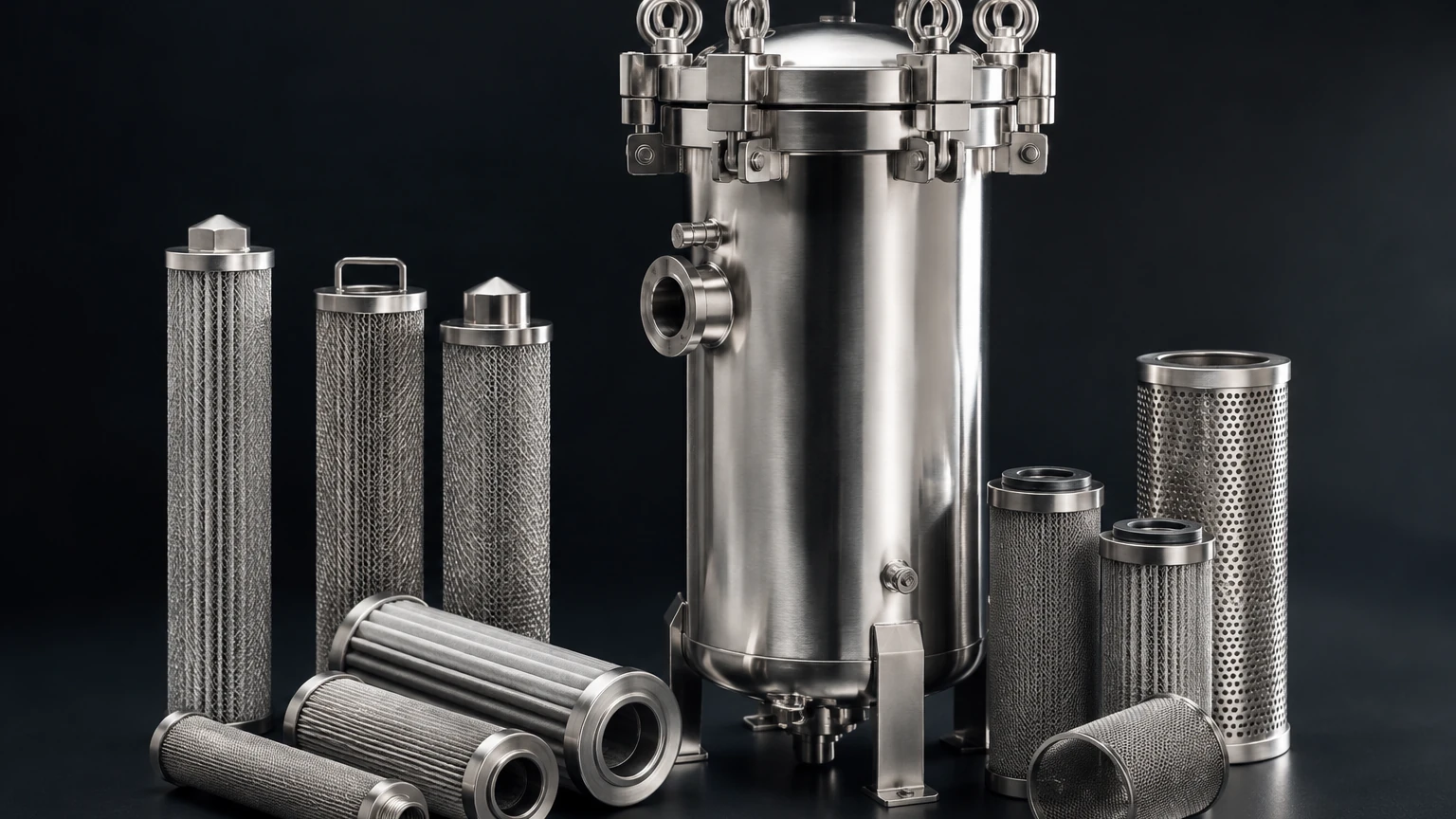
Kaifil specializes in manufacturing these types of high-durability stainless steel filtration components, which can be customized to fit the exact flow and pressure requirements of an industrial facility.
Maintenance Cycles and Total Cost of Ownership (TCO)
For a purchasing team, the initial cost of the Aquios Filtrion Fi1000 commercial filtration system is only one part of the TCO. The system’s operational cost is primarily driven by the replacement frequency of the proprietary cartridges.
The Fi1000 cartridges are typically rated for 40,000 to 60,000 gallons, depending on the water quality. In a high-volume commercial setting, this might translate to a 3-to-6-month replacement cycle. Engineers should consider the following when calculating TCO:
1. Consumable Costs: The price of replacement cartridges over a 5-year period.
2. Labor Costs: The time required for staff to bypass the system, depressurize the housing, and swap filters.
3. Downtime Risk: If the system is not maintained, the scale prevention stops, potentially leading to expensive repairs on downstream equipment like commercial dishwashers or boilers.
In many industrial cases, moving toward a backwashable stainless steel mesh filter or a permanent metal cartridge system can significantly reduce TCO by eliminating the need for frequent consumable replacements.
Customization and OEM Integration
Many commercial filtration systems are designed as "off-the-shelf" solutions. However, engineers often find that standard systems do not perfectly align with their specific pipe diameters, mounting constraints, or filtration precision needs. This is where OEM (Original Equipment Manufacturer) capabilities become vital.
When a standard Aquios Filtrion Fi1000 commercial filtration system does not meet the specific micron rating or material requirements of a project, custom engineering is the next step. Manufacturers can produce wire mesh filters and precision metal components that integrate into existing system footprints while providing enhanced performance. Customization options often include:
* Specific Micron Ratings: Moving from a standard 5-micron to a precise 1-micron or 20-micron mesh depending on the particle size distribution of the source water.
* Alloy Selection: Utilizing 304 or 316L stainless steel for superior corrosion resistance in saline or acidic environments.
* Reinforced Structures: Adding internal support cores to filter cartridges to prevent collapse under high differential pressure.
Selection Criteria for Industrial Engineers
Before specifying the Aquios Filtrion Fi1000 commercial filtration system or any similar commercial unit, technical professionals should confirm several key parameters:
1. Water Analysis: Conduct a thorough test of the influent water, focusing on Total Dissolved Solids (TDS), hardness (grains per gallon), and turbidity. The Fi1000 is effective for hardness but has limits on the maximum TDS it can effectively condition.
2. Peak Flow vs. Average Flow: Ensure the 15-20 GPM rating covers the peak demand of the facility. If peak demand exceeds this, multiple units may need to be installed in parallel.
3. Space Constraints: The Fi1000 has a relatively large vertical footprint. Ensure there is adequate clearance for cartridge removal.
4. Regulatory Compliance: Verify that the system meets local plumbing codes and industry-specific certifications (such as NSF/ANSI standards for drinking water components).
The Role of Precision Filtration in System Longevity
Effective filtration is not just about removing visible sediment; it is about protecting the intricate internal components of commercial and industrial machinery. Particulates as small as 5 microns can cause abrasive wear on valve seats, clog spray nozzles, and create nucleation points for scale growth. By utilizing a system like the Fi1000, or by upgrading to custom-engineered stainless steel filtration components, facilities can significantly extend the mean time between failures (MTBF) for their entire water-fed infrastructure.
For engineers looking to optimize their filtration processes beyond standard commercial offerings, exploring the technical resources and product options on the Main Page can provide the necessary data to design a more resilient system. Whether the goal is to reduce maintenance frequency or to handle extreme operating conditions, the transition from standard commercial equipment to precision-manufactured metal filtration is a common evolution in industrial engineering.
Conclusion
The Aquios Filtrion Fi1000 commercial filtration system provides a viable solution for many light-to-medium commercial applications requiring a combination of sediment filtration and scale inhibition. However, the success of any filtration installation depends on a rigorous analysis of flow rates, pressure tolerances, and material suitability. For demanding industrial environments where plastic components and standard cartridges may fall short, custom stainless steel filtration solutions offer the durability and precision required to maintain operational continuity. By understanding the engineering principles behind these systems, technical professionals can make informed decisions that balance performance, reliability, and total cost of ownership.
Download Aquios Filtrion Fi1000 Commercial Filtration System as a PDF
